Small House in Japan (Why Not Van Nuys?)


The architectural blog Dezeen has a cornucopia of outstanding designs from around the world.

They have many projects from Japan, including small homes, which the Japanese have constructed all around the densely populated country.

The Gap House, by MUU Store Design Studio, (shown above) only covers a total area of 200 square feet, yet it embodies an inventive, imaginative and practical way to live, with its light-filled interior and clean, modern layout.

It is sandwiched between two other buildings, yet it does not feel claustrophobic. The house is located in a residential area near Sagami Bay in Kanagawa Prefecture,Japan.

Alleys are where these small homes are constructed. In Japan, most alleys are  fastidiously neat. Nobody desecrates their environment in Japan.


Here in Van Nuys our alleys tell our stories of how we value ourselves, our city and our nation:

Van Nuys

Van Nuys

Around Van Nuys there are numerous places where this type of housing could be erected, and the benefits of building this type are many.

They are more affordable, they could provide walkable, new, community oriented housing near Van Nuys Boulevard, and they would help in the revitalization of our community.

Right now, Van Nuys is zoned to deny imaginative solutions to our housing crisis. We need to free up zoning to allow, encourage and incentivize developers, architects, investors and small-home builders to build more with less restrictions.

The alternative is the bleak, expensive, dirty, dilapidated slum of current day downtown and vicinity Van Nuys. It is appalling but it must not be our future. We must step up and change it for the better.

14547 Gilmore St. Van Nuys, CA 91405

Populating Van Nuys with Fine Architecture


VNB: 1952, photo by Alan Weeks.
DWP Collection

Van Nuys (b. 1911) began as a town, centered around a main street, connected to Los Angeles by streetcar and rail.

It built its fire station, library, city hall,  police station, and its churches, schools, shops and post office steps apart. On foot, a person could buy a suit, take out a library book, mail a letter, and walk to school.

Come to think of it they still can. But it was all there in downtown Van Nuys.

Today you might stand outside the LAPD Van Nuys Station and smoke a joint, drink a can of beer,  pee against a wall and nobody would raise an eyebrow.

The librarian, the cop, the priest, the attorney, they would walk past you and shrug their shoulders and mutter, “What can I do?”

We are so tolerant these days. Everything degrading is welcomed, while everything worthwhile is rare, expensive  or extinct.

Posture Contest, Van Nuys, 1958. Impossible to imagine these days with all the cell phone spines.

Surrounded by orange and walnut groves, the growing town nonetheless managed to provide safe, civilized and opportune situations for its newly arrived residents with affordable housing, subsidized by low interest government backed loans after WWII.

And plentiful, well-paying jobs. Imagine that!

Van Nuys, circa 1938.

Widening of Victory Boulevard: 1954.
Van Nuys Blvd. at Friar (circa 1950). Notice diagonal parking and streetcar wiring.
Van Nuys Bl. 2013

Somehow it was lost after 1945. The enormous shopping centers robbed Van Nuys of its clientele. The street widenings turned boulevards into raceways and the village feel was destroyed. Factories closed, banks shrunk, stores fled, and crime settled here to afflict, rob, disable and kill.

Why does Van Nuys flounder, while all around it other cities like Burbank, Glendale, Pasadena, and sections of Los Angeles, like North Hollywood, Studio City, Mid-City and Highland Park flourish?

Delano St. July 2017


Raymer St. March 2017

A journalist from Curbed LA called me yesterday. He is writing an article about Van Nuys and wanted to talk.

I mentioned many things that I wish were changed here, from road diets to better housing, from cleaner streets to more law enforcement for illegal dumping.

But I also told him that so much of our political leadership is devoted to working on problems like prostitution, rather than building a coalition of architects, designers, investors, and planners who could build up Van Nuys and make it, once again, a coherent, safe, stimulating, and pleasant place to live and work.

I know what’s bad here. But what about making it good? Where are our dreams? Why can’t we be as artistic as our studios, as wild in our imaginations as our writers, directors, cinematographers, animators, and designers?

Why isn’t the whole energy of creative Los Angeles devoted to overcoming our civic afflictions?


Near Cedros and Delano.

Van Nuys Bl. Nov. 2016


The deadest and more depressing areas of Van Nuys are closest to the Orange Line, which is also a good thing. Because this is where Van Nuys should work to build new, experimental, and innovative housing and commercial buildings.

Van Nuys Bl. Oct 2016 A dead place for street life.
The Empty Post Office/ Van Nuys Bl. Oct. 2016
Dystopian Van Nuys Oct. 2016. No people, no chairs, no trees. Just concrete.
Homeless on Aetna St. Feb. 2016


From Kester to Hazeltine, north of Oxnard, the “Civic Center” district contains an empty post office, vacated stores, underutilized buildings, and dystopian spaces of concrete, homelessness, garbage, and withering neglect.

The pedestrian mall on Erwin, south of the Valley Municipal Building and surrounded by the Superior Court, the library and police station, is a civic disgrace.

Ironically, all the law enforcement, all the government agencies, all the power that resides in Van Nuys….. presides over the ruins of it.


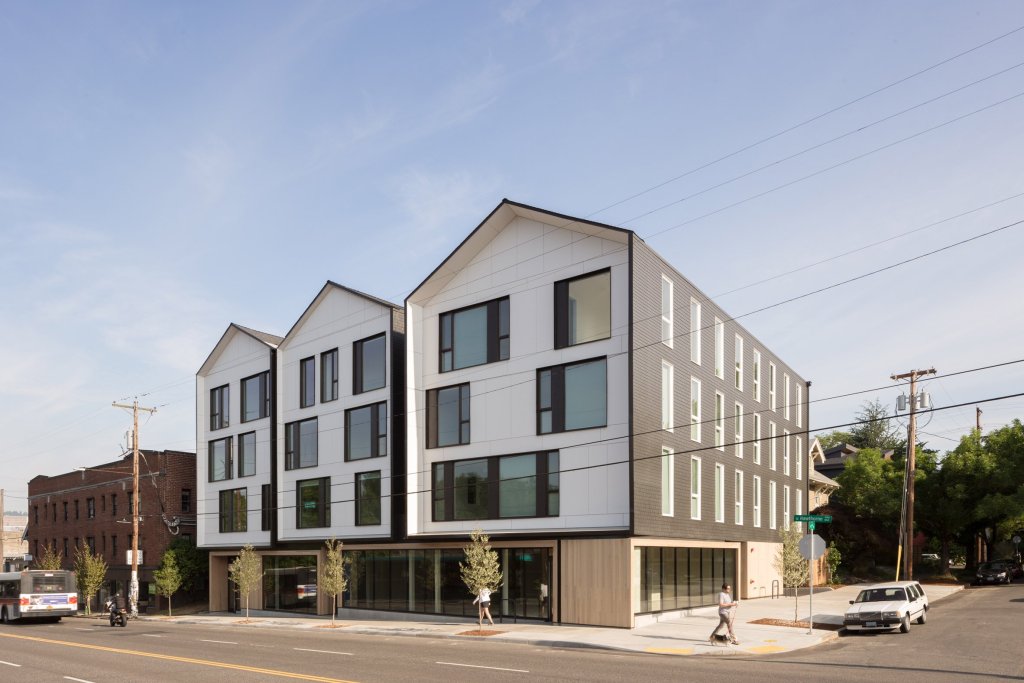
Meanwhile up in Portland, OR.

Holst Architecture, Portland, OR (Dezeen)
Works Progress Architecture, Portland, OR (Dezeen)
Works Architecture, Portland, OR (Dezeen)
Fujiwaramuro Architects, Kobe, Japan (Dezeen)
Van Nuys Alley near Delano and VNB

On Dezeen, there are posts about new, infill buildings in Portland, OR and Japan where the general level of architecture and design far outpaces Van Nuys. These are sophisticated, modern, but humble structures with ideas for living.

Look at these and imagine how, perhaps 25 new ones, could transform Van Nuys.

In the midst of our wasteland, we need to go back to working to demanding the best for Van Nuys, rather than accepting squalor and mediocrity.