Richard Hilton’s Guided Walking Tour of Historic Van Nuys: May 8th.

About, but not limited to, Van Nuys, CA.

On June 20, 2007, the Daily News printed an article about the efforts of preservationists to save the oldest home in Van Nuys from destruction.
On the morning of June 21, 2007 I went to the site of the Whisett Home to take photos and found that a bulldozer had already done its work.
Here is an interesting comment I received today on this blog from the developer. The spelling is his:
“That is not true. Merabi & Sons was waiting for the permit to built 18 units APT building, with three affordable units for the elderly people.
The comment the writer has made on the above artic about Merabi and sons is unfair.We help comminutes, and bring prosperity to Van Nuys we would never abandon it .”
Kami A. Merabi

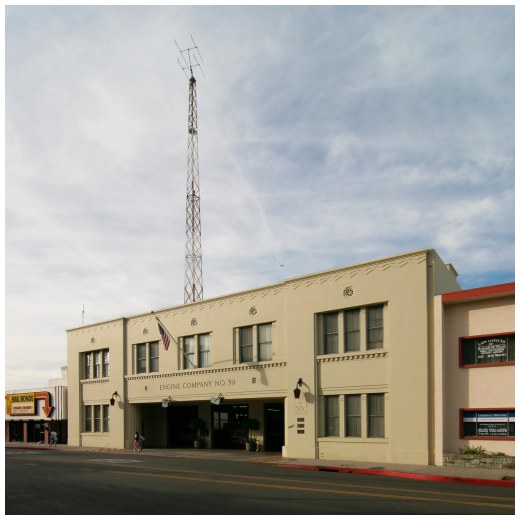
Photo Credit: http://www.you-are-here.com/building/fire_department.html
A burning desire to save Van Nuys’ Station 39
Los Angeles’ oldest operating fire station is outmoded for today’s equipment and needs, officials say. Its fans seek to rescue the classy, Depression-era building.
By Catherine Saillant
October 27, 2009
Station 39 is cramped and outdated. It’s a tight squeeze getting the trucks in, and there’s not enough room for the larger rescue ambulances that have become standard over the decades. There isn’t any on-site parking, forcing firefighters to walk three blocks from another city lot.
But the firefighters at the oldest operating station in Los Angeles could soon be moving to new digs, sparking concern about what will happen to the Depression-era building in Van Nuys and raising questions over whether a new location is even needed.
Critics worry that the edifice, built as a public works project in 1939 and now adding a touch of elegance in an otherwise tired neighborhood, could wind up as little-used business offices, another drug rehab facility or — even worse — torn down.
Ron Hay, who is on the local neighborhood council, wonders whether it doesn’t make more sense to modernize and enlarge the station rather than relocate it.
“It’s a densely populated area. There are a lot of apartments,” Hay said of Station 39’s current location. “When you get a lot of people packed in and sleeping together, there is always the possibility of increased incendiary events.”
Dr. Robert Fields, whose dental office has operated half a block from the station for 38 years, thinks Van Nuys has grown so much that Station 39 should stay put and another firehouse should be added somewhere else.
“We’ve gotten to the point where we need a second location,” Fields said.
Los Angeles Fire Department officials say relocation is necessary because Station 39 is too small and outdated to accommodate modern firefighting equipment and resources. An internal analysis of the department’s aging firehouses placed it at the top of the list for replacement.
Services to the community would be enhanced by a move, fire officials say, because a larger building would allow the station to expand its emergency medical response. The current quarters on busy Sylvan Street sometimes make it difficult for trucks just to get in and out.
“It’s the oldest operating station in the city,” said Battalion Chief Jose Cronenbold, who oversees department facilities. “It’s too cramped for the apparatus there.”
Across the street from another Valley landmark, the Art Deco-style Valley Municipal Building, Station 39 cuts a graceful profile on a street otherwise filled with bail bond offices, insurance outlets and low-budget attorneys’ offices.
From the start, it was a busy station. During its dedication July 29, 1939, fire wagons screamed out of the building three times to put out flames, according to an account in the Los Angeles Times.
A city advisory committee last summer recommended that the station be moved to a new building to provide needed space for emergency medical squads, more parking for firefighters and upgraded truck bays, storage and kitchen facilities.
“It’s operational 24 hours a day, 365 days a year. That takes a toll on infrastructure that’s already old,” Cronenbold said. “You’ve got 14 to 16 guys in there every single day.”
Councilman Tony Cardenas said he expected the mayor and the City Council to authorize a new station based on the fire committee’s recommendation. The cost of the project, estimated at $37.1 million, would come out of the Proposition F fire facilities bond issue approved by voters in 1998.
Cardenas said fire officials are looking for land close to Station 39’s current location near the Civic Center. Land that faces Van Nuys Boulevard would be ideal, he said, because trucks could easily pull in and out of traffic.
“We have some car lots within two to three blocks that are vacant,” Cardenas said. “There are a lot of buildings that are for lease. There is more opportunity today because of the economy.”
The city has replaced 19 other fire stations using bond money but had enough cash and interest left to build one more, the councilman said.
“We have the bond funds and the ability to improve the station, and it’s the lucky winner,” Cardenas said.
Residents say that if Station 39 does move, the city should preserve the building and perhaps convert it into a restaurant, or even a museum. Joel Horowitz, whose family has run a bail bond operation next to the firehouse for 60 years, thinks a Valley museum would be great.
Valley College and Cal State Northridge have collections of historical photographs and documents, but there is no central location where visitors can learn about the Valley’s agricultural past, its epic battles over water rights and its distinction as the nation’s first hub of suburban living, he said.
“We need our own cultural identity,” said Horowitz, whose shop includes large black-and-white historical photographs of the fire station, the municipal building and his bail bond business.
Cardenas, a former real estate broker, said the city probably would put conditions on the original property to ensure that its historical value is not destroyed. After a new station is built, in about two years, the old building would be declared surplus property by the city.
The city could then convert it into public offices or some other public facility. Or it could opt to sell the property to a third party, Cardenas said. Other retired firehouses have successfully been converted into restaurants and offices while preserving historical character, he noted.
Fields, the dentist, is among the local residents who say preservation is vital.
“It’s something we really can’t replace,” said Fields, who brought his children, and now brings his grandkids, to the station open house each year. “It would be very sad to lose a lovely old building to something that is cold and austere.”
catherine.saillant@latimes.com
Copyright © 2009, The Los Angeles Times

Only a few days ago, it looked like Councilman Tony Cardenas thought it a grand idea to demolish a historic piece of Van Nuys history.
Now, happily, the Councilman has more kind thoughts about the 1939 Fire Station No. 39:
“The building is beautiful and we will make sure it is preserved,” Cardenas said. “But it’s not just the station there that’s too small, it’s the streets and the surrounding area.”
More quotes from local residents and notables can be found here.
To quote the late photographer Richard Nickel, who documented the destruction of Chicago’s most historic buildings in the 1960’s:
“In a city of slums, why would you demolish its best buildings?”

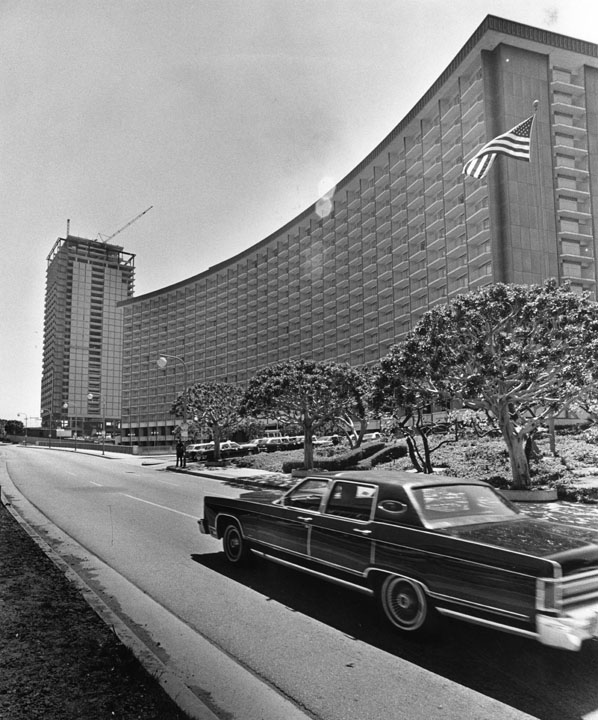
The National Trust for Historic Preservation has listed the Century Plaza Hotel in Century City on its list of the 11 most endangered historic places of 2009.
The list includes a mental hospital in South Dakota, Frank Lloyd Wright’s Unity Temple in Oak Park, IL and a Utah airplane hangar that housed the WWII Atomic Bomb plane, Enola Gay.
I am a historic preservation minded person who has lived in Chicago, Boston, New York and Los Angeles. It is easy to appreciate those quaint small towns that one finds on the East Coast, and to marvel at the architecture of Chicago, whose technical innovations in the late 19th Century brought us the works of Louis Sullivan and Frank Lloyd Wright.
But Los Angeles always challenges me when the word “historic preservation” is spoken here. It is often used as a lasso, to rope around structures that honestly are ugly and anti-urban in every sense of the word. It seems that merely being over 40 years old, brings some sort of citation and honor to various car washes, diners, shopping malls and hamburger stands in the Southland.
I don’t like the Century Plaza Hotel and I never did. The first time I went to it, I arrived by car, and entered a windy and garish lobby that looks the dreamland location for a 1967 Bar Mitzvah. I dislike the shape of building, which stands far from the Avenue of the Stars, and is meant to be looked at from the passenger side of a speeding car. A repetitive and monotonous pattern of balconies, a sunken restaurant plaza, and those globe shaped lights are all markers of the most mundane and corporatist era of hotel design. If one had to create a satirical parody of all the cliche elements of an international 60s hotel, this would be it.
Diane Keaton is heading an activist front to “preserve” this Minoru Yamasaki (World Trade Center) architectural masterpiece. One can expect to hear praise for poured concrete or whatever honorarium can be pulled out of the engineering hat. The 9/11 connection will connote the same holy tactile analogy as the Shroud of Turin does for many Christians.
This building is big and well known, and in this city, that is always what counts.
But in the San Fernando Valley, wholesale destruction of the obscure and charming homes of Studio City, many dating from the 1930s and 40s, continues unabated by the recession. Where are the historic preservationists who might confer some designation for Studio City, which also lost the iconic 1944 “Studio City Camera” sign in 2007? Who marches down Sylvan Street in Van Nuys to shout about the old library and post office?
All the small places that make life worth living, and give a city its soul are forgotten, and we concentrate our energies on praising and “protecting” the most alienating and ugly structure, the Century Plaza Hotel. Does this indifferent, mute and commercial non-entity really contribute to the vitality and street life of Los Angeles?

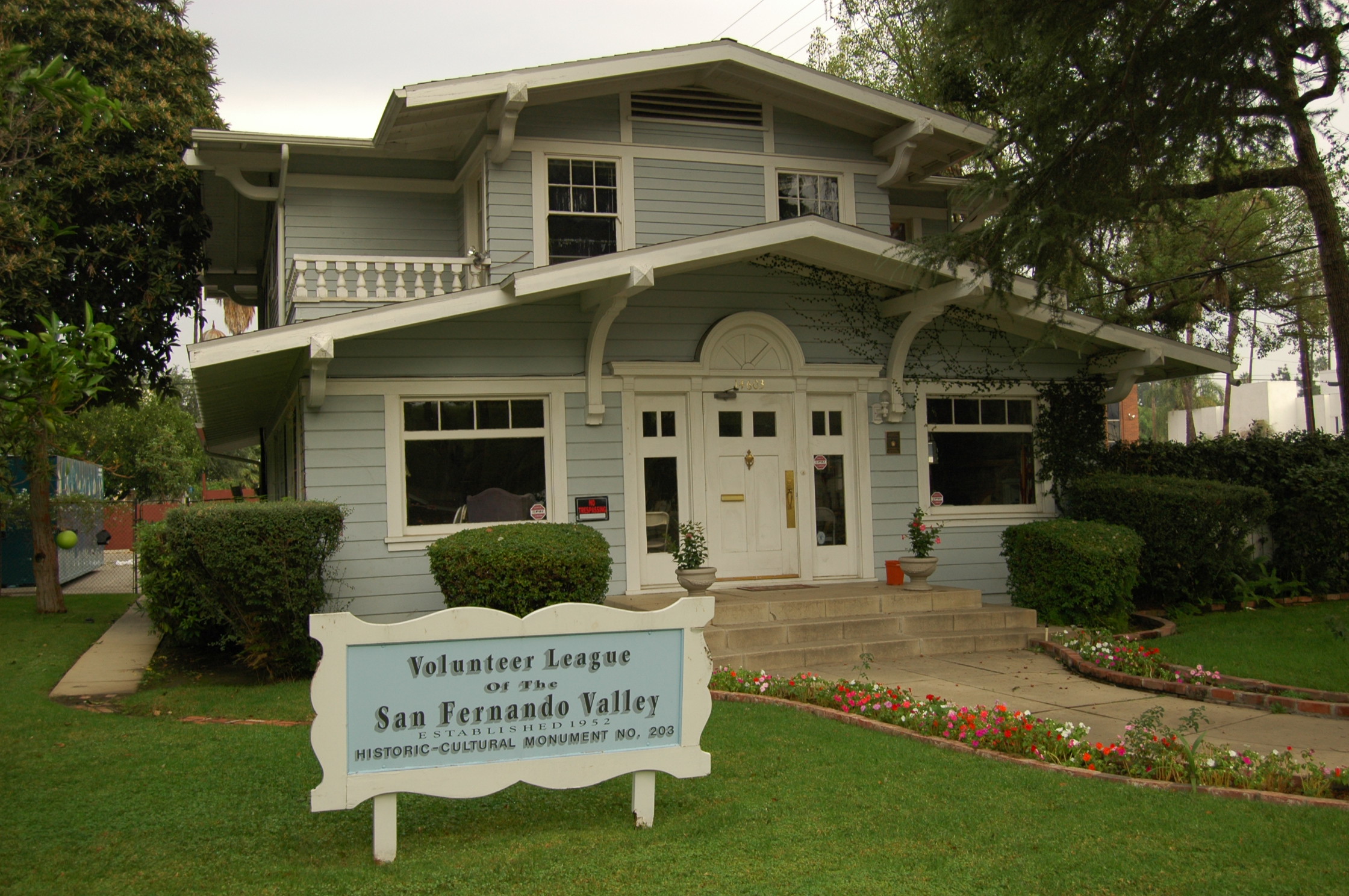
“Built in 1921 for the family of Robert J. Baird, owner of the Van Nuys Nursery Company, this Bungalow-style residence is now the property of the Volunteer League of the San Fernando Valley, Van Nuys. Declared: 10/18/78”
–LaOkay.com


 Here in Van Nuys
You must be logged in to post a comment.