11 Ideas to Improve Van Nuys.


For almost twenty years I’ve made a home in Van Nuys, CA.

And since 2006, I have published this blog: walking, photographing and writing about a peculiarly blessed, and unjustly afflicted section of Los Angeles.

Here are some 11 ideas that I am proposing to better Van Nuys, especially Van Nuys Boulevard:

Kjellandersjoberg_salabacke_view-courtyard.

Create Walkable, Garden Court Housing

We need, desperately, little, affordable, small housing units that share common garden areas. These were built all over Los Angeles up until the 1960s when dingbats took over with their car-centric designs.

Such garden courts would be most effective within walking distance of major bus and light rail streets.


LAPD Koban (Japanese Style) booth at The Grove.

Relocate the Van Nuys LAPD to Van Nuys Boulevard

The Van Nuys LAPD is buried deep behind the Erwin Street Mall, way back from Van Nuys Boulevard. What this accomplishes is removing the police from active interaction with pedestrians, shops and the action, good and bad, on Van Nuys Boulevard. Putting the police station back on the boulevard where it belongs would send a message to the community that law enforcement is on active duty: watching and patrolling, enforcing the law.


Reduce the Size of Wide Streets and Plant Trees

When drivers see five lanes of road in front of them, but every single lane is packed with cars, or conversely, when there are wide-open lanes with few vehicles, both scenarios create frustration. The speeding, the road rage, the frustration of having so much space for cars and hardly any for bicycles or light rail, has caused the decay and decline of Van Nuys Boulevard, as well as Victory.

The heating up of our climate, the constant hot weather, is creating a meltdown of mood, with more anger, more violence and more irrationality. Trees would help cool down the street and provide shade. Narrower streets, lined with cafes, pedestrians, activity, would build a sense of community decency.


58277232 – singapore – march 18, 2016 : maxwell food center is the maxwell road hawker food centre is well known for its affordable, tasty and huge variety of local hawker food.

Hawker Centers Like Singapore

Singapore has “Hawker Centers” which are groups of different food merchants housed under one roof. A Singaporean can get off a train and within a few feet find delicious, cheap food in clean areas which are protected from the elements but still open air.

By contrast, Los Angeles has nothing like this other than Grand Central Market which is not next to a train stop.  Van Nuys Boulevard would greatly benefit from one, large, enclosed, regulated building full of food sellers. This would bring the pushcart under control and provide a clean, reliable, fun, sociable place to eat and meet.

Billboard: Sepulveda at Victory

Give Commercial Buildings Without Billboards Tax Breaks

Billboards are so ubiquitous that we have wearily come to adjust our eyes to them. Yet their ugliness, their cheap, desecrating, looming presence brings down property values even while providing landlords with some income.

On every corner where there is a mini-mall with a billboard, the property owner who removes the signs should get a tax benefit because they are helping the community improve aesthetically.


A Monument When Entering Van Nuys

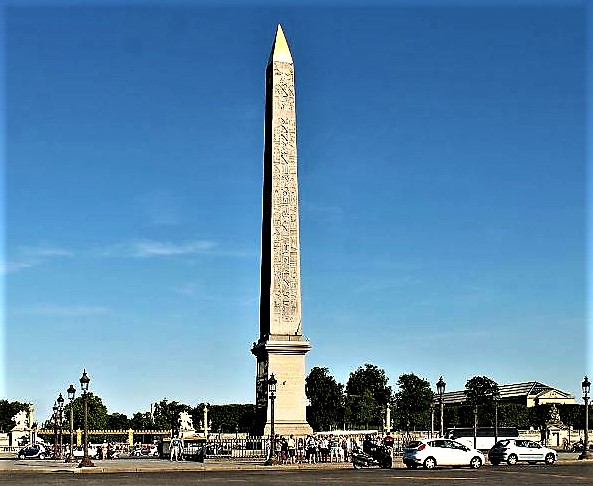
Why is there no marker, like an arch, an obelisk, or a gate when one enters Van Nuys Bl. at Oxnard Street?

Imagine a Washington Monument type obelisk in the center of Van Nuys Boulevard to make evident, proudly, commemoratively and architecturally, the fact that Van Nuys is a historic and proud area of Los Angeles deserving its own marker of identity and purpose.

Seen for miles, an obelisk perhaps 150 feet tall, should stand in the center of the boulevard, a booster of morale and an instigator of commerce and civic pride.

Santa Barbara, CA.

Pick a Unifying Style and Stick With it.

Paris, Santa Barbara, Charleston, Savannah: certain cities have an archetype of architecture which provides the base for how a city is constructed and designed.

In recent years, we have seen the onslaught of non-conforming, strange, computer-generated frivolities in architecture such as those which have marred and destroyed the beauty of London, England.

Yes, it is great to have one Disney Hall, but a street of melting blobs, narcissistic designs, starving-for-attention buildings, does not engender a district wide identity.

Strange Shaped Building: Vienna, Austria.

A classical Van Nuys would actually be revolutionary because it goes against so much architectural dogma these days and restores the primacy of community standards and group identity.


 Tear Up the Parking Lots and Plant Orange Groves

One of the tragedies of Van Nuys since 1945, indeed of all of Southern California, has been the loss of agriculture.

Once we all lived near local fruit groves, and their soothing, healthful, beneficial trees provided not only big business for the state, but gave a mythical, blessed countenance to Los Angeles which was exported around the world.

There are hundreds of acres of unused asphalt sitting behind empty stores along Van Nuys Boulevard which could be torn up and planted with citrus trees.

Perhaps an innovative architect could design housing that is combined with citrus groves?


Kester and Aetna

Kesterville

This blog has actively supported the preservation of an area of 33 acres, containing light industries, near the corner of Kester and Oxnard.

“Option A” would have destroyed 58 buildings, 186 businesses and thousands of jobs in a walkable, affordable, diverse district and replaced it with an open air, light rail service yard.

It would have been disastrous for the revitalization of Van Nuys. If it had succeeded it might have been the final nail in Van Nuys’ coffin.

Instead, happily, the Metro Board, with the support of Councilwoman Nury Martinez and others, objected to the Option A proposal. “Option B” was chosen, near the already existing Metrolink train tracks, thus preserving the Kesterville area.

So now is the time to put Kesterville on the map and make it a harmonious, vibrant destination of little apartments, stores, restaurants, cafes, all along the public transit corridor next to the Orange Line.

Pashupatina: Ivan and Daniel Gomez in their shop which they completely renovated with their own hands and money in 2015.
Create Gateway Signs to Welcome People to an Area. Kesterville could use one of these!


9 Houses and 24 bioclimatic collective housing units
by Fleury, Benjamin / Photo: Emmanuelle Blanc
Paris-Housing-by-Vous-Etes-Ici
9 Houses and 24 bioclimatic collective housing units
by Fleury, Benjamin / Photo: Emmanuelle Blanc
9 Houses and 24 bioclimatic collective housing units
by Fleury, Benjamin / Photo: Emmanuelle Blanc


Remove Onerous and Expensive Regulations on Housing

Builders are required, by law, to do so many expensive things that they are dissuaded from building.

One example is parking. The average building must spend 30-40% of its construction costs to provide space for vehicles.

Thus we have the paradox: not enough housing. And the housing we have becomes more expensive because there is not enough of it to bring prices down. And each rentable unit only becomes affordable if four working adults, with four vehicles, split the rent!

So now we have less housing, more cars, more cars parked on side-streets because we have, by law, made the construction of apartments so expensive.

Remove parking minimums and stop catering to the car as if it were the ONLY important thing in city planning.If a building were built with 200 apartments and only 100 parking spaces, would it really harm Van Nuys?

Is NYC harmed by scarcity of parking?

Homeless on Aetna St. Feb. 2016

Regulate Homelessness

California is often the destination for anyone living unhappily in any part of the world. Thus our state, because of its warm weather, attracts people coming here to escape.

Van Nuys, long considered the unofficial dumping ground of Los Angeles, is now under onslaught from homeless men and women sleeping everywhere, on bus benches, under boxes and tents, behind buildings and in RVs parked along the street.

We need to regulate where people can sleep by providing safe, clean, sanitary areas, to park RVs and where people can wash themselves, and get help so they do not have to sleep outside.

To talk about this is not to attack people who are in need. Rather, it is to assign us the proper legal and moral task of ending homelessness by not permitting it to exist in the first place.


Populating Van Nuys with Fine Architecture


VNB: 1952, photo by Alan Weeks.
DWP Collection

Van Nuys (b. 1911) began as a town, centered around a main street, connected to Los Angeles by streetcar and rail.

It built its fire station, library, city hall,  police station, and its churches, schools, shops and post office steps apart. On foot, a person could buy a suit, take out a library book, mail a letter, and walk to school.

Come to think of it they still can. But it was all there in downtown Van Nuys.

Today you might stand outside the LAPD Van Nuys Station and smoke a joint, drink a can of beer,  pee against a wall and nobody would raise an eyebrow.

The librarian, the cop, the priest, the attorney, they would walk past you and shrug their shoulders and mutter, “What can I do?”

We are so tolerant these days. Everything degrading is welcomed, while everything worthwhile is rare, expensive  or extinct.

Posture Contest, Van Nuys, 1958. Impossible to imagine these days with all the cell phone spines.

Surrounded by orange and walnut groves, the growing town nonetheless managed to provide safe, civilized and opportune situations for its newly arrived residents with affordable housing, subsidized by low interest government backed loans after WWII.

And plentiful, well-paying jobs. Imagine that!

Van Nuys, circa 1938.

Widening of Victory Boulevard: 1954.
Van Nuys Blvd. at Friar (circa 1950). Notice diagonal parking and streetcar wiring.
Van Nuys Bl. 2013

Somehow it was lost after 1945. The enormous shopping centers robbed Van Nuys of its clientele. The street widenings turned boulevards into raceways and the village feel was destroyed. Factories closed, banks shrunk, stores fled, and crime settled here to afflict, rob, disable and kill.

Why does Van Nuys flounder, while all around it other cities like Burbank, Glendale, Pasadena, and sections of Los Angeles, like North Hollywood, Studio City, Mid-City and Highland Park flourish?

Delano St. July 2017


Raymer St. March 2017

A journalist from Curbed LA called me yesterday. He is writing an article about Van Nuys and wanted to talk.

I mentioned many things that I wish were changed here, from road diets to better housing, from cleaner streets to more law enforcement for illegal dumping.

But I also told him that so much of our political leadership is devoted to working on problems like prostitution, rather than building a coalition of architects, designers, investors, and planners who could build up Van Nuys and make it, once again, a coherent, safe, stimulating, and pleasant place to live and work.

I know what’s bad here. But what about making it good? Where are our dreams? Why can’t we be as artistic as our studios, as wild in our imaginations as our writers, directors, cinematographers, animators, and designers?

Why isn’t the whole energy of creative Los Angeles devoted to overcoming our civic afflictions?


Near Cedros and Delano.

Van Nuys Bl. Nov. 2016


The deadest and more depressing areas of Van Nuys are closest to the Orange Line, which is also a good thing. Because this is where Van Nuys should work to build new, experimental, and innovative housing and commercial buildings.

Van Nuys Bl. Oct 2016 A dead place for street life.
The Empty Post Office/ Van Nuys Bl. Oct. 2016
Dystopian Van Nuys Oct. 2016. No people, no chairs, no trees. Just concrete.
Homeless on Aetna St. Feb. 2016


From Kester to Hazeltine, north of Oxnard, the “Civic Center” district contains an empty post office, vacated stores, underutilized buildings, and dystopian spaces of concrete, homelessness, garbage, and withering neglect.

The pedestrian mall on Erwin, south of the Valley Municipal Building and surrounded by the Superior Court, the library and police station, is a civic disgrace.

Ironically, all the law enforcement, all the government agencies, all the power that resides in Van Nuys….. presides over the ruins of it.


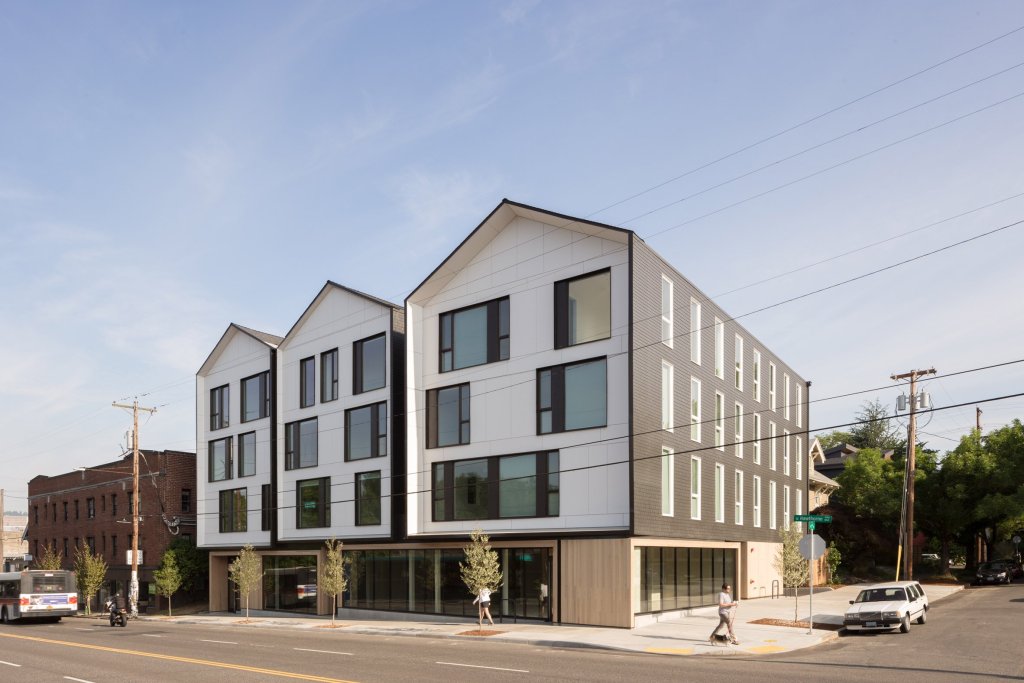
Meanwhile up in Portland, OR.

Holst Architecture, Portland, OR (Dezeen)
Works Progress Architecture, Portland, OR (Dezeen)
Works Architecture, Portland, OR (Dezeen)
Fujiwaramuro Architects, Kobe, Japan (Dezeen)
Van Nuys Alley near Delano and VNB

On Dezeen, there are posts about new, infill buildings in Portland, OR and Japan where the general level of architecture and design far outpaces Van Nuys. These are sophisticated, modern, but humble structures with ideas for living.

Look at these and imagine how, perhaps 25 new ones, could transform Van Nuys.

In the midst of our wasteland, we need to go back to working to demanding the best for Van Nuys, rather than accepting squalor and mediocrity.


Cinnamon Politics.


Cinnamon Politics

A few months ago, I walked into a Santa Monica dry spice store that my friend and I had dismissed a few years earlier.

It seemed ridiculous to us, that people, in the farm-fresh and organic era, would buy dried spices and spice blends at premium prices, and also waste money inside a store where the edibles sat in glass bottles in the burning Western window sun, becoming milder, less fragrant and more tasteless by the day.

Yet the business lived on, as culinary mediocrity often does in Los Angeles, eventually thriving in its insipid rendition of gourmet flavoring for chef lite hacks.

But then I came back into the spice store a few weeks back. I gave it another try. Maybe I was wrong.

I bought something called Northwoods Spice: salt, black pepper, paprika, thyme, rosemary and garlic, which the company describes as perfect for chicken or fish.

It cost about $13 for seven ounces. And I used it once or twice with no noticeable or discernible improvement in my food. In fact, the food had come out worse with the addition of the Northwoods Spices, giving baked chicken the flavor of something my mom might have cooked in 1975 Lincolnwood, IL served with Uncle Ben’s rice and creamed corn.

Equality’s Front Lines

Today, that company sent out an email with an entirely different agenda. They were giving away either a magnet or a cookbook called LOVE PEOPLE with any $10 purchase.

Penzeys.jpg

Further down the email, the owner and alleged author of the email, Bill, talked up his support for “people on the front lines of the continuing struggle for equality.”

Who, really, are the “people on the front lines of equality?”

To some they are students screaming to take down President Woodrow Wilson’s name at Princeton University. To others, like me, equality is often accomplished in a quiet or modulated voice: teaching, reading, praying, thinking, writing, to postulate ideas and reform minds, and argue, through logic and insight, for the reform of certain societal inequities such as equal pay for women and men.

The mob, screaming and tearing up for You-Tube, is the curse of our time. The Arab Spring, so liberating online, has burned up in the Saharan sands and splattered blood from Jerusalem to Paris to Mali. Millions protest. But not one speaks freely.

But, here in America, The Spice Man speaks freely.

He tied in the struggle for equal rights to the strange events in Ferguson, MO, where, in 2014, Darren Wilson, a police officer, shot to death Michael Brown, a black man who had just robbed a store and roughed up its owner.

A grand jury later decided not to prosecute Officer Wilson. And rioting followed after this legal decision.

So why bring this tragic event into a way of advertising your spices? The killing was an epic event, a turn of racial history, an explosion of anger, an invocation for rioting, an example of passion gone amok. To employ this police/pigmentation tale of violence to market spices reduces its enormity to triviality, and grounds it down into mere cocoa powder.

The seller of garlic powder, turmeric and thyme, whose exposure to worldwide aromatics evidently endows him with insight into all senses of the human condition, then compared police reform to Catholic priesthood reform, linking the two institutions, which have no relation or logical connection, but obsequiously praising The Catholics and The Cops for “coming a long way from protecting their own no matter what, to understanding that not everyone has what it takes to do the job.” Perhaps The Spice Man and his unessential oils belong in the latter category.

A scandal about police brutality, a scandal about child abuse, and now (to my mind) a scandal of a salt salesman using the most controversial and unsettled issues of our time to push his product.

Bill’s presumptuousness, his wise ignorance of imagining that his clientele shares his views on the proper role of police, on racial profiling, on police tactics, on law enforcement-all of it- sickened me because it used sensitive and philosophically critical issues in the service of selling spices.

In this strange marketing email, he also praised the Milwaukee police department for “an incredible forward-thinking outreach to our city’s homeless community.” In old America, before the 1980s, the police arrested people sleeping on the streets, not only because it was illegal, but also because it was unsanitary and unsafe. And gutters, park benches, alleys and dumpsters were deemed not fit for human habitation.

Strangely, there are still people, (like me) who think that there should be a law against allowing people to set up home on the sidewalk. Tolerance of it allows it to grow and become a movement of its own, normalizing the cruelty and barbarism of it, and giving a free pass to liberals to walk from their Range Rover with the handicap sticker on it, right into Studio City Lululemon on Ventura Boulevard, past the old lady who has slept on the metro bench for six months.

So now the police, as cited in Milwaukee, are expected to be the ambassadors of graciousness to the mentally ill, and to people made mentally ill by living outdoors in urban filth.

But back to The Spice Man.

He thinks he knows his customers. He thinks he knows them because sells them political opinions, set out in marketing blasts, better kept to himself.

He ought to make a better product before he jumps ahead to planetary reform.

Spices, kept out for too long, lose their potency, like old bromides.