Exploring an Old Neighborhood on a Cool Summer Afternoon Near Dusk.


21st St.

S. Central Av.
The First Spiritualist Temple (1911 & 21)
Second Baptist Church  2412 Griffith Av. (1926, National Register of Historic Places)

Yesterday Andreas and I drove over to an old neighborhood to walk around and take photos.

The location was south of downtown, and the 10; east of the 110, and encompasses streets such as Washington Bl, Central, San Pedro and Maple.

Most of the houses were built in the early 1900s. They are wood cottages with ornamental embellishments, front porches, little yards, along streets punctuated by a variety of churches.

Lincoln Theatre (1926)

There are some glorious old theaters, including the Moorish revival style Lincoln (1926), which was once the heart of the black live performance music community along S. Central Avenue.

The long, distinguished history of black businesses, churches, educational institutions and artists who lived and created here is much too long to discuss in this short blog post, but this is where, from the 1920s to the 50s, much of African-American creative life was centered.

Today, the shops, the residents, the people on the streets, are largely Latino, though that designation is sweeping and generalizing too, and cannot describe the immutable variations of life here.

Washington & Central


On our walk we encountered friendliness everywhere, from people saying hello on bike, to men grilling sausages, to porch sitters waving and engaging in conversation. There is street life here that is supportive, engaged, healthy, perhaps more grounded and nurturing than one could find in any area of the San Fernando Valley.

There are fine murals on buildings, and most of the alleys we walked past were shabby but kept free of debris, cleaner, in fact, than some in Van Nuys.

Washington Bl.
722 Washington Bl. (2017)

On Washington Boulevard light rail zooms past architectural relics from the past century: the Scully Building at 725 was built in 1930 and is a spectacular “Gotham City” type of Art Deco with steel windows and vertically decorated brickwork and carved stone; 722 was built in 2017 and is a new 55-unit apartment with government backed funding providing decent housing in a city starved for it. A mural on the side of the building is spectacularly subtle, artist unknown.

725 Washington Bl. (1930)


(Stanford Av. Near 20th.)

2010 Stanford Ave.
Site of a 1914 warehouse auction for the Arnold Furniture Co.

Display_Ad_37_–_No_Title

Many of the streets down here (excepting Washington Bl.) are narrower than most in modern Los Angeles, creating an enveloping and embracing closeness between pedestrians and businesses, and making biking and walking safer. Every car that we encountered at an intersection, gracefully and politely, ushered us to walk in front. Yes, it’s the law, but its routinely flouted in richer communities of Los Angeles, but not down below Washington Blvd near S. Central Ave.

Washington Bl.
Washington Bl.
Mid-Century Commercial Building along Washington Bl.

Washington Bl. Bridge

Our tour ended, and culminated, in the glorious Washington Bl. Bridge (1930) that crosses the LA River, its majestic classicism fouled up by graffiti. Yet its polychromatic terra cotta frieze panels, depicting the art of bridge building, are still present, if grimy, on the four pylons on each side of the structure.

At that bridge, as Mother Nature blew the waning candlelight out of the sky, ushering in the night, the remnants of some deceased industrial glory and aspirations of greatness still cried out for recognition.

Washington Bl. Bridge 1930

The Bus Bench


“Despite a growing population and a booming economy, the number of trips taken on Los Angeles County’s bus and rail network last year fell to the lowest level in more than a decade.

Passengers on Metropolitan Transportation Authority buses and trains took 397.5 million trips in 2017, a decline of 15% over five years. Metro’s workhorse bus system, which carries about three-quarters of the system’s passengers, has seen a drop of nearly 21%.”- Los Angeles Times, Jan. 25, 2018.


Let’s imagine a 62-year-old woman, Berta Gonzales, who lives in Van Nuys, near Victory and Sepulveda, who still works, as she has for the last 55 years, doing whatever she can to bring in cash for herself, her husband,  her two adult children and six grandchildren.

She works as a housekeeper, and she takes the #164 bus, every morning, at 7am, from Victory/Sepulveda to her job near Warner Center, a commute of 33 minutes.

When she gets off the bus in Woodland Hills, the temperature these days is around 80, but when she leaves her job, after cleaning bathrooms and vacuuming floors, doing laundry and dusting, around 2pm, the thermometer might be 110.

Last year she twisted her ankle when she slipped on a freshly mopped floor.  She hobbled around on a special shoe, using a crutch to walk, and she tried to stay off her feet if she could. She has no medical insurance, of course.

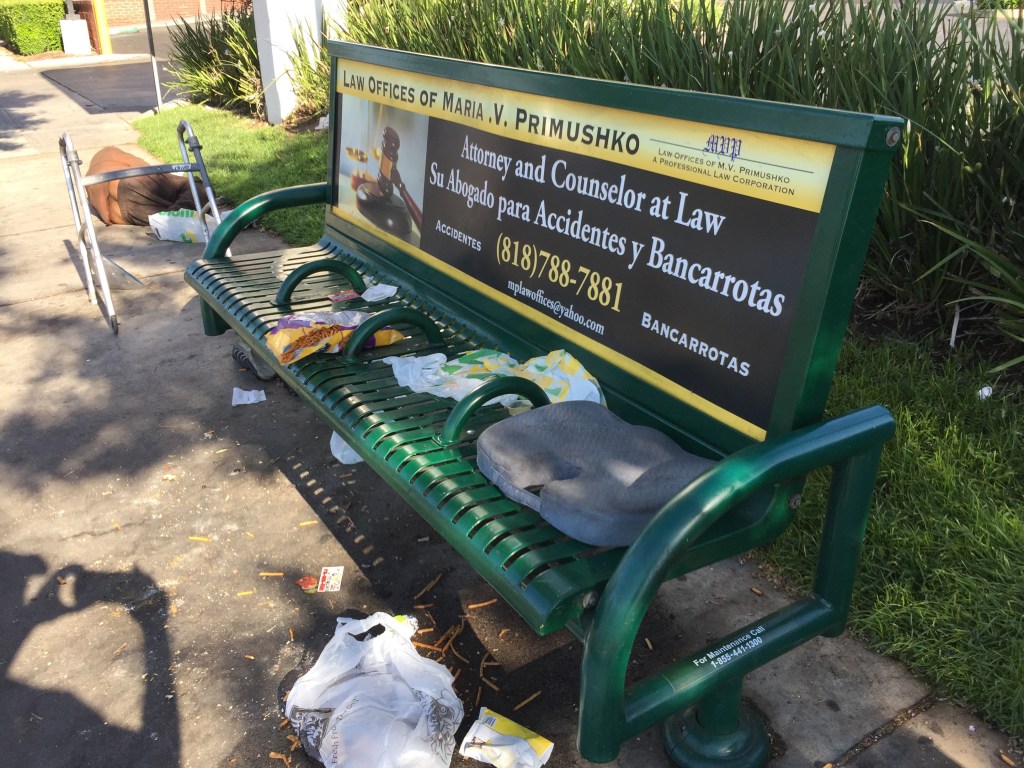
In the morning, when she waits for the bus, next to the bench without any sun protection, she is made to stand. Because there is a drunken, sick, filthy man sleeping on the bench, with all of his dirty clothes, his smell of urine, feces, body odor and beer, as well as half eaten and discarded food such as spaghetti, pizza, and empty alcoholic cans.

This is his spot. All the legitimate and necessary uses of the bus bench must be thrown out because his sickness and his selfishness, whether deliberate or accidental, is the most important thing catered to.

He has been here for months, if not years. Last year he fell down on the sidewalk and paramedics came to gurney him away. Then he came back for good.

This homeless person, multiplied by thousands, living on bus benches, is not an inducement for increasing bus ridership. Thousands of potential riders will see this lawless, unsanitary and unsafe barbarism all over LA and make up their minds to do anything to NOT TAKE A BUS.

Berta is like dozens, if not thousands of people who encounter this situation every single day. They are hard-workers, struggling to earn money, riding public transit as their well-meaning, liberal political servants wish them to do.

But put yourself in Berta Gonzales’s shoes and ask yourself: if you had a choice would you want to ride a Metro bus when this is the first sight you see every single morning?

Because Los Angeles does not enforce quality of life laws, there is a cascading affect impacting every other activity: traffic, air pollution, and longer commutes.

It is surprising that the plight of bus riders, many of whom are Latino, has not seized the identity politic podiums of those in city government who are always screaming loudest about injustices suffered by whatever is trending on Twitter that day.

Does grotesque, citywide neglect of sick people and working people and commuting people merit no outrage?

Who is responsible for keeping mentally ill people in dire need of treatment off bus benches and getting them into permanent hospitalization and shelter?

Who?

I know it’s not this blog.


Option A: What the Neighbors Think.


A light rail service yard in Washington state.

Metro is planning a light rail train down the center of Van Nuys Bl. extending from Pacoima to Van Nuys, stopping at Oxnard St. Less probable is a dedicated bus line.

Their final decision, as to what type of transport to build (bus or train) and where to service these will come in June 2018.

Four areas in Van Nuys are under consideration for eminent domain demolition and the building of a light rail maintenance yard.

These are called the “Option” areas and they are A, B, C, and D.

Options B, C, and D

B, C, and D all straddle the existing Metrolink heavy passenger rail tracks along Raymer St. near the former GM plant on the Van Nuys/Panorama City border.


OPTION A:

Option A

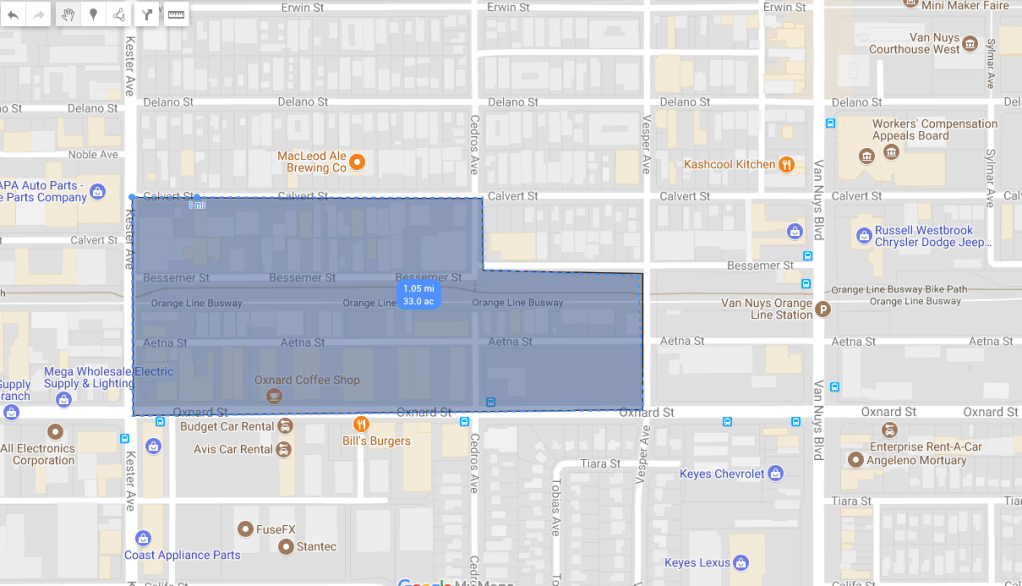
Only “Option A” is located in another area: this is a 33-acre spread of light industry comprising 186 businesses, 58 structures and as many as 1,000 workers who are located NE of Oxnard and Kester along Oxnard, Aetna, Bessemer and Calvert Streets.

This blog has reported extensively, since September 2017, on the “Option A” community: a unique, productive, and innovative group of entrepreneurs who make fine decorative hardware, custom shelving; record music, weld metals, clean carpets, fashion artistic stained glass, and restore vintage Mustangs, Vespas and large yachts.

Skilled craftsman at Pashupatina
Garrett Marks, CEO, Mustangs, Etc. (est. 1967)
Peter Scholz, owner Showcase Cabinets (est. 1987)
Simon Simonian, Progressive Art Stained Glass Studio
Kristian Storli, Owner: Bar Italia Vespa
Steve Muradyan of BPM Custom Marine

They employ local workers, many of whom walk to work. There are immigrants here, but there are also people who started companies 30, 40 and even 50 years ago who would be forced to move from their little supportive community and fight to rent new space competing against cash rich marijuana growers who are swallowing up space for their noxious, lethargy inducing, industrial scale weed.


I was curious what residents in the area think of “Option A” so I went online and visited Next Door.

My Next Door app page has 2,000 community members from Burbank Bl. north to Roscoe, from the 405 to Hazeline.


I posted a question asking if people opposed or supported “Option A.” Overwhelmingly, by a vote of 87% to 13 (94 total votes), they said they were against it.


Peter Scholz and employee at Showcase Cabinets


 Here are some of the comments:

“It seems like a giant repair yard would be an eye sore and would attract litter, homeless encampments and shady activities since it will have very little activity especially at night. I don’t see how that is worth uprooting all these businesses who contribute to our community and have been here for all of these years.”

“I prefer local businesses any day. Plus, with numerous new apartment buildings popping up all around the area, we have potential for more retail/cafes to move in to the buildings up for lease. However, if all of that space gets used up by ugly rail yards, then the Van Nuys economy will never thrive to its full potential. I’m sick of this city being treated as a dumping ground.”

“The downside of Option A is not only a large rail yard in main area of Van Nuys (which MTA promises would be modern and attractive) but as well, that it would take out approximately 200 small and thriving Van Nuys businesses that each employ, one, two, three, five or more employees, whereas the other two main options hold a minuscule number of businesses. Eminent domain [against] all these businesses in the heart of VN would hurt us in several ways, besides uprooting the businesses and the citizens who work there, there are limited number of commercial properties currently available close by, so many of the businesses could not relocate close by, would not be able to keep locale clientele. For many who live nearby, if new properties could be found, commutes would be added. And for all those businesses relocating outside our community, or for those that would simply be forced to fold, Van Nuys would lose a healthy business tax base. Again, the other two options provided by the city for the yard (if needed based on what the final decisions are) do not suffer from anywhere near the same extent of overall downside.”

“I own a house on Hatteras near the Option A area. And I also rent a building on Aetna which would be demolished. If this happens I will sell my house, which I just purchased two years ago and I will move out of Los Angeles. There is not a reason in the world to pick our district for demolition when so many jobs and lives are at stake. If Nury Martinez allows this she should be recalled.”

Clearly, people who live near the Option A zone are insightful and understand how important it is to preserve small business in Van Nuys. They know that an enormous, gaping hole would not revitalize Van Nuys, but further degrade it.


The community residents, as well as the businesses near Kester and Oxnard, are united in opposing the destruction of viable businesses and local jobs.

El Color de La Vida.


DSCF0656

Before the cold rains struck the San Fernando Valley late Monday afternoon, dark and menacing storm clouds went into formation.

Seen from the empty asphalt of an abandoned parking in Panorama City, the view east lived up to its name. The craggy, inky, rock-topped San Gabriels permitted fog to brush their face.

Eager to pursue the dark light show, we drove east on Roscoe where it opens up under the high voltage lines, across the valley, under the concrete freeway, cutting diagonally up Tuxford, emerging into the industrial abattoir of Pacoima where death and life, and light and shadow hunt under smokestacks and behind motels.

DSCF0668

DSCF0700

DSCF0709

The rains came down on Van Nuys Boulevard and San Fernando Road, soaking Chabelita’s Restaurant, Gallardo’s Auto Repair, Fierro’s Muffler, Franco Tires, JC and Son Welding, and the Coral Bells Motel.

And then, in the mode of Los Angeles, the sky cleared. A vast, blue vista opened up. A cold wind followed.

DSCF0689

Carrying our cameras, we passed men who eyed us with suspicion. Señor Fierro came out of his muffler shop and kindly asked us why we were taking pictures. I handed him my card and told him how beautiful the sky was. He seemed to agree.

These people work hard. They come from lands where blood soaks the cross and breaks the heart. Now they weld metal and change tires and cut hair and dig trenches. Here are these Americans whose presence makes us American.

San Fernando Road is also part of Route 66. The historic state sign says so. The old motels along the highway attest to a long history of travellers who made their way into California: on foot, by automobile, in the back of trucks, hidden inside freight trains.

They got here and slept on the floor, two or three to a bed. Some had no papers. Some had no money. They were somewhere strange and hostile, but free, free to pursue and put down roots and stop running.

But death caught some too young. Some died under trains, running across tracks after the signal, or purposely running into death to escape the misery of life.

DSCF0725

Pacoima is strong. Its buildings are painted in the deepest blues, oranges, yellows, reds and greens. There is no room for ambiguity in hue. The choices are laid out in bright sunlight. The devil and the angel battle here. You can eat well or go hungry. You can get pregnant and high, or go to school and study hard. You can pray or you drive drunk into a wall. Pick the orange off the tree or the prostitute off the street. It’s up to you.

On walls, adjoining muffler shops and liquor stores, are murals of mythological, cultural and aesthetic magnificence. Poor Pacoima has more beautiful public art than Beverly Hills. And there is even a wall-sized portrait of that savior and scoundrel El Niño. Artist Levi Ponce is the Michaelangelo of this district.

DSCF0787

DSCF0755

DSCF0759

VSCO J3

El Niño, as we all know, is in town for a few weeks. He may pay up or he may skip town without leaving payment. Nobody knows.

But Pacoima will carry on.

Processed with VSCOcam with e4 preset

Processed with VSCOcam with e4 preset

Jesus at Dunn Edwards.


A tailgate prayer and Thanksgiving feast was brought to the parking lot of Dunn-Edwards on Sepulveda this morning. Attending the event, sponsored by the Iglesia Mision Divina, were the very few day worker/painters who normally congregate at the paint store when it is open for business.

There was something spiritual and signficant, human, kind and touching here this morning.  IMG_9820 IMG_9821 Jesus.jpg

Estate Sale.


15149 23

15149 22

15149 21

15149 20

15149 19

15149 18

15149 17

15149 16

Two people, a Guatemalan born man, and his wife, raised three girls and one boy in this 1933 Van Nuys house.

The children grew into adults. They went to college, then graduate or medical school, and became highly educated professionals.

The parents, and another relative, stayed behind in the old house, a Spanish style ranch with a red tile roof and backyard full of fruit trees, and numerous potted, flowering plants.

All the old people died a few years ago. Now the house is being prepped for an estate sale. The lady running the sale is my friend. She invited me into the home to survey it.

It seems that nobody ever threw anything away. And every square space of the property was full of mountains of metals, tools, cans, bottles, wood, and machinery.

Packed tight in the front of the house was a tiny kitchen, dining room, living room and a two bedrooms. But in the back was a secret, unofficially constructed warren of rooms and an old patio converted to an indoor sewing room, and another bathroom, added on.

15149 14

15149 15

15149 13

15149 12

15149 11

15149 10

15149 9

15149 8

Outside, a jerry-built outdoor sink was plumbed up to an exterior wall. External electrical outlets taped up to live connections was nearby. A family of raccoons made their home above old lawn mowers and a rusted gasoline blowtorch. Any space that could store things, did.

Yet, these people were not pack rats or hoarders. They were, most likely, born poor, and through thrift, industry, and hard work, and a strong dose of Catholic faith, they persevered and prospered.

The front of their home has always been neat. The lawn is cut, the driveway swept, the cyclone metal fence keeps guard along the street. Birds of Paradise have grown large and cover the front living room window.

And when this house is sold, and the contents banished or transferred to new owners, the life of people who once inhabited this home will be erased forever.

15149 7

15149 6

15149 5

15149 4

15149 3

15149 2

15149 1