Looks Like Yet Another Redevelopment Plan for Van Nuys.


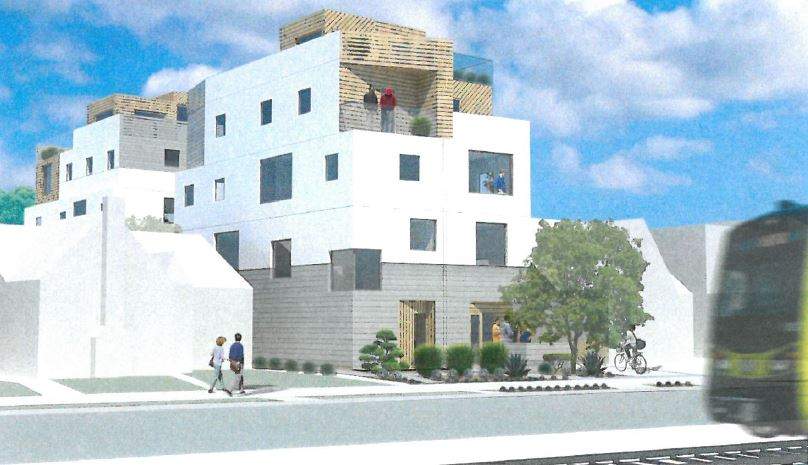
In Urbanize LA “Revamp in the works for Van Nuys Civic Center.

“In a motion entitled “Building a Livable City,” Martinez instructs the Planning Department and LADOT to take stock of the number of parking spaces needed to serve Van Nuys City Hall and other government functions in the Van Nuys Civic Center, and lay out a plan for consolidating parking onto a smaller footprint. This would clear the path for redevelopment of the complex’s remaining parking lots with a mixture of affordable housing, open space, retail, and other community serving uses. Likewise, Martinez proposes that any scheme also incorporate amenities for pedestrians and cyclists.”

Must we endure these promises again? Here is what they were writing 31 years ago this month:

Downtown Van Nuys, due to 70 years of misguided “redevelopment”, has obliterated itself and now crawls along at the lowest condition in its history.  Homelessness, abandoned storefronts, and an eight lane wide highway are what it looks like.  

Ms. Martinez has occupied her office, figuratively and literally, for over 7 years and during that time she has spoken up about all the ills of Van Nuys and the NE SFV: human trafficking, crime, housing, drugs, homelessness.  

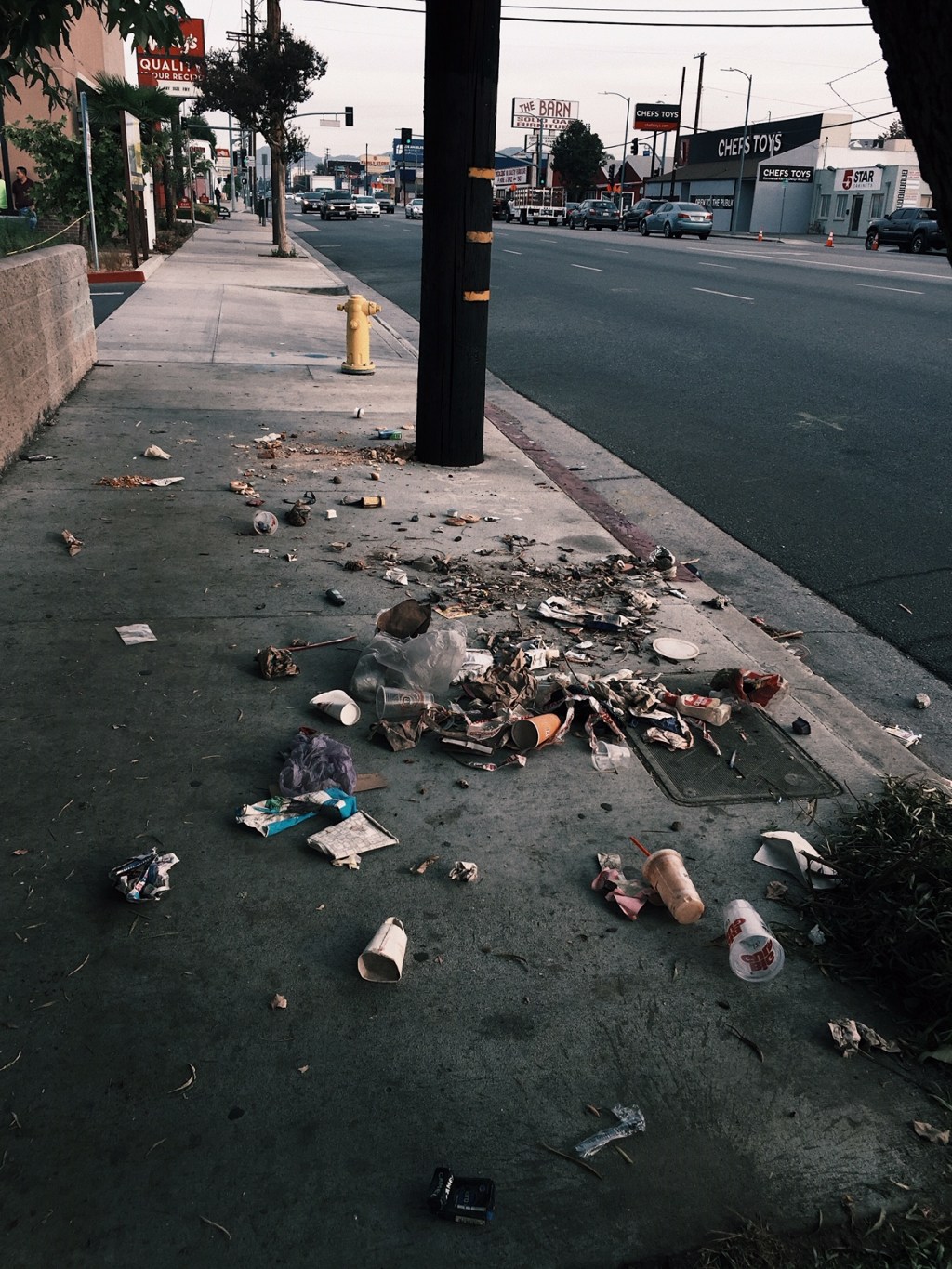
Yet, still the tent cities remain. The shopfronts are no more. The entire area looks like hell.

And at the center is the 1958 planned Van Nuys Civic Center, a ghost land of courthouses, library and police station all populated by vagrants, trash, emptiness and hopelessness. Surrounding the area are many tens of thousands of parking lots, enormous concrete fiascos erected 50 years ago to provide dignified places for vehicles to live. They are mostly empty now, and should be destroyed and replaced with housing, housing, housing!

But this requires a plan, an architectural plan, and there is never, ever any architectural thought put into any structures that go up in Van Nuys. Instead, a crooked and semi-literate group of grifters with dough show up at planning board meetings and offer up the shit boxes that are shoved into the poor streets nearby. And VNB remains the center of dysfunctional governance in the SFV. 

In past “great plans”, the Orange Line bus and and bike path was supposed to revive Van Nuys. But next to the path, are parking lots, rented out by nearby car dealers to store their unsold vehicles. This land, paid for with public tax dollars, is instead being exploited by for profit auto dealerships.

So I’m cynical.

Our present condition as a city, due to the horrendous tenure of Mayor Garcetti, normalized everything wrong, illegal, dirty and dangerous.

But let’s try again. Keep trying. We have nothing to lose. But our minds.

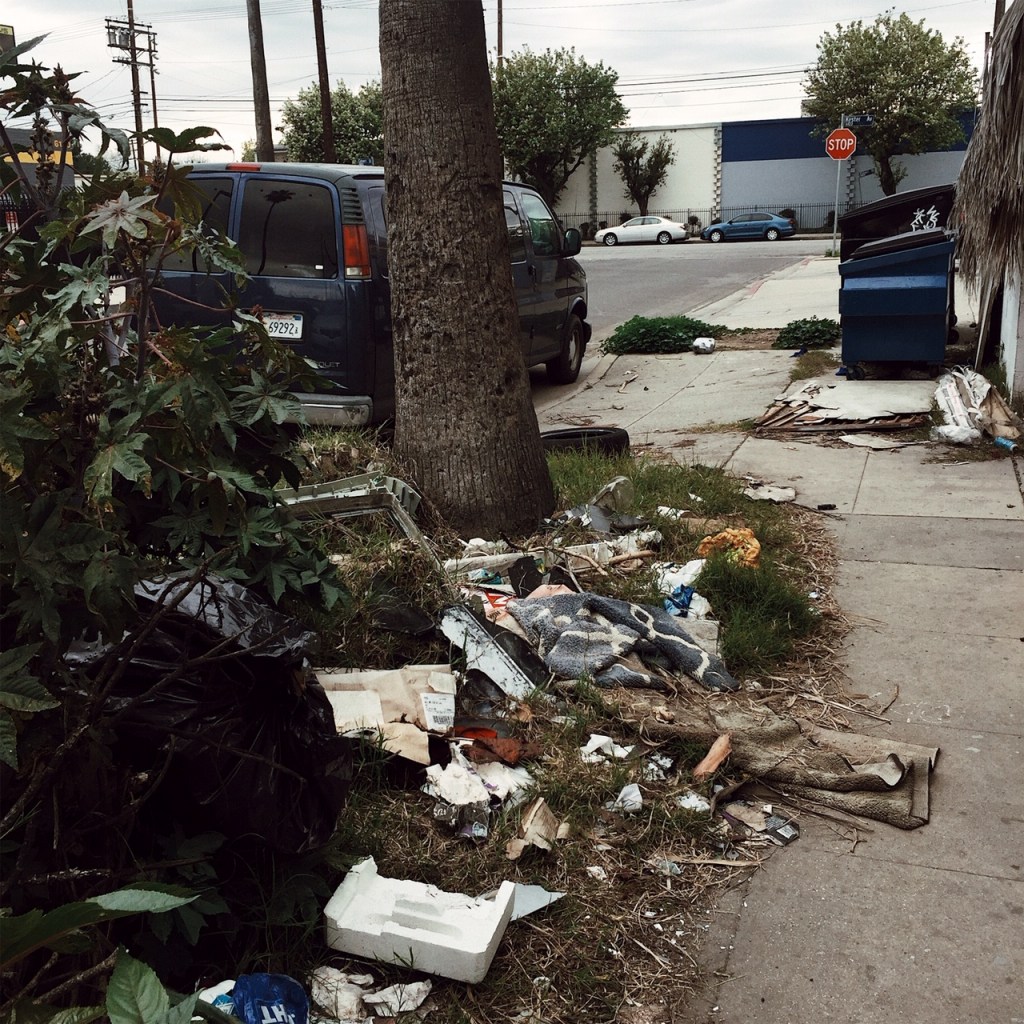
West Side of Sepulveda Between Haynes and Lemay, Van Nuys, CA.


The Streets Were Spotless


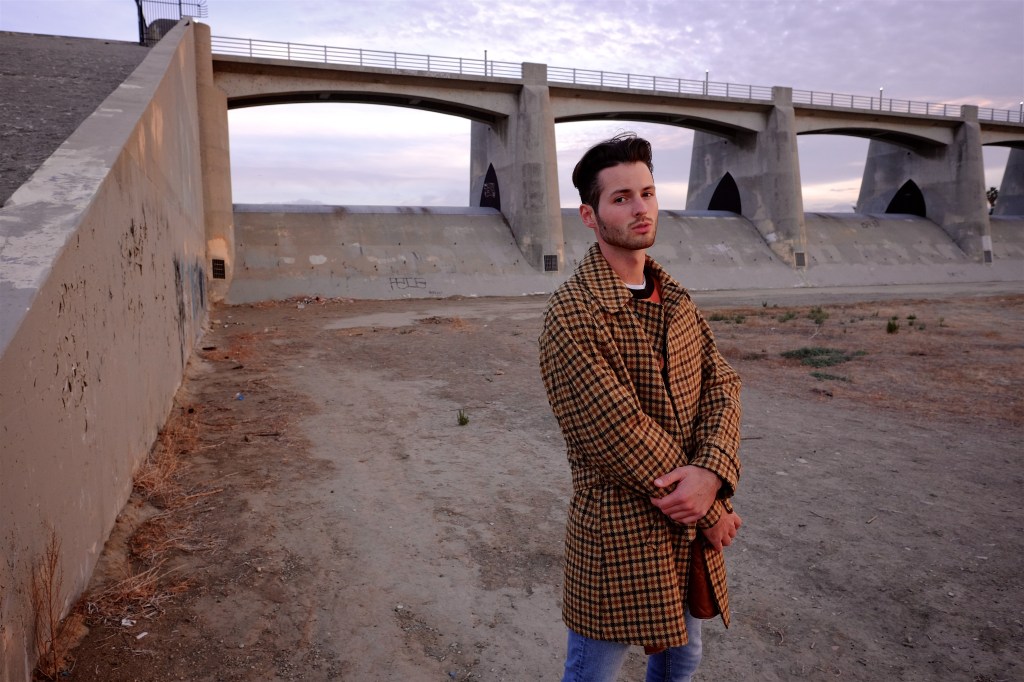
On Sunday I went to Burbank to take photos of a 25-year-old actor. 

We met at Chili John’s, a “World Famous” landmark, now out-of-business, a spot of streamline slickness with a neon sign, all of its recent Covid signs still intact. Somewhere I had read that preservationists were fighting developers on this site but could not pull up any stories to verify.

It was Burbank so there were no people around, just an empty parking lot, spotless, without litter, tagging or anything vandalized. The rains had washed the skies. In the distance, past Glendale, sharp and clear, stood the eternal San Gabriel Mountains. 

I got there before he did, and I walked along Burbank Boulevard where the cherry trees bloomed, and one specialty liquor store was open for contactless delivery. Through the window, I saw a $24 bottle of Riesling and moved on.

On Sundays, in Burbank, there are always old, spotless cars driving around. I saw a VW Beetle turn right. 

After that notable vehicle sighting, the actor from Springfield, MO appeared. 

He had just taken a Zoom acting class. He had long pandemic locks and beard and was quite chippy and happy with himself as he ran his hand through his hair and made goofy expressions with his face. He took out a guitar, which he doesn’t play, and he soulfully strummed it for our shoot. 

He had a backpack, a wool driving cap, zip up boots, tight pants, overcoat, trim denim shirt. We shot some photos of him along the long white wall where its red painted parking in rear. He talked about his end days Christian friends from Missouri and trimming his chest hair and how he comes from the same town as Brad Pitt.

He said he was happy in Hollywood, happy to meet cool people, happy for people who were signing him up and taking him to Peru for work. I think.

He told me he had access to a super high resolution Blackmagic Production 4k Camera, and if I wanted to use it on some other day I could. 

He left his stuff in the back, behind the store, and we walked up front to the sidewalk. I had no fear any of it would be stolen. But he went back to retrieve it and then rejoined me on the sidewalk where I directed him to slump down into the doorway and look down the street as if he were a tired, exhausted traveler.

We had free reign, with nobody nearby.

There was also no trash, no litter, no fast-food wrappers, no condoms, no homeless, no shopping carts; just an empty place all around, with store windows and shuttered businesses. After two hours, one masked pedestrian walked by.

That Sunday, Burbank was the Los Angeles that once existed, the hygienic wonderland of donuts and burgers and whimsical cars, chlorinated swimming pools, empty sidewalks and freshly washed streets.  It was dead but it was a delight, and somewhere nearby I imagined a crew-cut kid with blonde hair and plaid shirt riding his Schwinn.

When I was done, I drove through North Hollywood and crossed back into chaos, filth and disorder, past an invisible wall between dreams and reality, past and present, Los Angeles and Burbank. 

In Singapore.


In Singapore, which I just visited for four days, I do not remember seeing any decorative streetlights, but I might have been looking, instead, at spotless plazas, copiously planted parks with enormous trees and bright flowers; or perhaps I was riding the air-conditioned MRT, easily navigating between scrupulously clean stations, labeled in easy-to-read signs, navigable by newcomers and citizens alike.

One day we walked up to the MacRitchie Reservoir where students, in the water, directed by coaches, were practicing and exercising rowing. They worked hard and still smiled. At the clubhouse I saw posted rules and regulations and fines for violating the laws of the recreation area, and still, all around me, everyone was peaceful and happy. Why shouldn’t they be? They were surrounded by order, nature, and safety.

I was unaware, until I returned to Los Angeles, that our city was removing fines for overdue library materials.

In Singapore, next to transit, are great food halls, called “Hawker Centres” which gather, under one roof, superb eating establishments: affordable, delicious and regulated by government inspectors.  We ate at two:  Tiong Bahru and Old Airport Food Centre.

The hawker centres date back to the 1960s, when the new government of Singapore, in order to insure cleanliness, hygiene and food safety, put all the street food into these mass eating halls.

In 2019, Los Angeles made it LEGAL to sell food on the street, so the lady who just finished cleaning her cat’s litter box and will shortly make your guacamole, can also sell it from her blanket next to MacArthur Park and not get arrested. 

Often when people talk about Singapore, people who don’t live there, they bring up draconian laws that sound utterly terrifying. Death for drug dealers, chewing gum is illegal, and a recently enacted “fake news” law that might curb free speech.

Singaporeans I spoke to didn’t think about these laws, or believe they hampered their freedoms. Perhaps they were too happy enjoying the liberties of crime free streets, or sidewalks without homeless encampments.  They probably were also feeling good while availing themselves in superb health care or government subsidized housing.

Incidentally, Singapore has public housing. Rules are that the residents must be legal citizens or permanent residents. 82% of the housing in Singapore is government run. So here we have a refutation of the tired conservative/liberal ideology that poisons American minds. There is such a thing as desirable government housing. And there is such a condition as limiting the use of these buildings to those who are lawfully in the country.

Singapore is rated number one or number two in education for its schooling. An 8-year-old boy, a son of a friend, helped me program my mobile phone so I could get internet coverage all over the city.  Just one example of intelligence at a very young age that comes to mind. 

What else can be said to praise laws, rules, order, safety, and yes, penalties, punishments and respect for social order?  Can our nation, and our city, emulate Singapore? Or should we look to Mississippi, El Salvador and New Delhi for our future plans in transit, education, housing, health care and sanitation?

On the day we came back to Van Nuys, two men were shot and wounded nearby.  Four were killed here in 2019 according to the LA Times.  

“According to UN data, Singapore has the second lowest murder rate in the world (Data excludes tiny Palau and Monaco.) Only 16 people were murdered in 2011 in a country with a population of 5.1 million.”-BBC News  In 2017, 11 people were killed in Singapore.

Am I freer in Los Angeles or do I live inside a city prison of another kind?

The Fire Last Time


______________________________________________________________________________

On March 30, 2007 there was a fire burning in Griffith Park.

And I was walking in Studio City when a red-haired woman drove up and parked on Ventura Bl. in an odd little purple car, a Nash Rambler. Her license plate read “Kissmet.” I’m sure she is someone, or was someone, quite beloved, judging by her car and plate.

Yesterday, 13.7 years later, there was another fire burning above Warner Brothers Studio near Barham. And the same atomic plume of smoke went up in the sky and theatrically filled up the space between the rows of palm trees along Ventura Boulevard.

There was no Nash Rambler in yesterday’s photograph, and by comparison, in content and style, the new image is quite unexciting and unremarkable.

When fire threatens Los Angeles, the first thing we think of is our loved ones, and then our homes, and lastly our cars.  

Or perhaps it’s the reverse.

MacLeod Ale and Points East.


Yesterday, late afternoon, there were clouds in the sky and the temperature was notably cooler.

On Calvert Street, outside MacLeod Ale, I was waiting outside for a friend when it began to rain. A few drops fell and then it moved on.

My friend arrived and parked in one of the few spots reserved in front of the brewery. 

We had a few beers, including Cut and Dry, an Irish stout; Deal with the Devil, my favorite IPA; and The King’s Taxes, a mild warmish ale from the first days of MacLeod.

We ordered a mushroom and sage pizza. 

There were people sitting next to us with two dogs, one sitting on a lap, the other, a Rottweiler, lying on the floor.

Then we paid for our food and drink and walked down Calvert Street, east, to shoot some photos.

In what some might consider the better parts of Van Nuys the people walk or jog past you and don’t say a word. They walk their dogs past my house, they pull a wagon with triplets, they push a stroller, and nobody even looks at you or smiles.

But on this part of Calvert Street, a poor place, just steps from a large homeless encampment, the working people were outside sitting, talking, laughing, skateboarding, coming home from work and selling food from the back of a truck.