Option A: International Affairs, A Back Story.


Perhaps the quintessential Option A story grows out of the life of Ivan Gomez (b. 1972) the owner of Pashupatina, a fine custom decorative metal shop on Aetna.

He was born in Mexico, by chance. His other four siblings (one sister and three brothers) were all born in the USA.

They were raised in Pacoima and later Friar St. in Van Nuys. Ivan experienced the turmoil and insecurity of being a little boy who had to register with the INS every few years.

He later went to school in Tarzana, and saw the other world of privileged children. Never bitter, always ambitious, he worked in Van Nuys at Bargain Books, devouring books on design and mechanical art. He graduated from Van Nuys High School where he met his current wife, a Lebanese immigrant, Natalie Magarian. He did not go to college, but worked at Tower Records, and Aah’s on Ventura Bl.; Taco Bell, and most importantly, at a cabinet shop in South Central where he learned about the manufacturing, design and installation of custom woodwork.

Ivan formed a band called Stikman (1989-92) and they often played in the dug out ruins of old factories near downtown Los Angeles. He went to raves, but remarkably, he remained clean of drugs. His strong character resisted violence, self-destruction and falling into the traps of depravity all around him.

He does not smoke or drink. He has a wife, two children, a thriving business, a home in Lake Balboa. And both sets of in-laws live nearby.

I thought it instructive and interesting to explore the city of Los Angeles in the first 20 years of Ivan’s life, to give some context for what it felt like to be a young immigrant absorbing all the culture, music, crime, drugs, police brutality that fell atop the intelligent, observant, fervent, creative mind of Ivan Gomez.

All statistical facts in this article are from original sources and are footnoted.


The Idyll

Photo by John Divola

In 1970, there were some 966,240 persons in 26 San Fernando Valley communities in Los Angeles. The population was young. And the average age was 29.

There were small percentages of racial minorities in every community in the Valley, except Pacoima where 33% were black. 4% of Sun Valley was minority, mostly Mexicans.

In Woodland Hills, the average rent was $172, the highest in the Valley. And the minority population was 1%, the same as in Tarzana.

Encino had the most expensive homes, averaging $50,000 in value.[1]

Many worked in the defense-aerospace industry, 348,000 jobs in Los Angeles County. Some of the San Fernando Valley employers: Lockheed in Burbank, Boeing Co.’s Rocketdyne Propulsion and Power in Woodland Hills, Hughes Missile Systems in Canoga Park. Bendix Aviation, Ramo-Woolridge Laboratories, Litton Industries, RCA, Atomics International and Bunker-Ramo. [2]

There had also been cutbacks in the defense industries, ironically due to the Vietnam War. Research and development, which was a large part of defense contracting work, took a back seat to output and manufacture of weapons. When the war was on, rockets and planes were needed, fast. Employment fell from 616,000 in the state in 1967 to 400,000 in 1972. 70% in Los Angeles still depended on aerospace to earn their living. [3]

Military attack aircraft, surface to air missiles, rockets, bombs, satellites, electronic controls for weapons systems, defense-related communications systems, The Stealth and the P-3 antisubmarine craft, were only some of the advanced weaponry produced here.

All these weapons of war, sent around the world, would ignite and fuel conflicts that one day would come back to the San Fernando Valley and upend the placidity, the normality, the blessed banality of pools, homes, burgers, convertibles and blond-haired boys and girls riding bikes around safe and clean neighborhoods.

ph: Mike Mandel, People in Cars, North Hollywood, 1970.
Photo by John Divola, San Fernando Valley, circa 1970.

If you were wealthy in 1972, and could spend more than $100,000 on a home, you might want to live in Brentwood.


A Confluence of Events

**ADVANCE FOR SUNDAY, JUNE 8–FILE** In this April 29, 1975 file photo, mobs of Vietnamese people scale the wall of the U.S. Embassy in Saigon, Vietnam, trying to get to the helicopter pickup zone, just before the end of the Vietnam War. (AP Photo/Neal Ulevich, file)

In the late 1970s, a confluence of international events; wars, revolutions, and genocides swirled around the globe. Under the umbrella of American anti-communism, military interventions produced results that eventually washed back up onto the shores of Southern California.

In Vietnam, in 1975, the fall of the Saigon government, the helicopter evacuation of the US Embassy, and the triumph of Ho Chi Minh brought a new influx of refugees to the US. At the same time, in neighboring Cambodia, Pol Pot captured Phnom Penh and instigated a deadly forced labor and collective farms movement causing the deaths of millions. Cambodians who could, got out.

In US allied South Korea, still developing its economy, an uneasy and tense truce lingered. Fearful of a new war, the government encouraged some citizens to emigrate to the US and send money back home. Millions left and settled predominately in Los Angeles.

Filipinos who had served in the US military during WWII were allowed to become US citizens, and many war brides came to America. Relatives of people already in this country were permitted to come here and gain citizenship.

Los Angeles also became home to the largest group of Thai people outside of Thailand.

The engine for all the changes in allowing new countries to migrate to the US came after 1965.

The U.S. Immigration and Nationality Act of 1965 (also known as the Hart-Cellar Act) eliminated national origins quotas and gave priority to immigrants with skills. In addition, the law allowed the spouses, unmarried minor children, and parents of U.S. citizens to enter as non-quota immigrants.[4]

Previously the law had favored northern and western Europeans. The involvement of the US in Asian affairs prompted Congress to change laws. The US needed to look magnanimous in Far Eastern eyes so that our role in Vietnam might be justified.

In Taiwan and Hong Kong, the prospect of American retrenchment and Red China’s rise fueled new immigration to the US. The San Gabriel Valley, once a bastion of whites, became a sprawling Chinese community.[5] Asian-Americans would become the largest immigrant group by 2014.

In 1979, the Shah of Iran, an ally of the US, was overthrown and replaced by an Islamic fundamentalist government. Fifty-two American diplomats and citizens were held hostage for 444 days (November 4, 1979, to January 20, 1981) after a group of Iranian students took over the U.S. Embassy in Tehran.

The Shah had been a large weapons purchaser and his regime was seen as a bulwark against Russian expansionism.

By miraculous coincidence, all the US hostages were freed on the very day of Ronald Reagan’s inauguration. An overjoyed nation overlooked what some might call collusion.

Persian immigration to Los Angeles spiked. Beverly Hills and Westwood became the heart of a new community of refugees from Tehran and vicinity. Christian Armenians, many of them living in Iran, also came to Los Angeles and settled in East Hollywood and later Glendale. The Soviet Union also eased up on restrictions and allowed many Armenians to leave the communist ruled nation.

Notable too was the Soviet Union’s invasion of Afghanistan in 1980. It lasted over nine years, from December 1979 to February 1989. Insurgent groups known as the mujahideen fought against the Soviet Army and the Democratic Republic of Afghanistan government. These groups, which later morphed into Al Queda, were backed by the United States and Pakistan, making it a Cold War proxy battle. Between 562,000[27] and 2,000,000 civilians were killed. [6]

In Lebanon, a power struggle between ruling Maronite Christians, Shia Muslims, as well as the influx of Palestinians, resulted in Civil War, lasting from 1975-90, killing 120,000. Wealthier Lebanese, many fluent in Arabic, French and English, fled the country.


The War Against Central America

John Hoagland, El Playon, El Salvador, a well-known location where bodies of the “disappeared” are often found, Sonsonate, 1980.

In Central America, civil war broke out in El Salvador (1980-92). The government, with the support of the US, fought against guerillas who sought to bring social justice reforms. 75,000 people died. And the US spent $6 billion to aid a repressive regime.[7] President Reagan made a stand against the expansion of communism in the Western Hemisphere by brutally ramping up the wars to contain it.

In neighboring Honduras, Contra Guerillas fought against socialist Nicaragua’s Sandinista Government. Reagan also supported the Contras. A secret plan, hatched up in the White House, used illegal weapons sales to Iran to finance anti-communist Nicaraguan guerillas.

In El Salvador, Honduras, Guatemala and Nicaragua, millions were killed, and the murder rate, even today, remains the highest in the world. By 2011, 564,000 Central Americans would live in Los Angeles.


Mexico: Our On Again, Off Again, Family.


Mexican workers await legal employment in the United States, 1954 (LAT)
Braceros working in US farm fields.

Mexico and the US have had a long love/hate relationship . The northern colossus relied on migrants to harvest crops, and allowed free, casually monitored movement of Mexicans who supplied low-cost labor to US industries.

A mercurial, schizophrenic, self-centered immigration policy alternated between friendly and hostile. The pawns were poor Mexicans on foot, seeking work, escaping poverty, exiles from two nations, never fully at home in either one.

In 1930, after the Depression hit the US, half a million Mexicans, including children born in the US, were deported.

Then in 1942, the Bracero Program was established to bring in Mexican agricultural workers to fill in for war workers sent overseas or into weapons manufacturing.

But in 1954, “Operation Wetback” launched by the INS, arrested 1 million Mexican immigrants at their workplaces and many were again sent back.

In 1986, President Reagan, now a lame duck, signed an amnesty bill into law for 3 million illegal immigrants. Half of these stayed in California. In Los Angeles, 33% were foreign born in 1990, compared to 11% in 1970.[8] By 1989, Los Angeles had the largest population of Mexicans outside of Mexico City.

How did this tidal wave of immigration happen in such a brief period of time in the 1980s? One explanation:

“Mexico, burdened by international debt, imposed economic austerity measures further hurting the poorest members of its society, which caused thousands to make the dangerous trek north for economic survival. Guides who could lead families across the border to a better life in “El Norte” were nicknamed “coyotes.” Signs along the northbound interstate freeway in San Diego County graphically warned motorists to avoid hitting families fleeing across the highway.

More than 2.3 million foreign-born Latino residents in the U.S. took advantage of this [amnesty] program, leading to naturalization and green-card status. However, most foreign-born laborers did not want to give up their Mexican citizenship, preferring to work in California on a temporary basis and then return home. The IRCA required people to make a choice. Most choose to stay in the U.S. and sent for their family to join them. Under Reagan’s leadership, Congress had tried to limit Latino immigration, but instead, they created incentives that would lead to its increase.”[9]

Last year, some in the Mexican-American community shrugged their shoulders at Trump’s invectives. It had always been that way.


Imagine this man, a make believe character, a true, fine, successful, once famous Angeleno:

Up on Mulholland Drive, east of Beverly Glen, sometime in 1980, there is an old, white songwriter, Len Shnauzerman, attended by his housekeeper Esmerelda, sipping wine on the deck of his estate, overlooking the Valley, purchased for $39,000 in 1949. He’s still collecting large monthly residuals for a few songs he wrote 35 years earlier (“Mippity-Dippity”,”The Cow Girl’s Serenade”, “Hoopy Doopy Waltz”, “Pretty Girls and Peanuts!”). He used to love LA, but it was now a cesspool. He is angry at those illegals, riding the bus to work, mopping floors, digging trenches, pouring concrete, those illegals collecting benefits in his country.

He may be fiction but there were plenty like him and perhaps there still are. Just because you worked hard, doesn’t mean you didn’t get lucky.


Plagues of the 1980s

The 1980s also became the high water mark of the Cocaine Era, much of it originating in Colombia and sent up through Central America. Crack-cocaine addiction destroyed poorer communities, and ended up with the arrest and incarceration of millions of black Americans.

The Angel of Death, AIDS, arrived just about 1980 mowing down the young, the brilliant, the innocent, the uninhibited.

The party was over.

Los Angeles would undergo challenges to its identity and survival never anticipated.

Suddenly the faces one passed on the freeway were strange, exotic, and menacing.

Cindy Brady was replaced by MS-13.


 Communism Ends

The fall of the Berlin Wall in 1989, meant the end of the Soviet Union, and the death of the Communist Revolution. Soon, client states like Cuba could no longer count on Russian help.

The end of the Cold War affected the military-industrial complex in the US. There was a decline in spending at the Pentagon, and this was felt, most deeply, in California, where defense industries were a backbone of the state economy.

Skunk Works, Lockheed, Burbank, CA.

Beyond the Beach


Life Magazine, 1970.

To the average Angeleno, politics in the late 1970s was something that only mattered when it came to local issues: freeway traffic, water rates, school boards, fire protection, crime and safety.

The chosen ignorance of the larger world, the anti-intellectualism of the American Mind, would come back to haunt pleasure loving California, which did not make the connections between the military-industrial-political-money machine, and its role in eventually undermining the peace and security of domestic life in the Southland.

Many loved the Republicans who were tough on crime, tough on communism, tough on deviants, tough on high taxes. They carried the flag high, and promised a restoration of law and order and the banishment of all enemies, foreign and domestic.

Insulated from international traumas, residing in a bubble of postwar prosperity, enjoying a beer and a cigarette on the beach, the people frolicked in the surf on the edge of instability, oblivious to the coming tsunami of social upheaval in Los Angeles.

The low point of it all came in the early 1990s when riots, an earthquake, the Rodney King beating, and the OJ Simpson murder case, seemed to encapsulate a region unhinged. Random people were murdered. There were drive by shootings every day, gang warfare, and a feeling that Los Angeles was just a giant cesspool of dystopian failure.

5/19/92 LA Times


The 21st Century: A New City of Many Nations.

Through all the tribulations of violence, economic hardship, racial injustice, environmental degradation, social dislocations, skyrocketing housing, education and health care costs, the Californian pushed ahead to forge new horizons in virtual reality, public transportation, immigration policies, social justice, police reform, housing codes, environmental, gender and age protections.

And the remaking of Los Angeles, painful yet exhilarating, a city that would once again embrace so many different people, living in so many unique ways, that future also came to pass, a hopeful passage into the future; creative, imaginative, innovative, multi-dimensional, internationally engaged.

All this brings me back to Van Nuys and Ivan Gomez.

More on his life, and the meaning of Los Angeles and here in Van Nuys, to come……

Pashupatina: Ivan and Daniel Gomez in their shop which they completely renovated with their own hands and money in 2015.


[1] Valley Population Near Million; Growth Slows

–LA Times, April 29, 1971


[2] AEROSPACE LAYOFFS: THE HUMAN TOLL

Gottschalk, Earl C, Jr

Los Angeles Times May 2, 1971;

[3] http://articles.latimes.com/1999/dec/18/local/me-45171

[4] http://immigrationtounitedstates.org/673-korean-immigrants.html

[5] http://www.nytimes.com/2013/04/29/us/asians-now-largest-immigrant-group-in-southern-california.html

[6] https://en.wikipedia.org/wiki/Soviet–Afghan_War

[7] https://www.huffingtonpost.com/theta-pavis/decades-of-us-interventio_b_5610684.html

[8] http://articles.latimes.com/1993-11-14/news/mn-56940_1_illegal-immigrants

[9] http://picturethis.museumca.org/timeline/reagan-years-1980s/mexican-american-culture/info

SaveSave

Option A: Good News From Nury.


Options B, C and D
Option A: Destruction of 186 companies and 58 buildings and 1500 jobs.

Over the past few weeks, this blog has been engaged in enlightening the community about a potentially lethal plan, proposed by Metro, to construct a light rail service yard over the graveyard of 33 acres of businesses radiating NE from Oxnard and Kester.

“Option A” would bulldoze four blocks of small, family run companies, employing over a thousand people, demolishing 58 buildings and as many as 186 companies. This walkable, affordable, diverse area would become a vast zone of silence, blocks from Van Nuys Boulevard, and diminish hopes for a revival of Van Nuys which light rail could bring.

I met a group of fascinating entrepreneurs who build fine cabinetry, record music, restore vintage Vespas, repair racing boats; and service, sell and refurbish antique Ford Mustangs. I toured impressive shops and interviewed artisans who make exquisite glass and fine decorative metals forged with advanced machinery and human hands.

These people are overwhelmingly locals, they own or rent homes nearby, many chose to live here to be close to work. And they are first or second generation immigrants from Mexico, Armenia, Lebanon, Germany, and Norway as well as Reseda, North Hollywood and Lake Balboa. They are all struggling to make a living, but many are doing very well, and some own their buildings. Others rent space, but pay reasonable prices and would be finished if they were forced out.

All along I wondered why their elected representative, Councilwoman Nury Martinez, was not acknowledging their plight.

Now it seems she has heard the cries from people who are in fear of seeing their livelihoods decimated.

Jim Dantona, Chief of Staff for Ms. Martinez, sent me an email today. Attached was an official letter from the Councilwoman’s office to Metro in which she lays out why she opposes “Option A” and thinks “Option B” is a better choice.

Written in political diplomatic politesse, it acknowledges that the most negative impacts will fall on the “Option A” neighborhood. The word “impact” is used often, to describe the ruins of businesses…..just as our federal government concocted the phrase “collateral damage” to describe non-combatants killed in war.

“Option B”, near the existing Metrolink train tracks and Van Nuys Boulevard, is a far more sensible place to construct an additional train yard. New train yards fit best next to old train tracks.Metro will not make an official decision until January 2018. But for now, Councilwoman Nury is no longer silent. She has voiced, in print, her opinion that Option A should not happen.

Option A: Silence of the Nury.


Rail Service Yard at Night. What Kester and Oxnard may look like for the next 100 years.

Option A is a Metro Los Angeles plan to construct a rail maintenance yard on 33 acres of industrial land currently occupied by 186 businesses employing as many as 1,500 people. The location radiates from the NE corner of Kester and Oxnard and will demolish every single building from Kester to Cedros along Oxnard, Aetna, Bessemer and the south side of Calvert.

Family run businesses, enterprises utilizing high tech computers to fashion exquisite cabinetry, decorative metals, and music recording studios, will be gone. Destroyed as well: low cost rentals for vintage Vespa restoration, boat yards, exotic mushroom growers, glassmakers, sauna builders, and Ford Mustang restoration.

The Option A area is walkable, diverse, affordable, and near downtown Van Nuys. If it is obliterated it will become a vast zone of emptiness, high security cameras, fences, walls, and rob Van Nuys of its last industrial area which serves as a creative incubator for artists, builders and skilled craftsmen.

Metro: In attempting to increase density, variety, diversity and walkability why would you destroy the very thing you wish to create?

Metro has three other option sites which are B, C, and D. The September 28, 2017 Daily News article explains.

Options B and C are on either side of Van Nuys Boulevard at the Metrolink Train Crossing.

Option D is at 7600 Tyrone Ave, 55 acres of land owned by the Department of Water and Power. It said it will NOT relinquish the land.

B, C, and D do not involve the displacement, destruction and eviction of 186 companies.

Options B, C and D
Option A: Destruction of 186 companies and 58 buildings and 1500 jobs.

Silence of the Nury

Despite the suffering and anxiety of so many men and women in Van Nuys, Councilwoman Nury Martinez has been completely silent on this issue since the official announcement of the Option A scheme was announced in mid-September.

Some in her office have conducted meetings with the worried owners in the Option A area. But she has not publically stood with the afflicted businesses. She has not voiced her support for them and she has not taken a stand opposing the vast hole of a train yard just steps from her office in Van Nuys.

Her Facebook page shows many photos of her attending events in the past few weeks.

  • She recognized a project to fund breast cancer research.
  • She welcomed a Panorama City project to mentor young people in work.
  • She supported National Food Day to promote nutrition.
  • She joined cops and politicians to oppose domestic violence.
  • She celebrated the retirement of a 30-year LAPD veteran.
  • Latino Heritage Month got a photo with her.
  • Dodger Manager Tommy LaSorda got a 90th Birthday photo with her.
  • The International Day of the Girl got a photo with her.
  • LA Family Housing got a photo with her.
  • Girls Empowerment got a photo with her.


“My Nury, my Nury, why have you forsaken me?”

Ivan Gomez, Pashupatina

Ivan Gomez, son of Mexican immigrants, grew up poor with his four siblings on Friar Street, dodged gangs, bullets, drugs and went on to self-mentor in the art of making fine metals, eventually opening a highly respected and technologically advanced company, Pashupatina, inside a restored building on Aetna St. He merits no photo op with Nury Martinez.

Peter Scholz, Showcase Cabinets

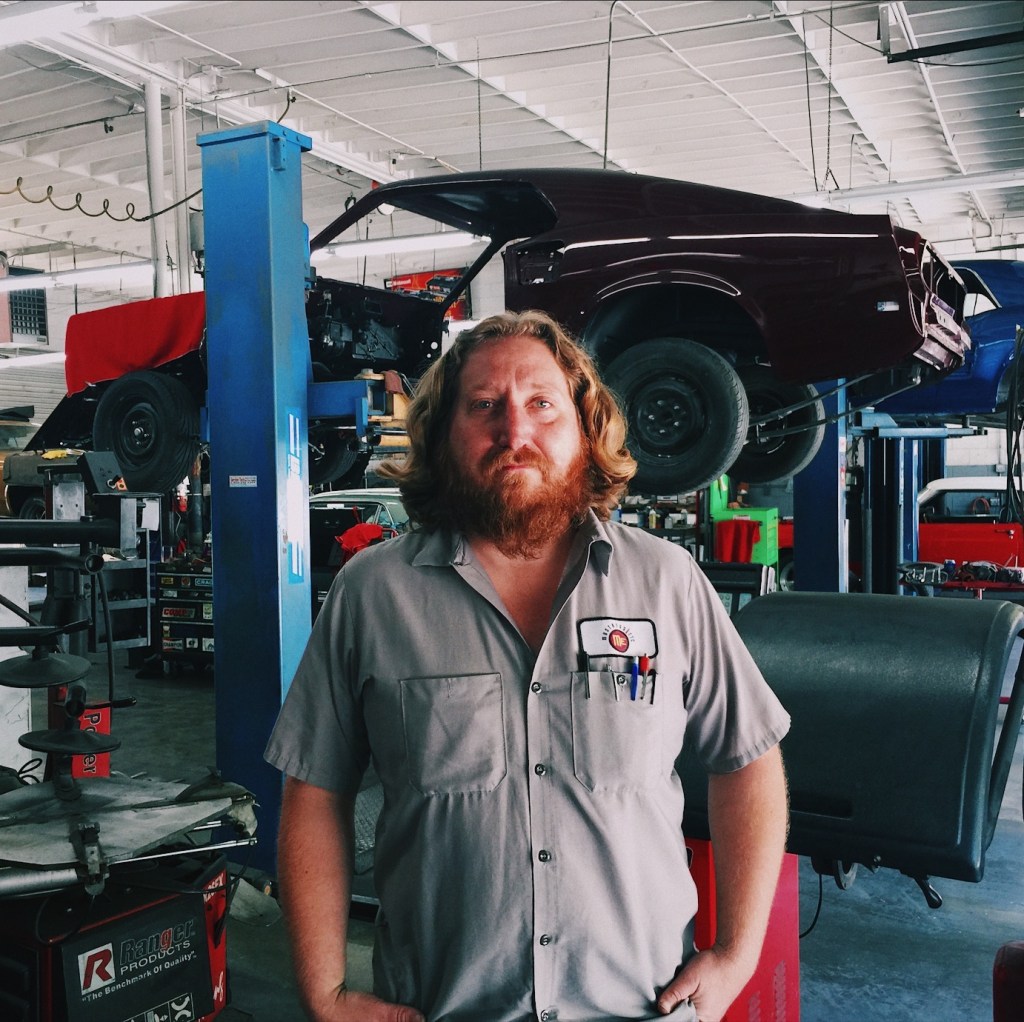
Peter Scholz, cabinet maker, lifelong resident of Van Nuys, owner of Showcase Cabinets, in business since 1987, employing skilled craftsmen who also live in Van Nuys, he has no photo op.

Scott Walton, Uncle Studios

Scott Walton of Uncle Studios, established 1976, legendary recording studio on Kester and Aetna, he may be obliterated, and he has no public support from Ms. Martinez.

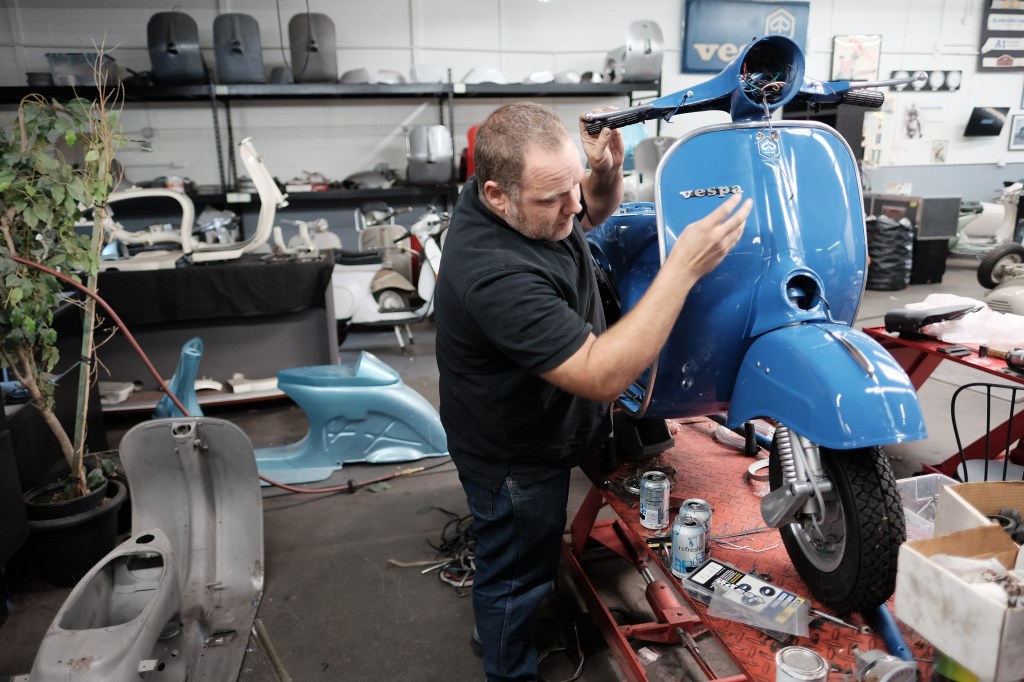
Kristian Storli, Bar Italia Vespa.

Kristian Storli, who restores vintage Vespas and has been evicted from two places on Calvert and Bessemer, and only finally found a home last year on Aetna, only to learn his shop may be wiped off the map. He has no photo op with Ms. Martinez.

Steve Muradyan of BPM Custom Marine

Steve Muradyan of BPM Custom Marine, who supports a wife, two children and two aged parents, rents a facility on Calvert St. (down the street from  MacLeod Ale) and he may lose his 6,000 SF space. Where will he go? There are no affordable, local industrial sites for 50-100 foot long racing boats. Does his plight matter to Ms. Martinez?

Skilled worker at Pashupatina

There are 1500 others who are obscure but working hard, trying to earn a living, doing the right thing here in Van Nuys.

Why is Nury silent on the plight of her most productive and contributing constituents? Why is she sticking her finger up in the wind to see which direction Metro Los Angeles blows rather than fighting for the community she purportedly represents?

Silence is not what people in jeopardy, at risk in losing everything they have worked for, expect from their elected leader.

Pashupatina: Ivan and Daniel Gomez in their shop which they completely renovated with their own hands and money in 2015.
At work at Pashupatina. Programming and designing intricate metals for decorative hardware.
Mustangs, Etc. Est. 1976
Pashupatina.

SaveSave

SaveSave

SaveSaveSaveSave

Option A: An Open Letter to Ms. Sheila Kuehl


“Sheila James Kuehl (born February 9, 1941) is an American politician and former child actor, currently the member of the Los Angeles County Board of Supervisors for the 3rd District. In 1994, she became the first openly gay California legislator and in 1997, she was the first woman to be named Speaker pro Tempore in California.[2] Kuehl most recently served as a Democratic member of the California State Senate, representing the 23rd district in Los Angeles County and parts of southern Ventura County. A former member of the California State Assembly, she was elected to the Senate in 2000 and served until December 2008. She was elected to her supervisorial post in 2014. In her capacity as Supervisor, she also sits on the Metro Board, First 5 LA, and is the County appointee to the South Coast Air Quality Management District.” – Wikipedia


Thursday, October 26, 2017

Metro Los Angeles Board

Re. Metro “Option A” Plan for Light Rail Yard in Van Nuys


Dear Board Members:

As you are aware, Metro Los Angeles is planning to erect a light rail service yard in Van Nuys. “Option A” is one of four sites proposed by the agency.

“Option A” would seize land NE of Kester and Oxnard, along four blocks, covering 33 acres, and demolish 186 buildings straddling the Orange Line Busway. For the purpose of this letter the area will be called “Kesterville.”

We are vehemently opposed to this plan. Here is why:


  • 186 small, family run businesses, employing an estimated 1,500 workers, occupying affordable, mostly rented space would be destroyed.
  • It would leave a gaping hole of emptiness blocks from downtown Van Nuys, obliterating plans for a denser, walkable area.
  • Option A will take out yet another engine of well-paying, highly skilled jobs and products, made in America, employing many immigrants and local residents.
  • It needlessly destroys a successful, close-knit pocket of creativity and commerce, manufacturing, and makers of unique goods and services found nowhere else in Los Angeles.
  • It will reduce fair priced, rentable industrial space in a city starved for it, in an area that is already served by public transport and contains more affordable housing.
  • Option A will subtract from the city what it is seeking to promote region wide: affordability, mobility, economic innovation, small business, local industry, ethnic diversity, and community cohesiveness.
  • The Van Nuys Neighborhood Council opposes Option A.


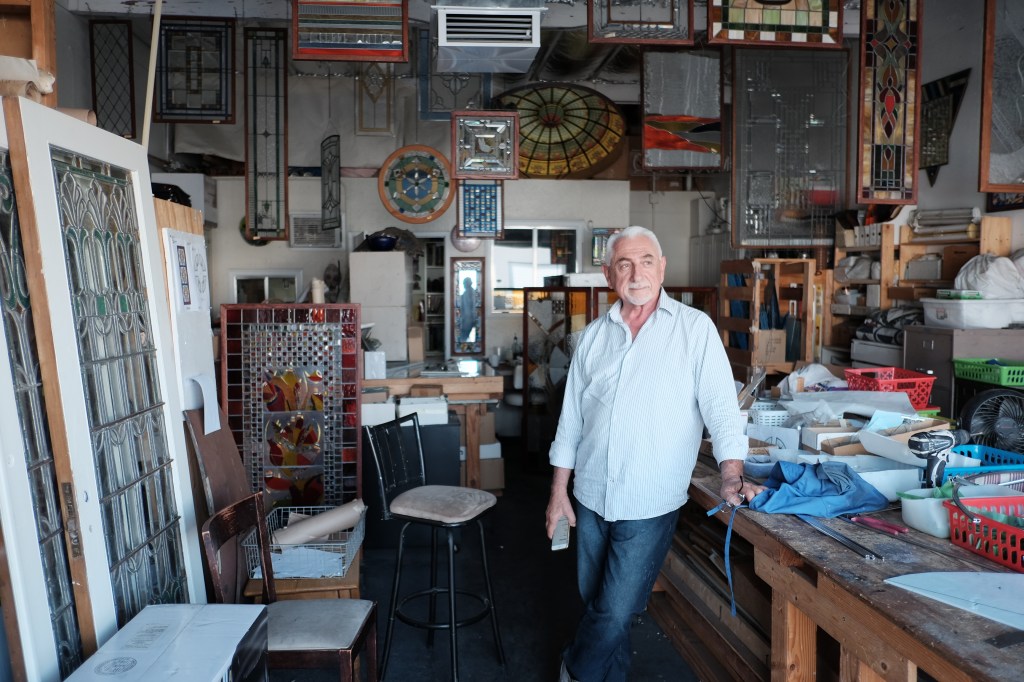
Within this dense, vital district are found a historic music recording studio, a maker of top quality metal hardware utilizing 3-D printers and advanced machinery, several fine custom cabinet builders and their craftsmen, an expert stained glass artisan whose work embellishes homes, churches and historic buildings, a restorer of Vespa motorbikes whose facility is the only one of its kind east of Pennsylvania, and a 20,000 SF shop where vintage Mustangs are serviced and restored. There are painters, carpenters, builders, and experts repairing racing boats, and several professional recording studios for musicians.

MacLeod Ale, a craft brewer of UK style ales, opened in 2014 and has become a highly successful and respected beer maker. They are located on Calvert St. adjacent to the Option A area.

Kesterville is a place of creativity, productivity, sustainability and viability. Organically, without government coercion or corporate ownership, it is an incubator of ideas and products. It has been alive for decades, growing more prosperous and doing well in the heart of the oldest part of the San Fernando Valley.

If Kesterville is destroyed, it will recall the most heartless obliterations in Los Angeles history: the razing of Chavez Ravine for Dodger Stadium, the flattening of historic Bunker Hill for corporate behemoths, and the bulldozing of West Adams for the Santa Monica Freeway.

Dodger Stadium, 1961. On land formerly housing poor Mexican families at Chavez Ravine.
1959:Evictions from Chavez Ravine.
1959: Families are Forcibly Evicted from Chavez Ravine to Make Way for Dodger Stadium.
1935: Boys in Chavez Ravine

Van Nuys has already suffered social, economic and environmental neglect. Why compound the injury by robbing it of yet another burgeoning and blossoming area that could become a new district of small businesses, restaurants, cafes, and even urban, in-fill small housing?

We urge you to respond to this civic emergency by opposing “Option A” and the demolition and eviction of sound businesses that support many thousands of families struggling to survive in a brutal time of economic insecurity.

We are in favor of light rail, and public transportation in general, but ask that it be constructed with greater sensitivity to the community so that it is compatible within the urban landscape and causes the least amount of damage to communities within our city.

Sincerely,

The Business District of “Option A”

Van Nuys, CA

91411


Option A: High Level Cabinet Meeting


Peter Scholz

Los Angeles is the second largest city in the United States, but aspects of it can seem almost small town. A sprawl built of people who came from somewhere else, infamous for its superficiality and temporality, it sometimes, surprisingly, produces individuals, deeply rooted in its soil, who live and work here their whole lives, sometimes in an area a few blocks wide.

Such is the case with Peter Scholz.

He was born in Van Nuys, 53 years ago. He lived at 5812 Lemona Ave in Van Nuys, CA. in a German-American family along with Michaela, his younger sister.

His parents, Heinz and Herlinda, had met in Vaduz, Liechtenstein in 1954. They married, and in 1959, emigrated to Los Angeles, where they found work, as driver and maid, in the Sidman Family estate in Beverly Hills. They stayed there only briefly.

Liechtenstein

Motivated by ambition and hard work, Heinz left his chauffeur job to work as a baker. Meanwhile, they had two kids, Peter and later Michaela.

In 1968, Dad opened Scholz Cabinets on Aetna St. in Van Nuys, a location where he did business for the next 20 or so years.

Peter worked part-time with his father, graduated from Notre Dame High School and then enrolled in Pierce College “because that’s where the best looking girls were.” He attended two years and graduated in 1984.

He continued to work part-time with his dad, closely learning the craft of custom cabinet wood making. He was, in effect, going to school overseas, by learning the German way of doing things here in Van Nuys: precisely, exactly, and diligently with strict attention to quality and integrity.

Yet Peter had other ideas and passions in his head. He was excited by art, by creative people, by wealth and Hollywood, and by that whole rich world, over the hill, where sculptures, luxurious homes, paintings and grandiosity were on display.

Remarkably, he didn’t try and become an actor. He didn’t intern at William Morris. He didn’t affect affectation. He still built cabinets. He used his skills in making them to enter a rarified world.

It was the late 1980s, an era of big shoulders, fat cigars, overpowering perfumes (Giorgio, Poison, Opium), Joan Collins, The Brat Pack, Wall Street, Greed is Good, and the explosion of personalities in the art world.

He wanted, somehow, to take the modest and self-effacing excellence he embodied and make custom cabinets and custom showcase podiums for architects, designers and clients in Beverly Hills, Hancock Park, Brentwood, Pasadena, Malibu and Westwood. He was introduced to notables who became clients, such as Eli Broad, real estate mogul, art collector and philanthropist; and Robert Graham (1938-2008), sculptor, born in Mexico, married to actress Angelica Huston.

Jean Michel Basquiat (1960-88)
Eli and Edyth Broad at home with Robert Rauschenberg

Still only in his early 20s, he started Showcase Cabinets, a name reflecting that his creations, his products, were showcases (custom pedestals and bases) to display art, objects, sculptures.

In 1984, at age 20, he married ( eventually divorcing after 20 years), had two kids, Niko and Jessica, and he has two granddaughters as well.

Annie, his girlfriend of eight years, also works in the shop. They live with their son Erik, 14, in a 1950s modern house near Valley College which they gutted and remodeled. It has white walls, a backyard pool, orange front door, and solar shades. The house is filled with a cacophony of eccentric and colorful artwork, sculpture, bright colored chairs and, most imaginatively, a graffiti painted bathroom that seems inspired by the interior of a NYC subway car, circa 1985.

He seems to have started everything, work, marriage, fatherhood, at an early age. In 2009, he also bought the building where he now headquarters Showcase Cabinets, Inc. He and Annie travel, often to her home country, Bulgaria, where they use her family house as a base point to explore Europe, including Greece, Italy and Germany and everything two hours or less from that point.

Annie and Peter

He employees some 10 people in his bright, 4,200 SF, well-run shop. Last year, they invested in a $30,000 Striebig Compact Vertical Panel Saw, made in Switzerland, which is accurate to 1/100 of a millimeter or 0.0003937008 of an inch.

His business, which is very healthy, is all word-of-mouth. In an era of social media, of pretending to be successful by posting doctored images and endorsing products, Peter earns his money in the real world of tangible, material substances made out of trees. There is no need for Photoshop when you rub your hands over a smoothly buffed, 30 foot long, walnut bookcase.

His location, 20 minutes from Beverly Hills, and within easy distance of the 405 and the 101, is ideal for clients, designers and architects who often want to drop by the shop to choose finishes, to see the craftsmen at work, to witness what they are paying top dollar for. And Peter welcomes them. He has everything to show and nothing to hide.

His raw materials come predominately from Valencia Lumber in Lake Balboa and Phillips Plywood in Pacoima. He also sends work to GL Veneer, Inc. in Huntington Park. Showcase gets the orders and this is passed up and down the economic food chain.

He deals with stress through kickboxing, the gym, and yoga.

He has some very nice bottles of Japanese whiskies lining an office shelf, in a room built of concrete block, anodized steel walls, and a one-way detective style mirror to keep an eye on the shop floor.

The wall facing his long desk is decorated with large format photographs of drug busts, tattooed gangsters, guns and illicit substances which his son-in-law, a cop, shot from an Iphone.

There is an air of bad boy badness in Peter Scholz but it seems to be more artistic expression than real life activity. But one would not care to incite him. He acts formidable…. and it doesn’t look like an act. If he were an actor, he could play a felon or a cop convincingly. He exudes menace and kindness equally.

Because he is happy in his life and work he projects his good fortune onto Los Angeles. “There is no better place to live,” he said, without irony.


Option A: Metro Plans to Demolish 33 Acres of Industry for One Big Rail Yard.


Ed Kirakosian, Peter Scholz, Ivan Gomez, Daniel Gomez.

Hanging over all this is the “Option A” scheme by Metro Los Angeles which might condemn Peter’s shop and 185 other small businesses, covering 33 acres, in an area north of Oxnard to Calvert, from Kester east to Cedros. This is ostensibly for a future light rail maintenance yard.

Opposition to the scheme immediately sprung up and Peter produced big yellow banners against Option A now hung all over the area.

Boldly, by instinct, in his customary manner, Peter marshaled his creative connections to hire artist Guy Ellis (#dcypher_dtrcbs) who painted a long mural on the exterior wall of Showcase. It is in the style of 1930s social realist protest. It is powerful and jarring, screaming, in deathly ashen gray, and living bright yellow, a cry against the potential destruction of the area.

If Option A is withdrawn, and the area is permitted to continue existing, Peter has plans to keep the mural up on his building, and even more plans to revitalize the district with the help of his neighbors, friends, investors, architects and innovative developers.

Showcase Cabinets, Inc. and the life and work of Peter Scholz, is yet another reason to drop the idea that wiping out a section of Van Nuys, and scattering her most creative and productive class, is progress at its finest.

#   #   #   #


SaveSave

Option A: The Vespa Whisperer.


After WWII, Italy was poor, the roads were torn up by war, and the new democratically elected government was prohibited to build military hardware. Industrial revitalization was a must. So innovative militarists turned to consumer products to employ workers and restart the economy.

The Vespa (“Wasp” in Italian) grew out of this era.

It was designed and built by aerospace engineers to satisfy postwar transportation needs economically. They created a scooter, with all the mechanical parts enclosed, and a tall frontal splashguard, features which appealed to Italian men in suits and women in dresses. There was no grease to splatter on well-tailored woolens, and the versatile, small, well-engineered bike travelled well on narrow, pockmarked streets.

Piaggio & Co. introduced it and still owns and manufactures Vespa.

After its debut in 1946, it sold slowly, if solidly.

Then “Roman Holiday” (1952) starring Gregory Peck and Audrey Hepburn, filmed on location in Rome, skyrocketed the Vespa’s popularity. Suddenly 100,000 a year were selling. The popularity of films such as “La Dolce Vita” (1960) and the neo-realist Italian cinema of the 50s and 60s made all things Italian seem fast, young and glamorous. The mid 1960s Mod Subculture in Britain, dudes in Ben Sherman shirts and skinny ties and tapered trousers, furthered pushed the Vespa into pop culture.

The Mods, Britain, mid-1960s
In the US, even Sears imported Vespas and renamed them Cruiseaires. By 1981, the bike had lost popularity due to environmental laws. Yet again, in the early 2000s, Vespa restarted its American sales effort, opening its first boutique on Ventura Boulevard in Sherman Oaks, CA hoping to capitalize on our four CA freedoms: sunshine, mobility, novelty, and fun.

According to Wikipedia, there have been 34 different versions of the Vespa. Today, five series are in production: the classic manual transmission PX and the modern CVT transmission S, LX, GT, and GTS.


About 4 miles north of the Vespa retail store, at an unmarked building at 14819 Aetna St. in Van Nuys, Kristian Storli, 39 is quietly, diligently and artfully restoring Vespas, at his company, Bar Italia Classics, established 2006. According to Mr. Storli, it is the only shop of its type from here to Pennsylvania.

You pass through a gate into a courtyard packed with tools and bikes, all under some sort of repair, but then you enter a stylish, air-cooled, gray-painted, 3600 SF shop, unlike any you’ve ever been to, with vintage illustrations, glass shelves filled with awards and medals, antique framed advertising for Vespas, and a very large movie poster of Angie Dickinson atop a Vespa in “Jessica” (1962) directed by Jean Negulesco. 

Sicilian women plan to rid their village of a sexy American midwife (Angie Dickinson) by making her job obsolete.”

Angie Dickinson, 1962.

Obsolete is what haunts Mr. Storli, a stocky, blue-eyed, mechanical minded man of Norwegian descent who went to school to study musical composition, and ended up investing his life savings into his Vespa passion. He has had three shops in the last ten years: first on Calvert, then Bessemer, and now Aetna.

C, B, A….. Ominously for him there is no letter preceding A.

Each time, rents and leases ended. And this time, he fears, he may become redundant by Option A, if his shop, and 185 others are demolished by Metro Los Angeles for a 33-acre rail service yard.

Nevertheless, there is a rhythmic beat and output of bikes at the shop. Many restorations take 12-18 months and require each machine:


  • To be disassembled and inspected,
  • Stripped of old paint on engine and body parts,
  • Hardware sent out for plating,
  • Reassembling the machine to peak condition in both function and appearance.
  • Full payments are dependent upon delivery of the finished product to its owner.

It is a painstaking job, only undertaken by devotees and acolytes in the cult of Vespa, but the result, as one can see in a finished product, is the absolutely breathtaking beauty of the timeless and completely Italian product. The smooth and shiny gracefulness of a finished bike exudes sensuality and speed.

One day a few weeks back, working inside his dream factory, Mr. Storli was jolted with a bomb of an announcement: He might have to move to make way for a 33-acre demolition project bulldozing 186 businesses for a future light rail maintenance yard operated by Metro Los Angeles.

He had only moved into his third, and presumably final shop, this year, 2017. He lost over a year of income when he had to move the second time. Now he was threatened with new economic ruin, not by a downturn in business, but by an aggressive action of a government agency using Eminent Domain powers to evict lawful enterprises.

He told me that he is deflated, worried, and panicked. He has started, grudgingly, to look for other affordable space in Los Angeles. But the rental vacancy rate for industrial property is only one percent. And the competition is marijuana growers paying three times the asking rate to landlords.

To lose so many businesses is sad.

But it is doubly tragic to see a completely original and unique craftsman, Mr. Storli, thrown out of his space. It is one more step in the homogenization of Los Angeles, where shortsighted bureaucrats fail to protect unique and skillfully constructed products and services when they are operated by small businesses. But every corner store is CVS or Starbucks.

We need excellent public transport.

But grotesquely destructive and obliterating plans to build a light rail yard through viable and productive industrial tracts only harms Los Angeles -by destroying the real and the good -by promising the imaginary and the perfect.