Erwin at Sepulveda, Metro Orange Line Parking Lot.
When the Metro Orange Line opened in October 2005, it was a stunningly different type of transport system which combined a bus only road with a landscaped bike path that ran alongside. It cost about $325 million.
It connected North Hollywood with Woodland Hills, and eventually carried over 30,000 riders a day. Since 2015, due to Uber and Lyft, ridership has fallen to about 22,000 a day.
Hundreds of homeless encampments have sprung up on the bike trail.
But Metro forges ahead!
There are plans to create gated crossings at intersections to speed up bus travel. There are long-term ideas to convert the entire system to light rail and also build elevated bridges over Van Nuys Boulevard and Sepulveda.
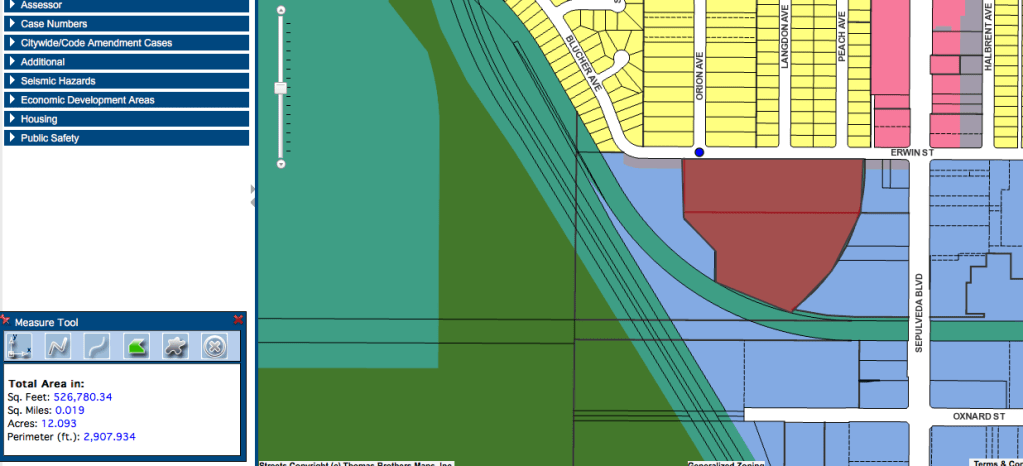
In Van Nuys, at Sepulveda and Erwin (north of Oxnard), there is a car parking lot for the Orange Line Metro riders. It is over 526,000 square feet, paved in asphalt, planted with trees and shrubs, and comprises over 12 acres.
Today, over 2/3 of it is used as an outdoor storage lot for Keyes Auto.
Red area is the parking lot of the Orange Line. It is now used predominately to store autos from Keyes Audi. (Source: ZIMAS)
The Sepuvleda/Erwin site is “Exhibit A” in the DNA of Los Angeles, because the right thing to do would be constructing 10-20 story apartments along the public transit route and creating incentives for residents to ride buses, take trains and use bikes for daily commuting.
Singapore Housing Estate with parks and nearby public transportation.
If LA were Singapore, Tokyo or Toronto we would do that.
Instead our city languishes and fights and wishes to preserve a 1950s idea of everyone going somewhere by car.
And thousands of new cars are lovingly housed on land paid for by public taxes which should be used as housing and parks for the greater good of this city.
Nothing beneficial for Los Angeles ever happens overnight. It takes years of planning and legal battles, for example, to build assisted or low cost housing, or parks.
One can imagine the fury and fear that might arise if a 12- acre park and housing development were planned on this parking lot ranch.
Imaginery view from Sepulveda and Erwin looking west. In reality, Singapore.
What, by miracle of God, might be possible here in terms of a park or high-rise group of apartments, placed near the bus line, with a buffer of trees, water features, and gardens between the new residential city and the single-family houses to the north of the site?
Yet here, alongside a public transit route, taxpayer funded Metro Los Angeles chooses to rent its land for an auto dealership. How does that benefit the surrounding residents?
For people who are obsessed with traffic, imagine that thousands of vehicles are parked here ready to be turned on and put onto the roads. How does that feel Van Nuys?
If the new planned housing estate were policed, regulated, secure, and it also provided a new park wouldn’t that be an improvement?
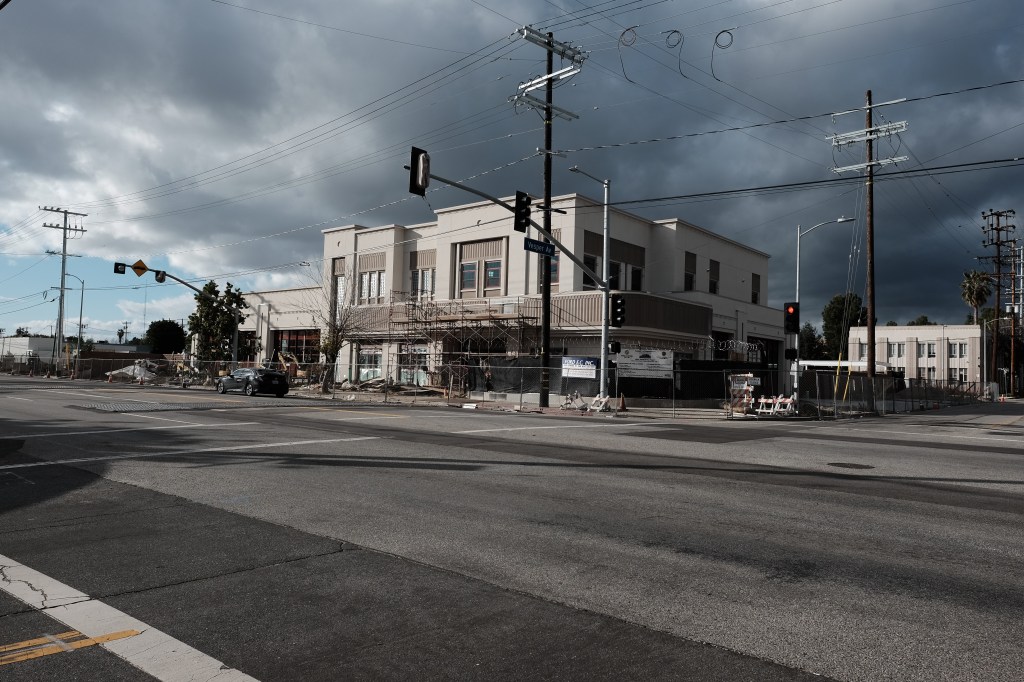
Long fought, both for and against, a new No. 39 fire station is nearing completion at 14615 Oxnard at Vesper, west of Van Nuys Boulevard.
It replaces a smaller, historic one on Sylvan Street across from the Valley Municipal Building. The older one is from the 1930s, and was a fine looking structure in the Art Deco design of that era. Perhaps a new brewery can move in there when the fire fighting folks vacate.
The new one, picks again from the era of the 1930s, but also borrows from nearby: to an obscure but beautifully designed 1938 structure on Aetna and Vesper, a crisp, elegant, dignified building that once belonged to the DWP.
The new $20 million dollar fire station, an 18,533-square-foot facility, was vigorously objected to, in lawsuits and protests, by residents who live south of the project. They feared noise from the fire engines, and a degradation of housing values.
Just a few years before, this area of Van Nuys emigrated in name to Sherman Oaks, and home prices shot upwards.
Lost in the din of rebellion was the very low-rent characteristics of the area along Oxnard St. which is a gathering place for homeless people, undocumented day workers and also abuts the over lit and monstrously illuminated car dealerships on Van Nuys Boulevard. If housing values were not endangered by these facts on the ground, the homeowners believed the proposed fire station would surely be even more detrimental.
So now, along the south side of Oxnard Street, a new, very tall cinderblock noise wall (future outdoor urinal?) shields homes from the upcoming engine company sirens. A pedestrian crossing, along with new sidewalks and road improvements upgrades the area.
Modern fire equipment trucks require bigger storage areas, and the old fire station on Sylvan only allowed trucks to back into the station. The new one has garages that the trucks can drive forward into which will add both speed and safety to the operation of mobile equipment.
The only egregiously aesthetic missteps in the new fire station are the cheap looking, burgundy, double-hung windows that look like they were ordered from a Chinese supplier on Amazon Prime. They are squat and graceless and ruin the rhythm and vertical linearity of the design.
Architecturally, the station takes its place in the old tradition of civic grandeur when buildings such as libraries, police stations, and schools were dignified and placed squarely on the street.
For almost twenty years I’ve made a home in Van Nuys, CA.
And since 2006, I have published this blog: walking, photographing and writing about a peculiarly blessed, and unjustly afflicted section of Los Angeles.
Here are some 11 ideas that I am proposing to better Van Nuys, especially Van Nuys Boulevard:
Kjellandersjoberg_salabacke_view-courtyard.
Create Walkable, Garden Court Housing
We need, desperately, little, affordable, small housing units that share common garden areas. These were built all over Los Angeles up until the 1960s when dingbats took over with their car-centric designs.
Such garden courts would be most effective within walking distance of major bus and light rail streets.
LAPD Koban (Japanese Style) booth at The Grove.
Relocate the Van Nuys LAPD to Van Nuys Boulevard
The Van Nuys LAPD is buried deep behind the Erwin Street Mall, way back from Van Nuys Boulevard. What this accomplishes is removing the police from active interaction with pedestrians, shops and the action, good and bad, on Van Nuys Boulevard. Putting the police station back on the boulevard where it belongs would send a message to the community that law enforcement is on active duty: watching and patrolling, enforcing the law.
Reduce the Size of Wide Streets and Plant Trees
When drivers see five lanes of road in front of them, but every single lane is packed with cars, or conversely, when there are wide-open lanes with few vehicles, both scenarios create frustration. The speeding, the road rage, the frustration of having so much space for cars and hardly any for bicycles or light rail, has caused the decay and decline of Van Nuys Boulevard, as well as Victory.
The heating up of our climate, the constant hot weather, is creating a meltdown of mood, with more anger, more violence and more irrationality. Trees would help cool down the street and provide shade. Narrower streets, lined with cafes, pedestrians, activity, would build a sense of community decency.
58277232 – singapore – march 18, 2016 : maxwell food center is the maxwell road hawker food centre is well known for its affordable, tasty and huge variety of local hawker food.
Hawker Centers Like Singapore
Singapore has “Hawker Centers” which are groups of different food merchants housed under one roof. A Singaporean can get off a train and within a few feet find delicious, cheap food in clean areas which are protected from the elements but still open air.
By contrast, Los Angeles has nothing like this other than Grand Central Market which is not next to a train stop. Van Nuys Boulevard would greatly benefit from one, large, enclosed, regulated building full of food sellers. This would bring the pushcart under control and provide a clean, reliable, fun, sociable place to eat and meet.
Billboard: Sepulveda at Victory
Give Commercial Buildings Without Billboards Tax Breaks
Billboards are so ubiquitous that we have wearily come to adjust our eyes to them. Yet their ugliness, their cheap, desecrating, looming presence brings down property values even while providing landlords with some income.
On every corner where there is a mini-mall with a billboard, the property owner who removes the signs should get a tax benefit because they are helping the community improve aesthetically.
A Monument When Entering Van Nuys
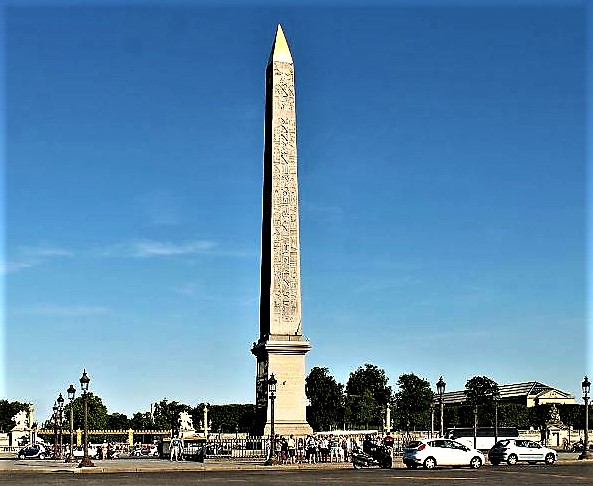
Why is there no marker, like an arch, an obelisk, or a gate when one enters Van Nuys Bl. at Oxnard Street?
Imagine a Washington Monument type obelisk in the center of Van Nuys Boulevard to make evident, proudly, commemoratively and architecturally, the fact that Van Nuys is a historic and proud area of Los Angeles deserving its own marker of identity and purpose.
Seen for miles, an obelisk perhaps 150 feet tall, should stand in the center of the boulevard, a booster of morale and an instigator of commerce and civic pride.
Santa Barbara, CA.
Pick a Unifying Style and Stick With it.
Paris, Santa Barbara, Charleston, Savannah: certain cities have an archetype of architecture which provides the base for how a city is constructed and designed.
In recent years, we have seen the onslaught of non-conforming, strange, computer-generated frivolities in architecture such as those which have marred and destroyed the beauty of London, England.
Yes, it is great to have one Disney Hall, but a street of melting blobs, narcissistic designs, starving-for-attention buildings, does not engender a district wide identity.
Strange Shaped Building: Vienna, Austria.
A classical Van Nuys would actually be revolutionary because it goes against so much architectural dogma these days and restores the primacy of community standards and group identity.
Tear Up the Parking Lots and Plant Orange Groves
One of the tragedies of Van Nuys since 1945, indeed of all of Southern California, has been the loss of agriculture.
Once we all lived near local fruit groves, and their soothing, healthful, beneficial trees provided not only big business for the state, but gave a mythical, blessed countenance to Los Angeles which was exported around the world.
There are hundreds of acres of unused asphalt sitting behind empty stores along Van Nuys Boulevard which could be torn up and planted with citrus trees.
Perhaps an innovative architect could design housing that is combined with citrus groves?
Kester and Aetna
Kesterville
This blog has actively supported the preservation of an area of 33 acres, containing light industries, near the corner of Kester and Oxnard.
“Option A” would have destroyed 58 buildings, 186 businesses and thousands of jobs in a walkable, affordable, diverse district and replaced it with an open air, light rail service yard.
It would have been disastrous for the revitalization of Van Nuys. If it had succeeded it might have been the final nail in Van Nuys’ coffin.
Instead, happily, the Metro Board, with the support of Councilwoman Nury Martinez and others, objected to the Option A proposal. “Option B” was chosen, near the already existing Metrolink train tracks, thus preserving the Kesterville area.
So now is the time to put Kesterville on the map and make it a harmonious, vibrant destination of little apartments, stores, restaurants, cafes, all along the public transit corridor next to the Orange Line.
Pashupatina: Ivan and Daniel Gomez in their shop which they completely renovated with their own hands and money in 2015.
Create Gateway Signs to Welcome People to an Area. Kesterville could use one of these!
9 Houses and 24 bioclimatic collective housing units by Fleury, Benjamin / Photo: Emmanuelle Blanc
Paris-Housing-by-Vous-Etes-Ici
9 Houses and 24 bioclimatic collective housing units by Fleury, Benjamin / Photo: Emmanuelle Blanc
Remove Onerous and Expensive Regulations on Housing
Builders are required, by law, to do so many expensive things that they are dissuaded from building.
One example is parking. The average building must spend 30-40% of its construction costs to provide space for vehicles.
Thus we have the paradox: not enough housing. And the housing we have becomes more expensive because there is not enough of it to bring prices down. And each rentable unit only becomes affordable if four working adults, with four vehicles, split the rent!
So now we have less housing, more cars, more cars parked on side-streets because we have, by law, made the construction of apartments so expensive.
Remove parking minimums and stop catering to the car as if it were the ONLY important thing in city planning.If a building were built with 200 apartments and only 100 parking spaces, would it really harm Van Nuys?
Is NYC harmed by scarcity of parking?
Homeless on Aetna St. Feb. 2016
Regulate Homelessness
California is often the destination for anyone living unhappily in any part of the world. Thus our state, because of its warm weather, attracts people coming here to escape.
Van Nuys, long considered the unofficial dumping ground of Los Angeles, is now under onslaught from homeless men and women sleeping everywhere, on bus benches, under boxes and tents, behind buildings and in RVs parked along the street.
We need to regulate where people can sleep by providing safe, clean, sanitary areas, to park RVs and where people can wash themselves, and get help so they do not have to sleep outside.
To talk about this is not to attack people who are in need. Rather, it is to assign us the proper legal and moral task of ending homelessness by not permitting it to exist in the first place.
This blog has written 13 other times on “Option A”, a Metro LA proposal by the public transportation agency to wipe out 33 acres of industry in Van Nuys, near the junction of Oxnard and Kester, and replace it with a light rail service yard. It would destroy 1,000 jobs, displace 186 businesses and flatten 58 buildings.
Though the scheme has been public knowledge since September 2017, property owners, workers, renters and the neighbors near here still stand on thin ice, awaiting official June 2018 word whether this whole district is sentenced to death, or if another site (B, C, or D), near the Metrolink tracks up on Raymer Street will be chosen instead.
A photo walk around here yesterday, along Oxnard, Aetna, Bessemer and Calvert, to document some buildings that may be gone in a few years, was also an opportunity to show that this area has great potential beyond its current light industrial use.
In gravel yards, on cracked and broken asphalt, under decaying wood, on treeless, depopulated and narrow roads, there are ingredients for a nice urban area of some new housing, some new cafes, some places where trees, lighting, discreet signage and pavement of cobblestones could bring an infusion of 24/7, urban, walkable, bikeable activity to the neighborhood.
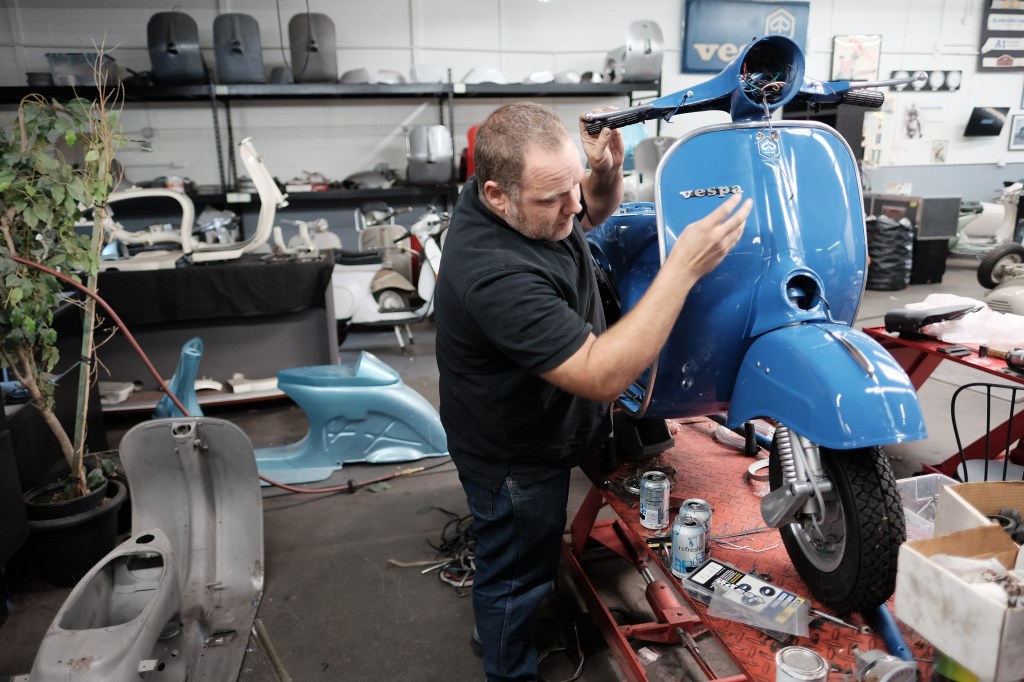
It is already an incubator of creativity with makers of exquisite decorative hardware, superb custom cabinetry, music recording studios, Vespa and Mustang restorers, stained glass makers, welders, boat builders, and kitchen designers. These businesses, incidentally, are staffed by mostly local owners and workers, many of whom are but minutes away, or take the bus or even walk to work. Rents are currently affordable, often 50 cents, $1 or $2 a square foot.
MacLeod Ale, maker of fine British style beers, since 2014, is on the north side of Calvert and is not threatened with demolition but its existence and success is a testament to the potential for innovation in this area.
Ironically, the very wonderful addition of a landscaped bike path and the Metro Orange Line bus in 2005 is now threatening the area because of future conversion to a light rail system. Yet the “Option A” district is thriving, even if it is shabby in places, because it is a work zone of skilled, employed, productive people.
Politicians who often talk ad nauseum about “diversity” should come here with mouths closed and observe men and women: Mexican, Armenian, Norwegian, German, Persian, Guatemalan, Salvadoran, Irish, Scottish, Israeli-Americans, all the hyphenations of ethnicity and gender, who don’t care about where anyone came from, but only about where they are going in life.
This is Los Angeles. This is diversity. This is economic prosperity. This is within walking distance of “downtown Van Nuys.”
Yet short-sighted officials, bureaucratic ignoramuses with grandiose titles, flush with public money, would consider wiping out the very type of neighborhood whose qualities are needed, wanted and venerated.
Option A must not happen. This is what it looks like now.
Imagine what it could look like with the right, guiding hands of investment, preservation, planning and protection.
The 33-acre area extends from Oxnard St on the south to Calvert St on the north, Kester St. on the west and Cedros on the east. In this area, rows of shops straddling the Orange Line will be extinguished by 2020.
Light rail is coming, the trains need a place to freshen up, and here is their proposed outdoor spa.
The engine of public relations is roaring. Mayor Garcetti needs to remake LA for the 2028 Olympics. He has gotten the city into full throttle prepping for it.
It is comforting to think that property owners will be reimbursed for their buildings, that businesses “can relocate”, that the city will take care of those who pay taxes, make local products, and employ hundreds.
But most of these lawful, industrious, innovative companies only rent space. Yes, they are only renters, and they face the dim, depressing, scary prospect of becoming economic refugees, chased out by their own local government. Some of these men and women have fled Iran, Armenia, Guatemala, El Salvador, and Mexico, places where war, violence, corruption, drugs and religious persecution destroyed lives and families.
Others were born in Van Nuys, those blue-eyed, blonde kids who went to Notre Dame High School and grew up proud Angelenos, driving around the San Fernando Valley, eating burgers, going to the beach, dreaming of making a good living doing something independently with their hands.
They all expressed shame, disappointment, anger, and betrayal against Councilwoman Nury Martinez and the Metro Los Angeles board for an action of insurmountable cruelty: pulling the rug out from profitable enterprises and turning bright prospects into dark.
Scott Walton, 55, whose family purchased the business Uncle Studios in 1979, said, “I think I’d sell my house and leave L.A. if this happens. I would give up on this city in a blind second.” His mother is ill and his sister has cancer. His studio now faces a possible death sentence.
What follows below are profiles of three men, who come from very different industries, but are all under the same threat.
Bullied at the Boatyard: Steve Muradyan
Steve Muradyan
At BPM Custom Marine on Calvert St., Steve Muradyan, 46, services and stores high performance boats at a rented facility. Here are dozens of racing craft costing from $500,000-$1 million, owned by wealthy people in Marina Del Rey and Malibu. The boats winter in Van Nuys, where they are expertly detailed, inside and out.
Mr. Muradyan, a short, broad-shouldered, sunburned man with burning rage, threw up his hands at the illogic of his situation. He takes care of his wife, two children, and aging parents. He pays 98 cents a square foot in 5,000 SF and he cannot fathom where he might go next. A wide driveway accommodates the 50 and 70-foot long boats. And he can work late into the night drilling and towing, without disturbing others.
He once ran an auto repair shop on Oxnard. Later he had a towing service. Then he started his boat business in 2003. He had raced boats as a young man, and this was part of his experience and his passion. Why not?
He deals with all the daily stress of insurance, taxes, payroll, equipment breakdowns, deadlines, customer demands, finding parts, servicing the big craft. He worries about his business, his family, his income. And now this impending doom, dropped from the skies by Metro. He prays it will not happen to him. He cannot fathom losing it all, again.
Art and Soul in Stained Glass: Simon Simonian
Over at Progressive Art Stained Glass Studio, 70-year-old architect and craftsman Simon Simonian rents a small unit on Aetna where he designs and molds exquisite stained glass for expensive homes, churches, synagogues and historic buildings.
He knows all the local businesses, and often he sends customers to the cabinetmakers and metal honers steps away. There is true collaboration between the artisans here.
A kind, creative man with a penetrating gaze, Mr. Simonian, with his wife and young son, came from Tehran in 1978 to study in Southern California and escape the impending revolution in Iran. He speaks Farsi, English and Armenian.
He is an Armenian Christian and his family was prosperous and made wine. His father had escaped the turmoil in Armenia when the Communists took over after WWII, which was also preceded by the massacre by Turkey of 1.5 million. His people have suffered killing, expulsion, persecution, and the loss of dignity in every decade of the 20th Century.
The Simonian Winery was doing well in Iran in 1979. And then the Islamists came to power and burned it down. By that time Simon and his wife and son were in Southern California. He begged his father to come but the old man stayed in Tehran and died five years later.
Tenacity, survival, and intelligence are in his genes.
“I love what I do. I have loyal customers. The location is excellent. I know all my neighbors here. I want to stay rooted. I don’t want to have to start all over again. Where can I find space like this? Where will I go?” he asks with the weary experience of a man who has had to find another way to proceed.
The Man from Uncle: Scott Walton
55-year-old Scott Walton looks every bit the rocker who runs the recording studio. He is longhaired and lanky. With a touch of agitation and glee, he slips in and out of the dark, windowless rehearsal spaces of Uncle Studios, where he has worked since 1979.
His father, with foresight, loaned $50,000 to his two sons, Mark, 20, and Scott, 17 to buy a recording studio. Here the boys hosted thousands of aspiring musicians including Devo, The Eurythmics, Weird Al Yankovic, Weather Report, Yes, Black Light Syndrome, No Effects, The Dickies, Stray Cats, and Nancy Sinatra.
When Scott first started he didn’t play any music. He learned keyboard, classical piano and he also sings. He went on the road, for a time, in the 1980s, playing keyboard for Weird Al Yankovic. He also plays in Billy Sherwood’s (“Yes”) current band.
Despite the proximity to fame, talent, money and legend, Uncle Studios is still a rental space where young and old, rich and poor, pay by the hour to record and play music. Something in the old wood and stucco buildings possesses a warm, acoustic richness. Music sounds soulful, real and alive here, unencumbered by the digital plasticity of modern recordings.
But Scott Walton is also a renter. He does not own the building bearing his business name. If his structure is obliterated, he will lose the very foundation of his life, his income, and his daily purpose. He will become an American Refugee in the city of his birth.
This is only a sampling of the suffering that will commence if Metro-Martinez allows it. The Marijuana onslaught is also looming.
On the horizon, Los Angeles is becoming dangerously inhospitable to any small business that is not cannabis. Growers are paying three times the asking rental price to set up indoor pot farms for their noxious and numbing substance. There may come a time when the only industry left in this city is marijuana.
The new refugees are small craftsmen running legitimate enterprises. Some may not believe it. But I heard it and saw it on Aetna, Bessemer, and Calvert Streets.
The pain is real, the fear is omnipresent and the situation is dire.
From Oxnard north to Calvert, from Kester to Cedros, in Van Nuys, Metro Los Angeles is proposing a 33-acre light rail repair yard.
“Option A” will require the eviction, demolition and clearing of some hundred or more businesses that hug the Orange Line industrial area.
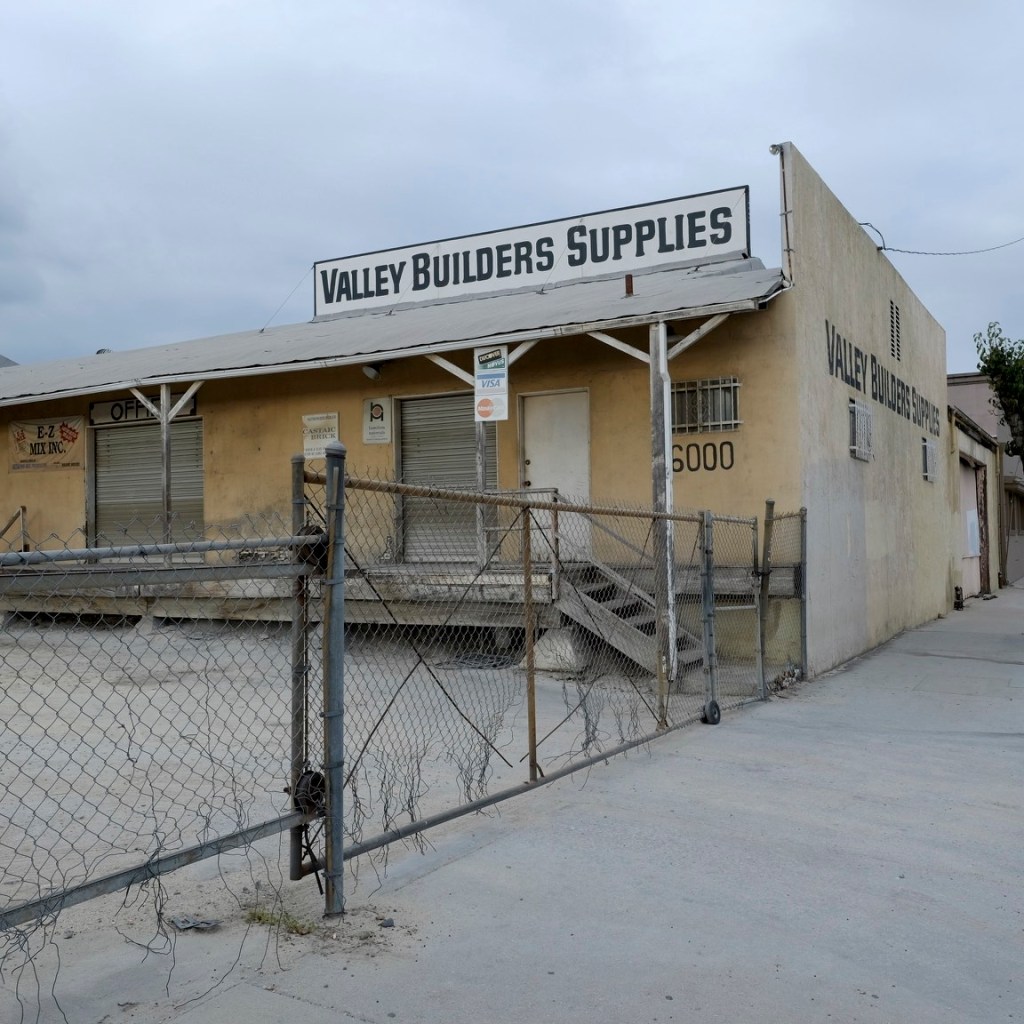
To the casual passerby, this area looks like a shabby district of old warehouses, with a sand gravel yard, a liquor store where homeless buy cans of beer, and used tires are fixed onto old cars at cheap prices. Wooden utility wires, car repair shops, and narrow Kester Street, along with a teaming population of Hispanics, affix in the elite, ruling-class imagination some place below dignity.
The real, happier, optimistic story is hidden away……
Behind the facades, technological, artistic, industrious, innovative and modern small businesses are building fine cabinetry, fashioning decorative metal hardware, restoring vintage motorbikes, making stained glass windows for churches and homes, recording music, and employing hundreds of people well-paid and well-skilled.
And they are all facing a death sentence whose judge, jury and law is Metro Los Angeles.
Pashupatina Owner Ivan Gomez
Kristian Stroll, Owner: Bar Italia Vespa
Ivan Gomez chatting with Kristian Storli inside Bar Italia Vespa. Both men have companies under demolition threat.
Hardware Built by Skilled Craftsmen at Pashupatina
Showcase Cabinet Owner Peter Scholz
The real estate here is cheaper, so Metro, in its billion-dollar “Measure M” wisdom, has fastened onto it, insisting that the destruction of many lives, companies and buildings will “improve” Van Nuys by permitting a site where trains from the yet-to-be-built light rail can be repaired.
Imagine 33-acres of train tracks and floodlights, fences, security personnel, closed circuit cameras, and penitentiary inspired gravel and stone paved grounds, acres of track, sitting just steps from Van Nuys Boulevard for the next 100 years?
What will result from the gutting out of yet another piece of Van Nuys? Just look at Van Nuys Boulevard and surrounding streets where every generation since the 1950s has insisted the mass clearance of homes, buildings and small structures is for the “improvement” of Van Nuys.
Widening of Victory Blvd. 1955 Tree Removal.
When the Civic Center of Van Nuys was built in the early 1960s, hundreds of homes were knocked down. Today the area is a Martian Moonscape of emptiness propped up by court buildings and occasional law enforcement.
When Victory Boulevard and Van Nuys Boulevard were widened in the early 1950s, commerce was lost, walkability and desirability were thrown away. The result is an ugly speedway of pawn shops and urine scented sidewalks.
And if some hundred businesses are cleared away just blocks from Van Nuys Boulevard to make way for a fenced in, electrified, floodlit prison yard for light rail, what positive affect will this have on the promise of revival for Van Nuys?
Simon Simonian, owner, artist at Progressive Art Stained Glass Studio
New $30,000, Swiss Made, Vertical Panel Saw at Showcase.
Newly renovated industrial headquarters of Pashupatina where fine decorative metals are fashioned for installation in homes and businesses.
Pashupatina owner Ivan Gomez presents his creations to members of the Valley Economic Alliance.
Ed Kirakosian, Peter Scholz, Annie Vatov and Ivan Gomez meet to discuss the fight to preserve their businesses from eminent domain clearance.
The pristine and light-filled interior of Pasupatina.
Skilled craftsman at work at Showcase Cabinets.
Peter Scholz, owner, Showcase Cabinets, discusses work with a craftsman.
Pashupatina, a place where pride is evident.
You can be sure that the politicians and agencies will promise the world to Van Nuys. Just as a decade ago Mayor Villaraigosa gave us “A Million Trees” and only a few years ago current Mayor Garcetti lauded “Great Streets” to further the improvement of our urban boulevards. A walk along vacant shops on treeless Victory Boulevard from Kester to Van Nuys Boulevard is evidence of these old promises.
A great city needs small businesses. A great city needs walkable streets. A great city needs to fight for the survival of unique places connected by history, places organic to the area in which they are born.
Option A is yet another death knell for Van Nuys, another scheme from the outside of Van Nuys, dreamed up by bureaucrats flush with cash, who think they know best how to build in Los Angeles.
You must be logged in to post a comment.