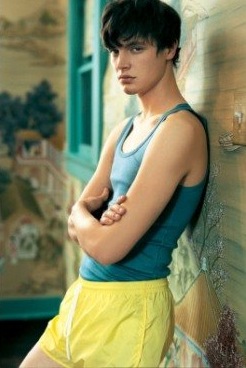
Little.


23529641484_bef770989b_o

Little, petty woman, living in your shell

Married, bored, angry and morose

You have so much on your plate

Life passed you by

Sitting in your car, looking at your phone, stuck in traffic

Honking, texting, daydreaming

Medicated, distracted, burdened

Out there the world is dancing and smiling

Without you

Celebrities always smile

What happened at the box office this past weekend?

You got home and found everyone looking at their phones

Where should you eat dinner?

Who left their shoes on their bed?

Why can’t he remember to flush the toilet?

Hours spent on the phone with T-Mobile to fix text messaging.

Tomorrow you may be dead.

Van Nuys: September 21, 1960


00118139-1

Among the stranger aspects of modern American life is that we have gotten over old 1950s fears (Communists, homosexuals, fluoridated water, rock and roll) but have now supplanted new, sometimes exaggerated terrors to replace the old ones.

The above photograph by George Brich (LAPL) was published in the Valley Times on September 21, 1960 and read, “Jeanne Avery, 15, 14155 Cohasset St., Van Nuys, adds to the view along palm-lined Van Nuys boulevard, community’s main business street. The community is the largest in the Valley.” Van Nuys is nearing its 50-year anniversary and is being celebrated as one of the most beautiful and productive cities in the Valley.”

Can you imagine the outcry in 2016 if an adult male photographed a 15-year-old girl on the street and published her name and address in the LA Times?

“Thank you George Brich for violating my daughter’s privacy! Now every crazy pervert in the world will know where she lives!”

“This is completely wrong. No young woman, no matter how attractive should be photographed by a stranger and have her address published in the paper!”

In 1960, America had a benevolent and innocent view of itself. It was considered an honor for a teenage student to be photographed in the local paper. And nobody meant anything ironic in describing Van Nuys as “one of the most beautiful and productive cities in the Valley.”

In 2016, the average American, the average person living in Van Nuys is probably photographed hundreds of times a day, in security camera videos, in mobile phone images, waiting in a car at a red light, filling up for gas, withdrawing money at the ATM, driving through McDonalds, or stopping to shop at Target.

But the intentional photograph by camera on a public street has now become a provocative act. Its artfulness, its quirkiness, its freedom has been put on probation. Public photography itself is now under suspicion.An art form and a means of communication has volunteered to restrain and censor itself. Even when no law has been broken, and no privacy invaded. And this in itself is irrational and a denial of our American way of life.

There is nothing against the law in taking a photo of a person on a public street. You don’t need their permission.

They understood that in 1960.


Bank of America, Van Nuys Boulevard, 1968.


gri_2004_r_10_b904_f14_004 gri_2004_r_10_b904_f14_001

While researching online, I came across these 1968 photographs of the Van Nuys branch of Bank of America shot by Julius Shulman. © J. Paul Getty Trust. Getty Research Institute, Los Angeles (2004.R.10).

The bank at 6551 Van Nuys Boulevard still stands, still functions as a bank. But today the building is surrounded by the detritus of modern Van Nuys: garbage, homeless people, illegal vendors, trash, graffiti and the smell of urine.


Yesterday in Burbank.


Processed with VSCOcam with j1 preset

Yesterday in Burbank, the sky was clear, clouds sat high and moved fast, the sun sparkled, dust blew, and people rode horses on dirt trails.

On this day, a film student from Canada put on a thermal shirt, petted a horse, picked up a shovel, tried on a jean jacket, and impersonated a life without quite really actually believing in it.

Near the stables, roosters crowed and horses neighed. And the student carried a black bag out of a red barn and walked diagonally past the camera.

The muscular, tattooed man stood timidly next to a white horse in leather blinders. He said he was from the city and had never touched that animal.

In the equestrian district, the air smelled like hay and horse, horse shit and horse sweat.

Processed with VSCOcam with e4 preset Ron Sky 2


Processed with VSCOcam with e2 preset

Later, along Victory, drops of rain fell and then stopped.

Under the concrete pillars holding up the Golden State, behind a steel fence, illuminated in the mellow end-of-day light, the student stood in mock incarceration, a dark skinned reminder of others who sit in prison, or move beyond borders to chase freedom in other lands.

He later stood shirtless next to a street sign, not unlike the thousands who stand on the streets of Los Angeles waiting for customers, or others who live on the streets because they have no home.

Processed with VSCOcam with e3 preset

Processed with VSCOcam with j4 presetAll of it was pretend, and all of it was about capturing light, and setting a mood, an imitation of life.

Yesterday in Burbank was make-believe.

But the light was real and the buildings threw off a gentle and enveloping glow, mitigating the harshness of the city, and offering an alternative imaginary story for jaded urbanites.

Processed with VSCOcam with j2 preset

The Sun Came Up Slowly Above Sepulveda.


15200 Victory Blvd. 2 15200 Victory Blvd.Under dark, glassy, reflective, translucent, stormy, gray, inky blue clouds Van Nuys awoke today.

The hot sun and its aggression were held back. And the light came up slowly. The workers sat in their cars along Victory waiting for the red light to turn green.

Humidity, and the hint of rain, the blessed promise of water, hung in the air.

The Barn (in back)

DSCF1242

Bulldozers carried pieces of broken-up pavement in the Wendy’s parking lot as mechanical jackhammers tore into old asphalt. Construction workers attacked the building, skillfully peeling and nailing glossy, modern effects.

West down Erwin, old cars and overgrown bushes flank houses where age and decay cannot hide. The past and its four-wheeled rusty remainders sit on driveways.

Erwin Near Langdon  Victory, where quiet houses sit next to six lanes of traffic.

6300 Langdon Ave DSCF1252

Back on the corner of Sepulveda and Victory, right where the police shot a man to death after he broke their window with a beer bottle, the empty parking lots and bank buildings are mute, without feeling, marooned in a landscape of cheap indifference.

15249 Victory Blvd. Chase Bank DSCF1261

There is no civic center, no park, no church, no place to sit. The frenzy of cars and donut shops, office supplies and Jiffy Lube, this is one of the many centers of Van Nuys. But the center cannot hold. The consensus of American life is scattered here, as it is all over the land. Somewhere in the shadows, thousands of homeless are waking up in alleys, in their cars, behind buildings. The normality of life seems normal but things are awry.

When the traffic eases, people will speed past here, and some will run across the intersection to board buses, and the day and its distractions will obliterate the early morning calm.

The RV Encampment


Screen Shot 2015-08-28 at 11.51.53 AMParked along Tujunga Avenue in North Hollywood, on the east side of the park, between Magnolia and Riverside, a remarkable new residential community of homeless people has been established in a line of permanently parked RVs.

Visible and egregious, with their reflective cardboard stuffed inside windshields to cool down the metal houses in the summer sun, these faded and rusted motor homes are testament, depressing and sobering, to the high cost of housing in Los Angeles and the inability of so many to find a suitable and safe place to live.

RV NH 4 RV NH 3 RV NH 2 RV NH 1 RV NH 15

I walked along here today and photographed some 15 vehicles where people live.

In front of one, a woman and two men were in lawn chairs, sitting in the shade. The lady asked me, in a friendly way, why I was photographing and I told her it was for my blog.

“I’m homeless. We’re all homeless,” she said.

And I told her I knew that. And I also said I was photographing these four-wheeled residences to let others know how their fellow human beings were forced to live.

“God bless you,” she said.

And I continued my walk.

RV NH 13 RV NH 14 RV NH 12 RV NH 11 RV NH 10 RV NH 9 RV NH 8 RV NH 7 RV NH 6 RV NH 5