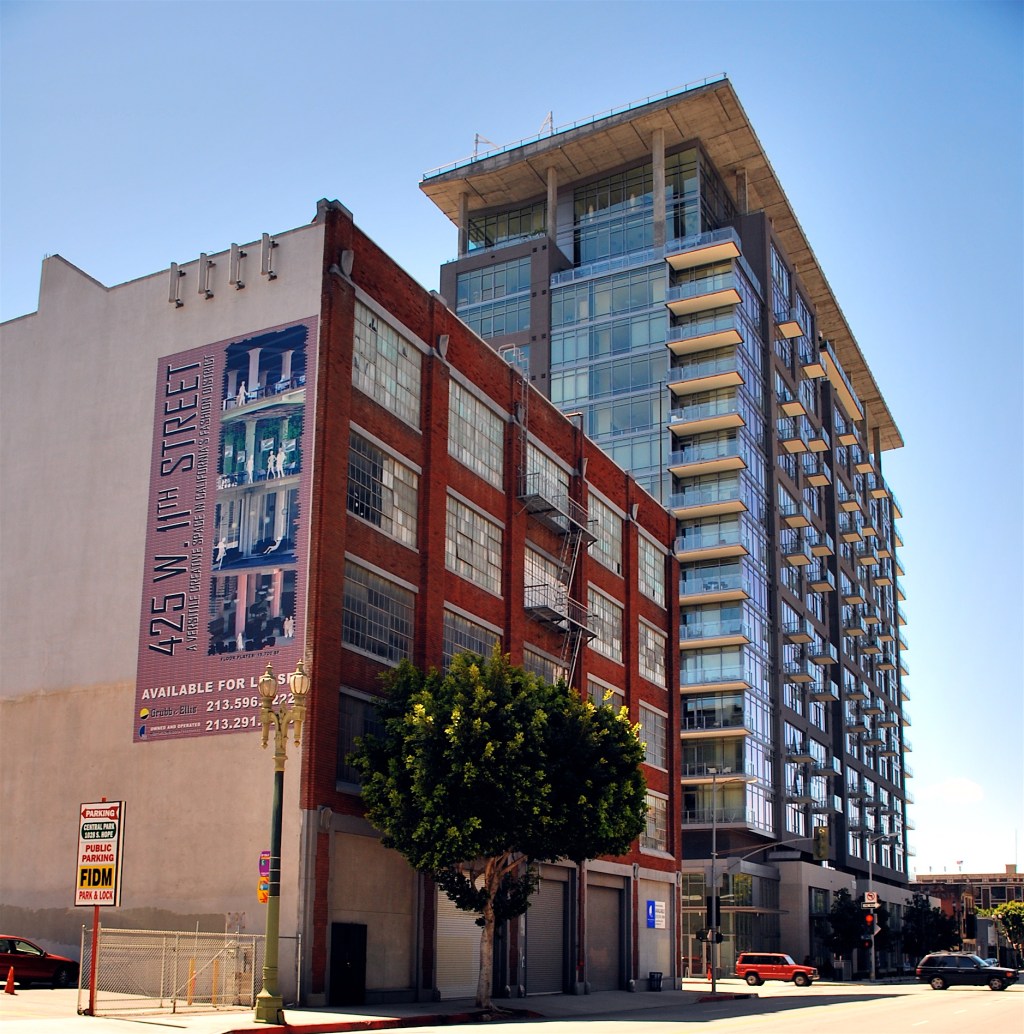
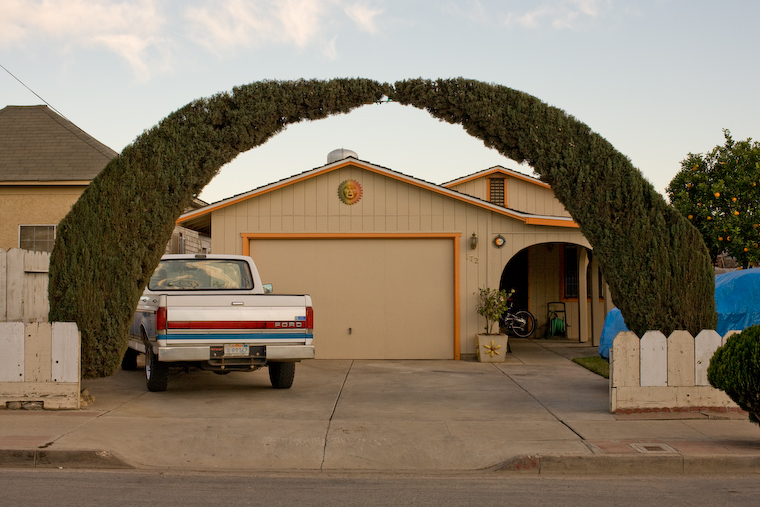
The Most Photogenic City


Processed with VSCOcam with c8 preset

We had walked over from her place on Benton Way in the late afternoon and stopped into a bright Mexican restaurant and sat at the bar where they had expensive tequilas and cheap margaritas.

At El Cóndor, on Sunset at Edgecliffe, the bartender was tall and black and efficient, fast serving the cold, salted glasses with the green mixtures to go along with the guacamole and chips.

We were talking and then a young guy sat down at the corner. The server, the busboy, and the bartenders seemed to know him as if he were a regular. He talked to a blond, bearded bartender, who left, and was replaced by a clean- shaven, quiet bartender in a denim shirt.

“I moved in with a girl,” he told the quiet bartender who listened and nodded politely and stared into the distance.

“I came here to act,” he said.

“What time do you get off work?” he asked.

“I’m going to a party later,” he said.

He was looking for a friend, maybe something more, but his plaintive loneliness reminded me of so many days and nights ago, and that certain summer twenty years ago when I moved to Los Angeles and lived with a girl. There was nothing to the relationship, other than a brittle friendship, and it died in the fall of 1994, never to return.

When you drink, you think, and you are articulate. The intuitions and insights flood your mind, and you feel relaxed and the fear and the anxiety leaves you and you can walk and laugh, cry and remember, and nothing will stop you, no inhibitions or tentativeness, no wary caution or reversion to propriety.

And the next day, if you are lucky, you remember a tiny portion of last night’s enormous revelations.

After we got back to her place on Benton Way, she told me I was her first activity of the night. Jason was downtown, visiting from Montreal, and she would be driving there to meet him.

But first she showed me those crazy, 1980s sweaters I gave her that had once belonged to my late Mother. She said they smelled like Louise, who died on September 1, 2014. My mother always dry-cleaned her clothes and hung them on wire hangers shrouded in plastic.


We sat on the gray sectional couch that had been in my mother’s apartment on Admiralty Way in Marina Del Rey, the couch that had been purchased at Crate and Barrel in Paramus, NJ on Route #17 in the summer of 2008, the couch that was selected as I pushed my reluctant father in a wheelchair around the store and my mother hobbled along. That couch covered the events of the last seven years, the deaths of its two owners. It lived to find a new home in Silver Lake.


We are not more than friends so I left to make way for love, which was fine, as I was happy to drive into the waning light and go back to a street I found a few months ago where the giant Church of Scientology looms over a motley block of cheap apartments.

That street was Berendo, near Lexington, and I found it just when the sun was setting, and the harsh ugliness of old, broken-down, and neglected buildings became comely, enticing and seductive.

Water LA Scientology Over Berendo Lexington Near Vermont

There were markers of Western history dropped onto the streets, like French chateaus and Spanish castles. There were homely, plain and workaday brick and wood apartments and houses, old wooden electrical poles and wires, and cars that were packed into tight alleys, and parked along the curb. Occasionally, a cat would crawl out from under a car and dart into another shadow.

Berendo was blasphemy, watched over by a cross atop on an old blue hospital now advertising SCIENTOLGY.

Under the gaze of the cult, I was walking, and photographing, a city unique in its fate and form.

Lexington Near Berendo Lexington Near Berendo (1) 4800 W. Lexington Ave.

Los Angeles: the most photogenic city in the world.

Whatever you imagine it is, it is.

Her beauty is fragile and fleeting. Her people arrive to grab onto to something illusory and transforming.

She should be seen and felt in the fading light, after the hours when the sun is brightest and before the hours when the darkness descends.

4th of July in Years Past


From the USC Digital Archives, one finds fascinating and unusual photos of old California.

A search for “4th of July” brought up these photos and captions:

Fourth_of_July_Santa_Monica_1952

“Photographer: Gaze. Date: 1952-07-04. Reporter: Gaze. Assignement: 4th July–Santa Monica. #23-29: Navy landing craft comes ashore in Fourth of July exercises at Santa Monica. LCM No. 268 in the foreground has just landed and No. 175 has just taken off back through surf. In addition to these landing craft, visitors streamed aboard the heavy cruiser USS Toledo and the destroyer escort USS Whitehurst.”

Philippine_Independence_Day_celebration_July_4th_1951

Philippine Independence Day celebration July 4th, July 4, 1951. Elizabeth Rigor (“Miss Luzon”); Mayor Fletcher Bowron; Sartonio V. Abrera (consul of Philippines); Maria Torres (“Miss Visayan”); Aurora Garcia (“Miss Philippines”).

Special_4th_of_July_rites_at_St_Vibianas_1951-2 Special_4th_of_July_rites_at_St_Vibianas_1951

Special 4th of July rites at St. Vibianas, July 4, 1951. Processional into cathedral with Archbishop J. Francis A. McIntyre.

Fourth_of_July_advance_Ocean_Park_Beach_1952

“Photographer: Gaze. Date: 1952-07-01. Reporter: Gaze. Assignment: 4th July advance. #41: Pretty Rita Simon looks as though she were about to take off on a giant skyrocket at Ocean Park which is one way of calling attention to the annual 4th of July fireworks exhibition which will be held on the end of Ocean Park Pier on the night of July 4 in tribute this year to four warships which will anchor in the Bay. Visitors will be allowed aboard from 9 a.m. to 4 p.m. July4, 5 and 6. #42: L to R: Audrey Donahue holds her ears as Margie Brunner lights giant skyrocket and Rita Simon appears ready to take off with the explosive on the Ocean Park beach. The girls enact the scene to call attention to the annual fireworks exhibition to be held at the end of the Ocean Park Pier in tribute to 4 warships which will anchor in the Bay over the three-day holiday.”

Gilmore St.- Diptychs


Here are six diptychs I created from yesterday’s walk down Gilmore St. between Kester and Tyrone.

VscoCam Gilmore7
“You write a blog to improve Van Nuys? That’s good cause this place needs a lot of improvement.”-Man at Central Lutheran Church


VscoCam Gilmore5 VscoCam Gilmore4 VscoCam Gilmore3 VscoCam Gilmore1 VscoCam Gilmore


Unstable Atmosphere/ Yesterday, a Strange Light


Yesterday, I went downtown. I took my camera. And I drove, in my meandering way, locally, hunting for light and shadow.

I left Van Nuys and went through Griffith Park and picked up Glendale Blvd where it emerges in Silver Lake and runs down into Echo Park.

1461 Alessandro St.

Near Effie Street, I stopped. And I saw dark clouds hover over the silver skyline, glass glistening coldly.

I parked where dozens of people sleep on the sidewalk next to a storage building and the street ends at steep, ugly concrete stairs. Climbing the steps, I stood near the metal rails and looked towards our downtown draped under an impending storm.

Yesterday, Sunday, a strange light and gentle gloom came in and out, an alternating atmosphere of rain and cold windy gray.

Thoughtlessly happy Los Angeles wore an unfamiliar face. The city everyone thinks they know once again confounded me.

DSCF1012


Near 4th and Main- View NE

I drove on to my destination at 4th and Main.

Downtown, at the art loft, a show at 2A Gallery was closing. The works were those painted by my friend Tam Warner’s father, Orien Lowell Greenough. He died, poor, in 2008. He was a liberal who hated war. His creations on canvas satirized, in depth, the hypocrisy and brutality of the killers and statesmen who run this world. His time had Stalin, Hitler, and Khrushchev.

We have ISIS and Putin, Al-Qaeda and Boko Haram.

The men who put on the show, Clay and Calvin, and their 2A Gallery, had recently come into my friend’s life, nurturing, elevating and sanctifying the late painter and his work. His daughter, after a run of mistreatment by another gallery, was grateful for their care and love.

It seemed as if Orien Lowell Greenough and his work were again going to find recognition in Los Angeles, full validation that had eluded him when he was alive, the story of so many artists, and writers.

And then Calvin and Clay confirmed that they were not only closing the show, but closing out their life in Los Angeles. They would be packing up and moving to McComb, Mississippi to live in a more affordable area. They would leave in 30 days, and drive 4 days across Arizona, New Mexico and Texas, eventually arriving in The Magnolia State, where the flag still flies the colors of The Confederacy.

Everyone was sad. But none more so than my friend, who had made a connection with the newly departing angels who had came out of nowhere to champion undervalued Orien Lowell Greenough.

Tomorrow, there may be money in art, but today you need to eat. Like the dead artist, the living gallery was squashed by the bottom line.

The truth is that they could not afford to live in Los Angeles any more. Or perhaps the truth is that they chose not to live in Los Angeles because home was somewhere else. Truth is subjective- so the artist claims.

Their departure is a loss to this city.

And when I left the loft, calmed by two evaporating beers, I drove in the dark rain through dystopian concrete canyons. I lost my way downtown, and found that my usual entrance onto the 101 was closed. I had to make a detour, a rerouting of my way home, that took me down old Temple Street, and over to Rampart, where I found a wet and slow, hidden and unfamiliar way to get onto the freeway and back home.

DSCF1026

Hart Street, Firmament Avenue, Sherman Way and Sepulveda.


DSCF1002

Yesterday, between the rains, after the air had been washed, the skies were radiant. And enormous cumulus clouds towered above, bottoms gray, tops white. The sun came and went. Streets of dark shadows ended in blinding light.

I walked in the wind up Sepulveda, north of Vanowen, and went left along Hart Street.

This is a neat neighborhood of mostly well-kept houses on generous lots. It is not rich here, but the general feeling seems contented. There are no sidewalks but lots of walkers.

DSCF1005

Near Sepulveda, at 15322 Hart, there is a burned-out house with a lovely second floor balcony and no trespassing signs on a gate; secluded and romantic, it awaits rebirth from ruin.

At 15439 Hart, someone is selling a 1970 (?) Yellow Ford pickup truck.

15521 Hart (built 1952) is a white house with blue awnings. Though it faces south, into the hot sun, there are no shades trees in front.

DSCF1009

DSCF1013

Firmament Avenue is the last street in this neighborhood east of the 405 freeway. Large houses and empty lots, well kept estates, battered weed infested places, townhouses and bungalows, all are found on the block between Hart and Sherman Way.

These are the kind of typically Californian streets that make people from other states uneasy. They mix danger with intoxicating beauty, ruin next to richness. Is this a good or a bad place? In this area an old lady might come outside and offer you apple pie… or aim a gun at your head.

DSCF1018

7110 Firmament could be a location in a 1940s Van Nuys movie with its roadside mailbox, cyclone fence, picket gate and wood houses set way back behind mature trees and overgrown ivy.


Next door, at 7128 Firmament, a brown stucco house with a red tile roof and white balustrade bedecked wall is carefree and liberal with its architectural elements. They are seemingly picked out of air and dropped onto a large lot hidden behind black screened fences and decorative lanterns. A Nury Martinez election placard is planted near the driveway.

Up at 15549 Sherman Way, Helen Towers (built 1972) is a large, 93-unit apartment building with a pool and lots of parking set on an acre and a half property right next to the on-ramp for the Northbound 405. Strangely bucolic, it seems well kept, if a bit dated.

DSCF1020

DSCF1022

At the Starbucks (15355 Sherman Way) a man ignited himself in burning flames last week and later died. I stopped off there for iced green tea. There were no signs of death, only life, and frozen faces glued to phone and screen.

My walk back home took me past the Royal [6920] Sepulveda Apartments, a “K” shaped, two-story complex frivolous in design, far from royal. Built in 1961, the 92-unit complex seems sex-soaked and secretive, untethered from anything around it, a floating, decadent motel of licentious and libidinous acts. Surrounded by parking, for quick escapes and quick arrivals, behind its closed drapes lie transient guests.

DSCF1029

There are no sudden storms in the Southland.


There are no sudden storms in the Southland.

They are slow, and anticipated for many days before arrival.

The rains of Los Angeles are not the violent and fast moving ones from my youth in Illinois.

They come from San Francisco, imported and exotic, served only in winter.

They travel, as if on a slow moving freight train, chugging down across the mountains, picking up wind and moving clouds with great effort, until, by eminent domain, they seize this region in rains, pushing out that squatter the sun, drenching the city in something purifying and disorienting, dark and light; a benevolent symphony of Earth’s workings, cleansing and renewing.

The rains of Los Angeles are a strange corrective of nature. They are more powerful and more intimidating than the human cesspool city of sudden violence and crashing cars. The Army of the Clouds is a conqueror who must be obeyed. Under occupation, rivers are rerouted, trees blown over, electrical current shut off, oceans churned, roads made impassible.

But they are kind in power, artful in practice.

They transform the ugliness of asphalt into reflecting pools.

They tame cars, dragging them through curbside baths.

They throw dark daytime shadows across the city.

And after they pass, one looks east, towards Pasadena and the nation beyond it.

And we stand, once again in the sun, in the Southland, in our winter.

Left to our own devices.

Raymer-LA River USA Gasoline Farmer's Ranch Market Raymer-Kester