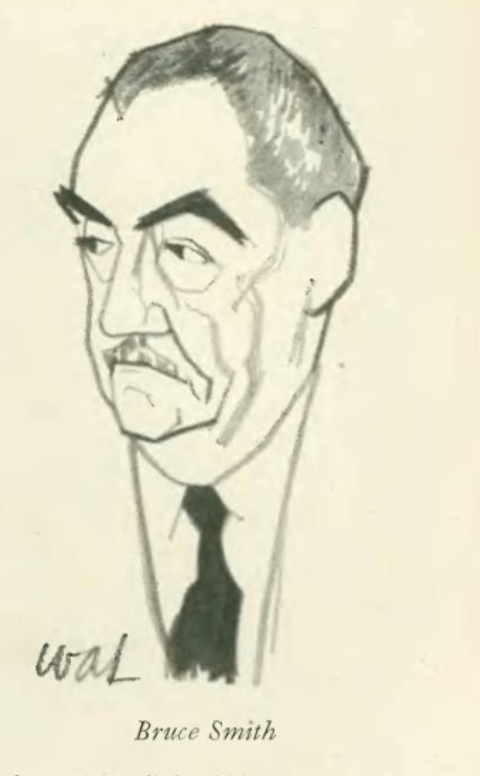
Bruce Smith: Police Reformer/ The New Yorker/ February 27, 1954


Bruce Smith (1892-1955) was the director of the Institute of Public Administration, a New York City based non-profit. He was a longtime and respected expert on American policing, and his statistical and behavioral studies of how cops work, lead to reforms in many cities and states.

In this profile from the February 27, 1954 issue of The New Yorker, the same woes and complaints that are heard from citizens and cops today echo throughout.

Crime, corruption, police abuse, and the many facets, (mental, physical, emotional, political, racial) in tough, violent, rebellious America is the law enforcement story of our nation. Corruption, lies, patronage and wealthy people who get the “fix” and way out for wrongdoing, that is all illuminated in this essay.

There is an ongoing struggle in our country between our love of freedom and our fear of violence, and our longing for, and resentment of, order.

Mr. Smith knew the devils and angels of human character through his footwork and statistical analyses.

It’s good reading to remind ourselves that whatever meltdowns afflict our nation today have lots of precedent.

The PDF below is downloadable. Or read the enlargements that follow.

Return to East Rustic Road.


One sweltering day, sometime in July 2012, I left Van Nuys with my camera to escape the 105 degree heat.

I got off the 405 and drove west, towards the ocean, along San Vicente, until I came into a picturesque canyon, shrouded in fog. I parked my car and ventured on foot to photograph the trees and the architecture in cool, refreshing tranquility.

I walked up East Rustic Road where there was, indeed, rusticity in nature and architecture. I stopped on the sidewalk along the street and beheld the glory of clouds coming down from the hills. All around were birds and flowers, fragrance and song.

And then, suddenly, a shrill voice yelled at me, “Why are you photographing mailboxes on this street!” 

Dazed, stunned, I was speechless. 

Who the hell was screaming at me? I looked around and an old woman came out of a garage of a house.

“I was driving up the street and saw you taking pictures of all the mailboxes! What are you doing here!” she demanded.

Now pissed off that I was being interrogated, and my right to walk and photograph on a public street was being infringed upon; appalled at her lying and false charges; I talked back. I said something like who are you to ask me? Did I need a permit to take a photo? Did I need to ask your permission to photograph a cloud?

“I have a right to know!” she screamed again.

Then an old man (her husband?) came out the front door and yelled, “If you don’t get off our street we are calling the Santa Monica Police!”

Not eager to incite, I walked away.

My beautiful, serene, moment of enjoyment was spoiled by these two irrational people.

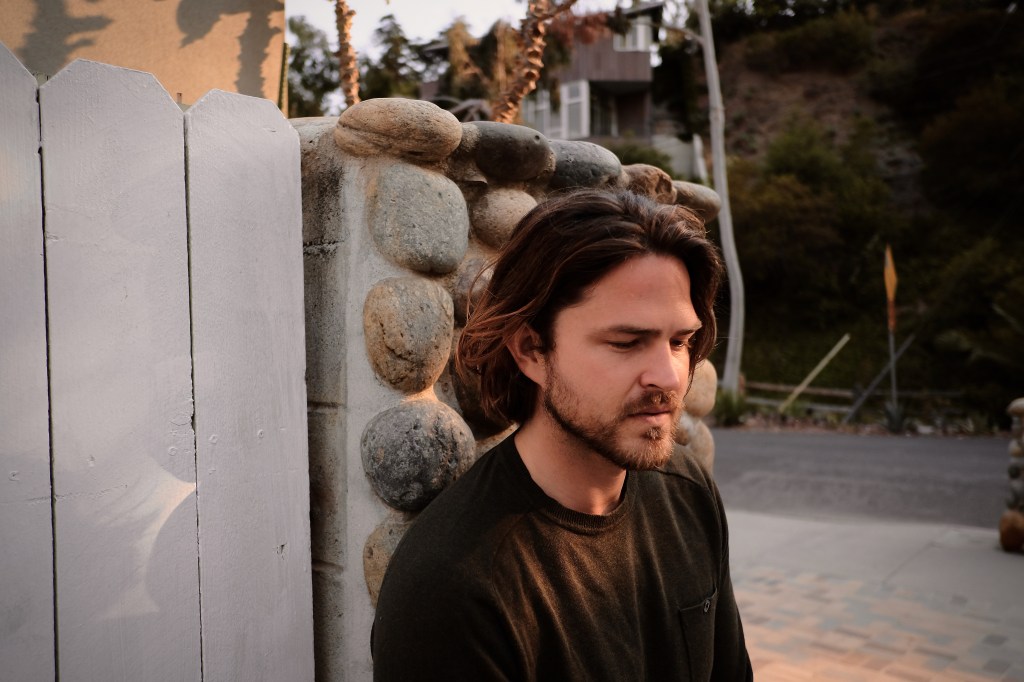
I vowed that one day I would come back here and shoot photos again, perhaps some portraits of an actor.

This past weekend, nine years later, I did just that. Without incident.

Model: Cheyne Hannegan

Cinnamon Politics.


Cinnamon Politics

A few months ago, I walked into a Santa Monica dry spice store that my friend and I had dismissed a few years earlier.

It seemed ridiculous to us, that people, in the farm-fresh and organic era, would buy dried spices and spice blends at premium prices, and also waste money inside a store where the edibles sat in glass bottles in the burning Western window sun, becoming milder, less fragrant and more tasteless by the day.

Yet the business lived on, as culinary mediocrity often does in Los Angeles, eventually thriving in its insipid rendition of gourmet flavoring for chef lite hacks.

But then I came back into the spice store a few weeks back. I gave it another try. Maybe I was wrong.

I bought something called Northwoods Spice: salt, black pepper, paprika, thyme, rosemary and garlic, which the company describes as perfect for chicken or fish.

It cost about $13 for seven ounces. And I used it once or twice with no noticeable or discernible improvement in my food. In fact, the food had come out worse with the addition of the Northwoods Spices, giving baked chicken the flavor of something my mom might have cooked in 1975 Lincolnwood, IL served with Uncle Ben’s rice and creamed corn.

Equality’s Front Lines

Today, that company sent out an email with an entirely different agenda. They were giving away either a magnet or a cookbook called LOVE PEOPLE with any $10 purchase.

Penzeys.jpg

Further down the email, the owner and alleged author of the email, Bill, talked up his support for “people on the front lines of the continuing struggle for equality.”

Who, really, are the “people on the front lines of equality?”

To some they are students screaming to take down President Woodrow Wilson’s name at Princeton University. To others, like me, equality is often accomplished in a quiet or modulated voice: teaching, reading, praying, thinking, writing, to postulate ideas and reform minds, and argue, through logic and insight, for the reform of certain societal inequities such as equal pay for women and men.

The mob, screaming and tearing up for You-Tube, is the curse of our time. The Arab Spring, so liberating online, has burned up in the Saharan sands and splattered blood from Jerusalem to Paris to Mali. Millions protest. But not one speaks freely.

But, here in America, The Spice Man speaks freely.

He tied in the struggle for equal rights to the strange events in Ferguson, MO, where, in 2014, Darren Wilson, a police officer, shot to death Michael Brown, a black man who had just robbed a store and roughed up its owner.

A grand jury later decided not to prosecute Officer Wilson. And rioting followed after this legal decision.

So why bring this tragic event into a way of advertising your spices? The killing was an epic event, a turn of racial history, an explosion of anger, an invocation for rioting, an example of passion gone amok. To employ this police/pigmentation tale of violence to market spices reduces its enormity to triviality, and grounds it down into mere cocoa powder.

The seller of garlic powder, turmeric and thyme, whose exposure to worldwide aromatics evidently endows him with insight into all senses of the human condition, then compared police reform to Catholic priesthood reform, linking the two institutions, which have no relation or logical connection, but obsequiously praising The Catholics and The Cops for “coming a long way from protecting their own no matter what, to understanding that not everyone has what it takes to do the job.” Perhaps The Spice Man and his unessential oils belong in the latter category.

A scandal about police brutality, a scandal about child abuse, and now (to my mind) a scandal of a salt salesman using the most controversial and unsettled issues of our time to push his product.

Bill’s presumptuousness, his wise ignorance of imagining that his clientele shares his views on the proper role of police, on racial profiling, on police tactics, on law enforcement-all of it- sickened me because it used sensitive and philosophically critical issues in the service of selling spices.

In this strange marketing email, he also praised the Milwaukee police department for “an incredible forward-thinking outreach to our city’s homeless community.” In old America, before the 1980s, the police arrested people sleeping on the streets, not only because it was illegal, but also because it was unsanitary and unsafe. And gutters, park benches, alleys and dumpsters were deemed not fit for human habitation.

Strangely, there are still people, (like me) who think that there should be a law against allowing people to set up home on the sidewalk. Tolerance of it allows it to grow and become a movement of its own, normalizing the cruelty and barbarism of it, and giving a free pass to liberals to walk from their Range Rover with the handicap sticker on it, right into Studio City Lululemon on Ventura Boulevard, past the old lady who has slept on the metro bench for six months.

So now the police, as cited in Milwaukee, are expected to be the ambassadors of graciousness to the mentally ill, and to people made mentally ill by living outdoors in urban filth.

But back to The Spice Man.

He thinks he knows his customers. He thinks he knows them because sells them political opinions, set out in marketing blasts, better kept to himself.

He ought to make a better product before he jumps ahead to planetary reform.

Spices, kept out for too long, lose their potency, like old bromides.


The Sun Came Up Slowly Above Sepulveda.


15200 Victory Blvd. 2 15200 Victory Blvd.Under dark, glassy, reflective, translucent, stormy, gray, inky blue clouds Van Nuys awoke today.

The hot sun and its aggression were held back. And the light came up slowly. The workers sat in their cars along Victory waiting for the red light to turn green.

Humidity, and the hint of rain, the blessed promise of water, hung in the air.

The Barn (in back)

DSCF1242

Bulldozers carried pieces of broken-up pavement in the Wendy’s parking lot as mechanical jackhammers tore into old asphalt. Construction workers attacked the building, skillfully peeling and nailing glossy, modern effects.

West down Erwin, old cars and overgrown bushes flank houses where age and decay cannot hide. The past and its four-wheeled rusty remainders sit on driveways.

Erwin Near Langdon  Victory, where quiet houses sit next to six lanes of traffic.

6300 Langdon Ave DSCF1252

Back on the corner of Sepulveda and Victory, right where the police shot a man to death after he broke their window with a beer bottle, the empty parking lots and bank buildings are mute, without feeling, marooned in a landscape of cheap indifference.

15249 Victory Blvd. Chase Bank DSCF1261

There is no civic center, no park, no church, no place to sit. The frenzy of cars and donut shops, office supplies and Jiffy Lube, this is one of the many centers of Van Nuys. But the center cannot hold. The consensus of American life is scattered here, as it is all over the land. Somewhere in the shadows, thousands of homeless are waking up in alleys, in their cars, behind buildings. The normality of life seems normal but things are awry.

When the traffic eases, people will speed past here, and some will run across the intersection to board buses, and the day and its distractions will obliterate the early morning calm.

The New York Incident.


DSCF0336 DSCF0324 DSCF0323

The New York Incident

I went back East for two weeks in July. My first stop was Boston, then I went to New York City and ended up in Chicago.

On Wednesday, July 22nd, I boarded a late afternoon train at Boston’s South Station and rode down, through the Connecticut shoreline, into Westchester County, and finally New York.

I hadn’t been in Manhattan since 2008. And as I walked through dismal Penn Station, dragging my suitcase on wheels, laptop slung around my neck, camera in bag across my shoulders, I entered into dusk on 8th Avenue and up into loud, thrilling chaos and disorder and a human army of walkers and honking cars and trucks.

It was about 8 O’Clock and I grabbed a smoking stick of chicken kabobs from a street corner vendor. A few jovial, joking, middle-aged guys, on their way to Madison Square Garden, stood behind me and kidded me about my kabobs, asking me if they were any good. They were my first interaction in the city, and a good one: the heart and soul of New York is the casual, interfering, obtrusive love of strangers on the sidewalk.

I walked east on 34th, aiming for a bus to take me uptown on Madison to my destination at East 87th. Eyes on the Empire State Building, I walked through Herald Square and then into a protest that spilled into the intersection of 34th and 5th.

There were hundreds marching against police brutality. And there were cops, on foot and in their vehicles, yelling through bullhorns to get the people off the street. The action and the sounds, the theater of it all, pushed me into grabbing my camera from my bag and start photographing it all.

As I was shooting pictures of people against law enforcement, someone came behind me and walked away with my luggage. My entire clothing and shoes and toiletries were stolen.

I knew it right away, or rather I realized it when I pushed through the crowd and got to Madison Avenue. I still had my computer and my camera, but I was without the two-week supply of pants, underwear, socks, shoes, and toiletries I had come with.

The next morning I had to go buy new clothes. Everything. I went to the cheapest place I could find, H&M, and bought it all. It was stuffed in a plastic bag.

I was near 59th and Central Park West, and had called the NYPD to see if I could go to a precinct station and file a report the stolen suitcase. They said to go to Midtown North at 306 W. 54th St.

As I walked up to the old brick building, a female cop came roaring out of the door and pointed to me, “You! Get out of here. Go to the other side of the street! And the rest of you, you can’t sleep here! Get up and get out!”

She thought I was homeless because I was carrying my bag of new, replacement clothes.

I ignored her and went inside the cop house. A large STOP sign was in the middle of a grungy room where cops sat behind swinging gates and an elevated stage. I saw a water fountain. Thirsty, I went to get a drink beyond the STOP sign.

“Sir! Get back! You can’t just walk in and drink there!”

I explained that I was here to file a stolen property report. They told me to put my name on a list and wait at a window on the other side of the room.

I waited. And nobody called me. Other people came in and walked in front of me. So finally I looked through the glass window and saw a bearded Orthodox Jew at a desk and a black woman standing behind him.

“Yeah, what do you want?” the black woman asked.

“I’m here to report my suitcase was stolen last night,” I said.

“Your suitcase was stolen last night so what are you doing here this morning?” the Orthodox Jew asked.

“I was robbed near 34th and 5th and they said to come here and file a report,” I said.

“34th and 5th? That’s the Empire State Building. You don’t come here. You go to the Midtown South Precinct at 357 W. 35th St.” the Orthodox Jew answered.

“They said you would write up the report and send it down to them,” I said.

“Who said that? We ain’t doing their work for them!” the black lady answered.

I realized now that I was in that territory of comical and tragic best covered by Woody Allen. There was no empathy, no service; only obstacles, ridiculous and inexcusable, but this was how the city that doesn’t work works.

I walked out of the police station and marveled at the New York comedy routine I had just experienced.

I still love that city.

LAPD Radio: Listen to it Live.


About once or twice a day, an LAPD helicopter flies within sight of my house and starts to circle.

Curious about what might be going on, I went on the internet and found this site where one can monitor the LAPD Police Dispatcher in live broadcast.

According to EveryBlock, 275 crimes (about 9 a day), were reported within one four week period in May, in the area bounded by Magnolia on the south, the 405 on the west, Sunnyslope on the east, and Saticoy on the north.

A large amount of the crime is auto theft and home burglary. Omitted from the law breaking list are such wonders of our environment such as couch dumping, tagging, speeding, red light running, prostitution, vagrancy, undocumented workers, identity theft, and McDonalds.