SB 79 and Our Hood


SB 79 is a new law, authored by State Senator Scott Wiener, approved by the legislature, and recently signed by Governor Gavin Newsom, to allow the state to overrule local zoning laws and permit the construction of multi-family housing on lots which are zoned for single family housing when these properties are within a half or quarter mile of a bus or light rail stop.

In Los Angeles, the law will allow much denser and higher development along not only wide boulevards, but inside old, intact, single-family streets, “side streets” which never had apartments or multi-unit housing.


A guide to the law along with maps is here.

Tiered density: The allowable height and density for projects are determined by the quality of the transit stop and the project’s proximity to it.

Tier 1: Applies to projects near high-frequency commuter rail or heavy rail transit, like BART and LA Metro.

Tier 2: Applies to projects near light rail and bus rapid transit lines.

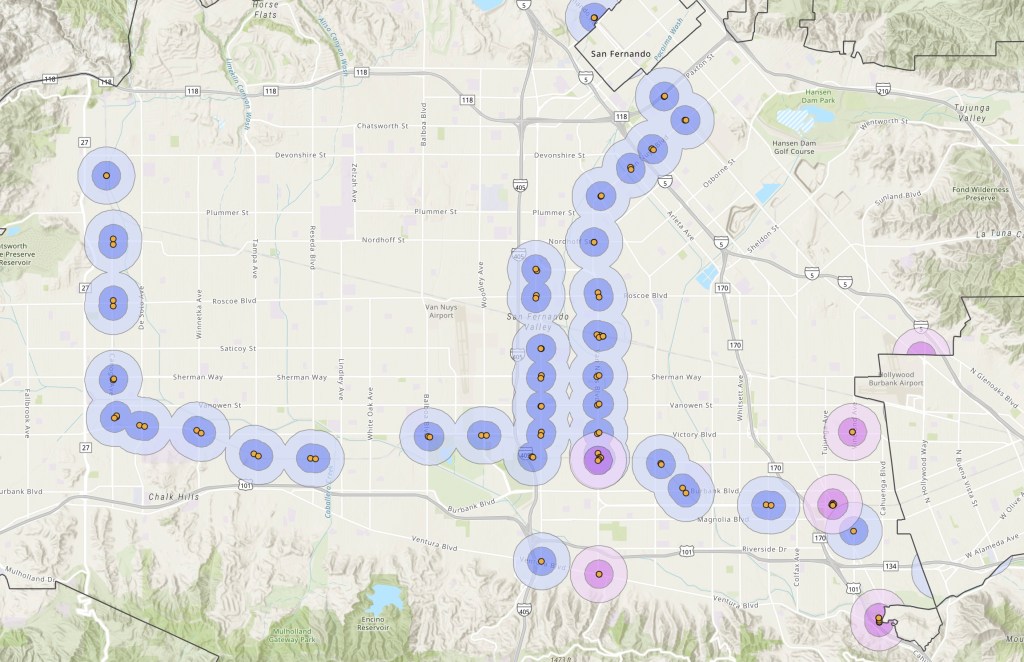
Along Sepulveda and Van Nuys Boulevard the proposed zoning map looks like purple bullet holes that radiate from transit stops. These circles are centered around the transportation stops and take no consideration into the historic or local character of any neighborhood. 

For example, I live on Hamlin Street which is a “Tier 2” zone because we are within a ¼ of Sepulveda Boulevard bus stop. My street, built on old walnut orchards, from 1936 onwards, is lined with palm trees, and then curves along with oak trees. The street has two-hour parking because of its proximity to Van Nuys High School.

If the law succeeds, my section of Hamlin Street would allow 65-foot-high buildings (six and half stories).

But the part of Hamlin Street a few hundred feet east from me would remain single family.

West of Sepulveda, south of Victory, is the beautiful and often filmed Orion Avenue with large colonial style houses planted with rose bushes and ranch fences, the location for many commercials seeking “a typical American street” that doesn’t exist anymore. With SB 79, the east side of the street could be obliterated with apartments that destroy the very beauty residents and film makers pay dearly for.


Yesterday, I had a real life encounter of what Hamlin St. and other locations nearby could become when I parked my car near 3052 West Boulevard in the Jefferson Park neighborhood of Los Angeles, east of Culver City. I was there to visit a new, multi restaurant creation, Maydan Market.

This area was given an economic boost by the Expo Line, a light rail system that connects downtown with Santa Monica. The good parts are investment, cleaner streets, the lowering of crime and the raising of the cultural and civic activities. 

The ugly parts are the disfiguring, ad hoc apartments that pop up on formerly coherent streets of 1920s bungalows. My eyes hurt looking at 3045 West Boulevard, a black and gray box suspended over a cinderblock faced garage, with a massive four story high open-air staircase on the side of the building. It looms like a monster over the street, with no respect or sensitivity to the vernacular that had existed here for 90 years.

Am I a hypocrite for decrying liberalized zoning that will change my backyard? Yes, I am. Sort of.

This blog has argued for years for the construction of new, multi-family buildings to replace unused parking lots behind abandoned shopping centers, or where there is a sea of asphalt like the Orange Line parking area along Sepulveda which was constructed for thousands of vehicles and is now empty.  I have fought for the idea of an architectural, coherent, community wide style that would incorporate history and embrace modernism but do it without destroying but enhancing the community of Van Nuys. 

And I’ve always cast a cold, unforgiving, forensic eye on the political neglect of Van Nuys by elected officials who seem to always be performing social media acts of kindness for oppressed groups while neglecting the needs of residents in this district. 

There are commercial zones galore that cry out for taller residential buildings along the wide boulevards of Van Nuys and greater Los Angeles. The one-story tall shops with parking lots in front are so defunct and useless that their very presence destroys civilized life and endangers the health of pedestrians. 

There are blighted buildings, such as this one at 7101 Sepulveda, that have been empty for years, packed with derelicts, unable to be demolished, yet crying out for replacement. As a bitter pill, the residents in the tree lined, charming, quiet streets behind must now expect multi-family housing to replace their 1940s ranchettes.

What do our elected leaders in Sacramento do with the quandary of building more housing? They embrace a fantasy of destroying single family homes and backyards. 

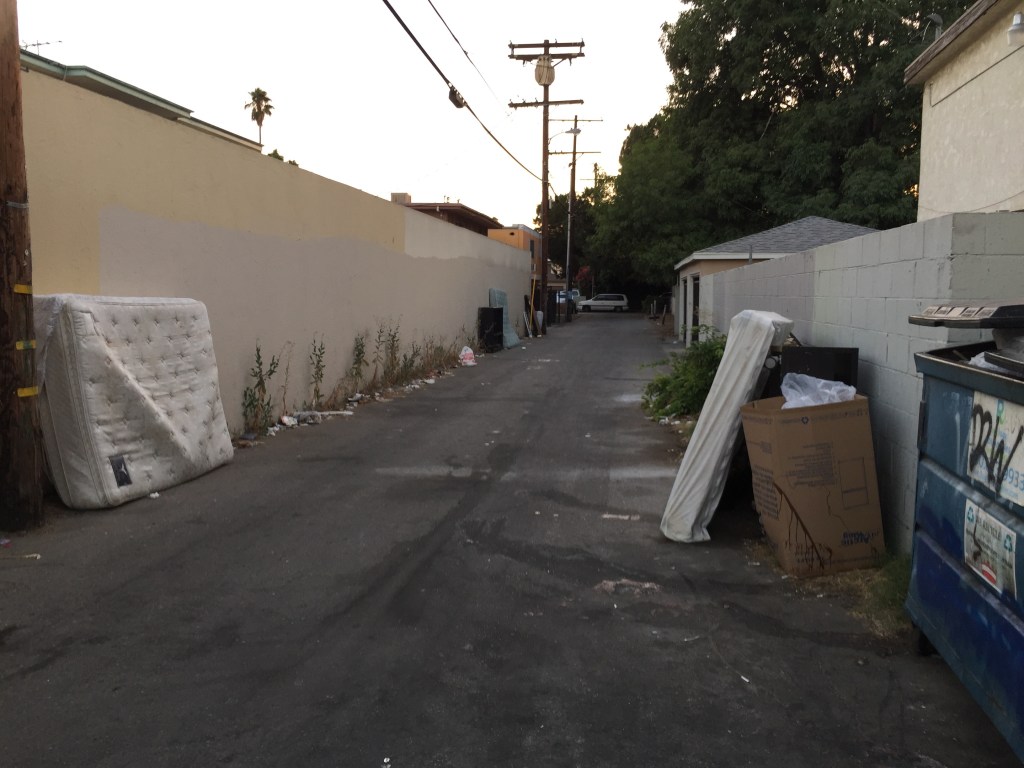
Will your neighbors and you, the elderly couple in the corner house, desire to ride buses (with homeless, drug addicts, crime?) and come home, late at night, from a bus stop on Sepulveda, and enter a new world of yet more cars, loud music, marijuana, dumped mattresses, and YouTube/TikTok/OnlyFans influencers smoking on the balcony next door? I doubt it.

Is that the paradise of tomorrow? Circles on a map, purple splotches of political malfeasance, indicating nothing but more mayhem, disorder and chaos.

I hope I’m long gone, either from life or Van Nuys, before this happens. 

The Social Disaster


In all the days since the disastrous fires destroyed vibrant and sparkling communities of people and their houses and businesses in Altadena and Pacific Palisades, flat and socially unpopular Van Nuys, miles from any combustible forests, sat silent, its empty parking lots and vacant stores along Van Nuys Boulevard mute and abandoned, its daytime as empty and lifeless as its nighttime. 

You live here and just like people anywhere yearn for the same normal things that civilized places provide: safety, cleanliness, affordability, and lawfulness. But all you get are sirens, speeding cars, helicopters at 2am, Woodley Park set ablaze monthly.

After nearly 25 years here I see nothing but decline in the environment around Van Nuys. 

The same neglected mini-mall that I complained about in 2009 is still the same trash strewn dump it always was. Its owner used to live in Bel Air. He complained about my criticism when all I asked him to do was hire a $10 an hour worker to sweep the sidewalk weekly and install a security light on the side of the building so people didn’t sleep and urinate and tag the walls. 

The stores that line Van Nuys Boulevard from Vanowen to the Oxnard are largely empty, many are built with gigantic parking lots behind them that are also empty, parking for thousands of cars that once shopped here, but those shoppers have left or died.

The Valley Municipal Building is where CD 6 Councilwoman Imelda Padilla reigns over the neglect and the ugliness. She replaced Nury Martinez who had to resign in disgrace after she was recorded by covert means saying ethnically insulting things about other Angelenos. Martinez came after Cardenas who went to Congress where he now serves.

Cardenas, Martinez, Padilla. It sounds like a nursery rhyme with its melodic Spanish surnames. It might well be a soundtrack set to an ever- present social disaster of Van Nuys with its hundreds of homeless sleeping in the plaza, along the Orange Line, or in the parking lot of the CVS on Erwin Street. 

How is it that the so-called heart of the San Fernando Valley, the place that once bustled with prosperity and good infrastructure, including light rail and neatly tended homes and businesses, has been allowed to die for so many decades? 

Victory Bl. east of Sepulveda, Van Nuys, CA 5/10/18

Is it callous to also point out that Van Nuys is less prone to fire than other areas that have boomed in recent decades? Would Van Nuys Boulevard, lined with 13-story tall Park Avenue apartment houses be a higher fire risk than thousands of wooden McMansions shoved up canyons in Bel Air, Brentwood, Malibu and the Palisades?

And when Van Nuys gets light rail, might it be possible to imagine a walkable, pleasant, less expensive part of Los Angeles where the vaunted word diversity can be used equitably as all types of inclusion would occur with young, old, well-off, not so well-off, living in nice apartments with patrolled and orderly parks and streets? 

Perhaps some of the displaced people would live in well-maintained buildings if such a thing existed in Van Nuys. 

With so much focus on rebuilding Los Angeles a good place to start an experiment in civilization would be Van Nuys. It’s the only corpse that has been screaming for rescue for decades.

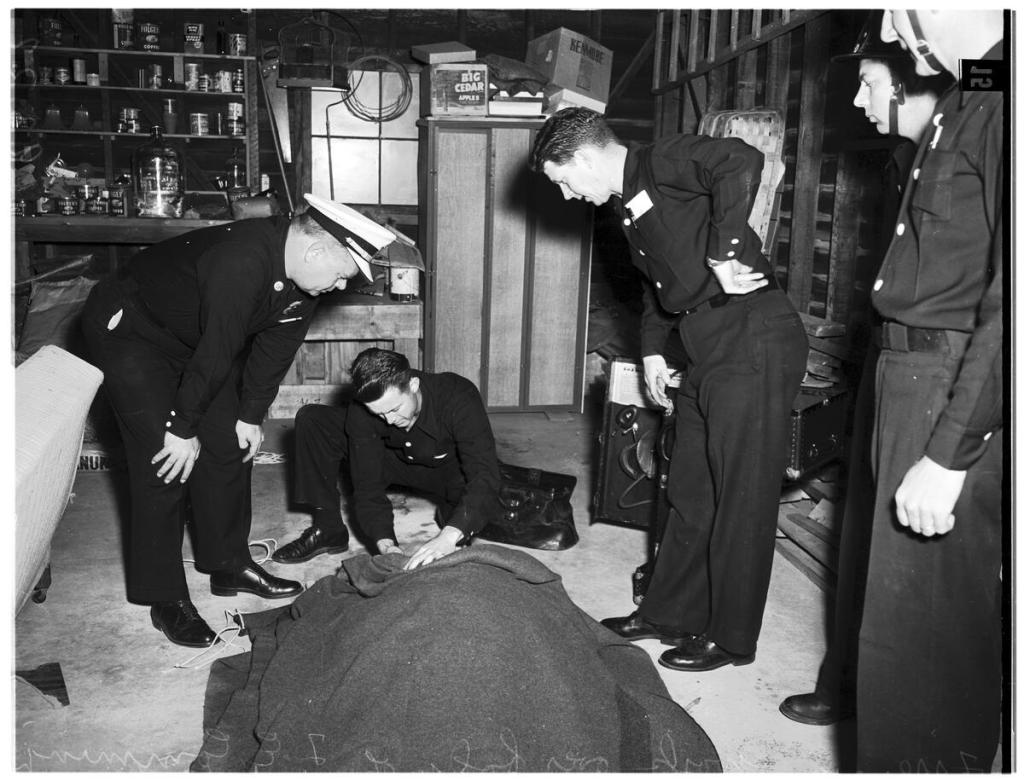
Suicide by Hanging, 1951


From USC Archives is this sad photograph, dated October 30, 1951, showing Van Nuys firemen over the dead body of T.E. Commings, who had earlier hung himself from garage rafters.

American newspapers back then showed flash lit photographs of crime and tragedy, usually with names and addresses of victims. “Mrs. Robert Crane, 34, of 114 Maple Street, was arrested by Officer Casey at the corner of Main and Toro where she had just run a red light. She was later tested and found intoxicated and booked at the Witsend Police Station.”

Though we erroneously imagine that we live in an unparalleled time of explicit violence, coarse language and animalistic barbarism, available to see in the palm of our hands, the 1950s had explicit examples of the worst of the humanity.

The difference is that Americans 73 years ago thought that there were normal, law abiding people who lived to pay taxes, marry, attend church, vote in elections, buy homes, cheer for ball players, and who knew right from wrong.

Popular morality was codified and distributed in films, written in stone on the bases of statues, and inscribed in history books that taught our history as a glorious march of freedom envied by the world.

The obscure ones who failed, who died by their own hands, or screwed up their lives in crime, they had one brief moment of infamy in the news and were quickly forgotten except by those who still loved them. To dwell on them would have been an indictment of the American experiment.

Incompetence at the Sherman Oaks P.O.


Last week, on Tuesday,January 16th, I made a pathetic sale on eBay.

I sold an Irish, hand made, blue cable knit sweater for $39.00. With $28 shipping and then eBay fees taken out, I think I made eighty-six cents.

A Boone, NC man was the winning bidder. I got his payment immediately.


I had promised free shipping, so I created a pre-paid label through eBay. I boxed up the sweater, printed the address and secured it on top of the box which was wrapped in layers of packing tape.

At Noon, on Wednesday, January 17th, I drove down to the Sherman Oaks Post Office on Magnolia and Kester, walked into the facility, and in the room where the clerks and customers transact business, under the guard of many security cameras, I deposited my shipment into the bin with all the other boxes of prepaid shipments.

Normally, a text would arrive from USPS, usually by evening, saying that the item was “received” then “in transit” and I would get daily updates until “delivery.”

I had no texts on Tuesday. Or any texts after I dropped off my prepaid shipment at the Sherman Oaks P.O.

I went back to the P.O the next morning. A lethargic woman ushered me to her station. “Huh?” she greeted me.

I told her what happened, showed her the tracking number, and she replied, “Huh?”

A clerk next to her asked me to write down the tracking number I was showing the other clerk on my phone. “It says here your package is ready for shipment,” the second clerk said.

“Yes, I know that. I dropped it off yesterday, pre-paid and I wonder if it is somehow lost or in back and if someone can check for it,” I said.

The lethargic one went in back, spoke to another clerk and came out to speak to me. “They in a meeting. If you put your name and number on here someone call you back when they out of it,” she said.

There was nothing I could do. The package had mysteriously disappeared.

24 hours later, two days after I shipped the package, I got a call from someone at USPS. “Yeah, you, uh, called for something? he said.

“Have you found my package?” I asked.

“Uh, it’s in Van Nuys,” he said.

“You mean it was shipped from Sherman Oaks to Van Nuys?” I asked.

“No. It’s ready for shipment with your prepaid label,” he said, reading off his computer, not knowing anything.

After that I thought my package had been stolen. Maybe someone else walked into the dank post office and swiped it under the glare of the cameras, or maybe a clerk in back has a nice, new, hand knit Irish sweater.

I apologized to my buyer and refunded his money.

Then on Monday, January 22nd, six days after I dropped the package off at the post office, four days after I refunded the entire amount to the buyer, a text message appeared on my phone:

USPS DELIVERED to MAILBOX in BOONE, NC.

The eBay buyer in NC now has a free sweater.

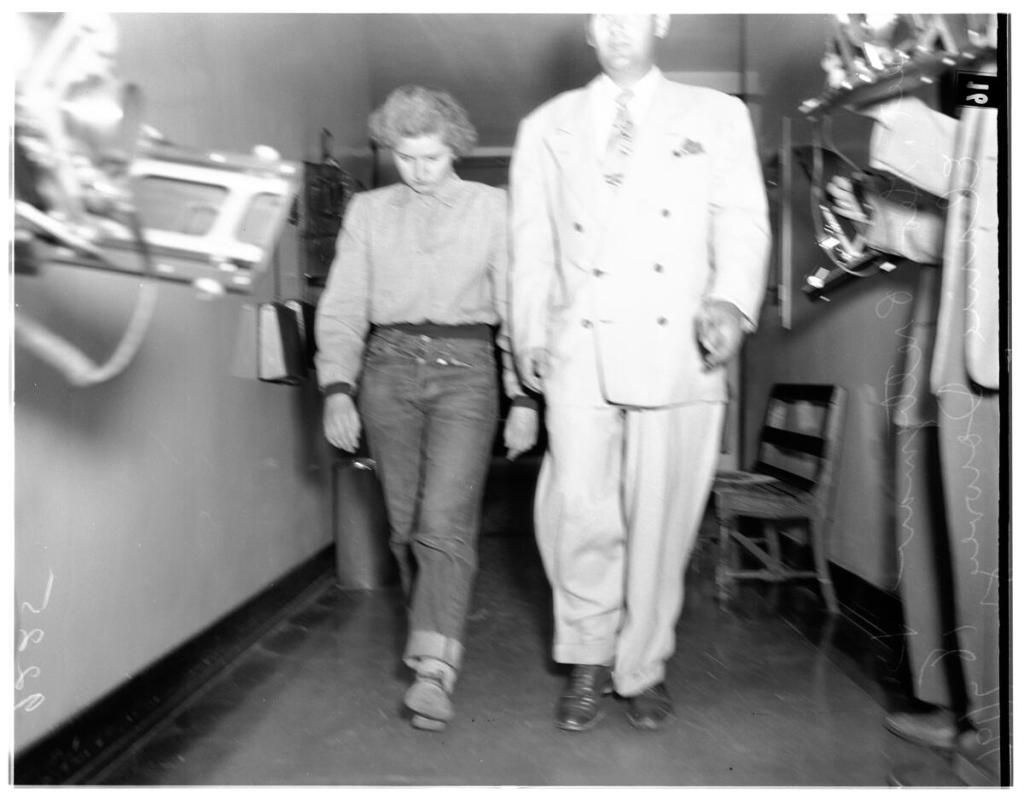
“Girl Stick-Up Artist” Van Nuys, 1951


“Girl stick-up artist (Van Nuys Jail), July 19, 1951. Detective George Pettyman; Elaine Downey — 18 years (suspect); Detective Guy Moulder; Janice Hays (caught with Elaine Downey); Officer K. L. Crondell (bitten by Hays).”

Source: LA Herald Examiner

A Proposal to Build Angels Stadium in Van Nuys


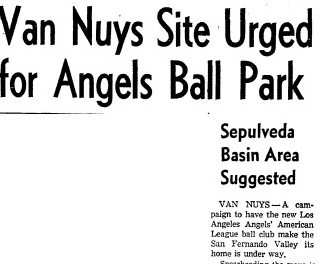
In December 1960, the Van Nuys Chamber of Commerce thought it would be a grand idea to have the recently conceived American League LA Angels play in a brand new stadium constructed right in Woodley Park Van Nuys. 

In the heart of flood basin. But conveniently located next to the 405 and the 101.

They wrote a telegram to club owners Gene Autry and Bob Reynolds imploring them to think about the “level and vacant” 100 acres “available for little or no cost” and adjacent right next to the just completed San Diego Freeway.

“We expect no local opposition to the plan,” said Nelson LaVally, secretary-manager of the chamber, confident that no families would object to the destruction of their local park.

There were two city-owned golf courses and a model airplane field. And the rest of the land “was leased out for agricultural use.”

LA Mayor Norris Poulson (R) supported the idea and liked the idea of a permanent home for the LA Angels in the heart of the largest park, flood zone and bird sanctuary in the San Fernando Valley. 

Councilman Patrick McGee (R) was also in favor of the idea of building a large 50,000 seat stadium with thousands of parking spaces in the middle of Woodley Park. He had given tours of the Sepulveda Basin a few years earlier to another LA ball club owner.

 “I made the same suggestion to Walter O’Malley and Del Webb and the NY Yankees before the Dodger contract was adopted,” Councilman McGee said. 

In 1958, McGee had vehemently opposed the Dodgers’ Chavez Ravine project (which displaced hundreds of Latino families) because it did not provide enough revenue to the city and would give oil revenues to a Dodger youth program, “spending public money for private individuals.”

The councilman thought the hotter valley weather more ideal. Most games would be played at night, and warmer temperatures in the SFV was appealing. Chavez Ravine and Wrigley Field in South LA were “20 degrees cooler”.

But the Angels ruled out the move. And the city’s Recreation and Park Department had other plans to add more 18-hole golf courses, tennis courts and several baseball diamonds.

Once again, visionary Van Nuys business minds and politicians came up with a shallow, ill-conceived and brilliantly self-destructive scheme that produced no results.

A pattern they would follow for the next 60 years. 

Color photos of Woodley Park: Credit to John Sequeira.