House Hunting in 1999.


23 years ago, I was 36, living with Danny in a spacious two-bedroom on the third floor of a well-maintained elevator building in Studio City overlooking the Los Angeles River and paying $950 a month.

I worked in documentary television and hopped from $1200 a week jobs easily and without fear of unemployment.

I had some savings and we began to look for houses to buy, with a budget in the range of $150,000-$225,000.

We found a 900 square foot ranch house on La Maida near Tujunga and Riverside in Valley Village. It was very small and outrageously overpriced at $299,000. We liked the location but decided against it.

Then we saw a fixer upper on Atoll Avenue, near Oxnard and Fulton, just north of Valley College. They were asking $164,000, but the house had no kitchen. None whatsoever. Our realtor, Marty Azoulay, said he talked to the owners and they would throw in a stove and refrigerator if we agreed to the deal. 

We nearly went for the Atoll Avenue house, but after several nerve-racking days we backed out.

We sometimes shopped at 99 Ranch Market on Sepulveda, and one day we found 6436 Blucher Avenue, the last street before the 405 freeway, on a block between Victory and Haynes.

It was 3 bedrooms, 2 baths and 1,846 square feet. We toured the property and took photos. There were steel windows and window air-conditioners, old carpeting, old bathrooms with corroded porcelain, steel awnings that overlooked a front yard with a decapitated tree and the consistent noise of the freeway, only a few hundred feet away.

“Caltrans is building a sound wall. Should be completed by 2002,” Marty assured us.

Next door, a new bachelor owner had just bought the exact same type of house and he had fixed it up nicely, with freshly painted light blue and light green walls. 

But 6436 was in very poor condition. Everything would need upgrading or replacing: bathrooms, kitchen, roof, electrical and plumbing.

We spoke to our realtor and told him to offer $15,000 less than asking. 

He contacted the seller and he came back with her answer.

The house would sell “as is” and she would not budge.

She stood firm at $180,000.

So, we walked away, and ended up buying another house a few blocks away for $194,000.

A Vast Wasteland: 15 Years of Facebook Messenger


Regretful, nostalgic, curious, melancholy, I recently opened my 15 years of Facebook Messenger to look at old messages, sent and received. 

2007-2022.

Who were these people? What did I want with them? What was I hoping for? 

I found a vast wasteland of forgotten names, broken connections and lost memories.

On August 9, 2012, I sent Christian L. a photo from a party. On November 3, 2016, he opened it. That was the end of our conversation. Who was Christian? What photo did I send? I’ll never know.

15 years ago, like 15 minutes ago, I was looking for work. Or thinking of sex. Or trying to connect to someone for some reason involving either reason. 

Zokai was a muscular black trainer from the gym. He was a potential protagonist in my short story, “Decline Press.” I thought I would photograph him. Have him read dialogue from the story. I sent him a message on August 14, 2016. What became of that? Nothing. Maybe I was to blame for spelling his name as “Zaikai.”

I unearthed a buried trail of dead ends, leads that lead nowhere, communications dreamt up out of my hopes, longings and imagination.

I was always thanking someone. 

On June 14, 2012, I thanked Samson whom I talked to at the Raymer Street Bridge. I have no recollection of the man or the conversation, but I do have a good friend with that last name who lives near Raymer Street. 

But he is not that Samson.

Then there was Satoshi, the hermetic, buzz cut Japanese model who brought me to a chanting worship service at his Buddhist temple in North Hollywood. I spent two hours gasping for breath as I repeated the same indecipherable chant over and over again. 

I tried to contact him after the service, but he never returned my messages. Angered, I sent him one of my petulant texts, and then attempted to apologize. I felt bad for him because his mother died. And then I met a man whose mother also died, me.

I was forever striking out and asking for forgiveness. 

I was always trying to fix what I fucked up.

I often attempted to go back in time before I offended, to find my way back to paradise before my fall.

Does everyone have a life like mine? Is it mere honesty or self-flagellation which propels me to air out long forgotten messages that don’t mean anything?

Should I even air my dirty laundry? Aren’t we all saints in our own mind? FB Messenger begs to differ.

Ambitious, directed, soul cycling, tanned and glistening fashion executive Glynis who I worked with at Ralph Lauren in 1989-90. I owed her an apology before she asked for one. That was 2013. I haven’t spoken to her in ten years, but here I was asking for her forgiveness.

I look again at 15 years of long-gone messages that went out to strangers, friends, acquaintances, co-workers,hotties, cousins, aunts, brothers, lovers, ex-friends and permanent enemies. I review notes of infinitesimal pettiness, penitential pleading, glib emotionality. 

I see myself in the mirror, cracked, crazy and unhinged. Or kind, forgiving, funny, ridiculous, self-effacing. 

My father died in 2009 at age 76. He grew up in Chicago’s Hyde Park neighborhood and his boyhood pals included Norm Jacobs, who took over Baseball Digest in 1969. Jacobs is 89 and a silent partner with Jerry Reinsdorf in the syndicate that owns the Chicago Bulls.

Norm is also a multi-millionaire publisher and owner of a sports team. His pal, my dad, spent his life going from mediocre job to job in publishing and advertising, battling epilepsy, raising a retarded kid. Norm never hired my dad, never looked after his well-being, really never knew a thing about my father’s life after 1950.

After my father died Norm was annoyed was me. I had let his teammates down.

During the pandemic death was all around. Carol had died. She was a girl, then a woman, who moved with her family from Wilmette, IL to Woodcliff Lake, NJ the same year we did. Our families were friends. I lost touch with her. Now she was dead.

I sent a condolence message to her surviving partner Katherine in Chicago who never answered.

Did it matter I cared enough to send a kind note to a grieving person I had never met, 40 years after I last spoke to their dearly departed?

Yet my condolence note on March 19, 2018, to Patrick, concerning the death of our mutual friend Trout, mattered.

I found a long-forgotten request to Councilwoman Nury Martinez to clean up a trash heap.  When the distinguished history of Van Nuys in the early 21st Century is written who will memorialize my contributions and my plaintive emails and texts to correct the filth that befouls our district?

Was the trash cleaned up? Did the trash come back? Or did it persist, like my messages, under a smoldering heap?

There are many messages to people that fell out of friendship. Chris was offended when I said his kitchen wall was hollow. Jacque, friend of 40 years, crucified me for not stopping off to say good-bye when I left Chicago after a two-day visit. “You were always selfish!” she said.

And Kristy McNichol. I sent her a FB message when I finished writing my novel about two families in 1980s Pasadena, “Exiles Under the Bridge.” Surely, she would be interested in it, having starred in a late seventies TV show, Family, which was set in that town.

How the imagination works, and tortures, and devises improbabilities, spun out of fantasy, to keep us alive and hopeful. 

Sweet Anita. We met through my blog. She lives nearby. We always laughed, she always complimented me, we had dinner at her house, she came to mine for wine and cheese. 

I pulled her off FB when we moved to opposite ends of the political fence. Yet I still miss her, wish I could crawl back into her good graces, for surely, we have done nothing to offend one another, and what happens in the voting booth, should stay in the voting booth.

I grew up when it was unspeakable to desire the same sex. Now it is blasphemous to desire a person from the other political party. 

On May 30, 2019, I waved to Christina. Who is she? I don’t know. 

Keith B. came up to me at Starbucks on August 3, 2017. 

Cary apologized for “getting pretty boisterous” at MacLeod Ale on April 6, 2015, and how things may have gotten a bit out of hand, and damn if I don’t remember anything about it.

MacLeod’s beer and my intoxication, was another instigator of trouble when I made a joke at the brewery about Sam W.’s “$250 sweater.” He didn’t take offense.

In 2015, just like 2022, and 1994, I was wondering who an agent for my writing might be. An obscure life prepping for a recognized life that will never be.

Producer, director, writer, political activist, and Married to a Millionaire Melissa of Nyack, NY let me know my short stories had no money in it.

Brad sent me a message on October 9, 2013, asking if I knew where Matt was? (Matt was a hustler/model I photographed a few years earlier.)

I didn’t know where Matt was. 

I still don’t know where Matt is.

Columus Day.


There is new construction fencing and green tarps in front of 6505 Columbus. A building permit has been created for a new single-family house on the one-acre site of the former Rancho Perfecto which I wrote about in 2019. 

The idea that the land will be graced with just one single house is ludicrous. Every property in the neighborhood is stuffed to the gills with accessory dwelling units, vehicles or marijuana gardens. And, in 2021, any one house on a given lot in Los Angeles must self-procreate.

The property is near the corner of Columbus and Hamlin. It is across the street from the blue sign, “Columbus.” Mrs. Tweddle, a writing teacher, resides opposite this lot and runs a school for writers, You Tell Yours . A couple of blocks north is the Columbus Avenue School. All around there are signs, schools, teachers and the word Columbus

Columbus is everywhere.

But the new sign is 6505 Columus.

A bad omen for that architectural phrase: God is in the details.

Given the paucity of refined signage what will the new house look like? 

I expect high walls, cinderblock and iron, and a lot of concrete to park large vehicles, Hummers, SUVs, dump trucks, and monster trucks. There will be high security cameras and floodlights all around, and perhaps a triple story, double front door leading into a vast marble hallway with plastic seating and a pool table. The style will be Home Depot on the Range.

This was once a pretty nice place to live, before the city and state went to hell.

On January 15, 1950, this property and original house was listed in the LA Times at $22,500. 

Large 6 rm ranch type with 1 ½ ba. plus guest house, rumpus room & bath, laundry house, tool house, large double garage with storage closets. Patio, lighted badminton court, bbq and plenty of shade and fruit trees and roses. 

Does anybody these days desire a badminton court?

Maybe badminton would improve the neighborhood.

The Pink Oasis: Time Magazine, July 4, 1949.


“That amazing mechanism, the human eye, adjusts itself to Los Angeles in a matter of hours. The optic nerves grow submissive before the red glare of geraniums, the flash of windshields, the sight of endless and improbable vistas of pastel stucco. Even on his first, casual, hundred-mile drive the pilgrim achieves a kind of stunned tranquillity, and gazes unblinkingly at palace-studded mountains, rat-proofed palms, and supermarkets as big as B-2Q hangars.

This surrender of the senses is seldom averted by the city’s more conventional scenery. Downtown Los Angeles has genuine smoke-stained old brick and stone buildings, jammed together as tightly as those of Philadelphia or Baltimore. Hundreds of old-fashioned clapboard houses stand uneasily in the sun along its older residential streets. But the visitor in 1949 is apt to stare at them less in recognition than in disbelief, like a wanderer pushing through the vine-hung ruins of Angkor-Thorn.

They are obviously the work of a dead race—the people who thought Los Angeles was going to be a Cleveland with orange trees. After four frantic years of war and four wild years of peacetime boom, it is plain that Los Angeles will never be like anything else on earth.

More Fish then Boston.

By now it is probably the third biggest city in the U.S. —more than 2,000,000 people live within its far-flung city limits, more than 4,000,000 in its metropolitan area—and it has gotten pinker, more sprawling, more like a Los Angeles promoter’s dream with every advancing mile.

It has given the lie to the starched double-doubters who had cried that Los Angeles was a gaudy but impractical contraption which would inevitably collapse, trapping swarms of blondes and bare-toed yogis in its wreckage. It has become an industrial giant, has attracted not only new people (949,585 in Los Angeles County since Pearl Harbor), but new money, new business, and $450 million in factories and machinery since V-J day.

Its economy no longer depends directly on its basic industries—oil, oranges, motion pictures and aircraft. It lands more fish than Boston or Gloucester, makes more furniture than Grand Rapids, assembles more automobiles than any other city but Detroit, makes more tires than any other city but Akron. It is a garment center (bathing suits, slacks, sports togs) second only to New York. It makes steel in its backyard. Its port handles more tonnage than San Francisco.

It has built 240,000 new houses and apartment units in the last four years. Whole new villages have sprung from its brown plains, some lush and expensive, others as starkly laid out as well-planned graveyards, all equipped with their own highly colored, glass-heavy shops and markets. Enormous, gleaming new branch department stores have sprung up, not only along Wilshire Boulevard’s fabulous Miracle Mile, but in virtually every suburban area. A city ordinance requires that new stores have parking lots; most are as big as football fields.

Los Angeles has finally forced the East to go West and do business. Many firms have surrendered to it completely, have moved their headquarters to Los Angeles. Among them: Rexall Drug, Inc., Carnation Co., American Potash & Chemical Corp. With all this, Los Angeles is the richest agricultural county and the most productive dairying county in the nation. As an afterthought it raises 3,000,000 rabbits, 10,000 chinchillas and most of the country’s cymbidium orchids.

In a Little Spanish Town.

It has reached this state of supercharged development through a process as astonishing as a Cecil B. DeMille production. Los Angeles began life in 1781 as the Spanish pueblo of Nuestra Señora la Reina de Los Angeles de Porciúncula —a comatose village of 44 souls, surrounded by arid plains and arid mountains. It dozed for a century, hardly opening an eye when four square Spanish leagues of its dusty ground was incorporated into a U.S. city.

Then the West-reaching railroads got to Los Angeles—the Southern Pacific in 1876, the Santa Fe in 1885. New settlers came in expecting an oasis and found none. They set out to build an artificial one. They dug wells with imported picks, planted imported palms and eucalyptus trees, cultivated lemon, orange and nut groves and a thousand and one foreign flowers, grasses and grains. They built with imported brick and lumber. They had no domestic material but sunshine.

A city sprang up where no city seemed to belong. It built a 233-mile aqueduct, ruthlessly sucked away the water of the distant Owens River—a project which turned the verdant Owens Valley to desert and stirred its farmers to rebellion. It constructed an artificial harbor, hatched the motion-picture business and raised oil derricks and searchlight beams. Its full-voiced Chamber of Commerce ballyhooed to climate. The city gulped in armies of aging lowans, land-hungry Oklahomans and dazzled tourists.

It grew without inhibitions. It was fascinated by space, color, the vehement sermons of real-estate sharks and the horticultural efficacy of powdered cow manure. It developed into a new kind of city—a sprawling confederacy of villages, with five branch city halls and 932 identifiable neighborhoods, in which life is dedicated to the sun, the lawn sprinkler and the backyard grill, and in which the swimming pool is the mark of success and distinction.

Over the years it developed a new breed of Big Man. They were plungers, they were impatient of tradition, and they were fascinated by newness, bigness and the sound of battle. Director D. W. Griffith demonstrated that the jerky, flickering motion picture could be a dramatic form with sweep and magnificence. M.G.M’s Louis B. Mayer ran a cheap variety theater in Haverhill, Mass, into a cinema empire. Oilman Edward L. Doheny, a gold prospector from Tombstone, Ariz., found a fortune beneath his feet and exploited the vast oil wealth of Los Angeles. Donald Douglas and “Dutch” Kindel-berger built air armadas, and restless Henry Kaiser, fabricator of dams & ships, gave southern California its first complete steel plant.

City on Wheels.

Los Angeles became the first big city of the automobile age. Its citizens worship the fishtail Cadillac, use their cars for almost all transportation (there is one car for every 2.6 persons—the nation’s highest average), drive up to traffic lights like ballplayers sliding into second, and regard the pedestrian with suspicion and distrust.

A pearly industrial smog now hangs embarrassingly over the city for days at a time, dulling the sun and stinging the eyes of the population. It is no longer the great open-shop town—labor unions, which cracked its defenses during the war, have consolidated their gains in the years since. It has a new leavening of industrial workers. But its tone, spirit and huge aspirations are unimpaired.

Rich, booming, and afloat with dull-eyed suckers, it is an irresistible target for shady operators, con men, burglars, jewel thieves and tired Eastern torpedoes—all of whom slip into sport coats and slacks on arrival. Murders are often bizarre. Elizabeth Short, nicknamed the “Black Dahlia,” became the most highly publicized corpse in the country after a citizen left her slashed body on a vacant lot. A Mrs. Mary James was dispatched with more finesse—her husband thrust her foot into a box containing a rattlesnake, gave her a drink of whisky and then drowned her in the bathtub.

Los Angeles has its own odd set of local customs. It has few basements and fewer furnaces and almost every house has an “incinerator” in the backyard—a reinforced concrete stove with a screened stack for burning rubbish and gaper. Its real-estate men still hang up strings of flags to advertise a house for sale. Its love of the unusual extends even to the young —high-school boys at Van Nuys began dyeing their hair green this spring, to the dismay of parents and teachers.

It is movie struck, and its residents imitate and envy the stars of the screen— though members of “downtown” society and the rich of Pasadena enjoy bristling at them and Los Angeles society pages go out of their way to avoid printing a motion-picture person’s name. It is a city full of people from somewhere else and it still has little sense of tradition or of unity.

Dreadful Joy.

It has hordes of critics, and they damn it like Victorian belles stabbing a masher with hatpins.

Intellectuals, Easterners and British writers, many of whom have lived happily in its sunshine for decades,of Dreadful Joy [where] conversation is unknown.” H. L. Mencken handed down a one-word verdict: “Moronia.”

But Los Angeles has its own brand of magnificence. It is amazingly clean, awesomely spacious. It has ramshackle houses, but in comparison with other big cities, no slums. Its great boulevards wind through miles of windblown trees, bright flowers and sweeping, emerald-green lawns. It is a Western town, with the memory of Deadwood and Virginia City in its bones; in its love of display, its detachment from the past and its obsession with its own destiny, it is simply striking the attitude of the gold seeker and the trail blazer.

Nothing about the city is more surprising, at first glance, than the man it has elected and re-elected its mayor. This week he will be sworn into office for the fourth time.

Peace & Quiet.

At 61, after ten uninterrupted years in office, plump, greying, long-winded little Fletcher Bowron often seems oddly like a preacher running a wild-animal act. He is obviously appalled by the way his charges snap and yelp, and he says so—his remonstrative cliches have antagonized not only the City Council (a group which he is certain is plotting the city’s Downfall), but virtually every civic organization in town.

In throbbing, booming Los Angeles, he is a man who hankers after peace & quiet. Said he, sadly, last week: “The good Lord didn’t intend this to be an industrial city.” He is still apt to speak of automobiles as “chug wagons” and to recall with a reminiscent sigh the good old days when Santa Monica Boulevard was nothing but a dusty lane running between outlying farms.

He is the antithesis of the type which even Los Angeles fondly believes typical of its executives—the flamboyant figure in a shaggy sports jacket who barks decisions into three telephones. Fletcher Bowron wears dark suits, black shoes, and rimless spectacles. His desk, in Los Angeles’ 32-story City Hall (the 13- story limit in earthquake-conscious Los Angeles was relaxed to make it the highest building in town) is a hopeless clutter of papers and reports.

He is the slow-moving despair of complaining citizens, committees intent on getting information and newspapermen with deadlines to make. Three red chairs stand at attention before his desk: interviewers often sink into them like dental patients steeling themselves for a long, tedious inlay job.

Bowron listens politely to a question, tilts back, forms his hands into a steeple on his paunch, and answers —sometimes for half an hour without a stop. He seems to forget time, and his voice rises and falls as soporifically as the sound of distant surf. Said one defeated interrogator: “Asking him questions is like trying to bail out the ocean with a teaspoon.”

But for all this, Fletcher Bowron is the people’s choice. The town often ignores him—only three days before he was re-elected last month, the Los Angeles Examiner put him and his campaign back on an inside page, ran a Page One banner line which read ALY KISSES RITA’S FOOT. But his constituents know he loves them.

He is a fiercely honest man, and is eternally intent on protecting Los Angeles from itself. Last week, when one Brenda Allen, queen of Hollywood’s call girls, charged (from jail) that Los Angeles cops had accepted bribes from her, Bowron reacted less like an injured politician than a father whose children have been caught smoking cigars behind the barn.

Despite his misgivings about its didoes, he is fantastically proud of the city, and works 14 hours a day at his trying job. He seldom sees his wife, or his 15-year-old adopted son, Barry, except at breakfast. His most vehement critics agree that he would scrub City Hall down with a toothbrush if he decided, after thorough investigation, that the gesture would help Los Angeles.

Honest Mayor.

He became mayor almost by accident. A native son, he had started out in the world as a reporter on the San Francisco Sun after graduating from the old Los Angeles High School (now being torn down to make way for Hollywood Freeway) and spending two years at the University of California at Berkeley. He achieved his biggest youthful ambition in 1917; after years of studying law in his spare time, he was admitted to the California bar.

He joined the Army in 1917, served through World War I in a San Francisco Army office. In 1922 he got a job as a state deputy corporation commissioner; it seemed that he might jog on through life as an inconspicuous public servant. But California’s Governor Friend Richardson, impressed by his thoroughness, appointed him to the Superior Court bench. In twelve years as a judge his homely virtues and his obvious distress at civic corruption attracted the interest of Los Angeles reformers.

On Jan. 14, 1938, a tough, red-faced private detective named Harry Raymond indirectly did Bowron a good turn. Raymond, who had been loudly threatening to “blow the lid” off the city, walked out to his car, got in, stepped on the starter and detonated a bomb which someone had unkindly hidden under the hood. Bomb, car, detective and all went up in a fearful explosion. Raymond was not killed—although surgeons had to dig 122 separate slugs out of his torso.

Enemies. A police captain named Earle Kynette and another officer were sent to San Quentin for the crime, and the administration of Mayor Frank Shaw was doomed. Bowron was pressed into service as a reform candidate; he was elected on his 16th wedding anniversary in 1938,

Cautiously, but conscientiously, he set out to clean up a Los Angeles that had 300 gambling houses, 1,800 bookies, 23,000 slot machines and 600 brothels. He waited for seven months before he took steps to remodel the police department, but when he did, he kicked out 23 high-ranking officers. He appointed a college graduate as police chief, and a Rhodes scholar as fire chief.

He banished slot machines and pinball games—though most of them reap peared outside the city limits. He abolished other municipal evils—the sale of civil-service promotions and the use of the city zoning ordinance to squeeze bribes from commercial enterprises.

None of this was accomplished without Bowron’s tramping on sensitive toes; he made scores of enemies. He was accused of being arbitrary, tactless and indecisive, and was variously described as ‘Chubby Cheeks,” “Fumbling Fletch,” and “Bottleneck Bowron.” He was even attacked by Cafeteria Owner Clifford Clinton, a vociferous reformer and the man who spent $72,000 to put Bowron into office. “Drab . . . colorless … far from inspiring . . .” cried Clinton. “We were misled . . .” Clinton ran against him;—and lost.

To the majority of the citizens Bowron seemed to be just the fellow for City Hall —a man who would keep the city clean, cry out at its enemies, real and imaginary, and stay up nights worrying while it went about its noisy and exuberant business.

Last week, for all the forced-draft accomplishments of the years since V-J day, the city and its satellite towns were still grappling with a multiplicity of problems. The prosaic business of supplying new homes with gas, sewage lines and electricity had taken on the breathless urgency of a serum flight to Nome. Under Bowron’s administration 50 miles of cast-iron water mains had been laid every month to keep up with the city’s mushrooming growth. Los Angeles had built 34 new schools in ten years and still needed “a new one every Monday morning.” Though the Pacific Telephone & Telegraph Co. had installed 416,338 telephones since V-J day, it was 41,405 orders behind last week.

Los Angeles still had a vast supply of its most precious and vital commodity—water. It drew 255 million gallons a day from the Owens River. With its adjoining towns it sucked too million gallons through a 392- mile aqueduct from the Colorado River; despite the bitter interstate dispute between California and Arizona over the river’s output, Los Angeles expected to tap the Colorado more freely in the future.

But in common with the rest of arid Southern California, Los Angeles lusted for more. Its County Board of Supervisors eyed the ocean—it suggested a prize of a million dollars for the man who could provide a process for distilling sea water cheaply enough to make its use practical. It got letters from prison inmates, housewives, inventors, crackpots, from all over the country, from Holland, India, England, Australia and half a dozen other foreign lands.

None of them gave the right answer. But Angelenos were sure that the problem —and all the rest of the city’s problems—would be solved in good time. They had to be. City planners expect a population of 6,000,000 in greater Los Angeles by 1970. Less cautious citizens call the planners pikers, are certain that the city will eventually be the biggest in the world. And after that? Undoubtedly, its boosters mused, it would have another boom.”

Copyright 1949, © 2014 Time Inc. All rights reserved.

Beware of Big Promises: 1963


Community leaders, developers, planners, business people, and boosters are forever promising a brighter day tomorrow.

So it was in Van Nuys nearly 60 years ago.

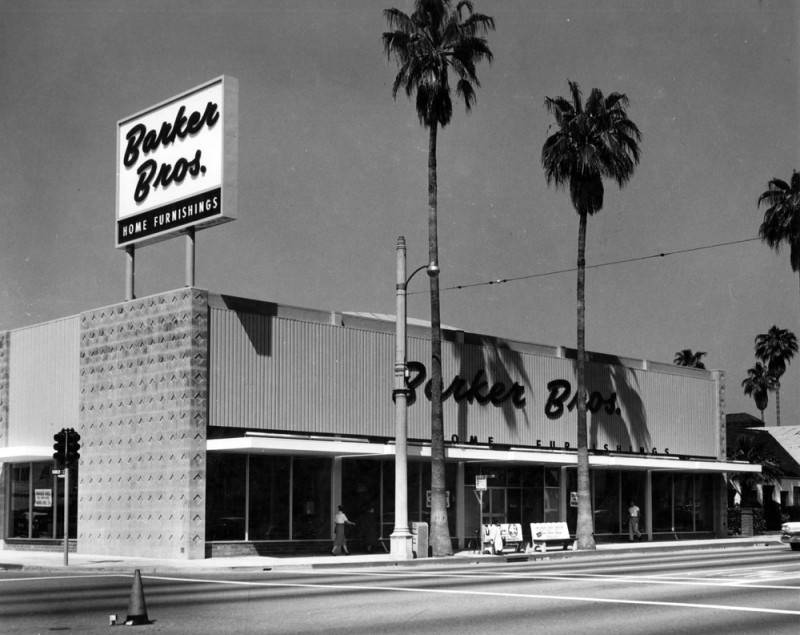
The new police station, a striking piece of $5 million dollar architecture, whose inspiration appears to be many vertically positioned Philco televisions, was nearing completion on March 29, 1963. The grand civic center, a pedestrian promenade, a library, and several court buildings would complete the ensemble.

On February 16, 1963, 400 well-groomed white people gathered at the Masonic Temple Lodge on Sherman Way to view the exciting land use plans unveiled by the Los Angeles Planning Department governing the future development of Van Nuys.

A mystery remains: Why was a law enforcement structure removed from the street and shoved way back behind a deserted pedestrian mall?

The idea that a police station, whose presence is ostensibly there to prevent crime, should be buried far from the streets where officers patrol, is one of the confounding results of architectural planning which often presents glorious schematics but fails to consider practical results. Van Nuys Boulevard today is a ghost town, except for those who are there to make crime. A cop or two might reassure diners, drinkers, and those who are out for a nighttime stroll.

And the plans for Van Nuys? What have they produced in the last six decades? Probably the largest conglomeration of urban ugliness, environmental catastrophe and social upheavals within the entire United States.

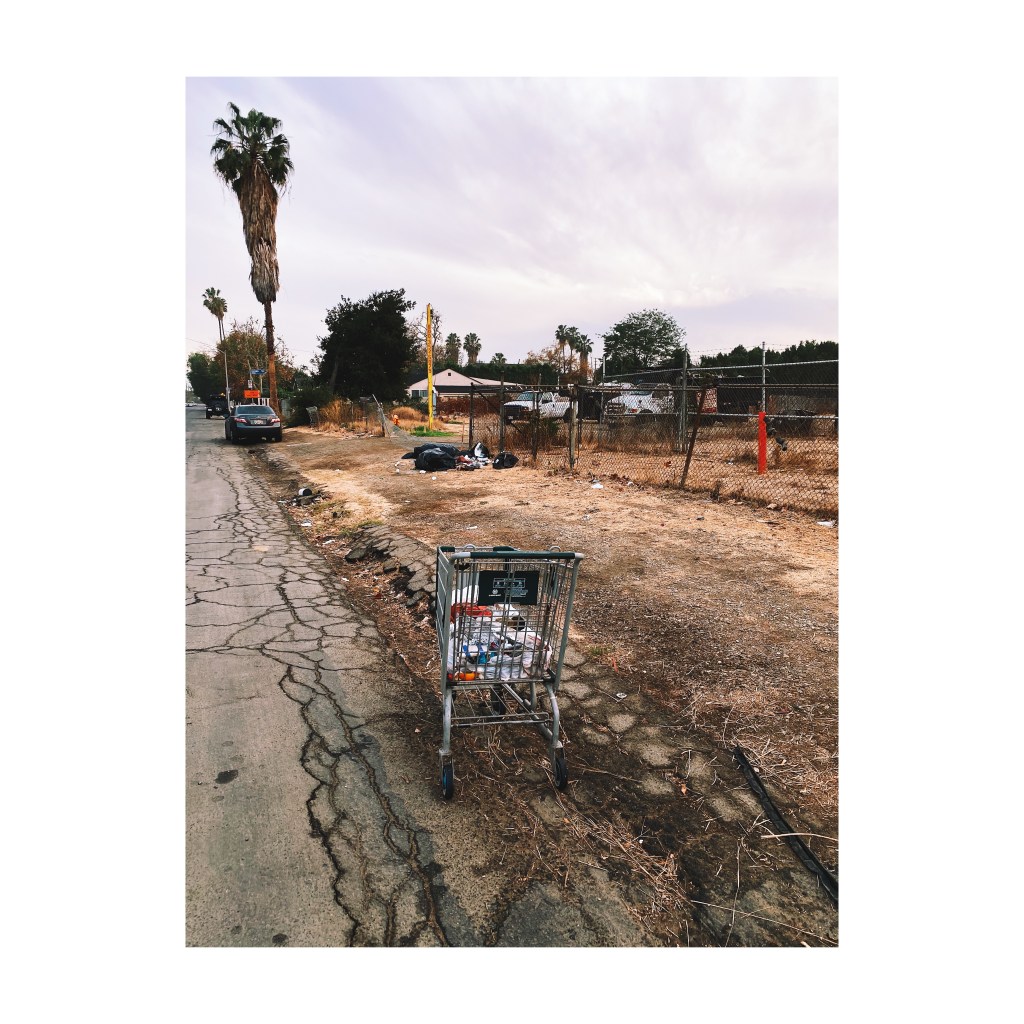
Our surroundings are here to serve only the needs of cars, our air is dirty, our parks few and overrun with garbage and homeless, and we live under the daily and nightly sounds of gunfire, fireworks, sirens and patrolling helicopters. Our rivers are concrete, our boulevards are decorated with billboards and wooden traffic poles, our corner stores are marijuana outlets or parking lots, and the sidewalks are festooned with shopping carts, discarded sofas and tents.

Though most everything along the wide streets looks like impoverished crapola, the rents are exorbitant, and a “starter” home is $800,000. Any efforts to build higher than four stories brings out the angry loudmouths on NextDoor, and developers are maligned and despised by the general public while bearing ridiculous regulations that require onerous fees and expensive construction that inflates costs and discourages new housing. The little old lady, who inherited the three bedroom ranch house from her parents, and pays $300 a year in property taxes, is usually the bitterest one of all.

“I pay taxes! Why does everything look like shit!” she screams.

What kind of city do we live in? What is wrong with us?

Our system of life on Earth is failing globally, and especially here in Van Nuys.

The lesson: beware of great promises made by the powerful for they only care about themselves.

Credit: LAPL/Valley Times Photo Collection

Reunion


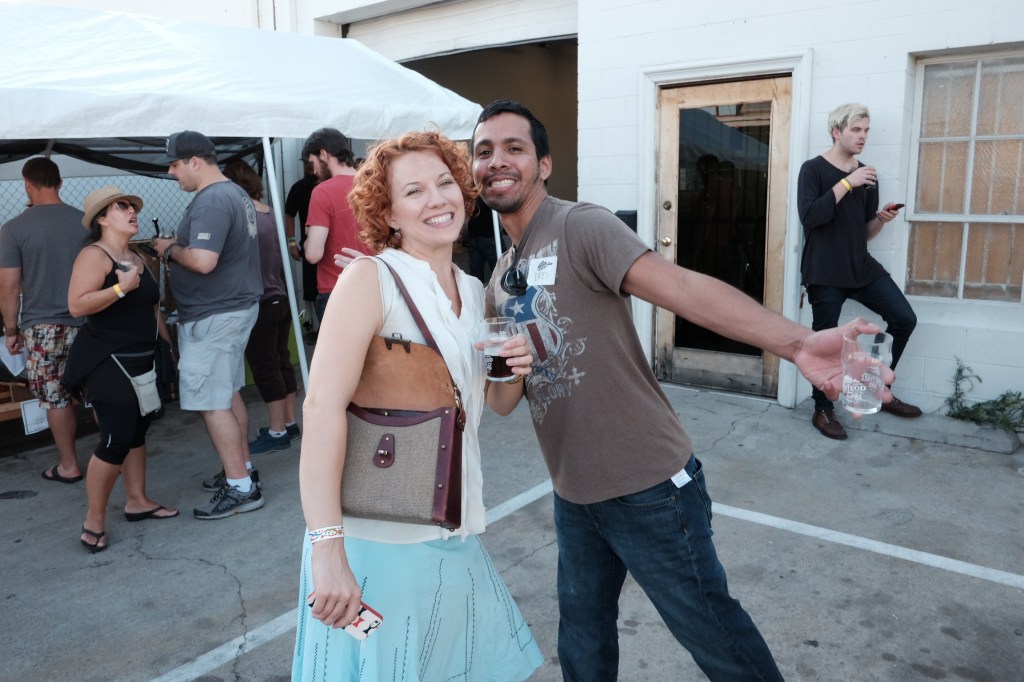
Last night was a reunion at MacLeod Ale, the first time all of us had gathered since last March 2020.

Times have changed.

There was a large area outside under tents where many could gather. Let’s hope they keep this pandemic innovation.

Some pizzas are spicier, some beers are smaller, some people are larger.

After 15 months, everyone looks a few years older, including this writer.

As night fell, the place got more crowded, and that familiar loudspeaker announcement came on to have someone move a car blocking other cars on the driveway. There has never been enough parking here, which is a good thing for those who want people to walk, Uber or bike here. Bad for those who measure the quality of life in Los Angeles by how much parking there is.

Anyway, it was good to see friends. Again.