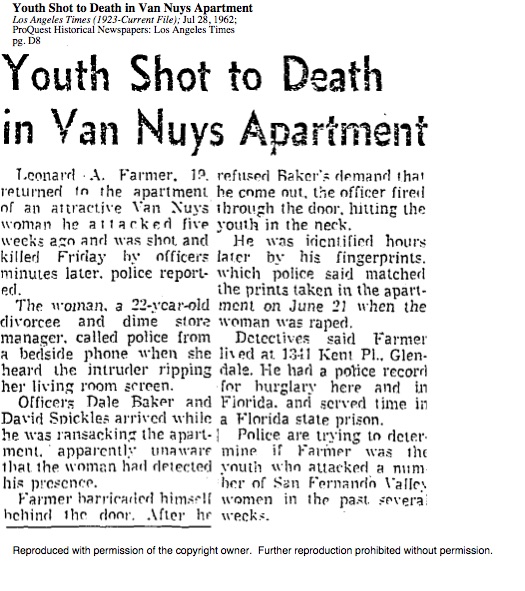
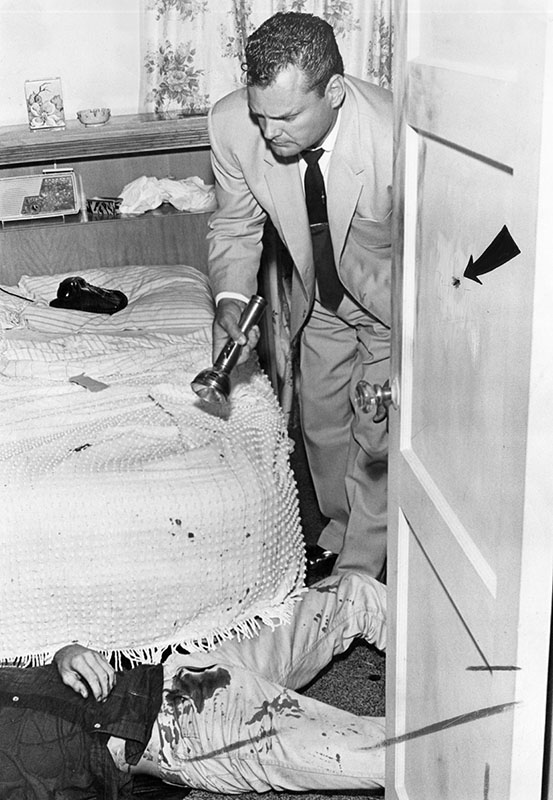
July 28, 1962: Youth Shot to Death in Van Nuys Apartment


Clearly, there was crime and murder in Van Nuys in 1962.

In great staccato shorthand a woman is described as “a 22-year-old divorcee and dime store manager” (doesn’t that say it all). Divorced and managing a dime store. Things could be worse at 22.

Miss Colleen K. Mitzel was alone, in her apartment, and called police from a bedside phone when she heard an intruder, later identified as Leonard A. Farmer of Glendale, aged 19, ripping her living room screen.

She kept her revolver but did not use it, waiting for the police to come.

When cops arrived, the suspect was ransacking the apartment and then barricaded himself in a bathroom. After he refused to come out and surrender, Officer Dale Baker and his David Spickles fired through the door and killed him.

The intruder died in a stranger’s bathroom in Van Nuys. An ignomious way to depart this world.

He had a police record and had served time in a Florida prison.

Random Observations.


The early March air smelled quite frequently of jasmine yesterday.

The skies were cloudier, anticipating and foreshadowing the slowest, rarest event that mercurial, moody nature ever delivers to Los Angeles: rain. We want it so badly that when it comes we regret it, like so much else in life.

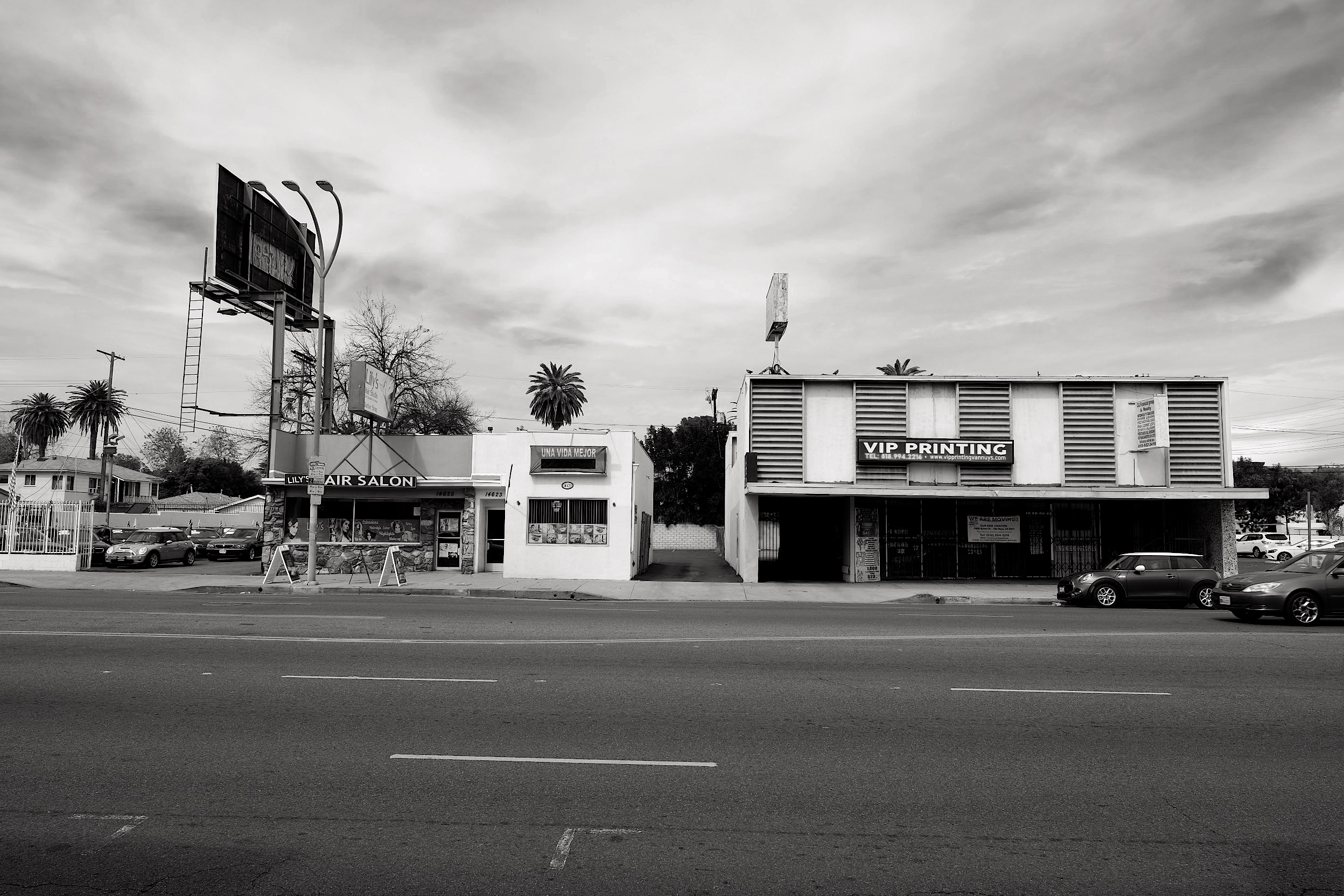
I walked east along Victory and stopped at 14619, where a two-story building, housing VIP Printing, caught my eye.

Built in 1960, it’s a box with a second floor of louvered windows and panels, alternating. The first floor has shops under a protruding horizontal overhang. Except for the ugly signs marring the façade, it has a plain purity and deserves better treatment.

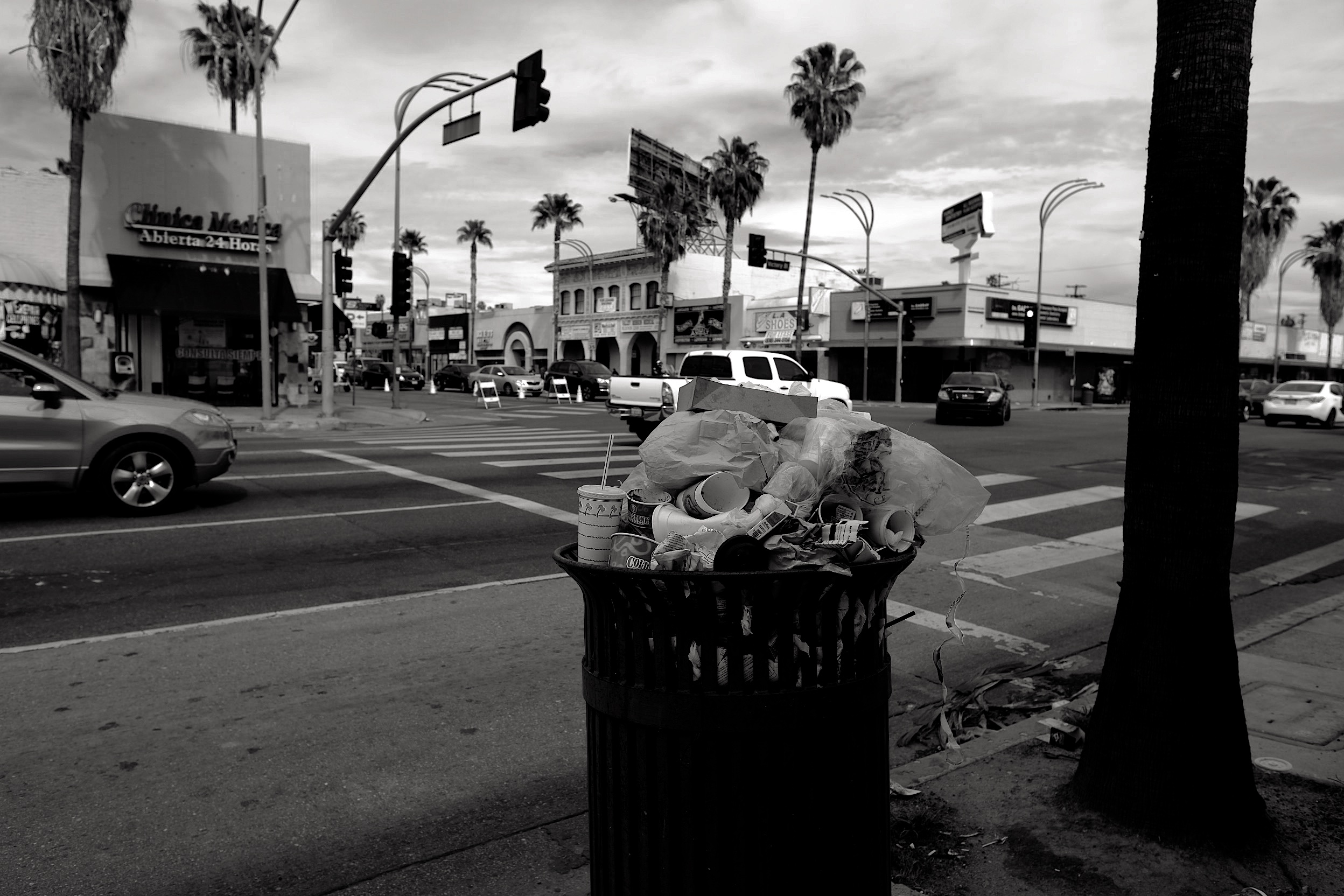
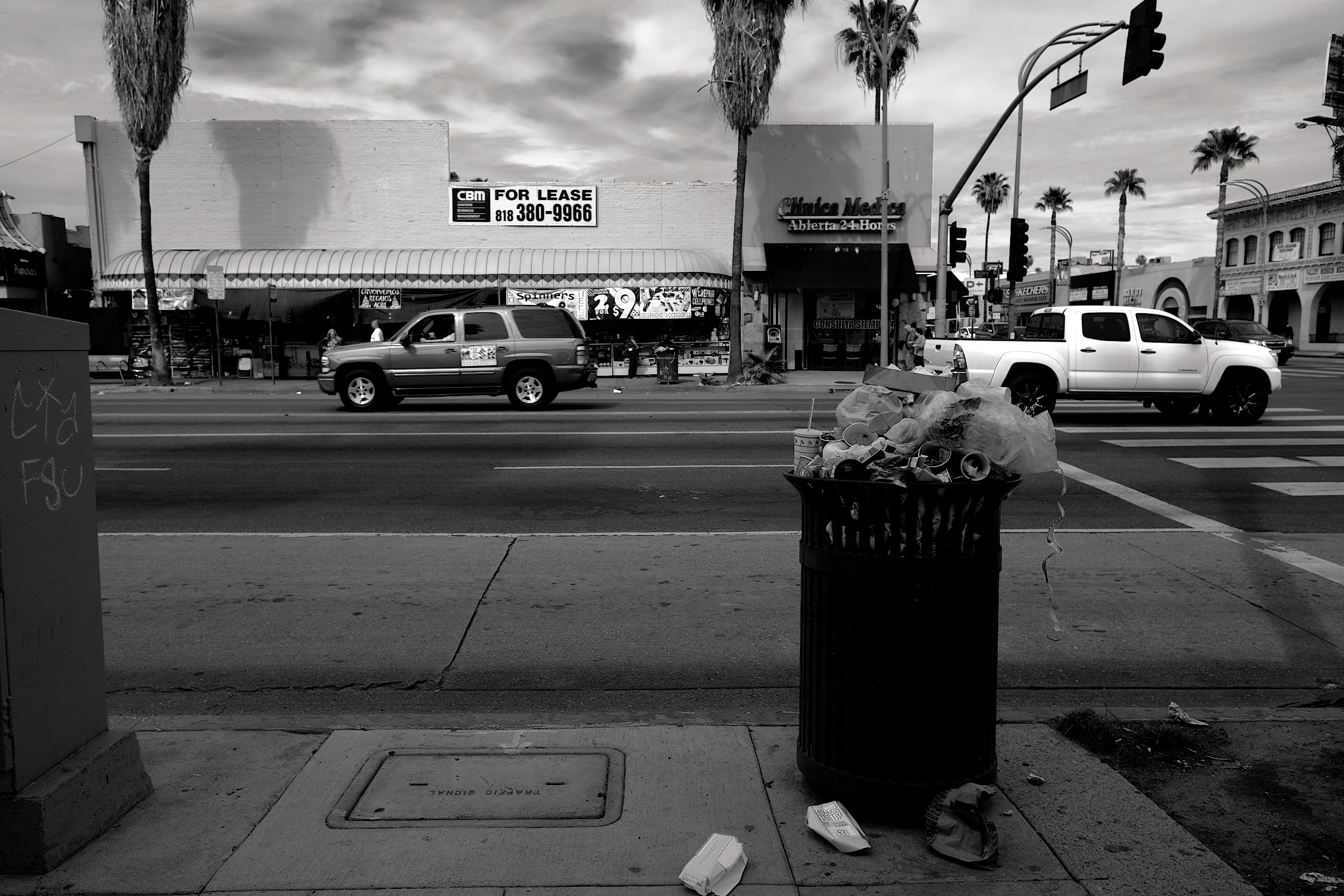
On the corner of Van Nuys Boulevard and Victory, the symbol of Van Nuys: an overflowing trashcan.

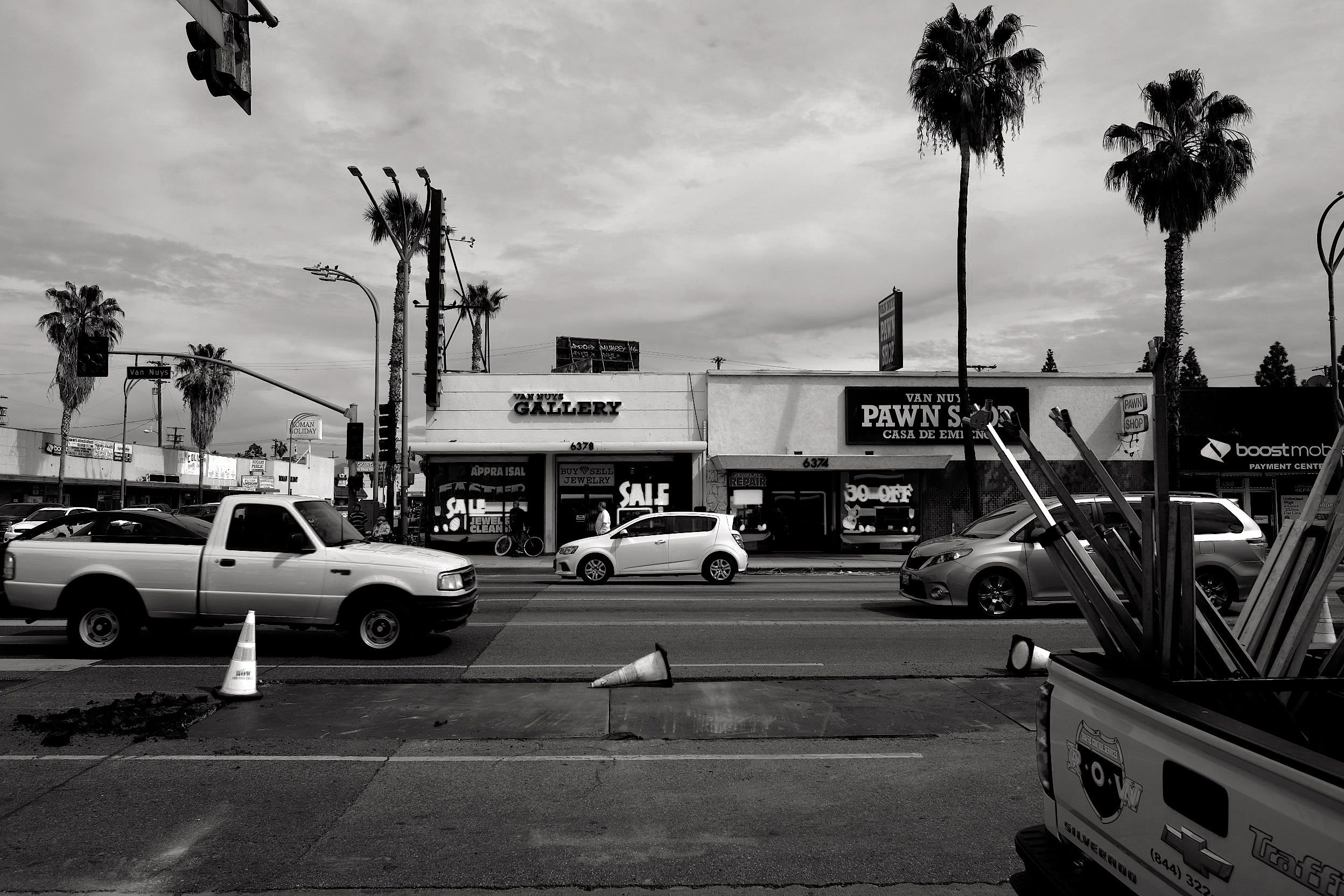
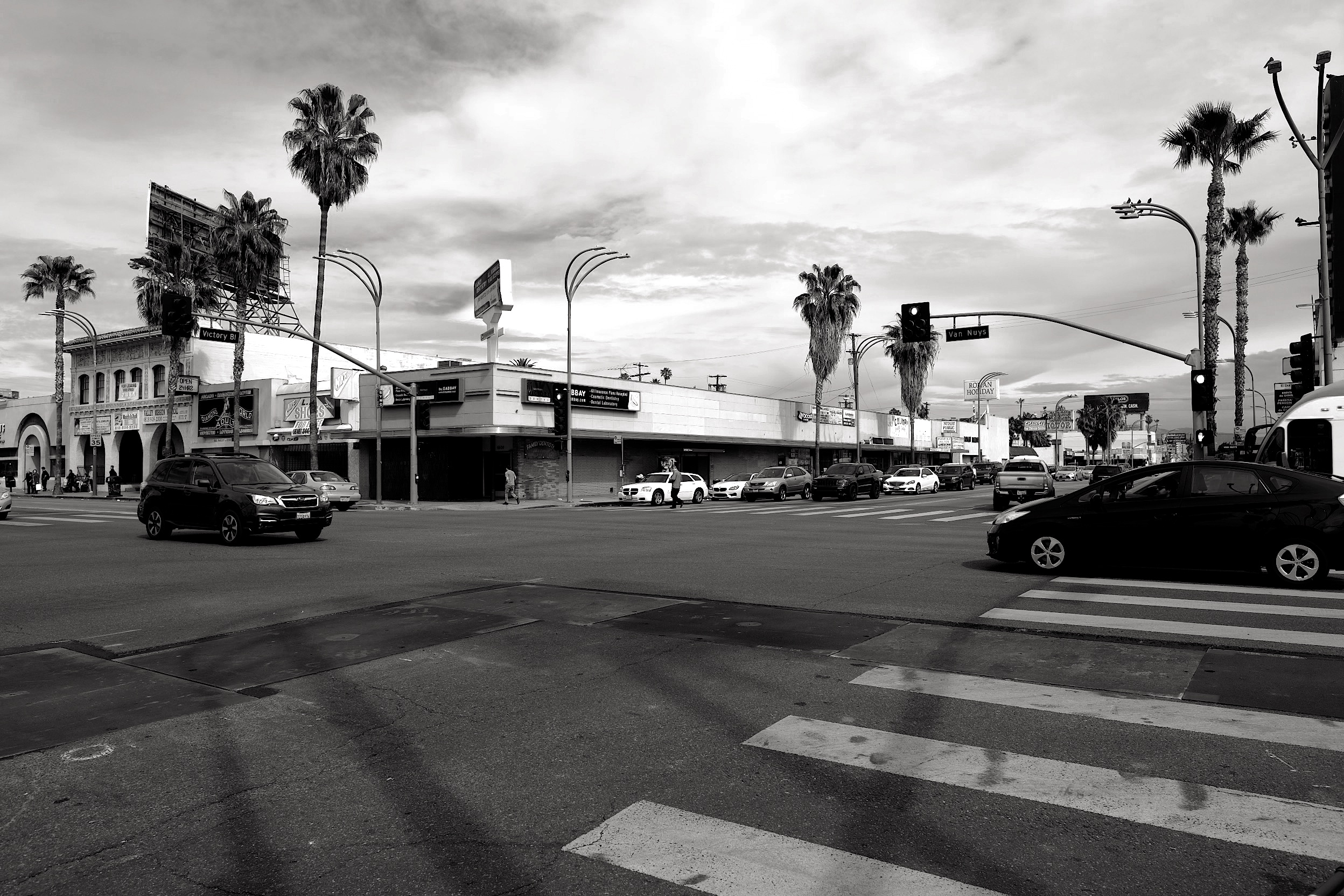
Also at that intersection: decrepit one-story buildings.

In a finer city, these prominent parcels might be five, six, seven, or eight stories tall and contain many apartments on each corner. This is Van Nuys, stuck in 1966, perpetuating wasteful land use, wasted because housing is desperately needed. We need one less pawnshop and 500,000 more apartments.

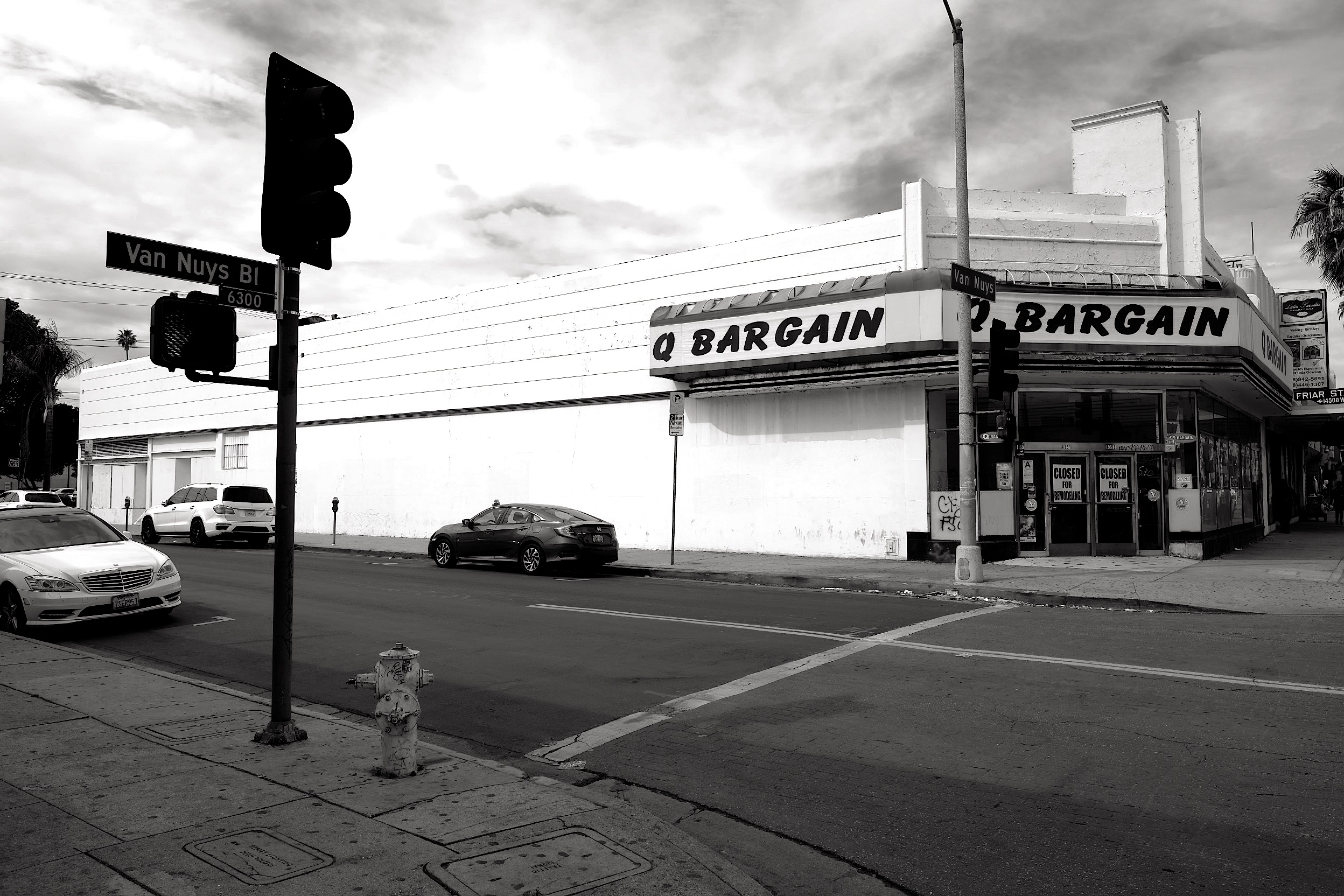
The Q Bargain Store at 6351 Van Nuys Bl. was built as Sontag Drugstore in the 1940s. It still has the streamlined look of its youth. Like all of Van Nuys Boulevard north of Oxnard, it got old, it got poor, and we all got fucked.

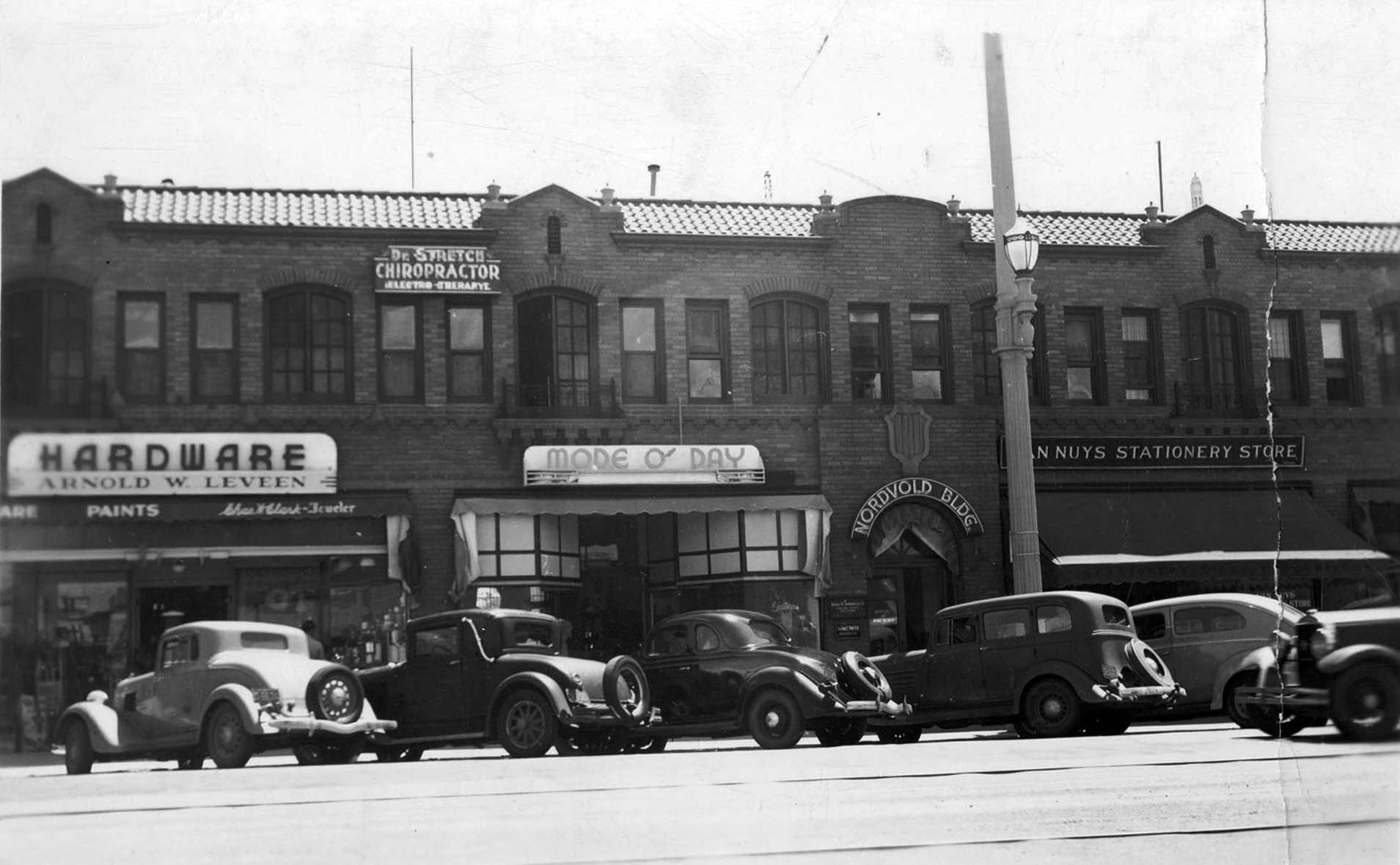
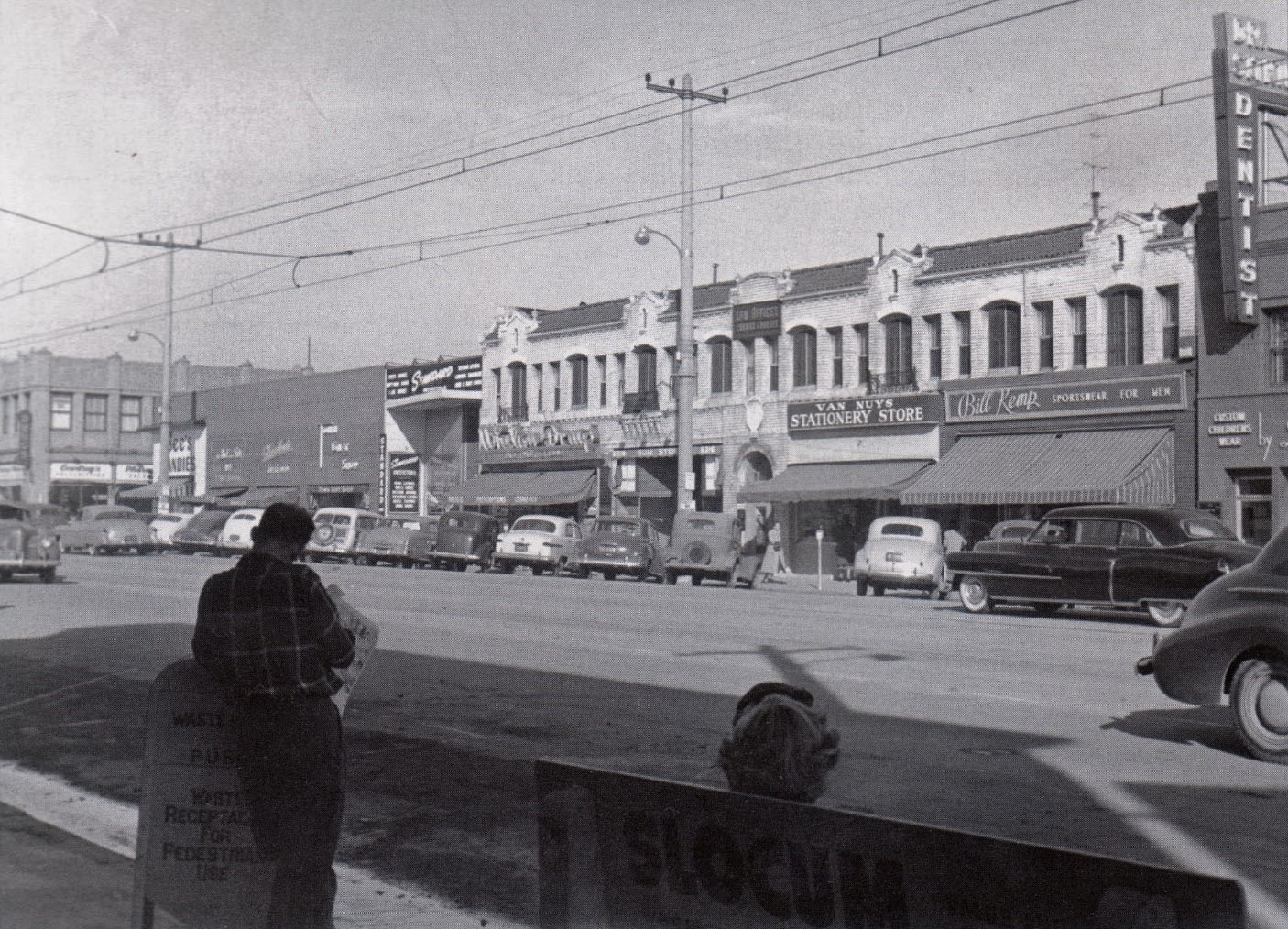
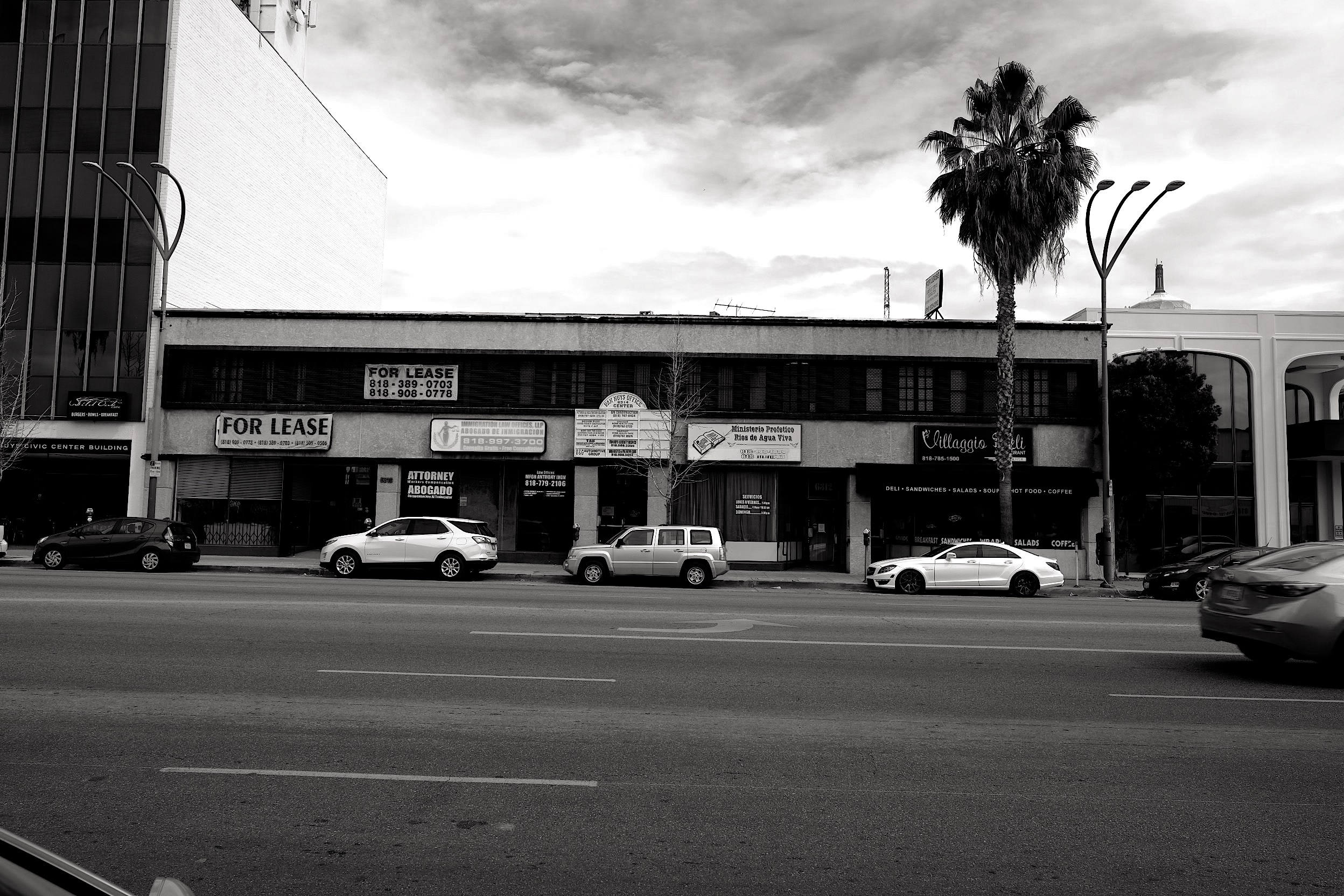
Norvald Bldg, 1940, 1953, 2018.

Deformed beyond belief is the decapitated 6314 Van Nuys Boulevard, which in its decorative heyday was called the Norvald Building. Prominent people and institutions:  realtor/developer Harry Bevis, Bank of America and DWP were tenants in the 1940s and 50s. A 1953 photograph shows Van Nuys Stationery store, Whelan Drugs and Bill Kemp Sportswear for Men.

Van Nuys, it is not fiction to say, once had businesses supported by letter writers and men who wore well-tailored sportswear.  They used the word “amazing” a few times a year to describe space travel, or volcanic eruptions, never as an adjective for avocado toast or their little dog Zoe.

Diagonal parking was available along with a streetcar running down Van Nuys Boulevard. Imagine that!

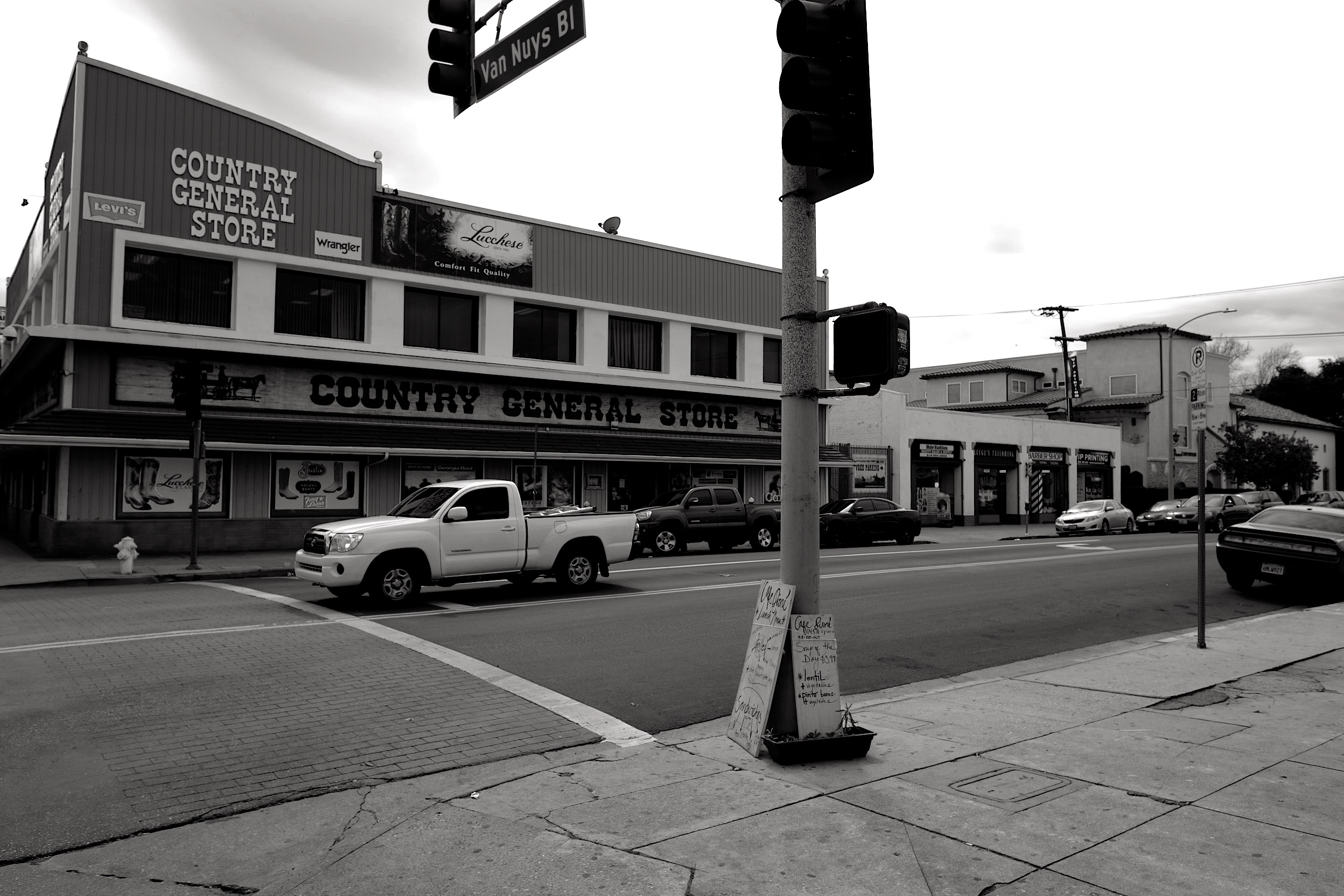
The Country General Store at 6279 Van Nuys Blvd is a very fine country/western clothing store with a large selection of boots, ornate belts, and men’s Western hats, jeans, and sport shirts.

Unfortunately, the façade is cheap vinyl and fakery, obscuring a neo-classical California Bank that once anchored this corner with respectable, solid architectural forms and operable windows. A decorative clock and a traffic light with moving Stop/Go arms embellished and celebrated an urbane, safe, and tidy young town.

The future, seen through the past, is waiting for its revival. We send our thoughts and prayers to Van Nuys, a critically ill patient wounded by fatal liberalism and self-destructive policies.

Repavement and Regret


For those whose intimate, internal bodily movements and outer mobility are regulated by motor vehicle, this was a weekend of challenge and frustration.

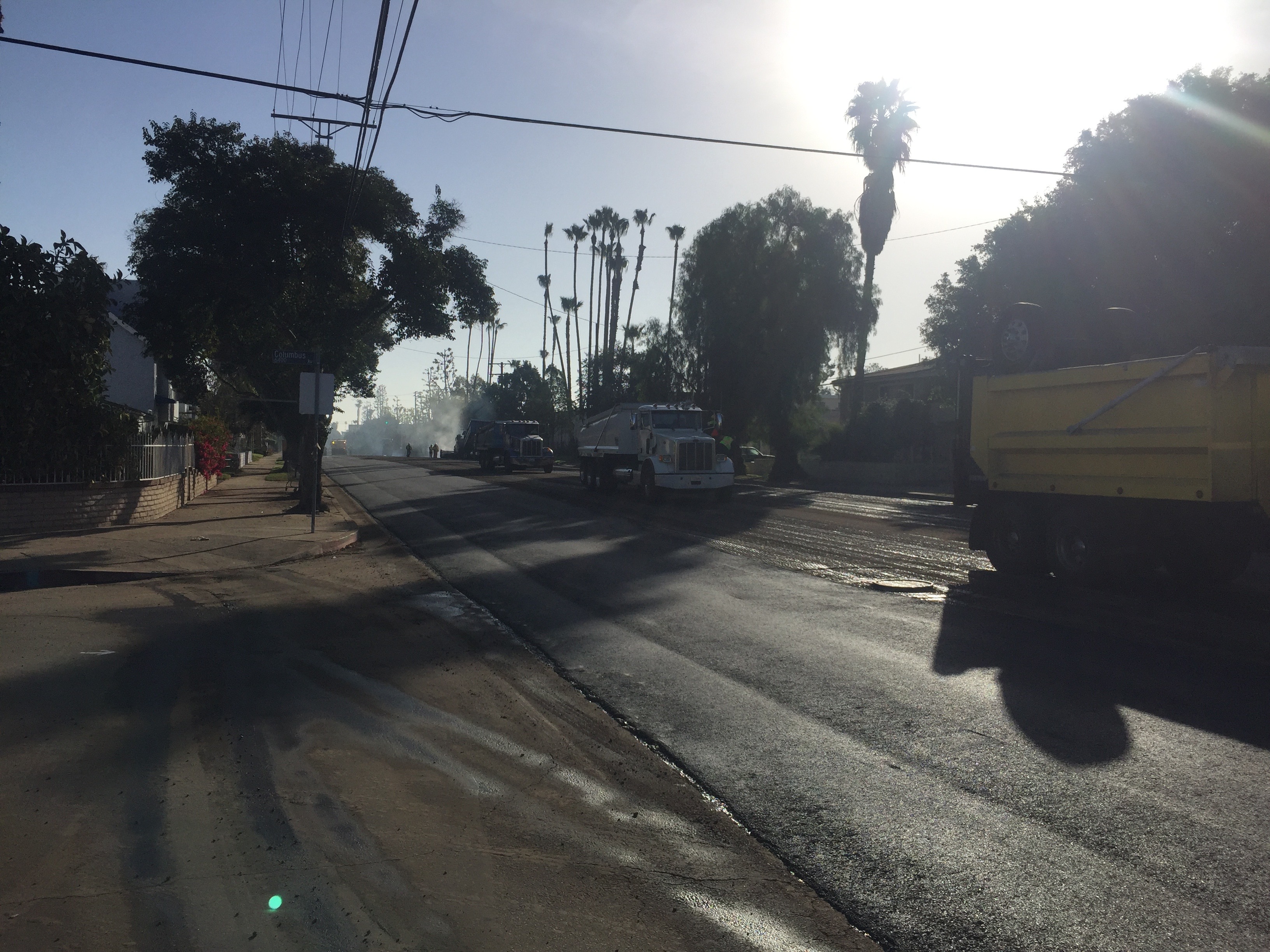
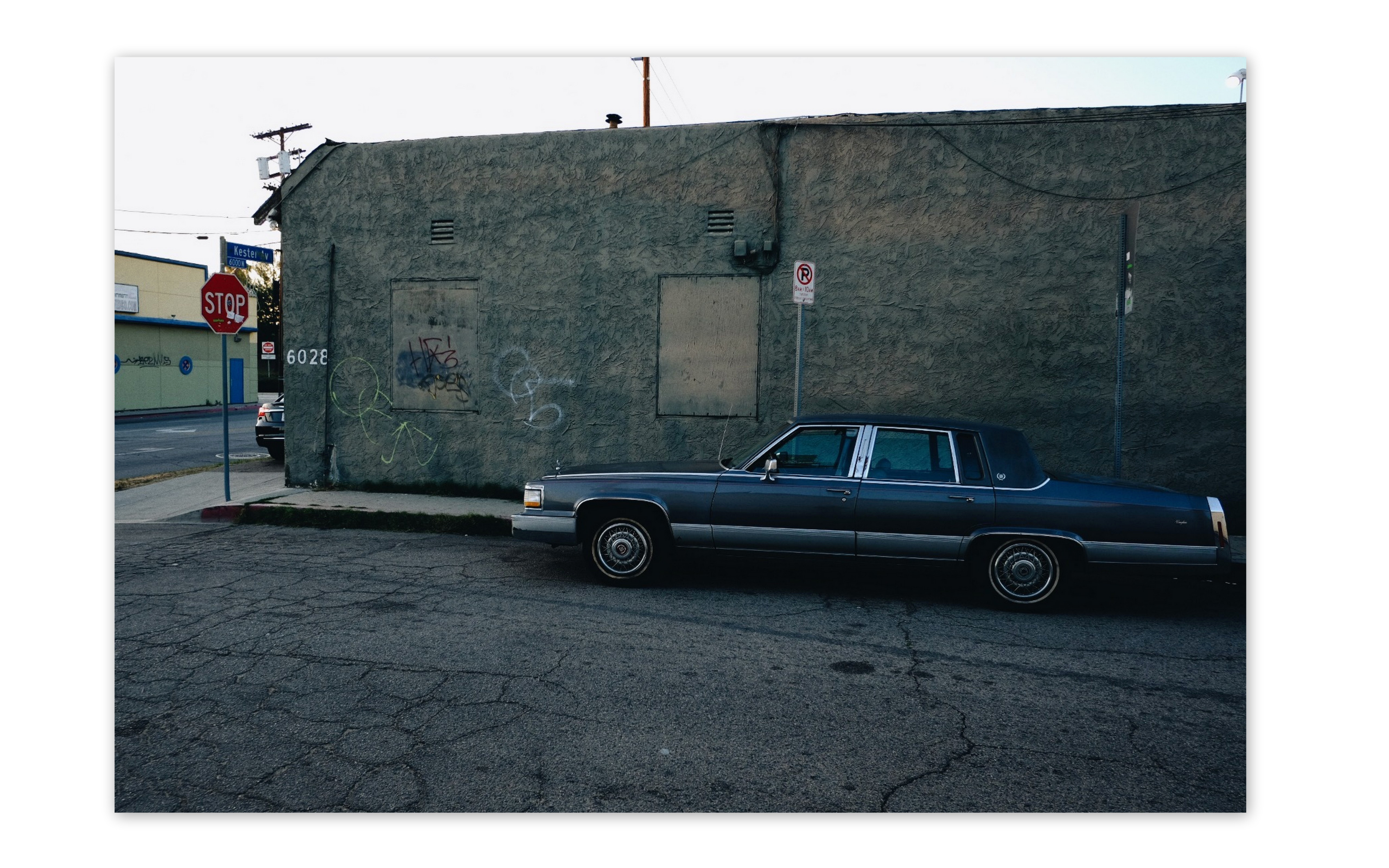
Without official warning, or public service announcement, Victory Boulevard, all eight lanes of it, were repaved between Kester and Sepulveda. It was possibly the first time it had been improved since all the pepper trees were ripped out in 1955 for its first widening.

In the historical traditions of Van Nuys, the new Victory Boulevard project will come without any amenities: no bike lanes, no center median of trees, no decorative lighting, no plantings and no safe crosswalks.

In our neighborhood, just north of Victory, between Kester and Sepulveda, the repaving anger was palpable, the pain deep, the suffering great.

For there is a large colony of culinarily disabled people on our street.

Large house payments prevent ownership of non-essentials, like coffee makers, so many of our neighbors, on weekends, get out of bed, slip into their SUVs in their pajamas, and drive three minutes to McDonalds, on Kester and Victory, to get scalding, industrial, assembly line coffee in Styrofoam and bring it back home. For them, the inability to drive to the drive-in was cruel.

At LA Fitness, on Sepulveda near Erwin, a new mall is under construction on the north side, and there are also orange pylons blocking the parking lot entrance, which affects members at the gym by consuming valuable parking spaces.

Yesterday, I saw an angry, old, black-haired woman driving around the parking lot of the gym in her prune purple,’71 Chevy Nova, unable to find a spot. Her mouth was spitting out a torrent of obscenities, her hands were like death grips around the neck of the steering wheel, she braked and accelerated in fits and jerks. She simply could not find a place for her car.

Minutes earlier, a convoy of young moms met up for dance class and took up six handicapped parking spaces at the gym but the  Angry Old Woman in the Nova knew nothing.

A normal weekend on Victory Boulevard is full of nocturnal sirens, from ambulances, police and fire. Usually at least one person is shot by gun or run over by car, or a speeding, intoxicated driver flips over and is either gravely injured or killed. Bank robbers, who usually arrive by car, found no work these past two days at Chase or Wells Fargo on Sepulveda at Victory.

All the workaday business of the boulevard terminated.

This past weekend was eerily quiet. The lack of danger, the absence of tragedy, upset many who live along the eight-lane speedway. There was only a thick scrim of dust, on Saturday, to remind people that Victory exists to pollute and desecrate.

When Victory Boulevard does not move with motorists, the people are alarmed, and demand a return to normality, which the repaved roadway promises to bring back tomorrow.

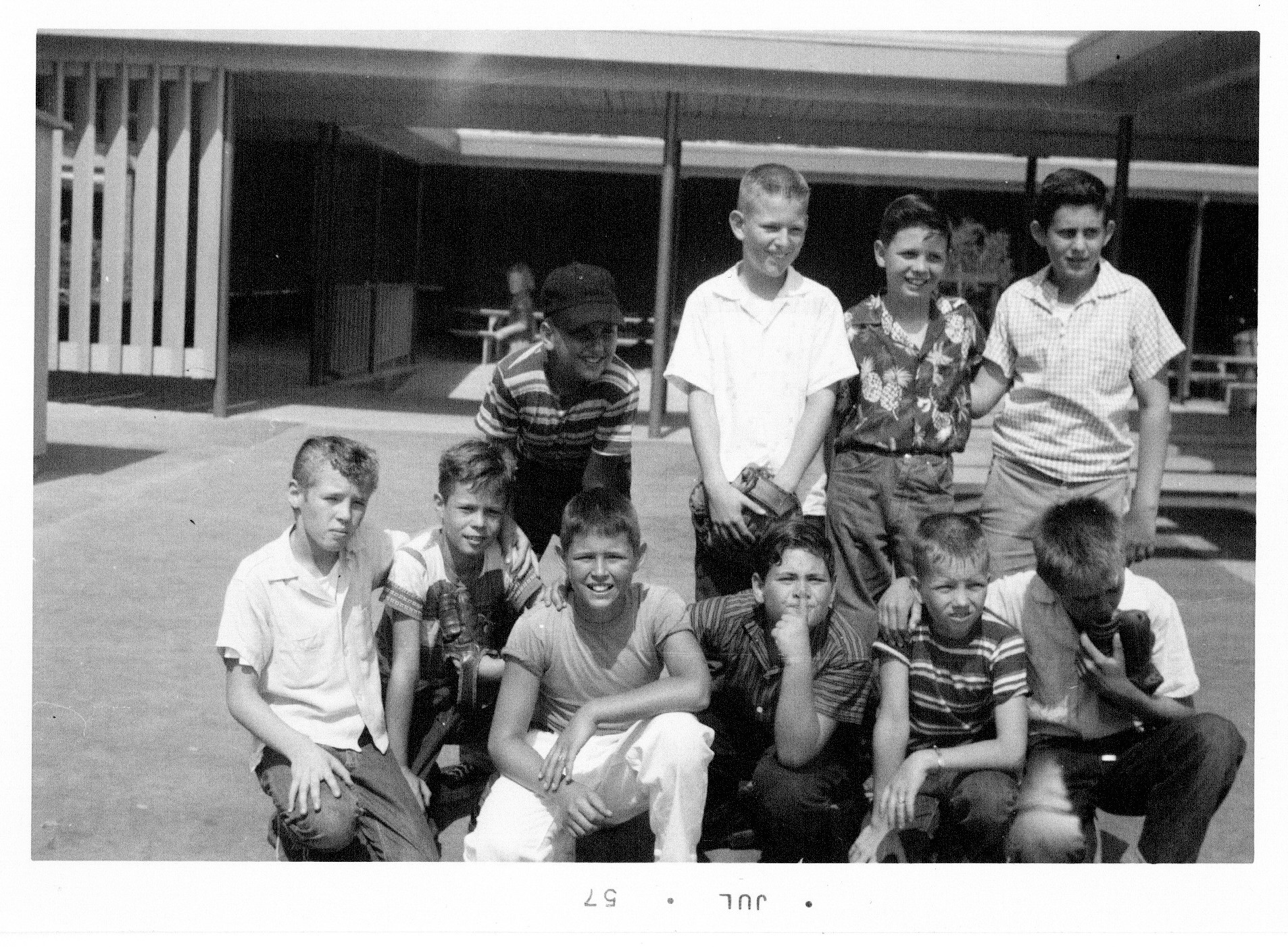
Baseball Team in Van Nuys, circa 1957


Tom Cluster has been a longtime reader of this blog, having a special interest in it due to his association with Van Nuys. He grew up here, partially, from 1955-62, and lived on Columbus Avenue, north of Vanowen.

He sent along this 1957 photograph of his 5th Grade baseball team, most likely posing inside a courtyard of the newly constructed Valerio St. School.  It was a five minute bike ride from his house.   Most of the children, as strange as it seems today, walked or rode their bikes to school. Only a kid with a broken leg would be driven to school in a car.

He wrote:

“I’ve attached a picture of a group of boys in my elementary school in 1956 or 57.  You’ll notice that a couple of them have the rolled up sleeves on their tee shirts. Bottom row, third from left seems perfect.  The guy second from the right in that row has let it fall out a bit.  It was quite the “tough guy” look.  I remember when we first moved to Van Nuys, I was riding my bike in the new neighborhood and two guys stopped me.  They were older, and they had that look.  They asked me what I was doing there, and I breathed a sigh of relief when my explanation that we had just moved into the neighborhood satisfied them and they let me go.

I know that what completes that look is having a pack of cigarettes as part of the rolled up sleeve, but the version we had in elementary school was definitely without tobacco.”

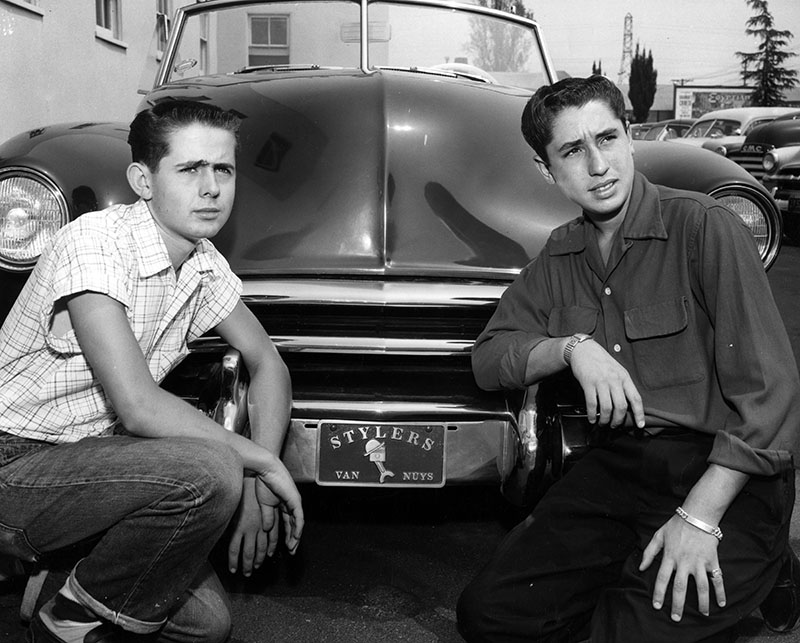
1955: Stylers of Van Nuys.


Photograph caption dated February 23, 1955 reads “Posing with custom, are, from left, Wally McIntyre, president, Stylers of Van Nuys, and George Weinstock, secretary-treasurer. Sleek showpiece is ’48 Olds with unaltered engine but complete customizing, including ‘Frenching’ (recessing) headlights, ‘shaving’ (taking ornaments off) hood and ‘deck’ (trunk), new upholstering and rungs, choming windowsills and painting dash to match general color scheme (Mandorin (sic) red and white).”

Kester, the Underachiever.


He has low self-esteem. He thinks he is too skinny, too short, too overlooked.

He blames his parents, near Raymer, for spawning him into the world from an obscure and ugly industrial spot near the concrete walled Los Angeles River.

On hot days, which are frequent, he told me hardly anyone drives up to his northernmost reaches. He looks at the homeless carts, the empty parking lots behind Target, and he thinks he is like an orphan among roads in Van Nuys and vicinity.

He told me he is jealous of Sepulveda named for an explorer, and of that “pompous” boulevard hosting such notables as Bevmo, OSH and LA Fitness. “What do I have except a couple junky liquor stores where they sell malt liquor? Sepulveda is arrogant. He has money and history and power. He was born near The Mission, holier than thou, and rams his way all through the San Fernando Valley and even has a pass named after him. He has Getty and Skirball and two Zankou Chickens. He gets to go all the way to LAX and beyond. He is well-travelled too!”

“I’m only 4.7 miles long. And people use me. They know I have no ramps to or from the 101 so they travel on me as a shortcut of necessity. They don’t really want to visit me. They would rather be on Van Nuys Bl.,” he said tearfully.

I told him I had respect for him, as he, evoked in me, a sweet nostalgia.
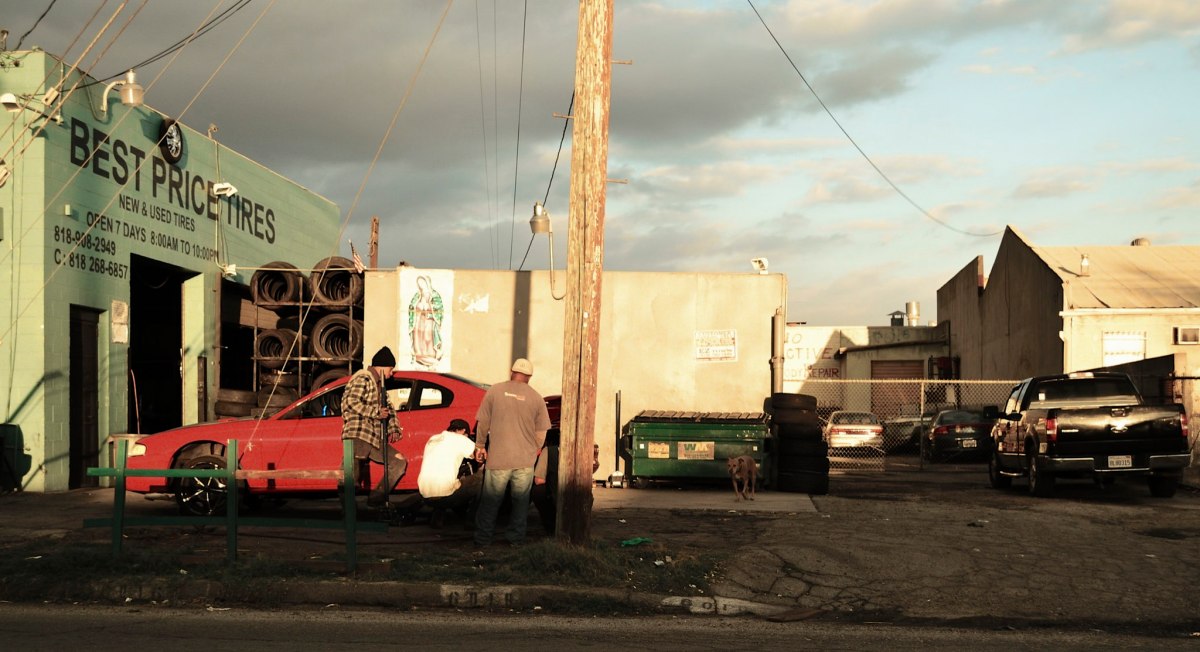
I said I liked Valley Builder’s Supply at Oxnard, especially the piles of sand and rock. And the place next door where they put bald tires on cars as a stray, three-legged, bandana-necked dog dances in the dust and dirt around the jacked-up vehicles. I tried to cheer him up and mentioned the braceros who gather for work everyday, smiling, rubbing their stomachs, itching for opportunity. “This is the real city. This is you, Kester!” I said.

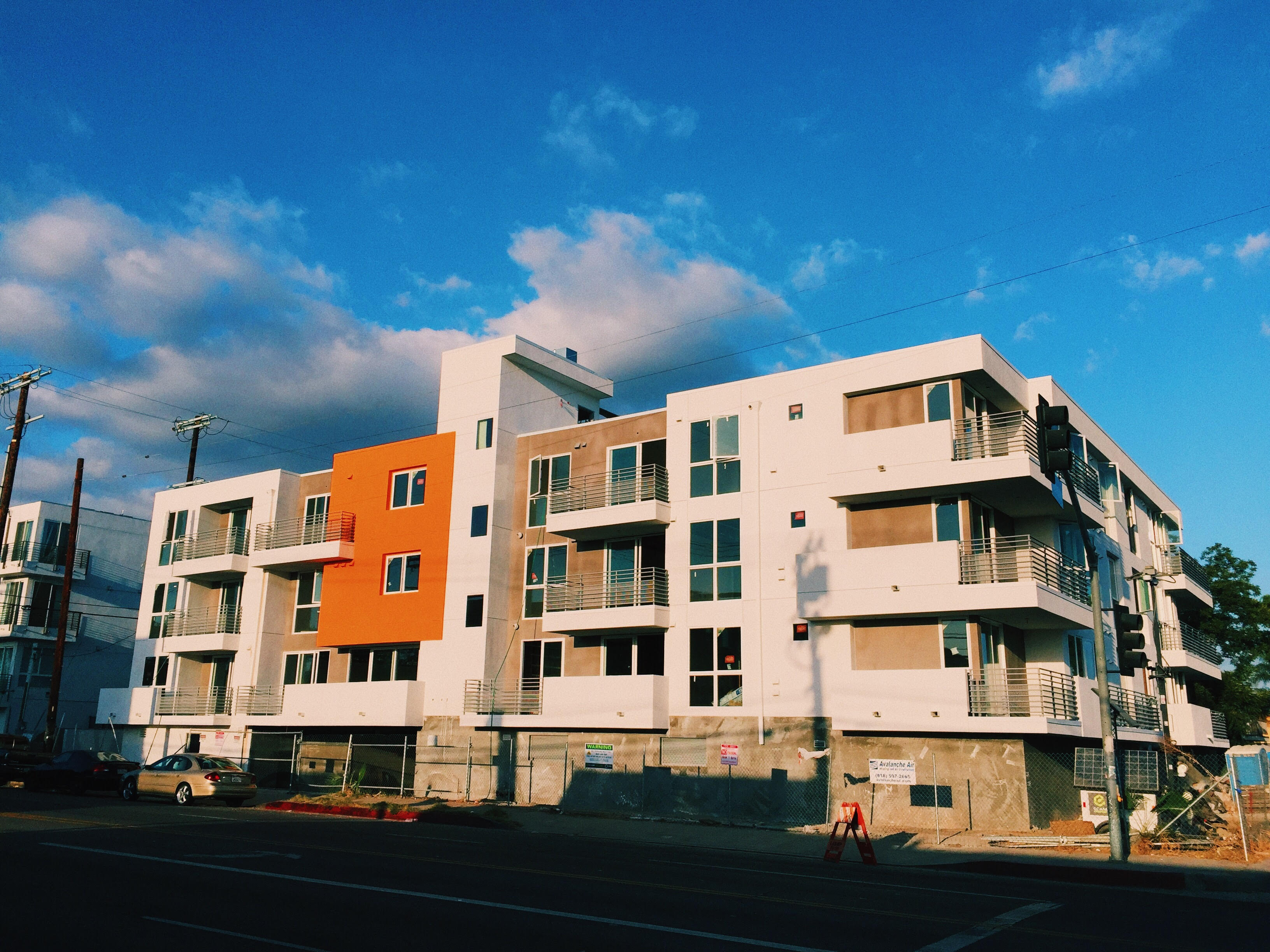
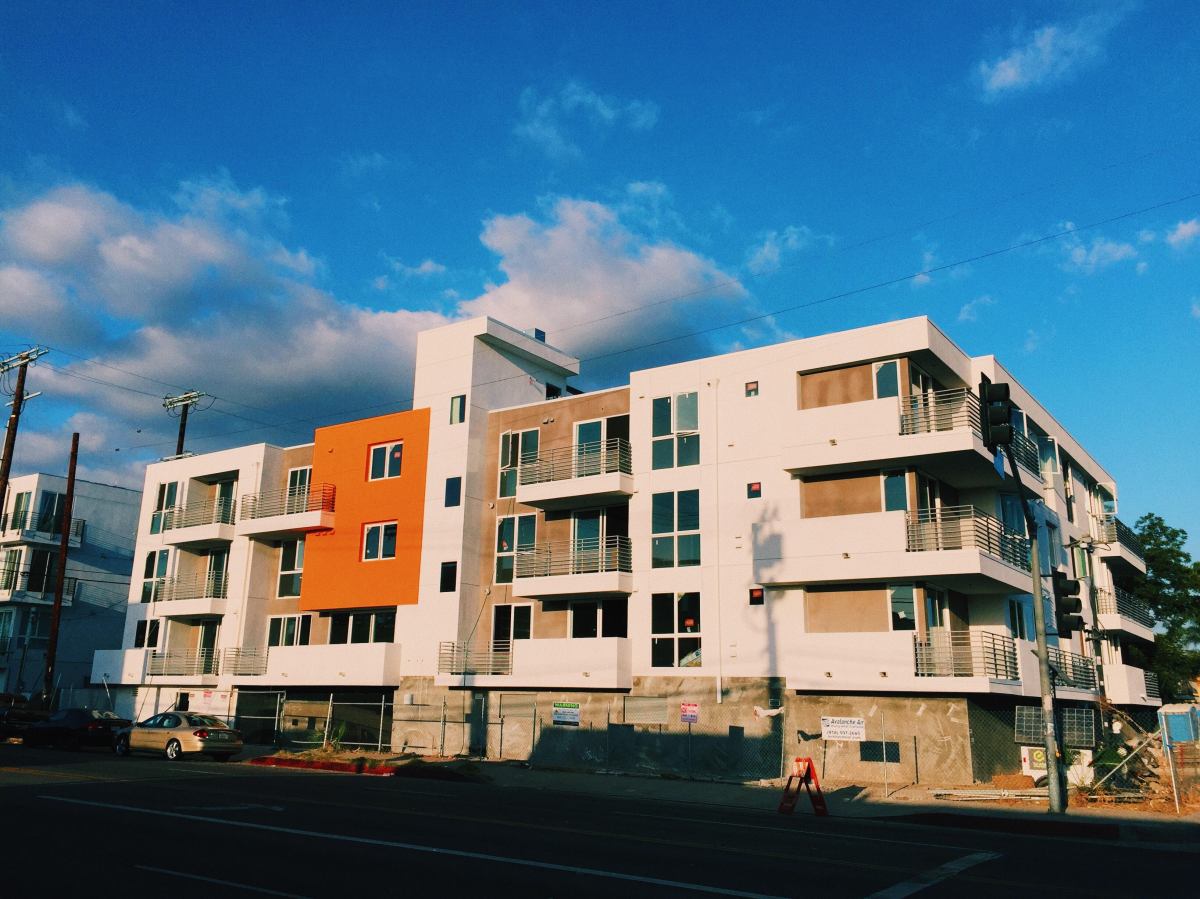
I thought he would be thrilled at the two, new, white, glistening apartments on Kester between Delano and Erwin. “Big deal,” he said. “One of the buildings has just painted a big orange tongue on the front like a Pez dispenser. It’s like they want to make me look ridiculous instead of elegant. I’m always put into the low-class category!”
He said that even churches ignored him. La Iglesia En El Camino at Sherman Way just gives me a parking lot. And then there is that lousy self-service car wash across from the church. On Sepulveda, they have new, automatic car washes with flashing colored lights and lots of suds. On Kester, people still spray their cars by hand!”

He talked about his bitterness towards Van Nuys High School which turns its playing field bleachers away from him.

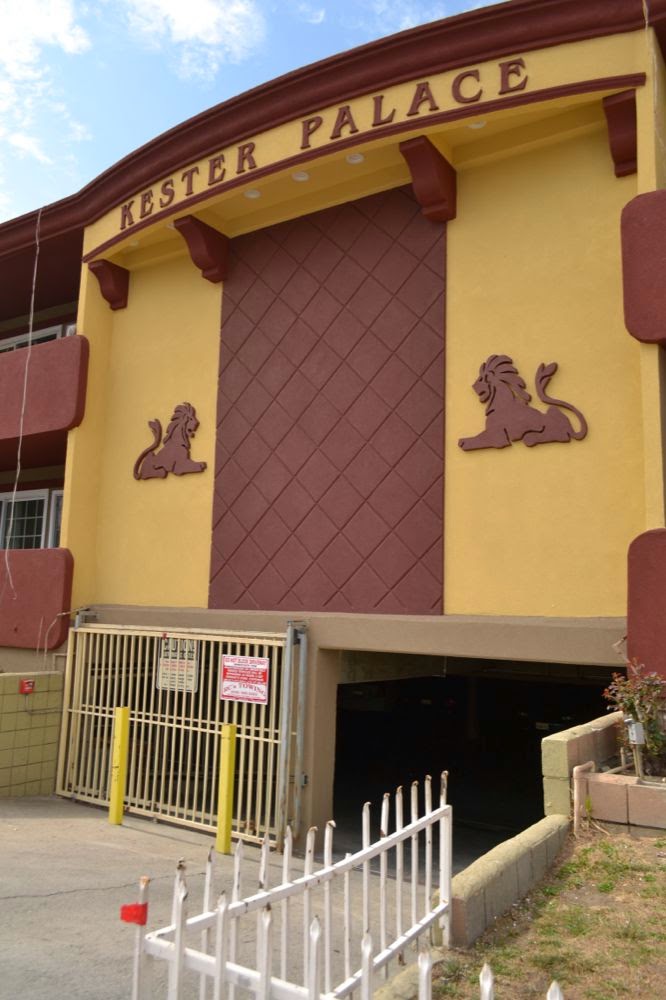
He ridiculed the remodeled Kester Palace apartments south of Victory as “refried beans” and “tacky.”
Most angrily he attacked the mini-mall on the NE corner of Victory where the trash and the shopping carts full of garbage are always left on the Kester side of the building.

I tried to change the subject.

“What about MacLeod Ale? I know it’s not on Kester but so many of its patrons drive down you to get there!” I said.

“Don’t mention MacLeod. They have it easy on Calvert Street. That street is twice as ugly as I am but they still get crowds of fans. Life is really unfair!” he said.

Then I had to, unfortunately, break the news to him that Metro is planning to demolish 58 buildings from Kester to Cedros along Aetna and Bessemer to accommodate a future light rail storage and maintenance yard.

“What? That’s crazy. Why would they destroy all those small businesses where people make a living? This is madness! Why does Van Nuys keep shooting itself in the foot? Do you mean to tell me that part of Kester will be taken away and devoted to floodlit rail yards right in the middle of old Van Nuys?”

“Yes. The great new transportation future of Van Nuys, with light rail, requires the dismemberment of one of its solid, dense, walkable districts. That is always how it works in Los Angeles. You must wipe out the old to create the new!”

He started to cry.

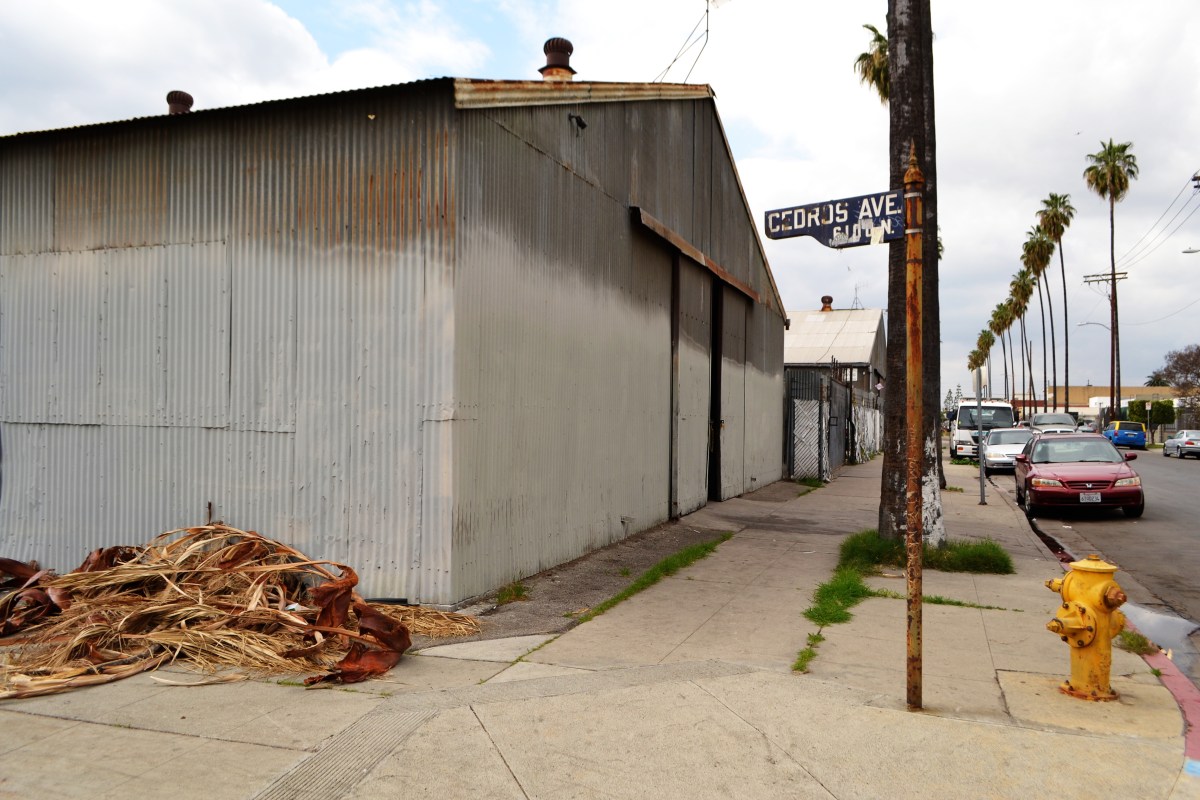
“It’s not part of my family but do you mean they will also knock down the old metal-sheeted, pitched roofed, fruit packing houses on Cedros and Calvert? Those go back to before WWII. Those are really lovely reminders of old Van Nuys,” he said.

“Yes. I’m afraid they will demolish those too,” I said.
After spending time travelling, walking, and observing Kester, I understood that he was, truly, different from the louder, noisier, bigger, wider roads. He struggled to voice his own identity. He watched as less deserving streets around him got more and more action, and he slipped, quite often, into self-pity.
In other cities, perhaps in Italy or Mexico, a Kester might find love with his shadows and frumpiness. His shy virtues of walkability and modesty, independence and eccentricity, could give him a solid living and self-respect outside the US. Poets would write of Kester, painters would paint him. The monogram “BVN”, sprayed so artfully, so often, on the walls of Kester, would be stitched into the world’s finest garments.

But cruelly, in Los Angeles, in the San Fernando Valley, the majority stamps him only as Kester, the Underachiever.