The Perfect House


In early 1993, I was visiting Larry and Kay, who lived in a beautiful home in Woodland Hills, south of Ventura, of course. They were around the corner from the last large orange grove in the San Fernando Valley.

They were Hollywood people, who had moved out to the SFV, in the late 1960s, from Michigan. 

The husband was a TV producer who had success on ABC in the 1970s. The wife played tennis with “Happy Days” star Marion Ross. They had three children. I was friends with their middle daughter Beth, who I had gone to college with.

Their house was up on a hill, atop a long driveway, in a bed of ivy and surrounded by mature trees. There was a large, life-sized cow in front, so you were assured this was a place of wit and irony.

The expansive, beamed, rustically casual interior with a wall of patio facing French doors was paved with polished bricks. A two-story tall front hall, with plants growing up to the ceiling along an open riser staircase, extended back into an amorphous pool that was surrounded by terraced, green hillside and more vintage signs from old roadside advertising.

That year I was considering moving from New York City to Los Angeles. And then, the next year, I did. 

The husband was a gregarious, self-confident, big Midwesterner who liked practical jokes, loved making television, and loved Los Angeles. He would have made a good poster child for the LA Chamber of Commerce: family man, in a spectacular house, having fun earning a living in entertainment.

During one conversation Larry said he liked LA because when you drove to the airport “you never had to go through a bad neighborhood.”

Kay said she loved LA because she loved her house, “It’s paradise here in my home and garden,” she said.

I thought then, 26 years ago, how odd and how normal these remarks were, how characteristic of Los Angeles, and a certain kind of person these impressions of life here were. For who would argue, especially in 1993, that a nice home was not the entire object of life and the culmination of Los Angeles dream? 

Who cared if there was nowhere to walk, if “Main Street” was a 15-mile-long wreckage of parking lots, junk food, car washes, shopping centers and ugliness; and your downtown was a vacated, forgotten and despised urban renewal zone, strangled by bad air and wide freeways, where lost people wandered aimlessly?

And you never knew your neighbors’ names, and you only saw them from behind your tinted, electric windows.

If you bought a nice ranch house south of Ventura Blvd. you were really set. The city and its attributes or lack thereof were of no importance. The sun always shined on your pool and your garden.


I have lived in this city more years than other city, and still I wonder what I am doing here.

Like Larry and Kay I have a nice house, perhaps not on the scale of their house, but it’s a good, clean, comfortable house, and I like it.

But beyond this house, a few houses down, here in Van Nuys, one encounters a city where 58,000 people live on the streets, and traffic, billboards, mini-malls, illegal dumping, air pollution, and crime are profuse. 

A great house would be a great if it were in a great city that took great care of its environment. 

But our city lets people camp out along the freeway, and defecate in the take-out line next to Wendy’s. It cannot stop it when drivers cut off in traffic kill each other and it cannot predict if a madman with a gun will shoot to death some random man at the Orange Line bus in Lake Balboa.

The Perfect House could never exist in a city where 90% of the people who can, drive their children to schools in other school districts, because the local schools are inferior, because the nearby, walkable schools are populated by less advantaged kids. What fine city sends its’ kids far away to go to schools in other places?

In our city, desperate for housing, people with homes protest housing for homeless seniors. It reminds me of a man with epilepsy, and an autistic boy, who protested a memory care facility for Alzheimer’s patients near his home in NJ. 

The Perfect House would not exist in a city with scattered, garbage-filled carts on sidewalks. And a bus bench shelter was not for bus riders, but a bed for a man without a bedroom.

Los Angeles promotes self-destruction of self and city as public policy. It allows vagrancy, dumping and human defecation into local rivers that empty into the ocean.  And its leaders ask you to understand and accept the degradation of a city as the natural order of business.

Straws are banned, smoking is banned, but tens of thousands of trash campers can set up their tents anywhere in Los Angeles.

How are we not calling this an emergency?


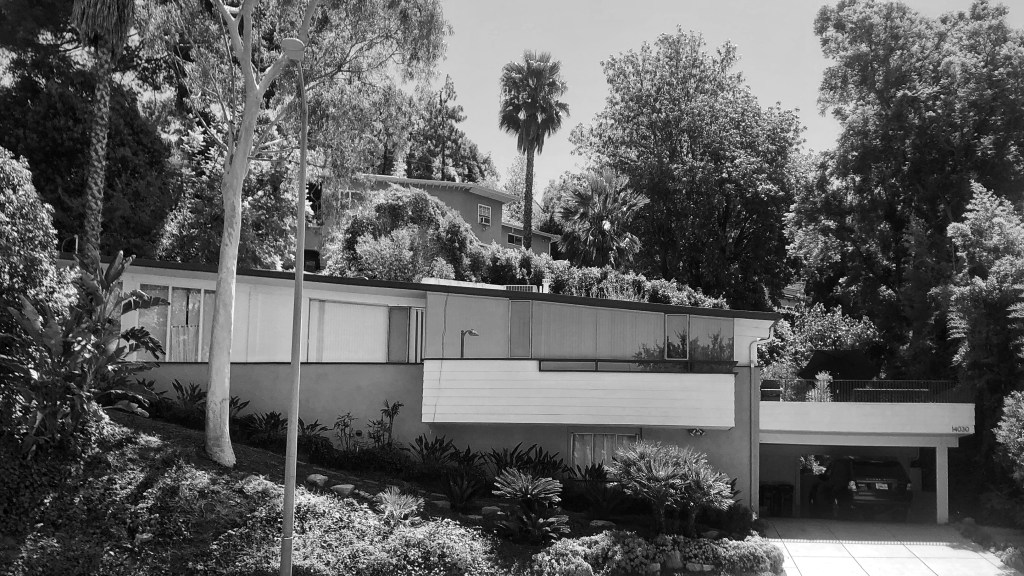
In the photo above is a version of The Perfect House at 14030 Valley Vista, Sherman Oaks, CA by Gal Harpaz, photographer.

The architect was born in Ferrara, Italy, a Jew who escaped when Mussolini came to power. Edgardo Contini, (1914-90) who was a founder of Gruen Associates and a planner in many projects in this city including the Pacific Design Center, the Fox Hills Mall as well as President of the Urban Innovations Group, the practicing arm of the UCLA Graduate School of Architecture and Urban Planning. He worked with Architect Charles Moore and participated in the Grand Avenue proposal for California Plaza on Bunker Hill.[2]

And during his lifetime in Los Angeles, Mr. Contini seemed to think that this city was in need of urban preservation, reuse of older buildings rather than outward sprawl. He wanted to end our wasteful, continual destruction of historical structures and our voracious consumption of wild lands and agricultural fields beyond the city.

He saw Los Angeles as more than the ideal house. He imagined a city where the health and well being of all was the optimal.  

What would he think of Studio City today where $3 million dollar houses are constructed steps away from people sleeping on mattresses along the LA River? Or of Van Nuys Boulevard with its’ boarded up businesses, homeless encampments, and dismal condition?

In 1972, he wrote, “We should place the emphasis on recycling, no further withdrawl from our resources of open land would be required/ and we will not leave urban litter behind.”

Are we better off today than we were in 1972? Or are we still, like Mayor Garcetti, just talking a virtue game and living in a cesspool? 

Where are all the big plans for humane and just architecture to heal all the atrocities of modern Los Angeles? Can we just survive and continue to build a city of flat-topped McMansions, backyard garage add-ons and $3500 a month apartments?

Is any large city in America as dirty as Los Angeles? Is any booming and billionaire saturated city in Europe? One looks to India to imagine our dystopian future.

The Perfect House is beyond most of our reach, but the better city should not be.


[2]Obituaries: Edgardo Contini, Architect, Urban Planner; by Leon Whiteson; LA Times, May 1, 1990.

Clearing Up a Photo Mystery


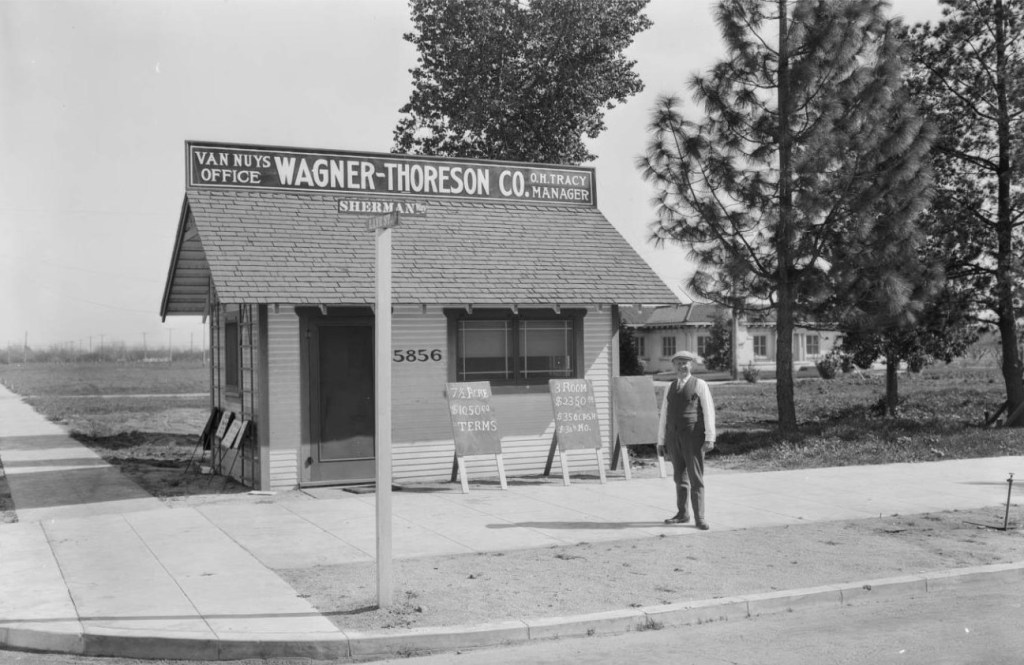
I found a DWP  Collection photo from the 1920s that shows the Van Nuys office of “Wagner-Thoreson Co.” (a realty company) and a nattily attired man standing in front. 

In the background is an estate on a large piece of land. A signpost reads: “Sherman Way” and “Lane St.” The photo had some information underneath which said “Lane St. was later renamed Califa St.” 

Where exactly was this? 

On Google Maps there is not a “5856 Sherman Way.” I thought the signpost might be blocking a number “1” so I inputted “15856 Sherman Way” but that address, in present day Valley Glen, was not at an intersection.  Califa and Sherman Way do not intersect either.

The 1926 San Fernando City Directory listed “Wagner-Thoreson Co.” at 5856 Van Nuys Bl. (at Califa). Not “5856 Sherman Way.”

Then I remembered something. 

Sherman Way was once the route of the Pacific Electric streetcar. The PE snaked its way up through the Cahuenga Pass into North Hollywood, then west down Chandler Blvd. It turned north up Van Nuys Blvd. and then travelled to go west on Sherman Way.

But Chandler Blvd. and Van Nuys Blvd. did not exist in name until 1926. From 1911 until 1926 Chandler, Van Nuys and Sherman Way were all named: South Sherman Way, North Sherman Way and Sherman Way!

On May 25, 1926, the Los Angeles City Council, with some infighting between San Fernando Valley residents, came to a compromise and agreed to partition the Sherman Way family into three distinct names: Chandler, VNB and Sherman Way.  


So the man in the mystery photo is standing on present day Van Nuys Blvd. at Califa, a block south of Oxnard.

Van Nuys Bl. 1930

Pacific Electric service lasted until December 29, 1952. 

Cahuenga Pass 12/29/52
N. Hollywood, CA. 12/29/52
Chandler Bl. 12/29/52

These sad and wondrous Kodachrome photos from the collection of Caesar “CJ” Milch (not the original photographer) show the #5146 car that once ran up through the Cahuenga Pass and into the eastern San Fernando Valley on its last day.

Not Van Nuys Blvd at Oxnard


Why not Van Nuys Bl. at Oxnard?

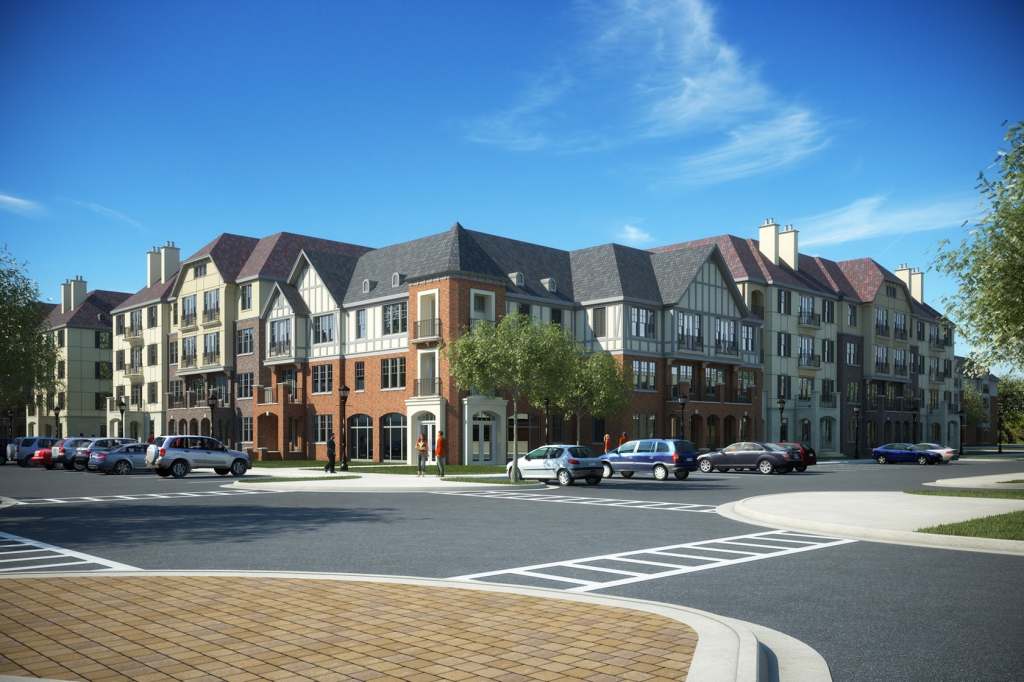
On Architizer, an architectural website, I found a photo and description of a residential/commercial development built in Mountain Brook, AL in 2014.

Pleasant, as all ideal architectural plans and photos are.

But it also fired up an idea…

Why couldn’t buildings like this go on the NW corner of Van Nuys Bl. and Oxnard St.?

Where currently there is a large, unoccupied glass building that once housed a car dealer (what else?) it is now a yawningly empty welcome to the alleged business and government district of old Van Nuys.

The Mountain Brook, AL buildings (architects: Wakefield Beasley & Associates) anchor the street with ground floor shops, landscaping, sidewalks, trees and diagonal parking. They invite people to walk and to park in front.

276 apartments are built above the stores, with one, two and three-bedroom plans, and are spread between the structures. Various modern amenities, including fitness centers, parks, yoga and meditation areas, wifi, are added to entice renters.

What is it that makes this type of building a dream and not a reality on the main street of Van Nuys? Why, in a city starved for housing, is there not a furious effort by Councilwoman Nury Martinez and the City of Los Angeles to rev up the pace and quality of apartment construction?

Stylistically, the traditional look of this building would probably elicit snickers from the Christopher Hawthorne/Frances Anderson crowd. It is much too literal and polite and pseudo-historic for a cult which takes its abstract, contorted meals at Frank Gehry’s feet.

Frank Gehryism

But Van Nuys is starved for anything that can bring us up from the homeless, trashy, neglected place we are today. An above-average, but suitable design such as the one from Mountain Brook, AL is better than shopping carts full of garbage and people sleeping in cars.

It would work because it cares about the urban context around it.

Looking East For Ideas.


Bessemer St. Van Nuys, CA near the Orange Line.

On these torrid July days, when the temperature is 105 degrees, and a walk down Van Nuys Boulevard near the Orange Line Metro stop brings you face-to-face with people sprawled out on the sidewalk, living in tents, sleeping on dirt, it is instructive and bracing to think of other civilizations, such as Japan, where human beings live under more benevolent and intelligent rulers.

Instead of parking lots furnished with the shopping baskets of homeless people, instead of garbage piles on the sidewalk, instead of empty streets filled with only the cries of mentally ill men and women, Japan offers low-rise, modern houses where children are cared for, and people work together to make contributions to society.

Every day we live amongst a remarkable level of filth, violence and rampant barbarity in Los Angeles; thinking it normal that a Trader Joes manager is shot dead walking to her store entrance to see what the commotion is; or that a camping father with his family is murdered, randomly, in Malibu State Park; or accepting as “normal” the idea that 100,000 people sleep on sidewalks, and RVs and cars, and live in tents in the city of the Kardashians, the Cruises, the Broads, the Carusos and the Spielbergs.

How can so much money, so much power, so much fame do so little for their city? How obscene it all is.

Near Cedros and Calvert, Van Nuys, CA.

Empty Buildings on Delano near VNB.

Slum Housing on Cedros.   Owners: Shraga Agam, Shulamit Agam 


There are places where guns don’t kill people every single day, and children live in clean, well-cared for apartments and houses next to spotless streets, where the trains run on time and people stand in line to wait for the next one to arrive.

We can’t completely transform what Los Angeles is, but we ought to engage our imagination to other places where they do a far better job of taking care of people and emulate those finer qualities of faraway lands.


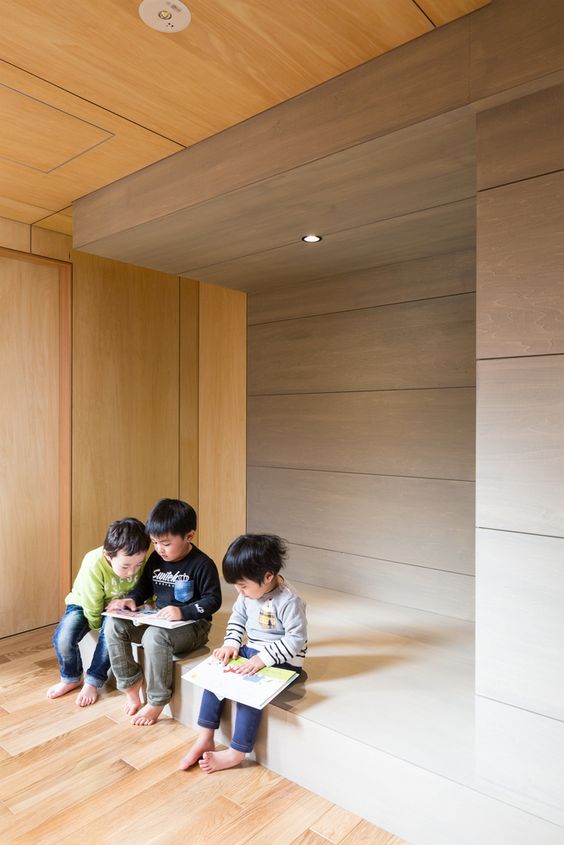
Architects: HIBINOSEKKEI

Location: Sagamihara, Kanagawa Prefecture, Japan Project Year: 2017

Photographs: Studio Bauhaus / Kenjiro Yoshimi

Source: ArchDaily

Van Nuys.

Walkable Places You Drive By.


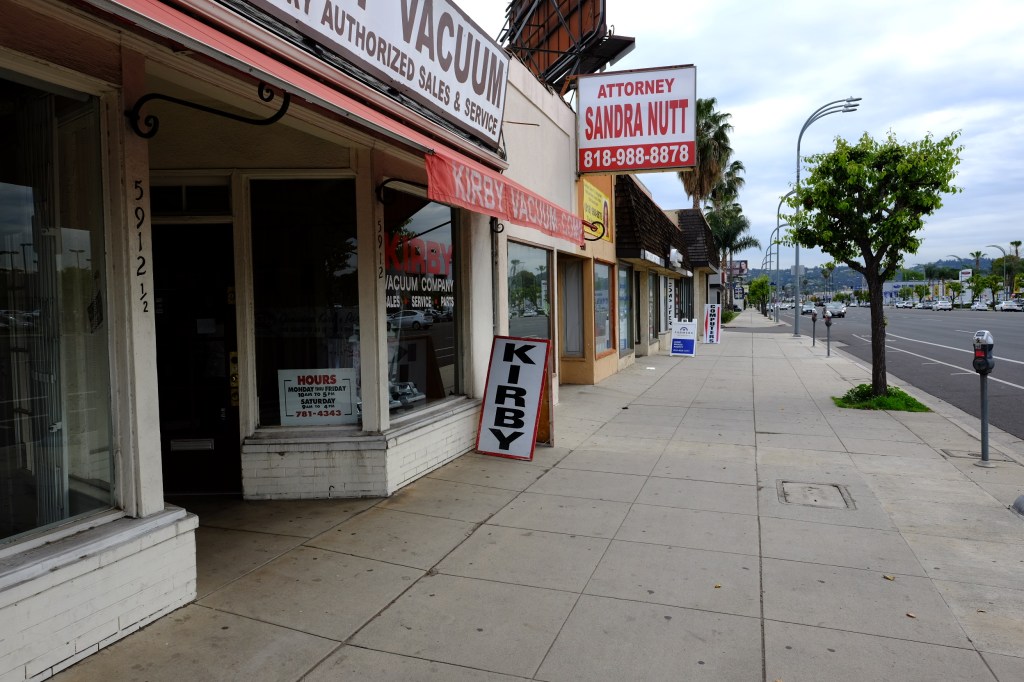
On the east side of Van Nuys Boulevard, south of Oxnard, there is a conglomeration of small shops.

Signs advertise a Kirby Vacuum shop, Attorney Sandra Nutt, a Farmers Insurance office, PC Tech Computer Repair, Young Actors Space, and a Los Angeles Wedding Chapel. Angeleno Mortuary and Benjamin Moore Catalina Paint fill up the northern most two blocks.

Here you buy cleaning machines, you get legal counsel, you are taught acting, you are legally married, you are fixing your computer, you are buying paint, you are purchasing life insurance, and you are dead and interred.

All this small business activity takes place in little shops constructed in the 1940s when commercial Van Nuys barely stretched south of Oxnard.


To the east of this is a pleasant, shady neighborhood of single- family houses mixed together with multi-family properties, mostly well-kept. Tiara, Califa, Tyrone and Sylmar are interesting to walk down because they contain an ecosystem of housing that works well together, near public transportation, modest and neat.

And if you are wondering what to call this area, please address it properly as “Sherman Oaks” even thought it abuts downtown Van Nuys.

You get your smog check in Van Nuys. You rent or own in Sherman Oaks.

At Calhoun and Tiara, a three-story apartment is under construction. Humorously, I observe that the style recalls those jutting out, trapezoids on steroids style popular 15 years ago in Santa Monica. The Valley is always behind….. architecturally.

There are vividly painted buildings on Calhoun, including a bright red box unit, and a 1920s house in school bus yellow at 14300 Califa. People will do daring things only when they see their neighbors do them.

The eccentric hues cheer up the area, bringing energy to a place where the beiges and grays cover everything else.

At Califa and Sylmar there is a property with dark green dwarf palms growing in profusion along the walkway and the front yard. They are a bold alternative to grass and liven up the house, along with a muted green fence built of wood and wire. This arrangement of plants discourages parking, and provides a sharp, prickly security perimeter, a subliminal deterrent, but naturalistic.


On the west side of Sylmar, are newer (2014), two-story dense houses packed together, a chorus line of garagettes. The builder pastiched shutters, vinyl windows, tile roofs, and various desert colors to evoke a Californian aura, Montecito Mansion by Home Depot. The houses sold for about $800,000 each.

With a down payment of $157,000, a mortgage for a family of four would be about $3,100 a month.

This area, newly christened as Sherman Oaks, still within paint fume reach of the auto body shops along Oxnard, is a desirable place in a city starved for “affordable” housing.

At 14403 Tiara, townhouses with three bedrooms and three baths will soon be available for $659,000 each. With rows of garage doors, it is unlikely that any of the folks living here will hang out on the front porch drinking lemonade.


The tour ends BEHIND the shops on Van Nuys Boulevard where an old house stands marooned in a sea of asphalt and parking.

Forensically, curiously, I wonder what this was so many years ago? Was this building a little cottage in a sea of orange groves, set back from the road before they filled in the frontage with the commercial buildings? Someone was surviving, living, eking it out 80 or 90 years ago. Then the land, I guess, was subdivided and “improved”.


A clever, innovative city would allow this back area to be turned into a garden apartment area. The shops could be built with apartments above, and the windows could face in back around a central courtyard planted with lemon, orange and walnut trees. They might build a few more small houses here, and devise a protected, nurturing development on this site.

The cynic in me doubts it will happen. But the optimist in me knows it is possible.

SaveSave

Bank of America at Haynes and Van Nuys Blvd.


gri_2004_r_10_b904_f14_004
Ph: Julius Shulman

gri_2004_r_10_b904_f14_001
Ph: Julius Shulman

Many are familiar with the large, architecturally impressive Bank of America at Haynes and Van Nuys Blvd. It was designed by Paul Revere Williams, a prominent architect who was also an African-American Angeleno. The bank was built in 1967 and features murals inside and out by artist Millard Sheets. In 1968, famed photographer Julius Shulman photographed the bank. It was a high point for civic architecture in Van Nuys, and perhaps the last time this area felt proud of its main street.

OLYMPUS DIGITAL CAMERA

Prior to the 1967 bank, there was a more humble, late Art Deco, Bank of America at this same location, 6551 Van Nuys Bl.

In this black and white photograph, one sees the crisp, scrubbed-down, finely cared for building. Around it was a thriving street with well-dressed, law abiding citizens, and perhaps the occasional criminal whose activities were the exception not the rule.

00133214


DKV-uMvUQAAoTRM.jpg-large
Chase Bank, Sepulveda at Victory.

Today, human beings in Van Nuys sleep, eat, and defecate alongside bank buildings. Their disgraceful conditions scarcely cause anyone to notice. Or care.

In 2017, we are so busy congratulating ourselves on our “tolerance”that we forget that things that were once intolerable, illegal and immoral were considered so for many good reasons. In our gross barbarity, in our willful blindness to the suffering of neighbors, we are co-defendents in a new type of indecent nation, one that tests our moral fiber and will present itself to history for judgment.

Human beings do not belong on the street. They should be housed safely, affordably, with sanitation and security. Call this conservative, call this liberal, call this anything you want.