12012 Chandler.


$(KGrHqN,!oMFBlWKBW,RBQqwCPDGC!~~60_57 BRL61-0294 BRL64-0116 Honeywell Service Center Building Back Honeywell Service Center Building Front

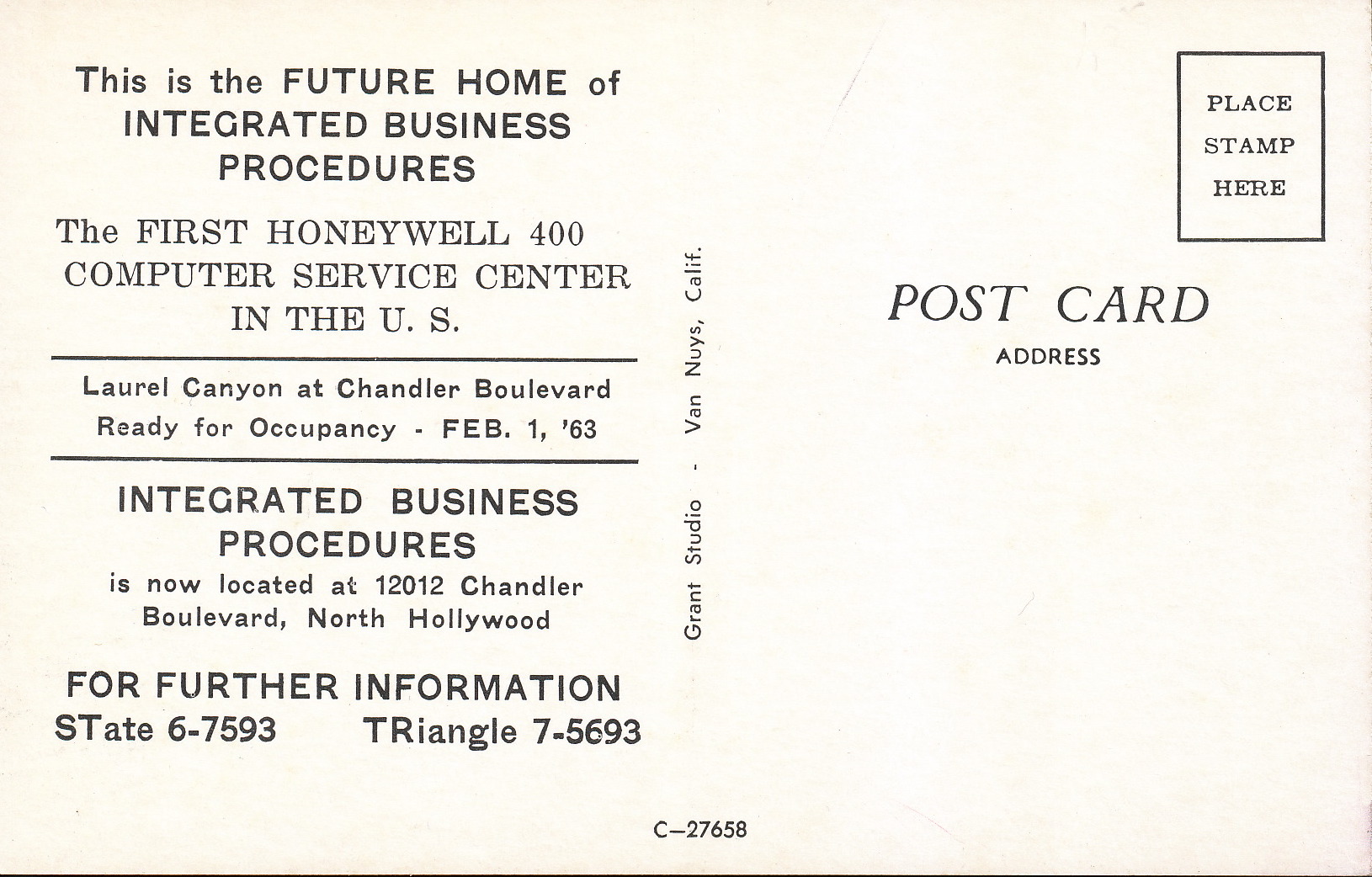
Scanning through some of the postcards loaned to me by Tommy Gelinas at Valley Relics, I came across this 1963 postcard of a new building at  the corner of Chandler and Laurel Canyon in North Hollywood.

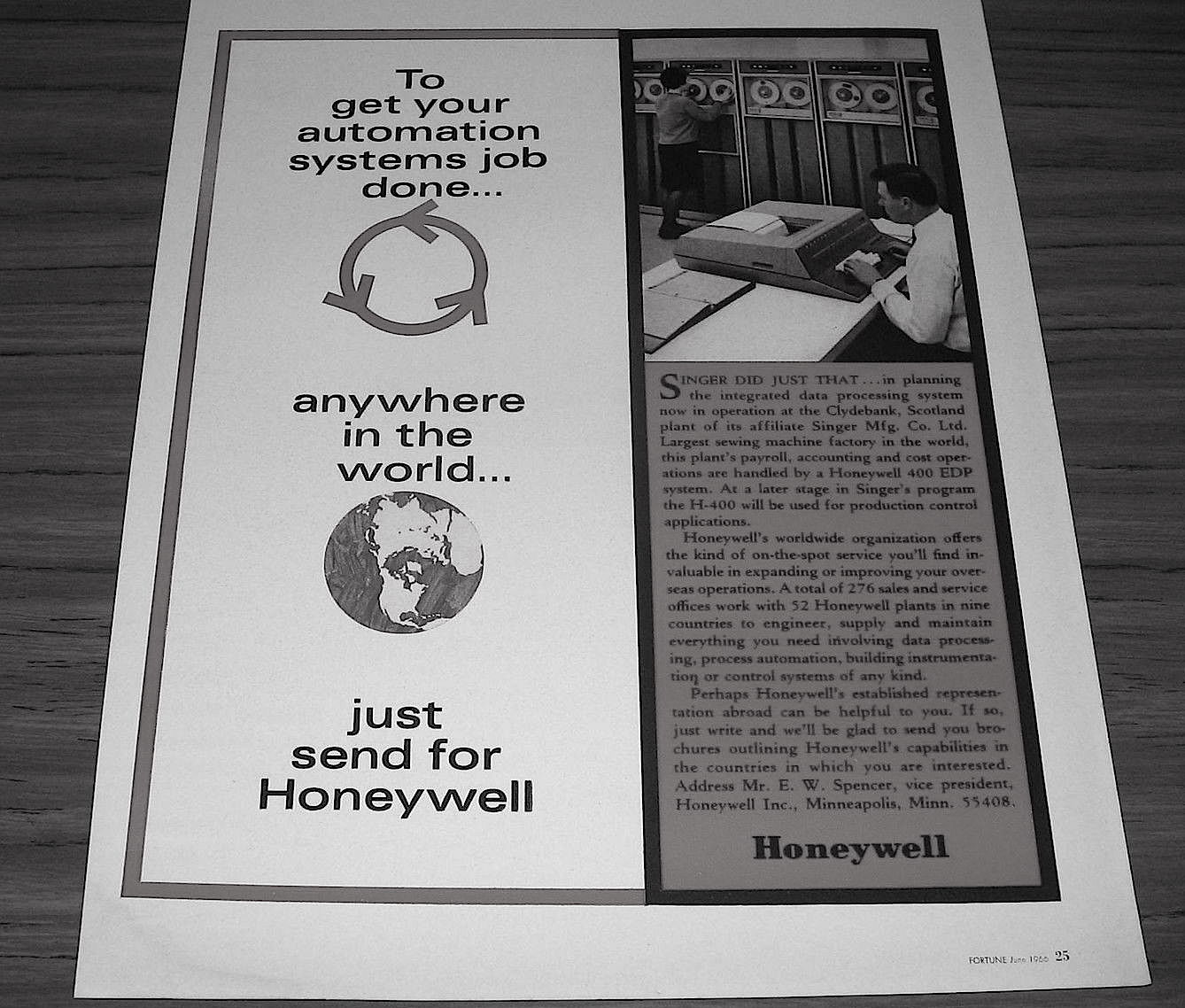
12012 Chandler was the home of “the first Honeywell 400 computer service center in the US.”

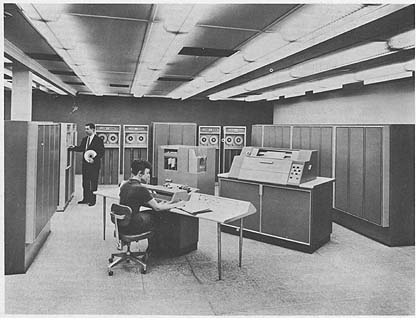
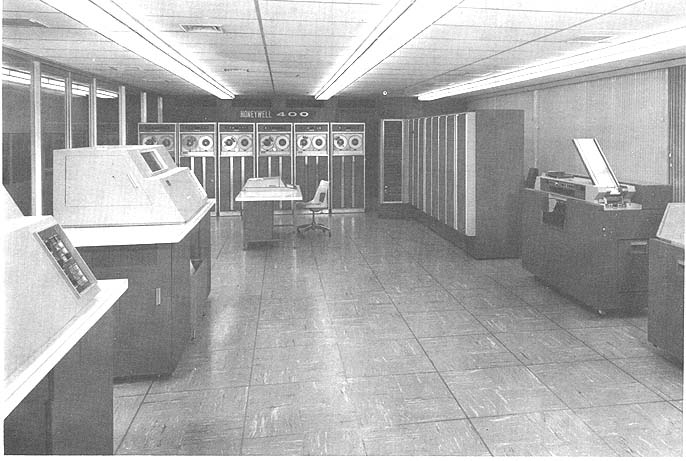
The Honeywell 400 was a system the size of a room, so nobody who worked with one carried it into this building for servicing. It was an early 1960s workhorse for processing payroll and other functions of business and industry. According to Kraza, Honeywell was part of a second generation of computers that came of age when transistors replaced vacuum tubes.  ” Transistorized computers were more powerful, more reliable, less expensive, and cooler to operate than their vacuum-tubed predecessors.”

The black and white photographs above show the Honeywell 400 in operation. However, they are not from 12012 Chandler.

Rancho Pequeño and Other Places….


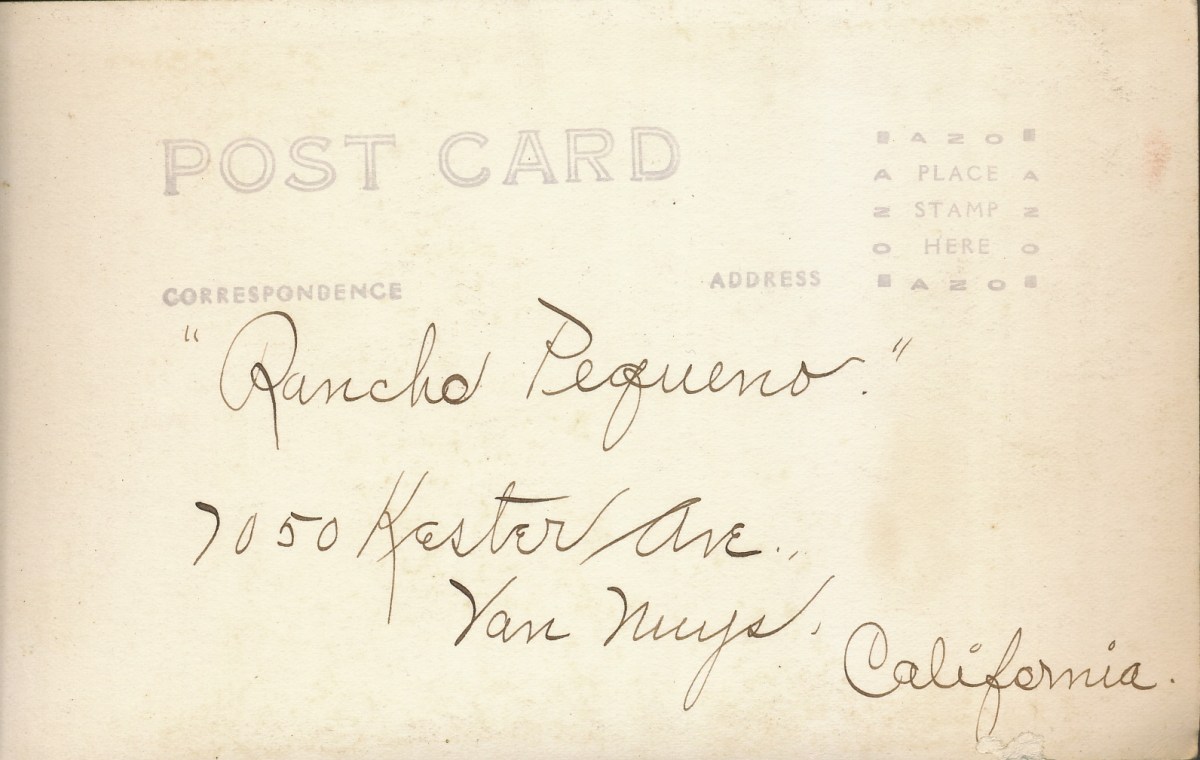
Rancho Pequeno Back

Rancho Pequeno

Kester Street, for those who don’t know her, is a narrow road halfway between Van Nuys  and Sepulveda Boulevards, paralleling both.

Before WWII, it was on the fringe, out on the wide land, beyond settled Van Nuys.

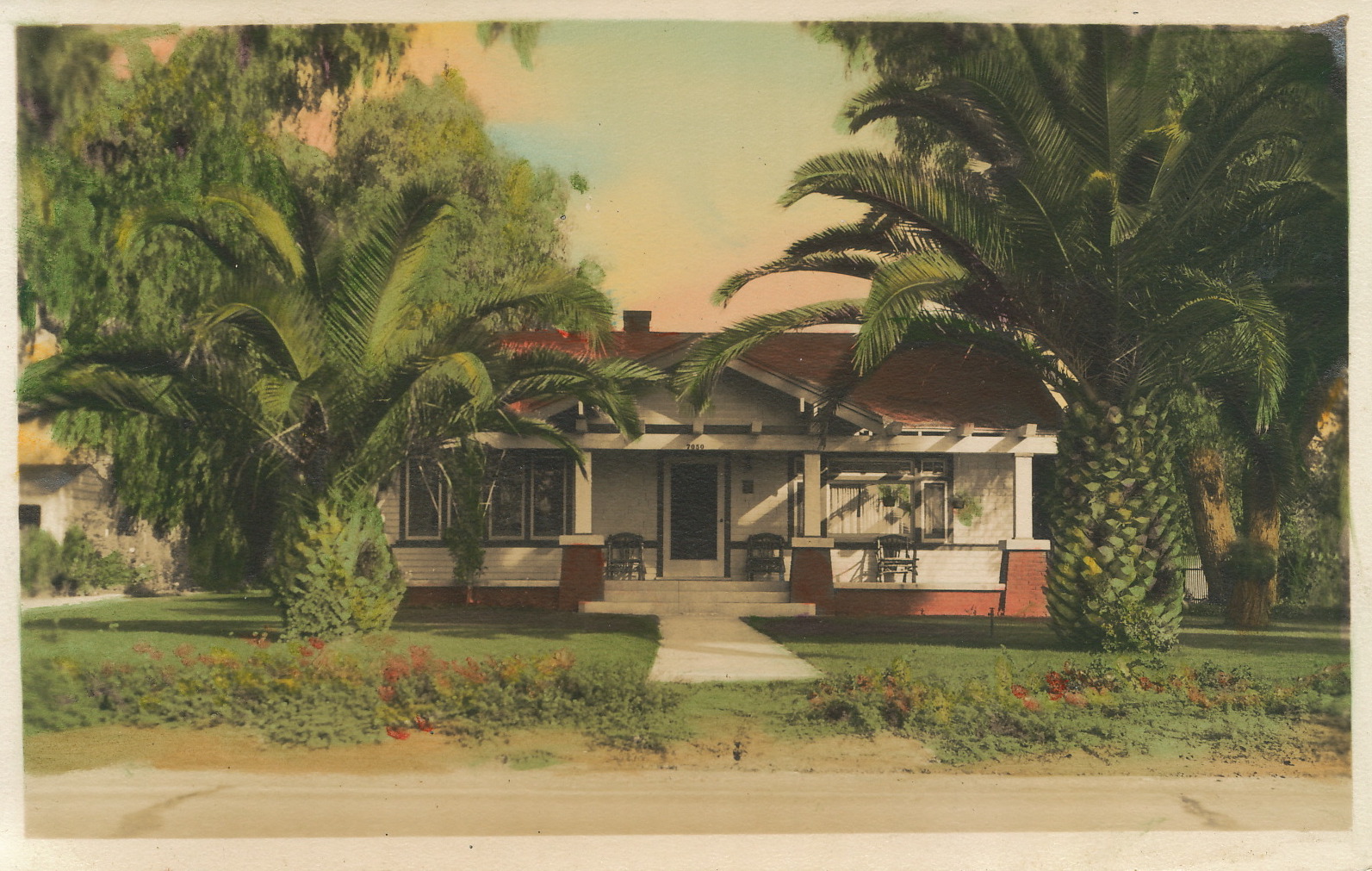
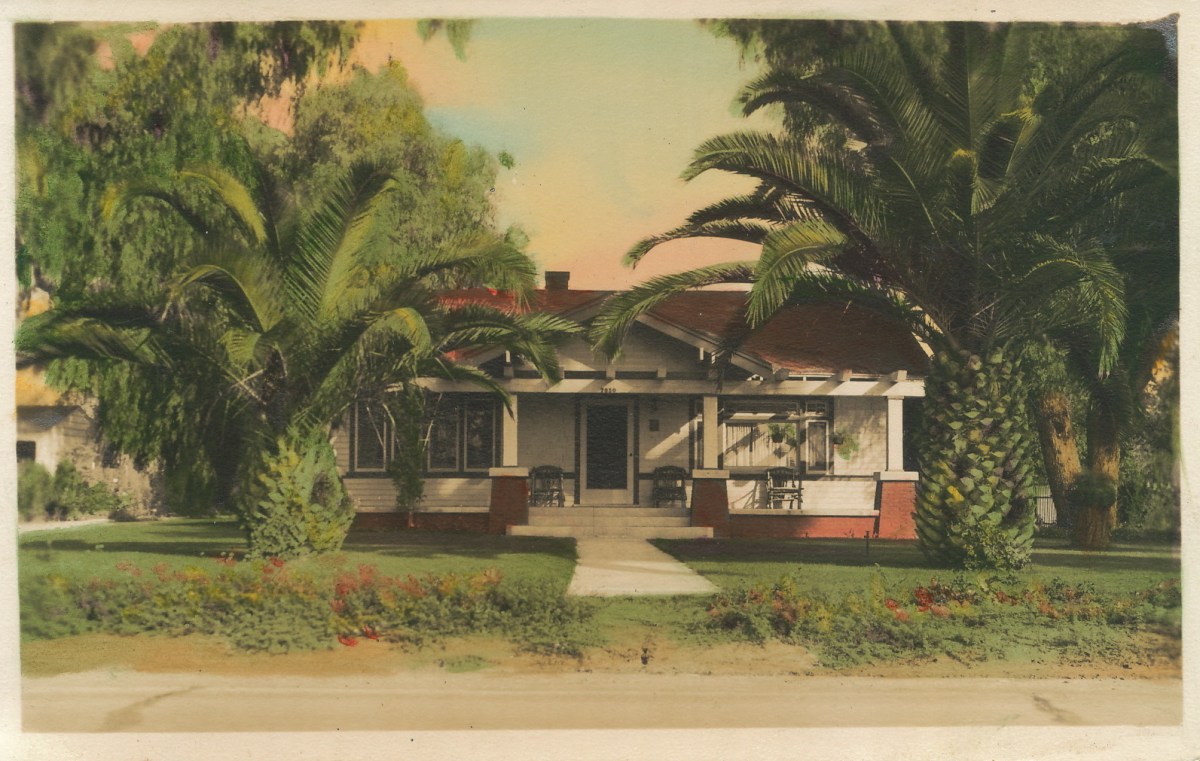
Rancho Pequeño at 7050 Kester (near Vose) was significant enough to have its own postcard.


These are postcards scanned from the collection amassed by Tommy Gelinas at Valley Relics.

They provide pictorial fantasy, mined from fact, of the places and events and people who once lived in the San Fernando Valley.


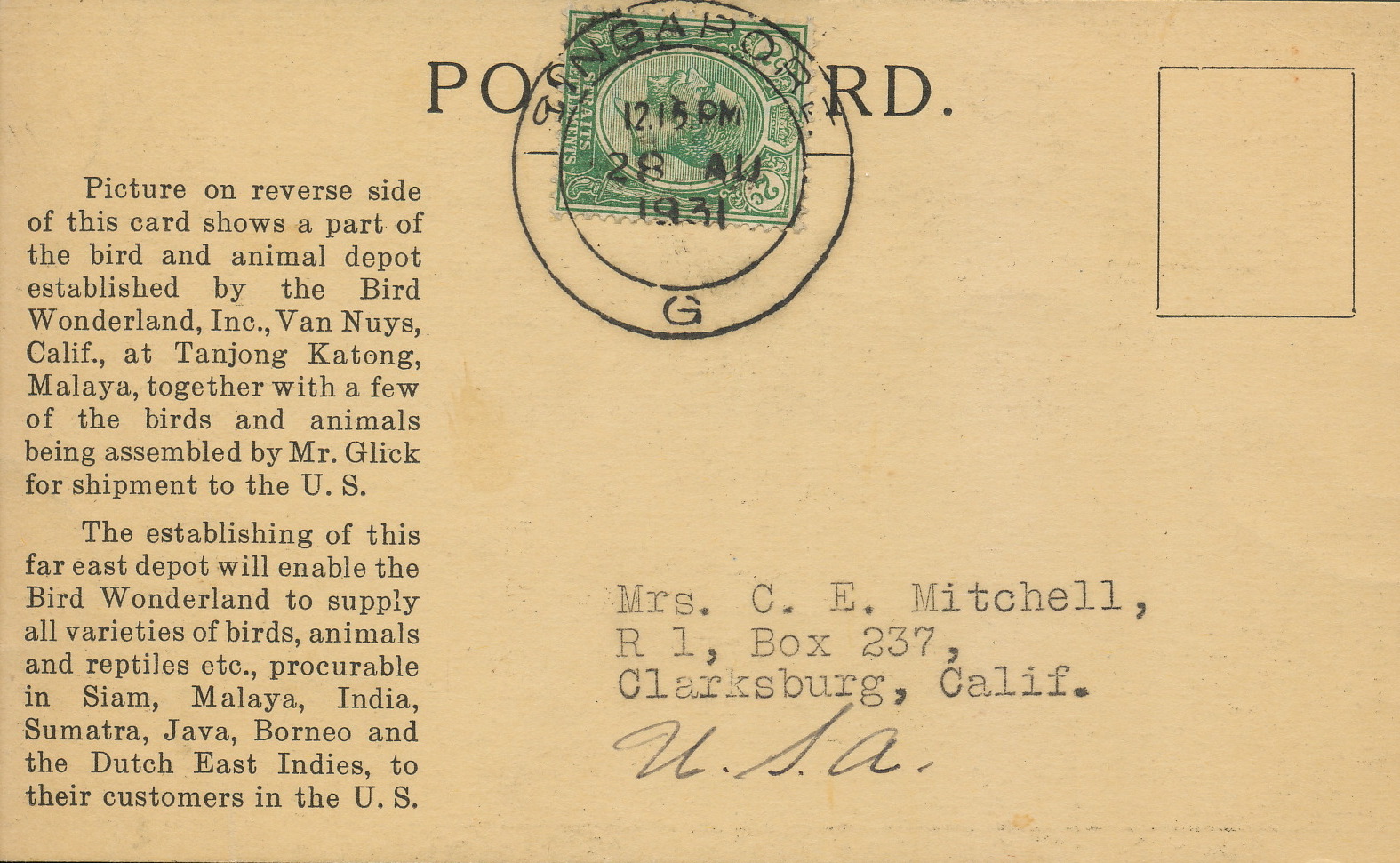
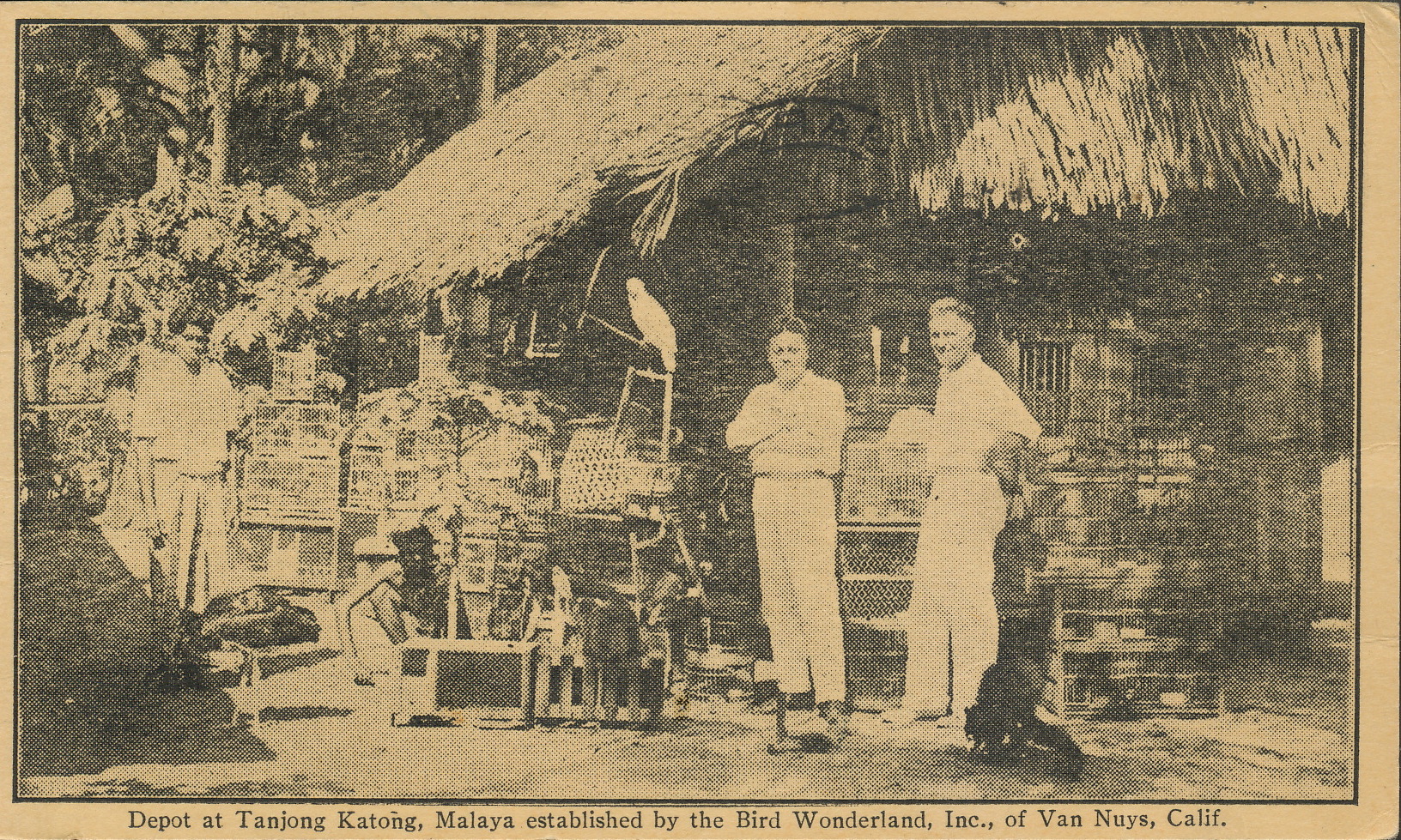
Malaya:Van Nuys Back Malaya:Van Nuys

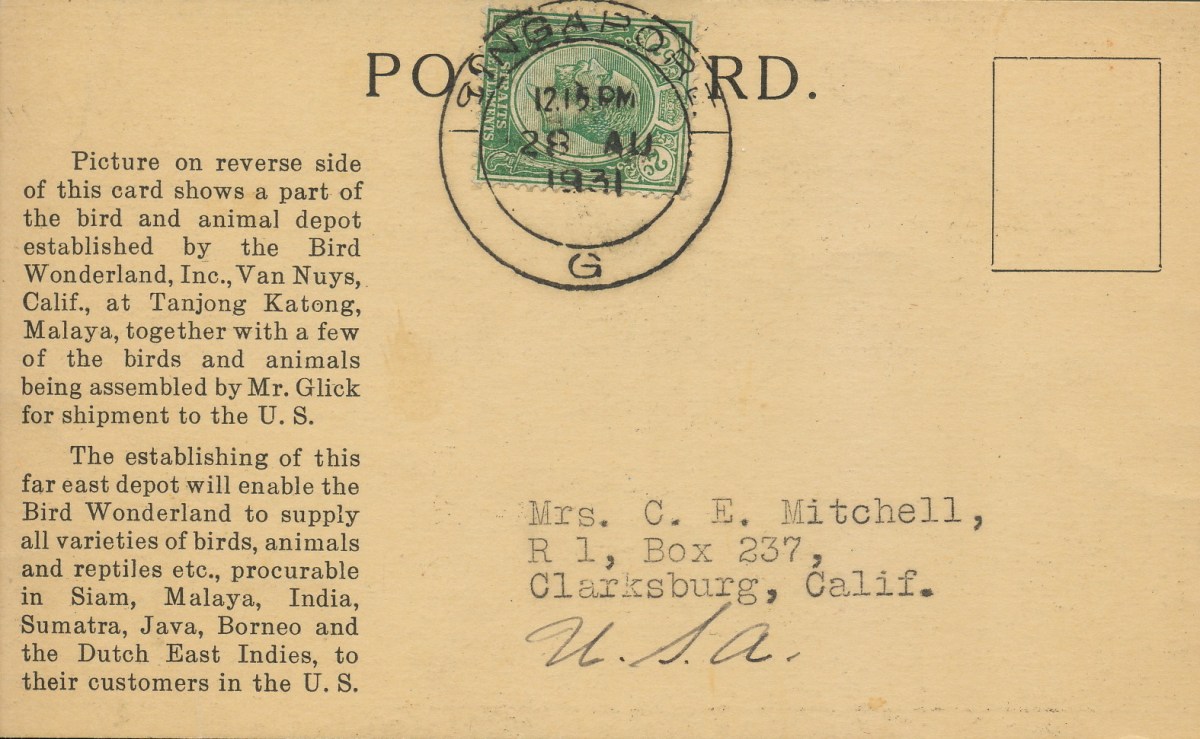
A 1931 postcard shows two men in Malaya (Malaysia) procuring exotic birds for shipment back to Bird Wonderland, Inc. in Van Nuys.

It was located at 15640 Ventura Boulevard, Van Nuys, CA, a location that today is known as Encino.

80 years ago, the name Van Nuys was used all the way from Beverly Glen south of Ventura up to Roscoe west past the present day 405. There was no shame in the name.

Our Ventura Boulevard has an interesting article on Bird Wonderland, which also had exotic animals, including, Jackie the Lion who allegedly inspired the roaring one seen in every MGM movie.
 

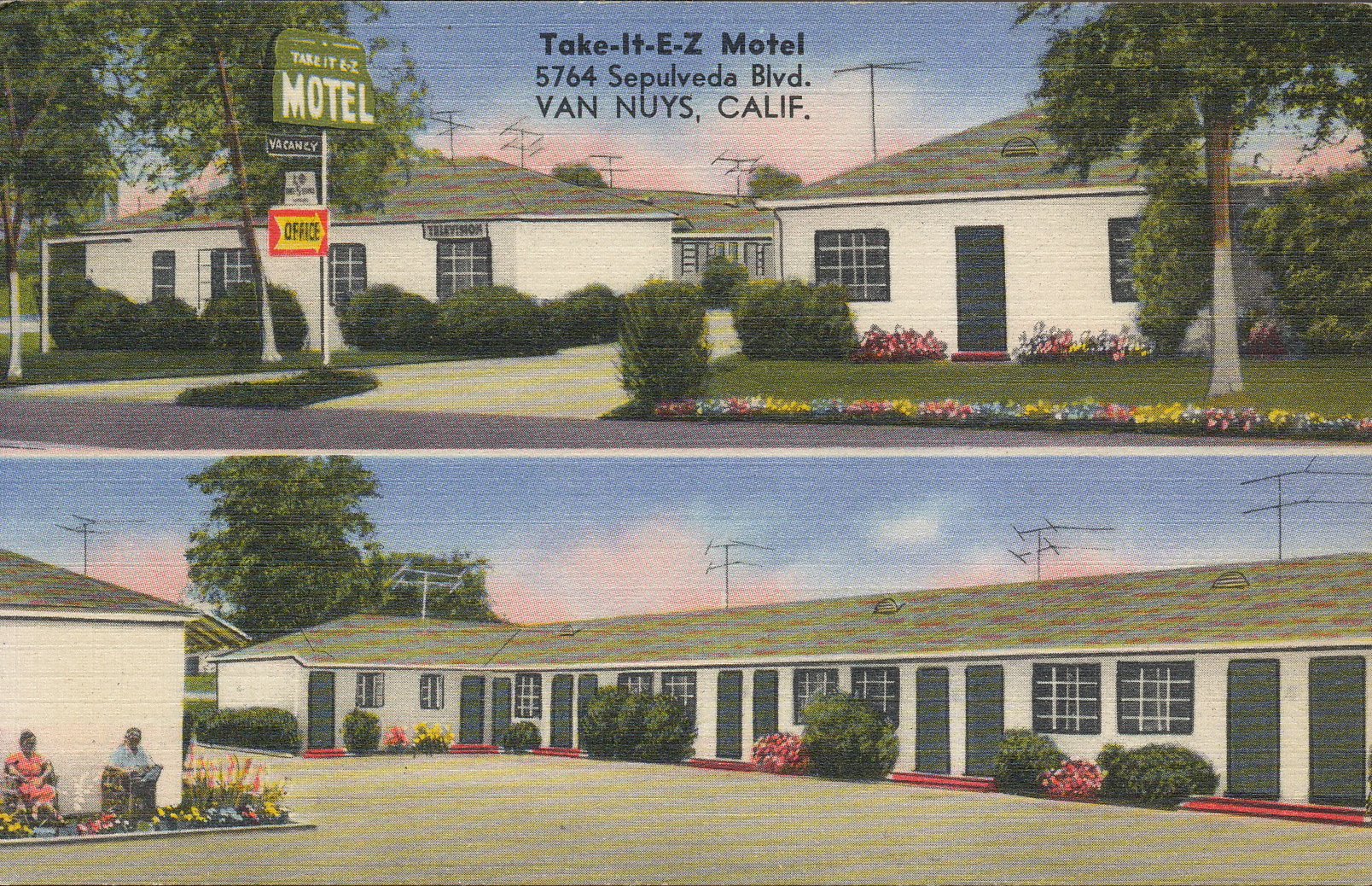
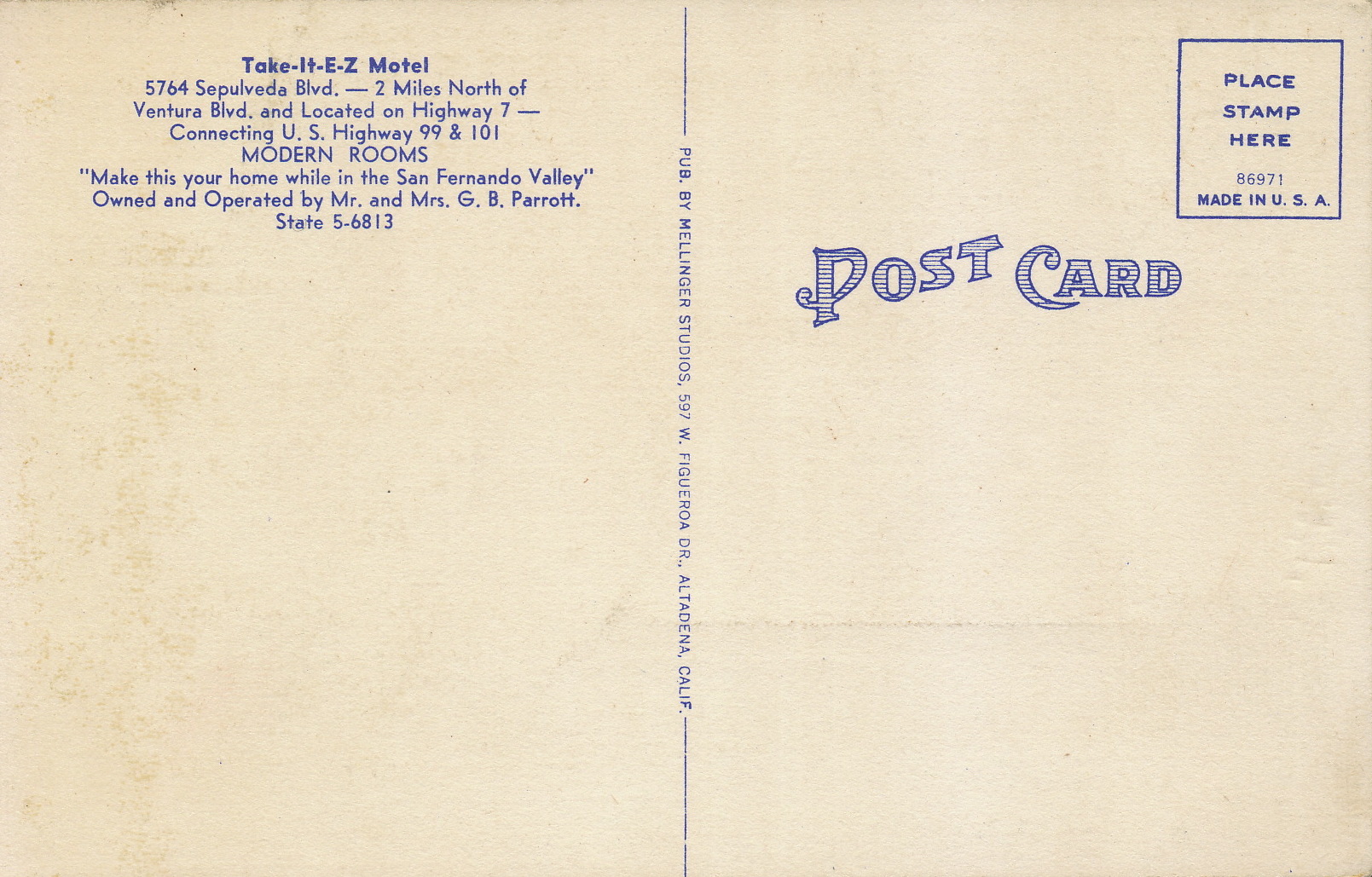
Take It Easy Take it Easy Back

No motel on Sepulveda today enjoys an entirely good name. Much of them, especially those north of Victory, are havens for prostitution.

But back when the area was a main highway into the San Fernando Valley, before the freeway, it hosted many family owned motels.

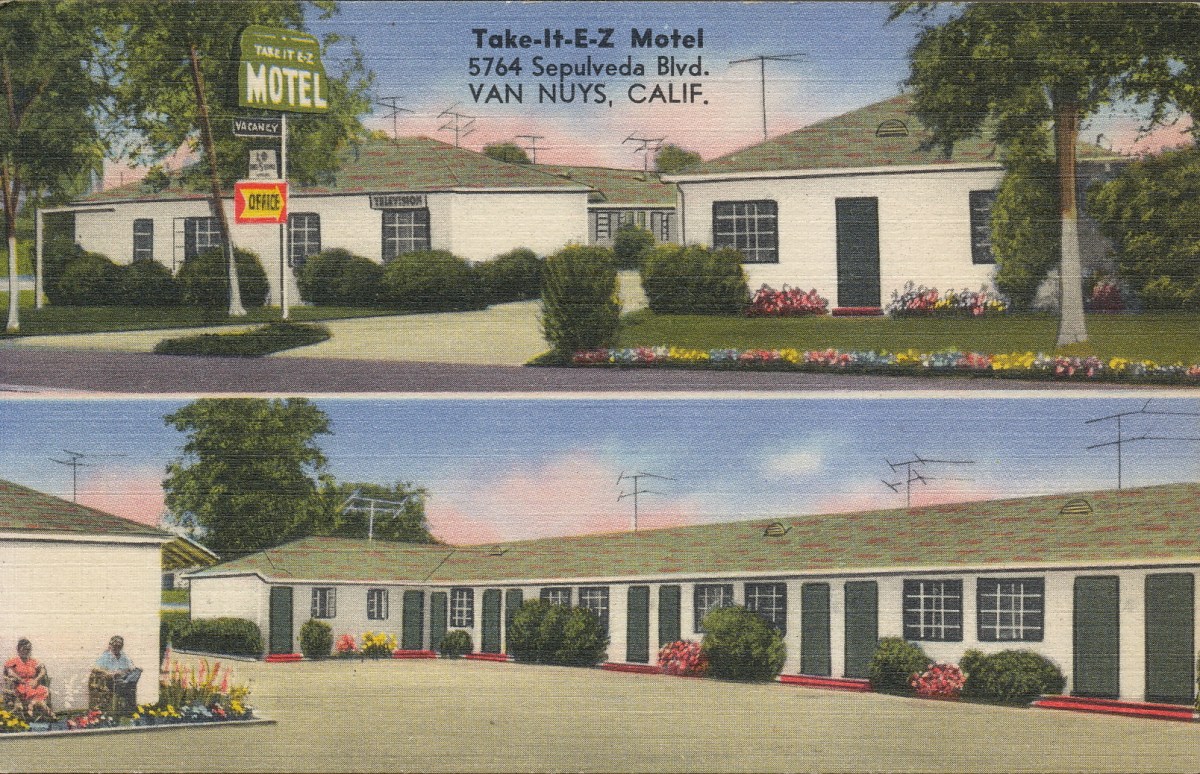
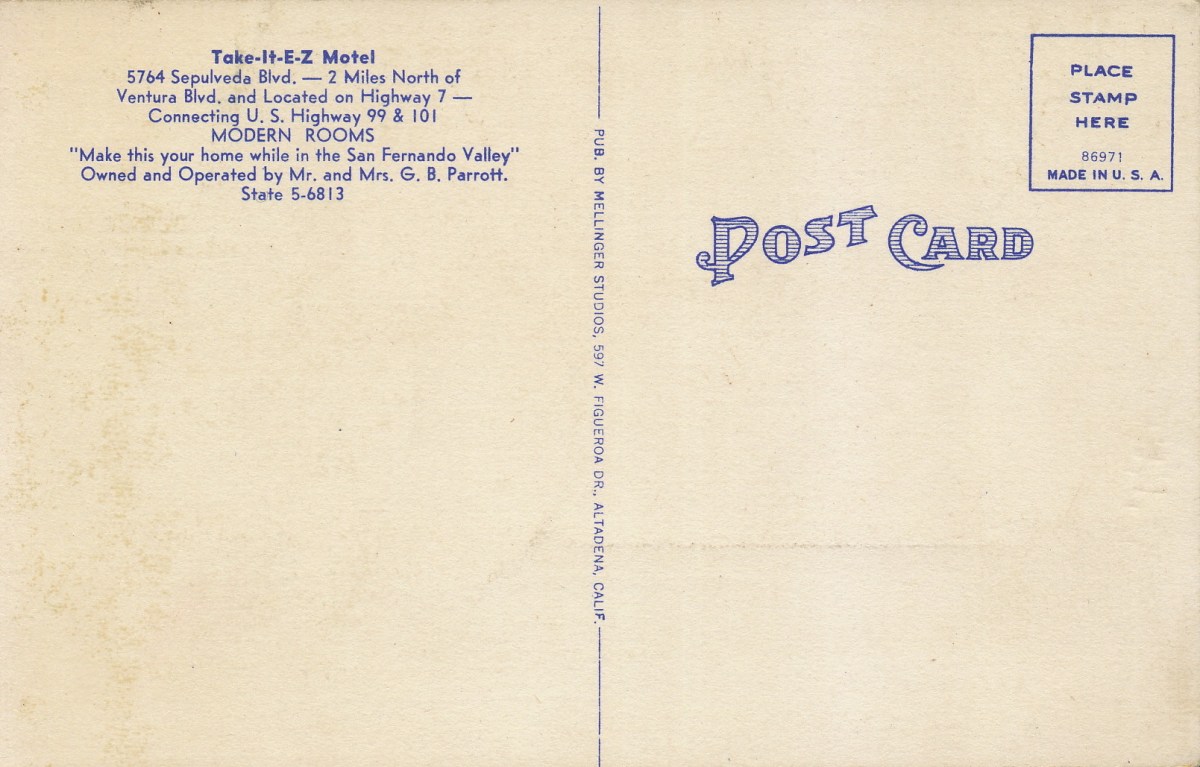
Take it E-Z Motel at 5764 Sepulveda was owned by Mr. and Mrs. GB Parrott.

The motel is still there, at Hatteras, across from Target, and is planned for tear down next year with a new replacement.

The postcard shows two people sitting in chairs on the side of the building, facing the western sun.
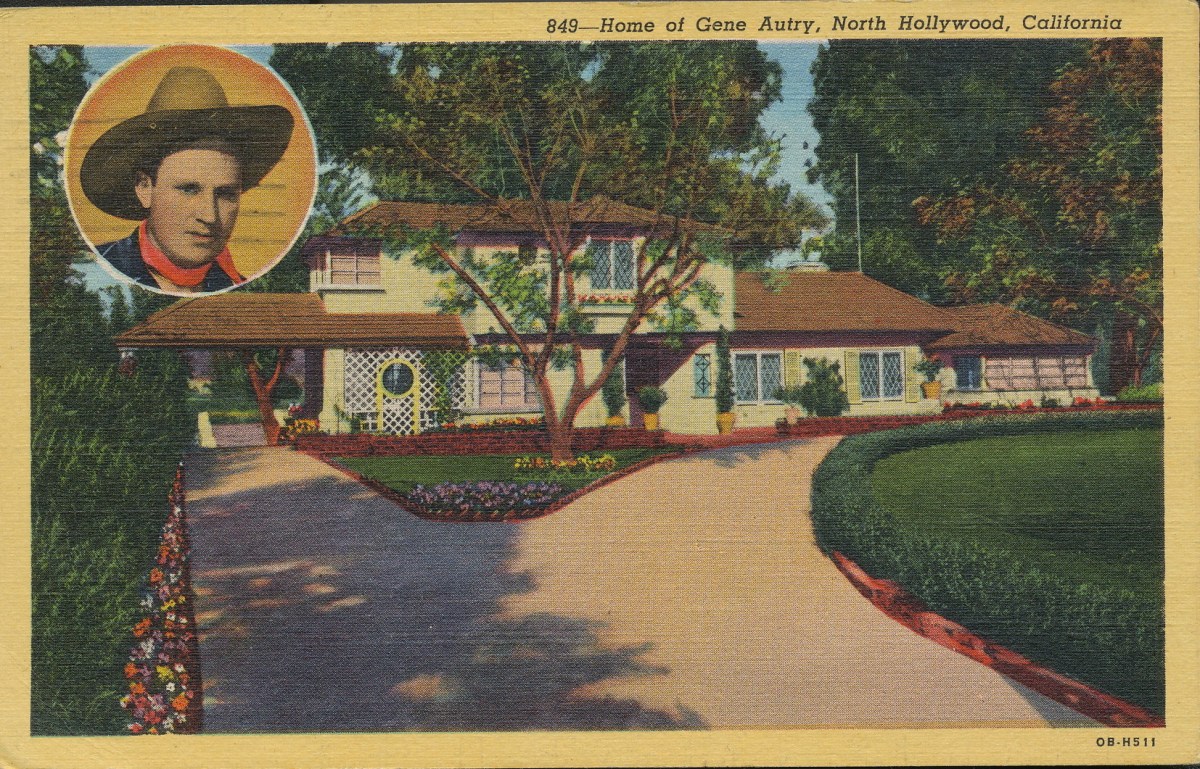
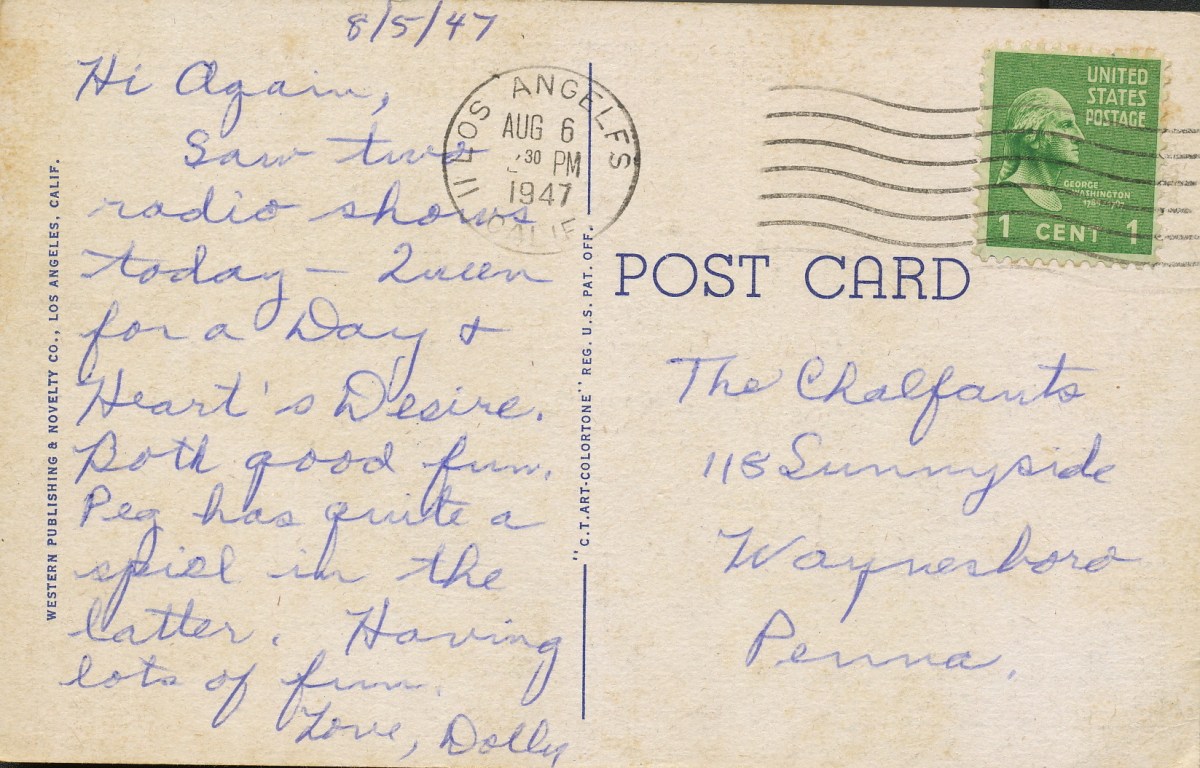
Gene Autry Front Gene Autry Back

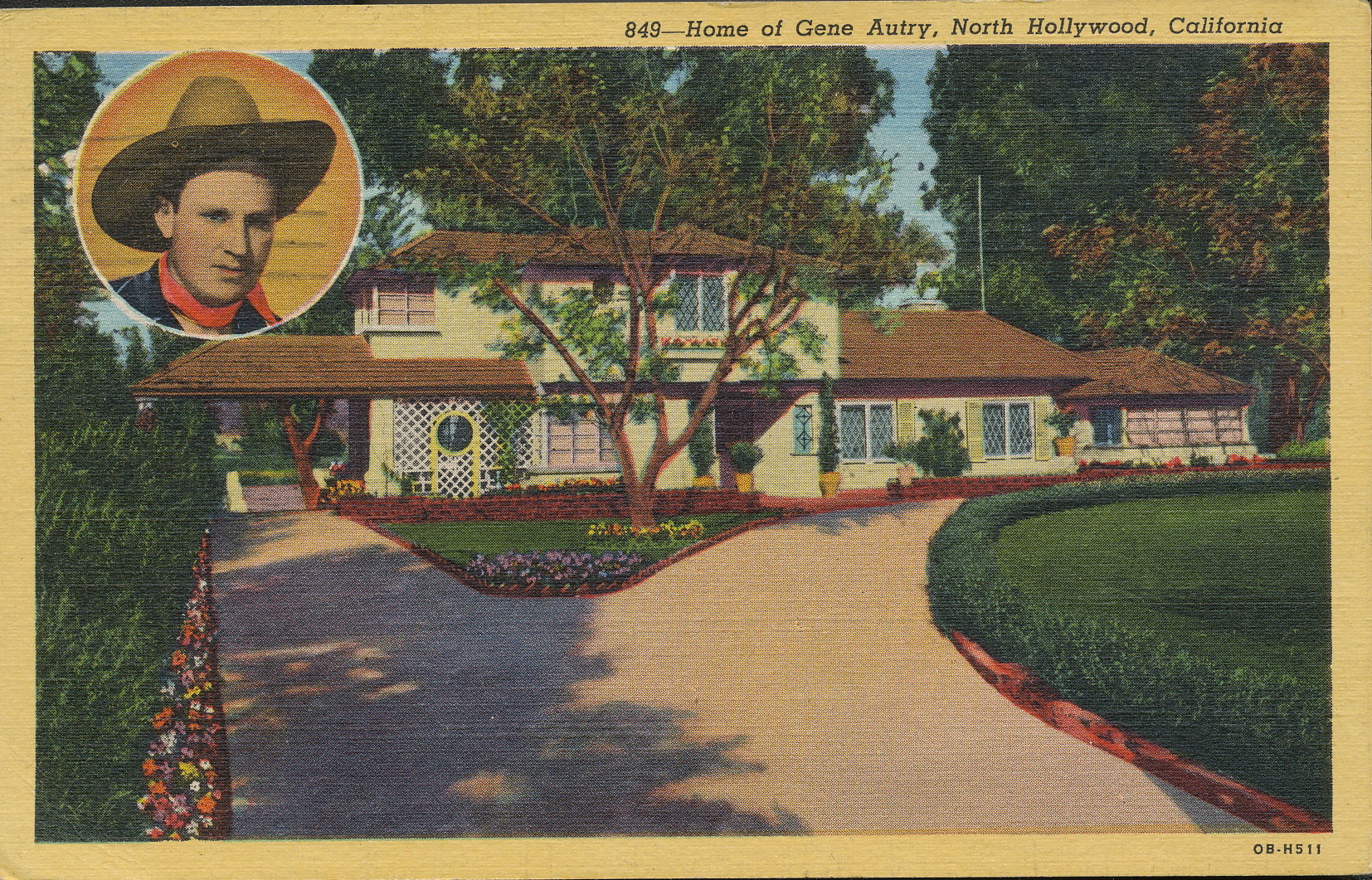
Dorothy visited Hollywood and sent a postcard of Gene Autry’s home in Toluca Lake on August 5, 1947.

Writing to The Chalfants of Waynesboro, PA, she reports, “Saw two radio shows today, Queen for a Day and Heart’s Desire. Both good fun.”

Things may change in Southern California. But people still text and email the folks back home to tell them how they came in contact with celebrities and how wonderful the weather is.

 

Man in Truck Killed By Train: 1957


Train_vs_auto_accident_at_Vineland_Avenue_and_Vanowen_Street_1957

In the 1950s, movies were censored.

Violence was off-screen.

Death, dismemberment, bloody accidents, injuries: all of it was hidden.

But real life photographers back then rushed to the scene and photographed the daily gore that makes the daily news.
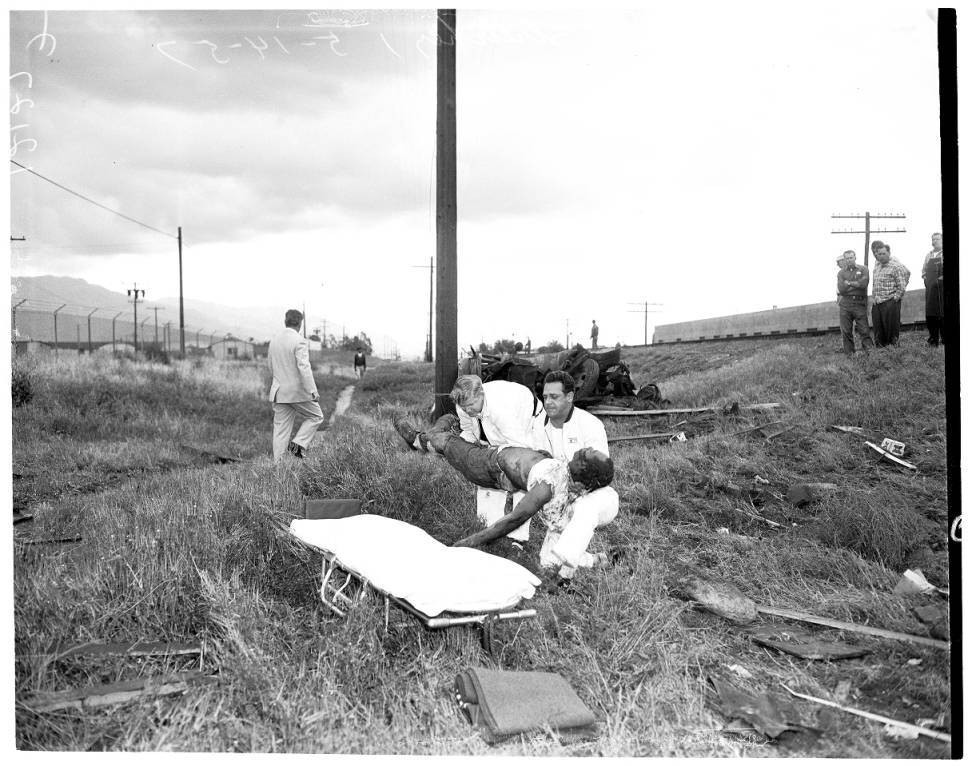
One such example is this photo from May 5, 1957, near Vineland and Vanowen, where the lifeless body of Louis Bell, killed by a train in his truck, is lifted onto a stretcher.
Today we watch computer generated “entertainment” scenes of virtual gore that
would have made 1950s audiences vomit.

But who shoots real news photos today?


image.Train vsauto accident at Vineland Avenue and Vanowen Street14 May 1957Louis Bell (dead).Caption slipreads: "PhotographerGlickmanDate1957-05-14AssignmentTrain vsTruck 1 killedVineland Ave. and VanowenNoHollywoodG300/301/214/215Ambulance attendants lift body of Louis Bell onto stretcher; in background is his demolished truck".

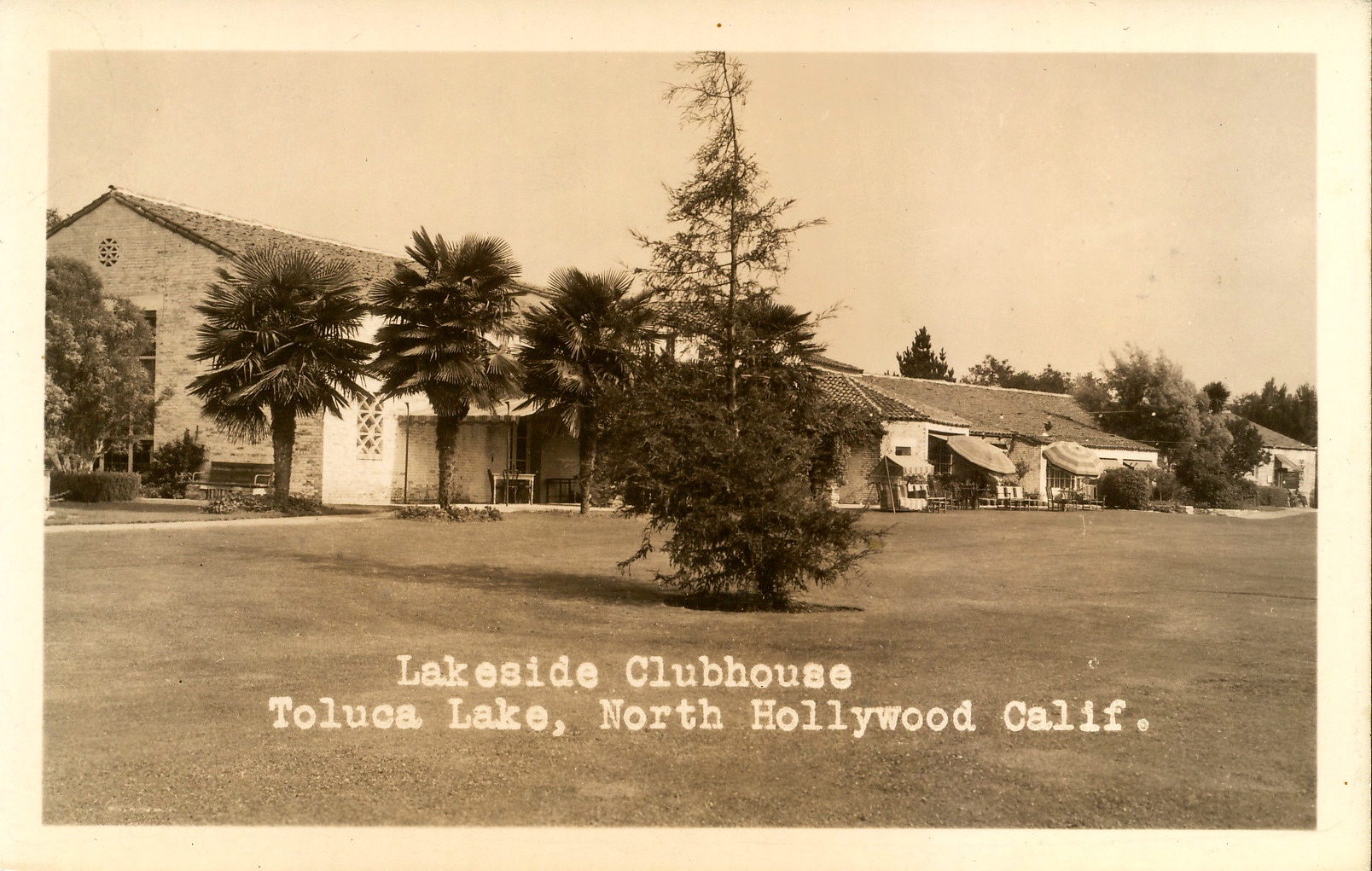
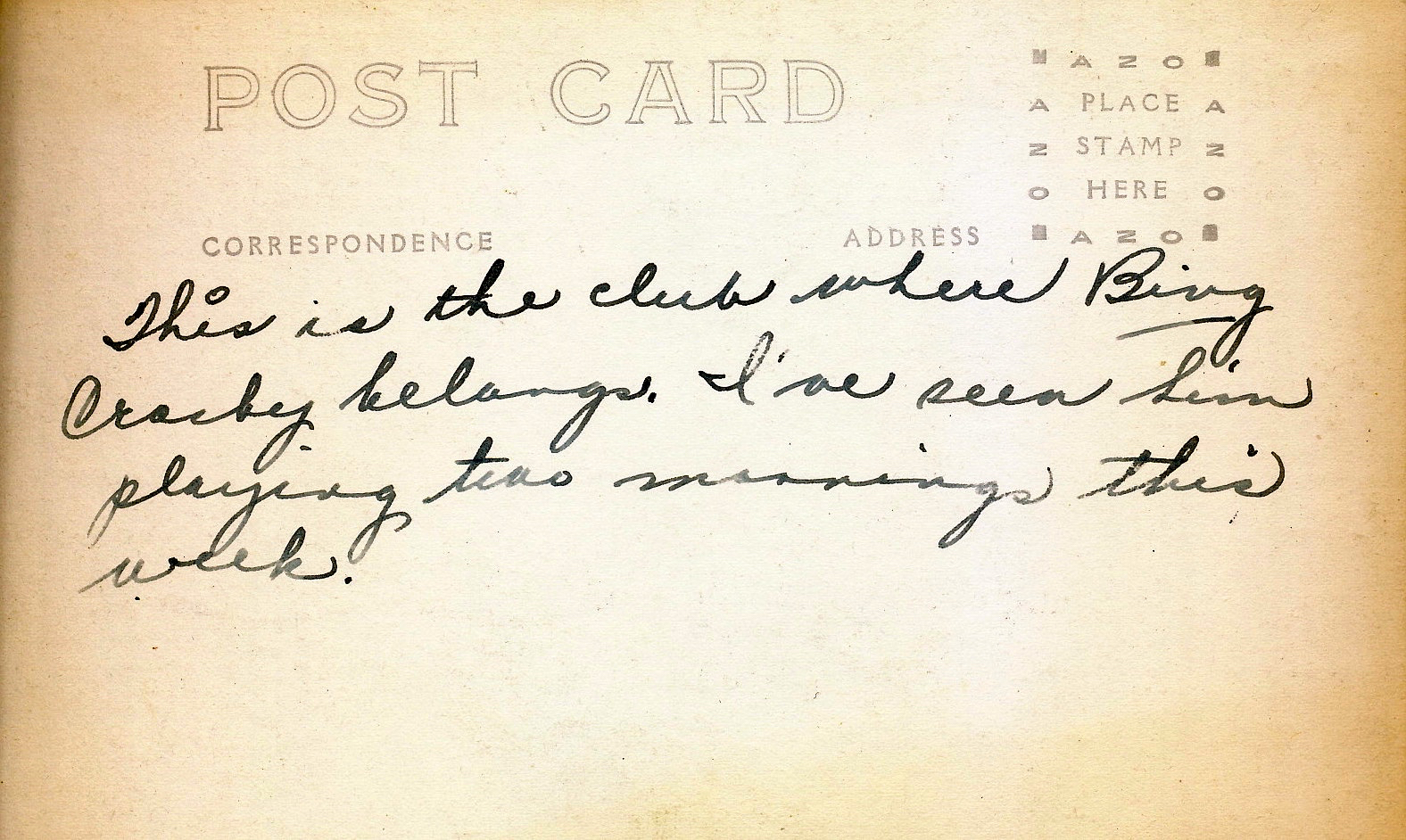
“This is the club where Bing Crosby belongs….”


Picking Olives Front

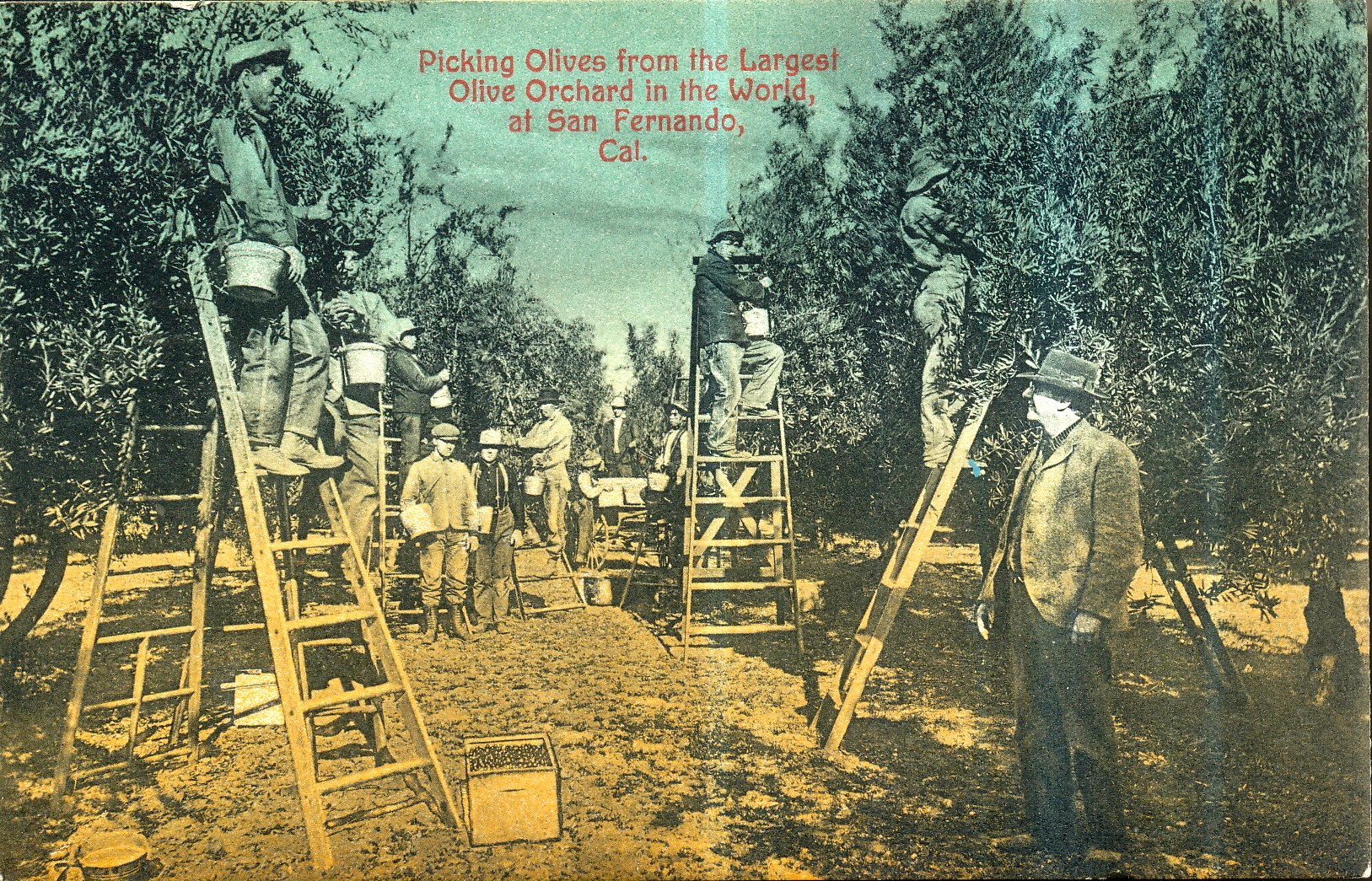
Some of the enormous, picturesque, and historic postcard collection amassed by Tommy Gelinas and his Valley Relics has passed through my hands.

The San Fernando Valley, only 100 years ago a largely agricultural area, dotted with newly established towns, became the fastest growing part of the United States in the 15 years after WWII.

Postcards from visitors who passed through here; visited olive groves, rode streetcars through vast planted lands, absorbed all the sunshine, boosterism and hucksterism of that time; radiate in words and pictures.

Lankershim VN Front Lankershim VN Back

Around 1910, Pacific Electric advertised a 101-mile-long, one-day trolley trip for one dollar. “The Scenic Trolley Trip” visited 10 beaches and 8 cities.

“Paralleling the mountains from Los Angeles to the ocean, then 36 miles along the Seashore. Parlor Car; Reserved Seats, Competent Guides. FREE ATTRACTION-Admission to largest Aquarium on Pacific Coast; Ride on the LA Thomspon Scenic Railway at Venice; Admission to Camera Obscura, Santa Monica.”

It sounds thrilling.

And imagine, men in suits and women in long dresses riding all day in wool coats, felt and feather hats, with many layers of undergarments, not even an ankle exposed.

Tower Motor Front

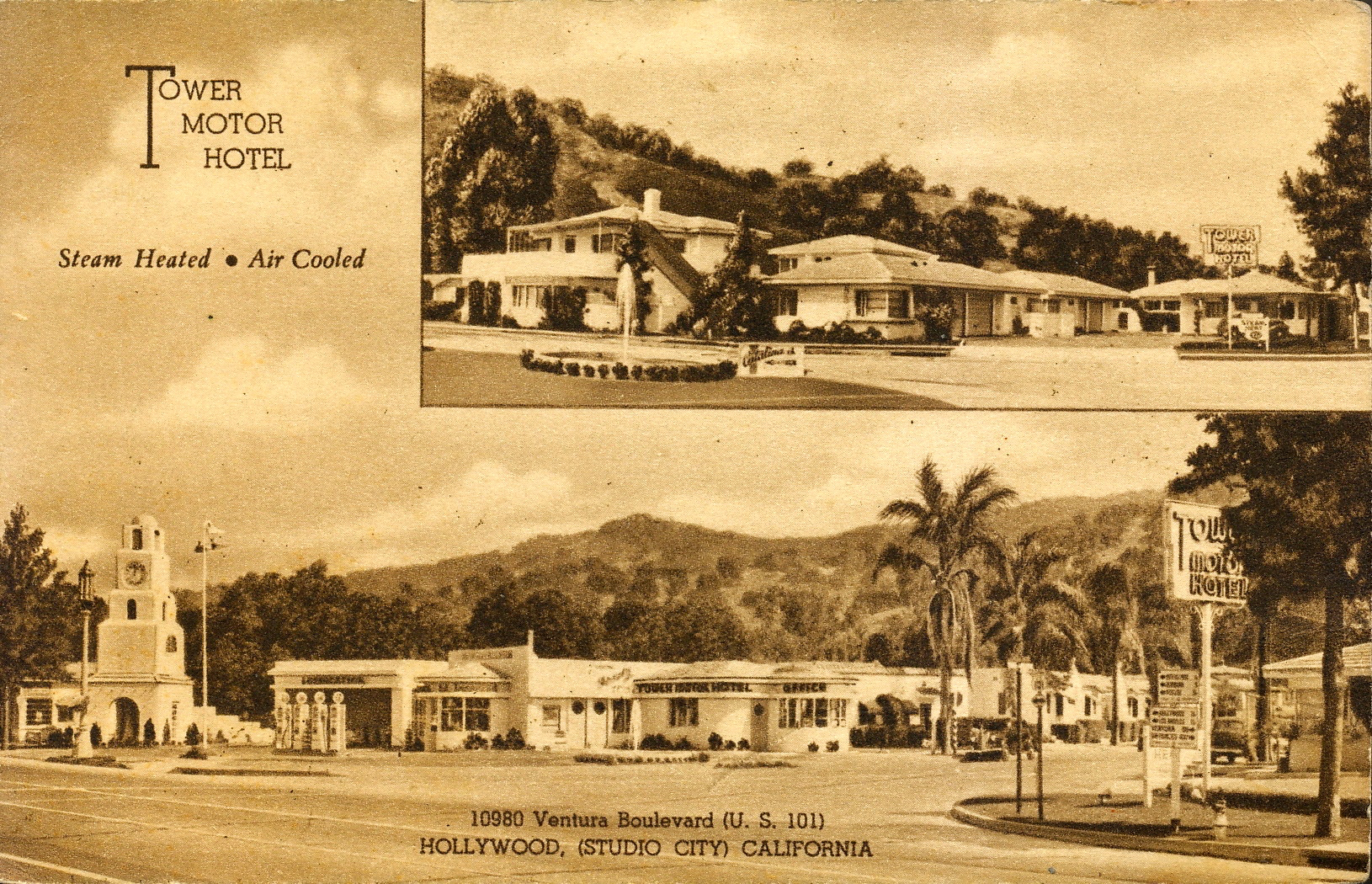
Thirty or so years later, the Tower Motor Hotel at 10980 Ventura Blvd in Studio City was smartly streamlined with gas pumps in front, steam heat and air-cooled rooms.

Lakeside Front Lakeside Back

Bing Crosby, who lived in Toluca Lake, was the most successful singer of the 1930s. A postcard sent from a fan who visited Lakeside Golf Club near Mr. Crosby’s home wrote: “I’ve seen him playing two mornings this week.”

IMG_0028

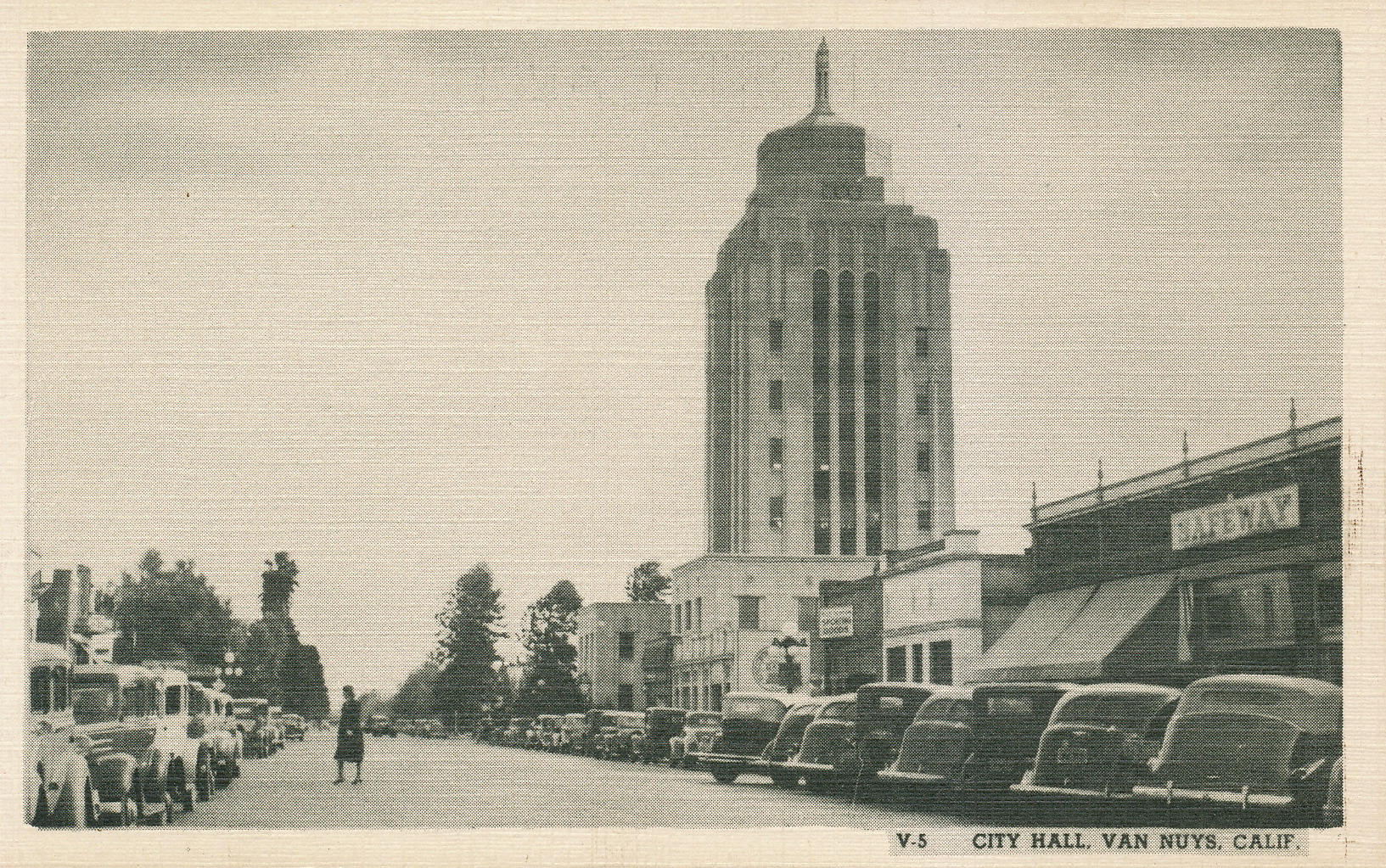
A 1930s view of Van Nuys, along Sylvan Street, towards the Valley Municipal Building, shows diagonally parked cars and a “Safeway” store.

On another postcard, showing the Encino Country Club, a Model T is parked under a shady oak in a verdant landscape of hills and orange trees.

IMG_0012

It may be too much to extrapolate truth and fact from these postcards. They were advertisements for businesses, meant to promote and sell.

But my heart tells me that Encino, Van Nuys and the rest of the Southland were magical back then.


Vanowen and Laurel Canyon: 1931


Bossout_case_intersection_of_Vanowen_Street__Laurel_Canyon_Boulevard_Southern_California_1931_image_1 Bossout_case_intersection_of_Vanowen_Street__Laurel_Canyon_Boulevard_Southern_California_1931_image_5

From the archives of USC comes these fascinating (Dick Whittington Studio) photos of Vanowen and Laurel Canyon Blvds. in 1931.

What might have become of the vast and verdant emptiness had it been developed with a plan, or a vision, beyond that of buyer and seller and developer?

It would be an intersection harmonious, civilized, aesthetic and humane.

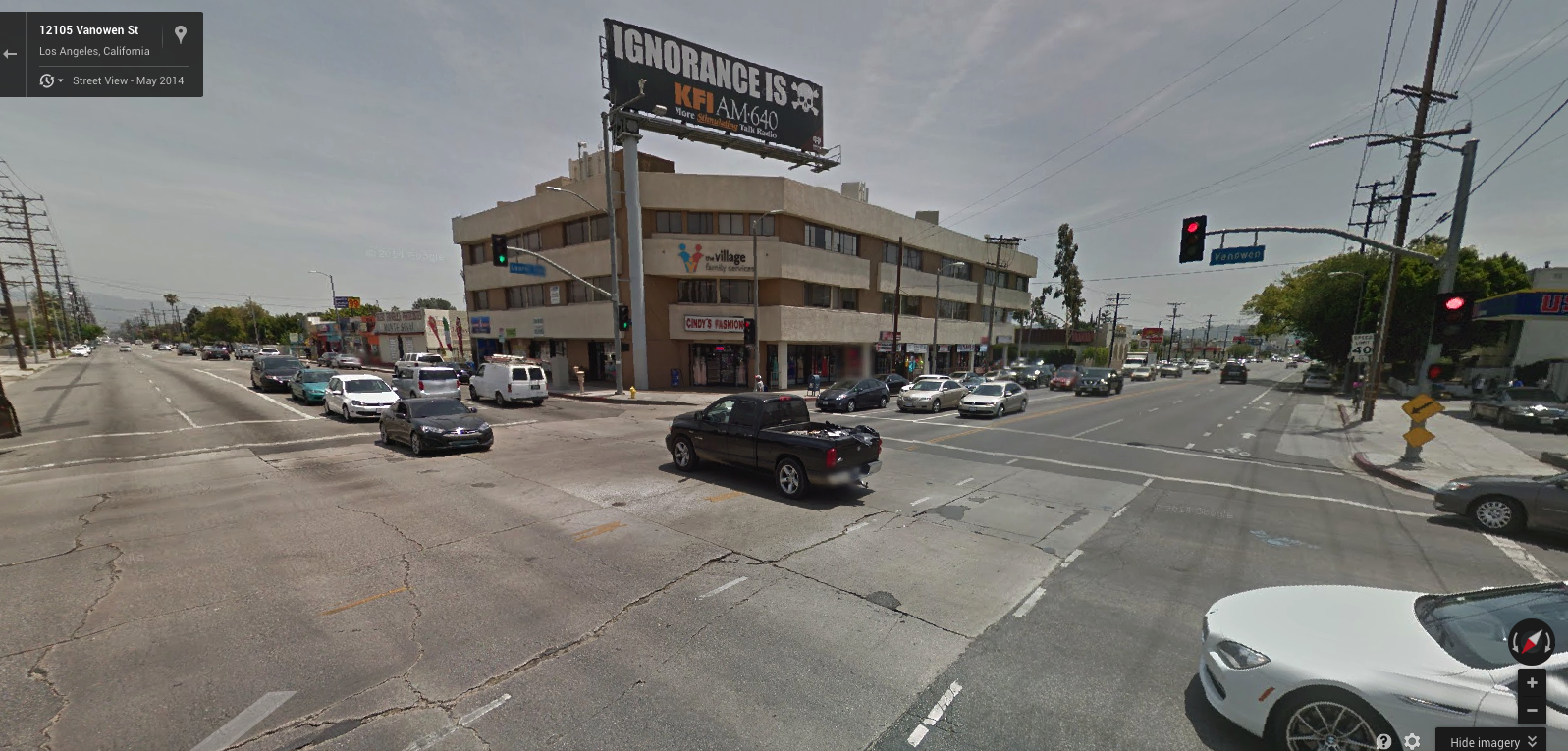
Instead, it is today a monstrous urban carbuncle of cheap, ignorant, lowdown, poisonous ugliness; billboards, traffic, crime, and junk food bake under hot skies and treeless hell.

This lost place wears a name tag provided by the billboard: ignorance.

screenshot_371


Foley’s Donuts and North Hollywood (via Japan and Vancouver)


Page-06 Page-01

Page-08 Page-04

Page-07 Page-03

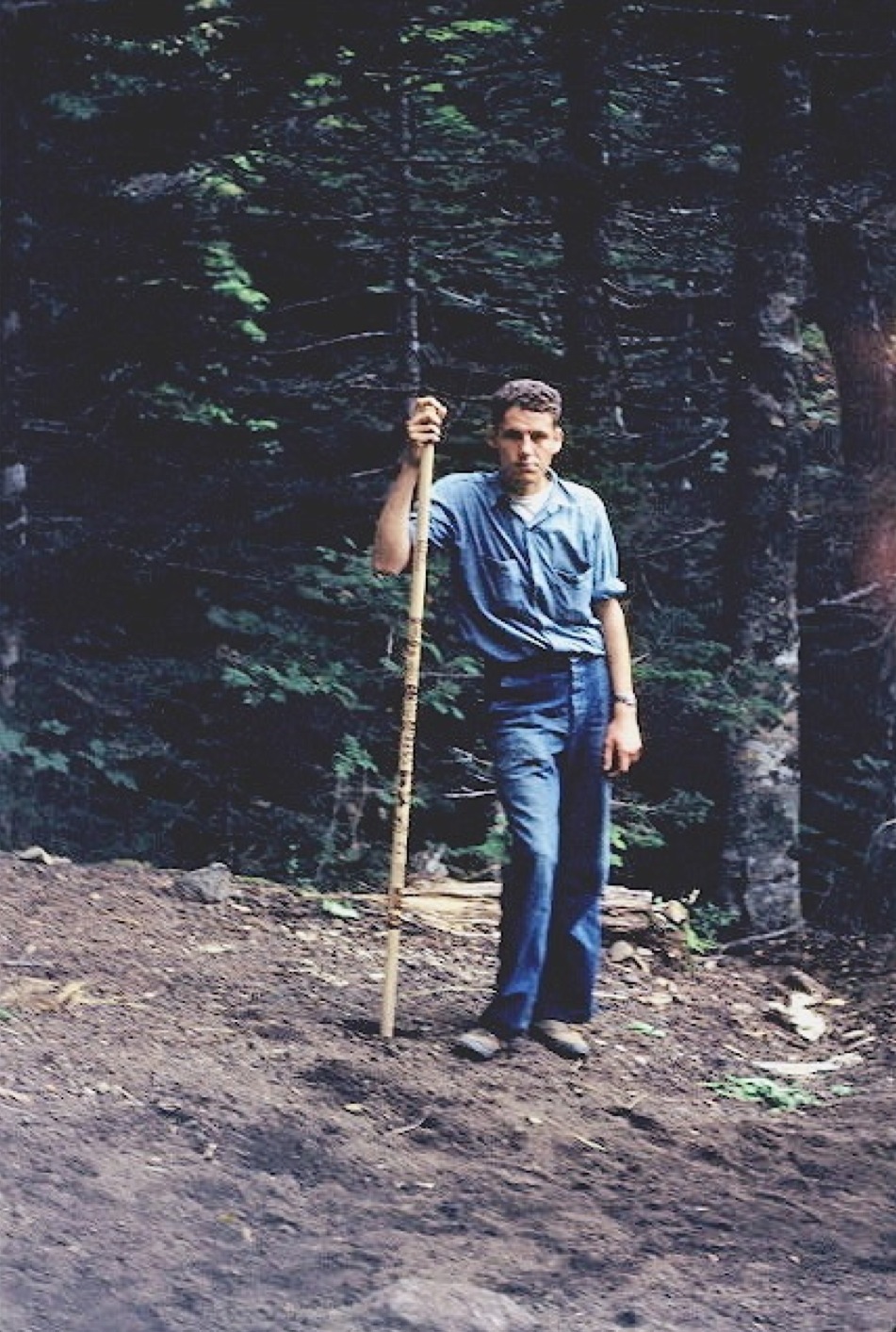
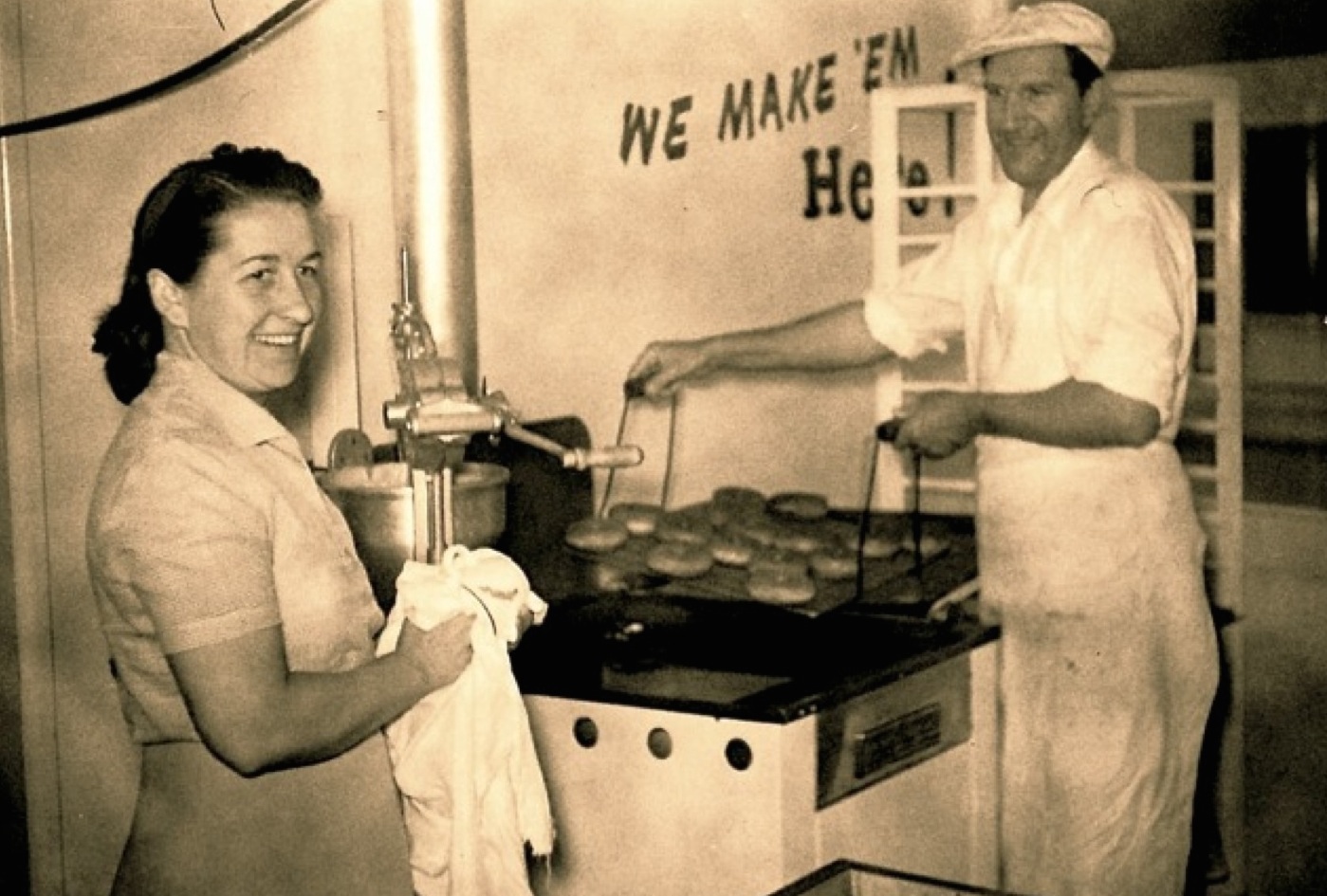
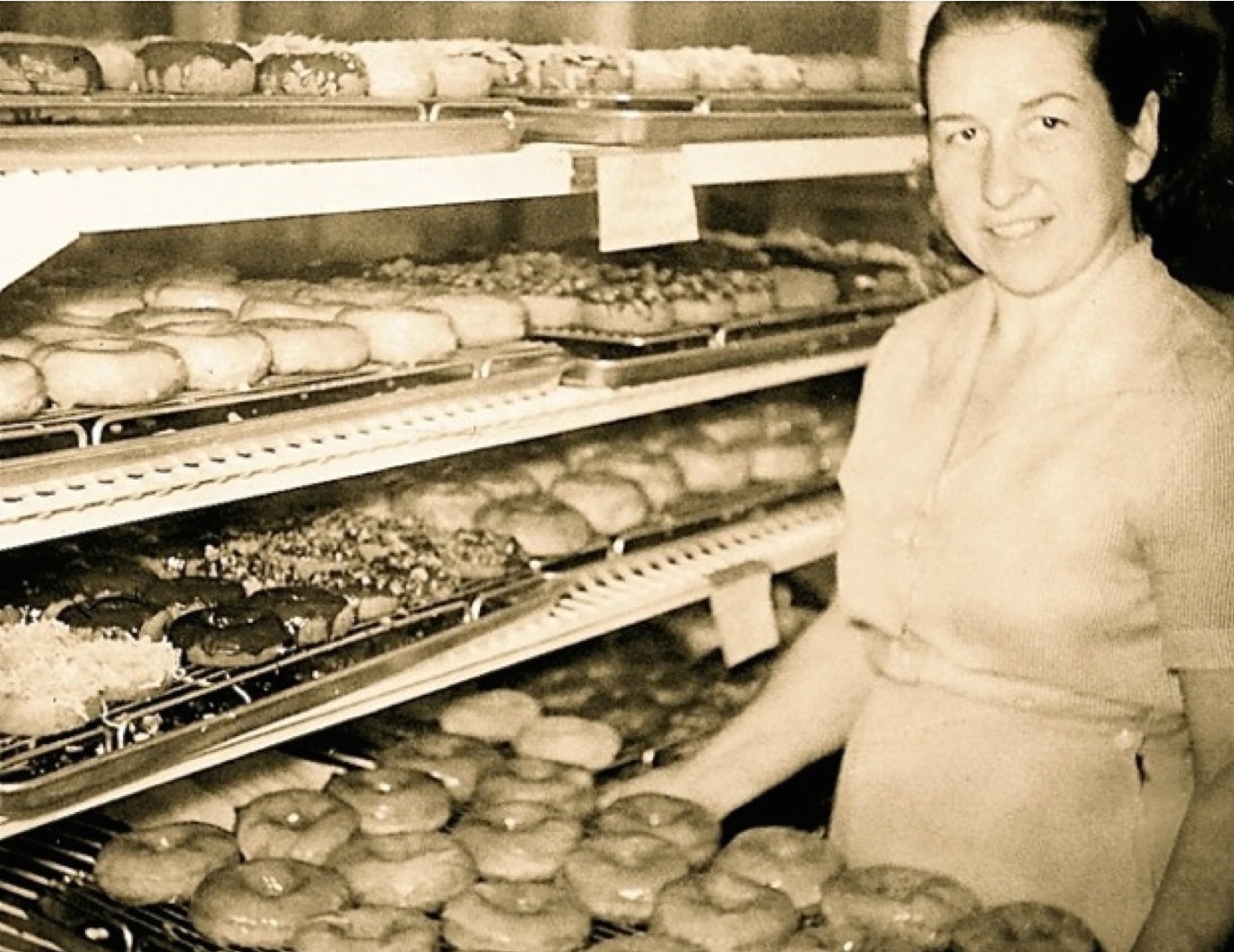
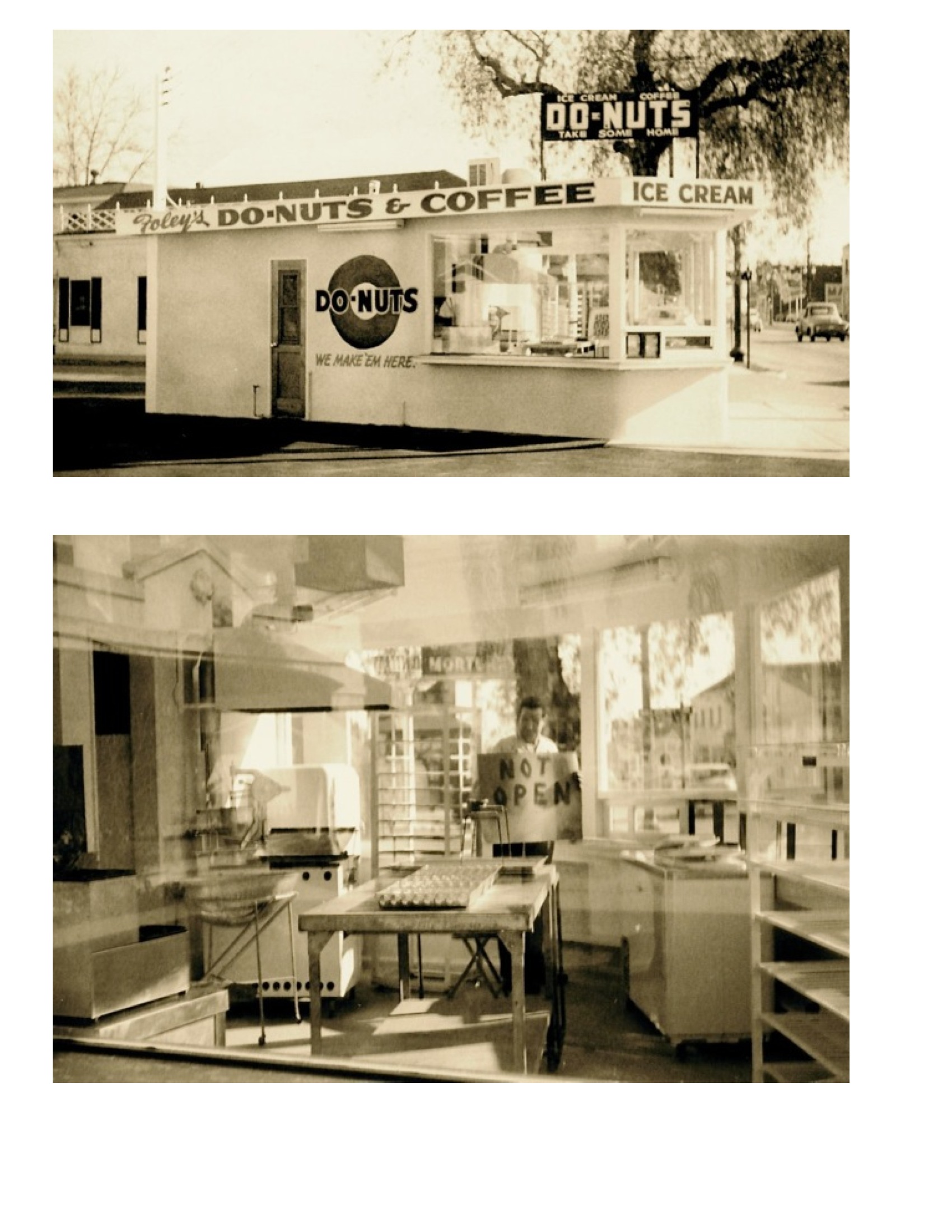
On a recent visit to Vancouver, I met a naturalized Canadian named Christopher Foley, who by coincidence comes from a family that settled into the San Fernando Valley in the early 1930s. Chris lived in both the SFV and San Francisco and later emigrated to British Columbia.

He showed me, in his digital scrapbook, some fascinating old pictures.

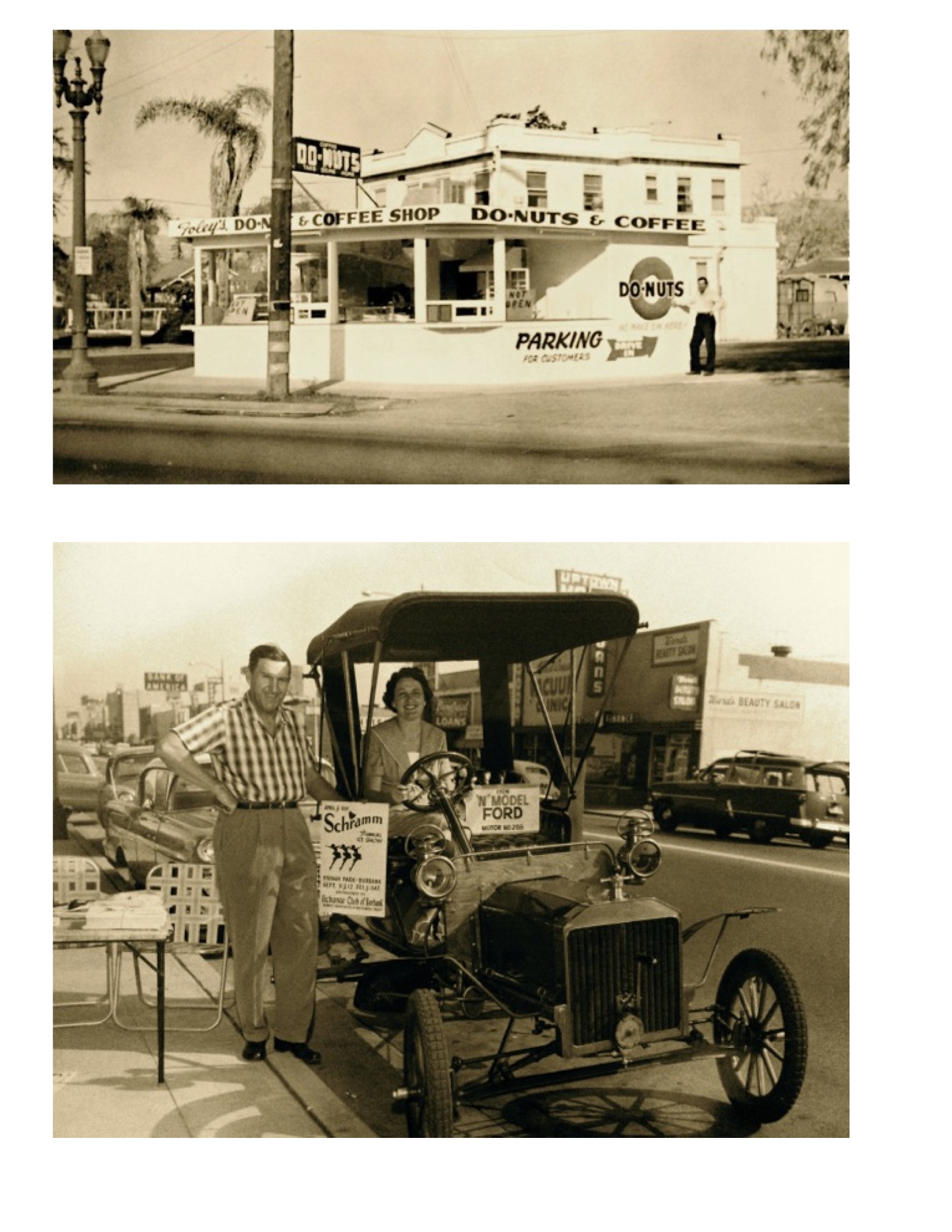
His grandfather, a movie photographer, had moved from West Virginia in the early 1930s to work in the studio system.  Later on, the family opened up a donut shop in North Hollywood called, not surprisingly, “Foley’s”.

His mom, actress Mary Foley, played a band member in “Some Like it Hot” (1959/Dir. Billy Wilder) which starred Marilyn Monroe, Tony Curtis and Jack Lemmon.

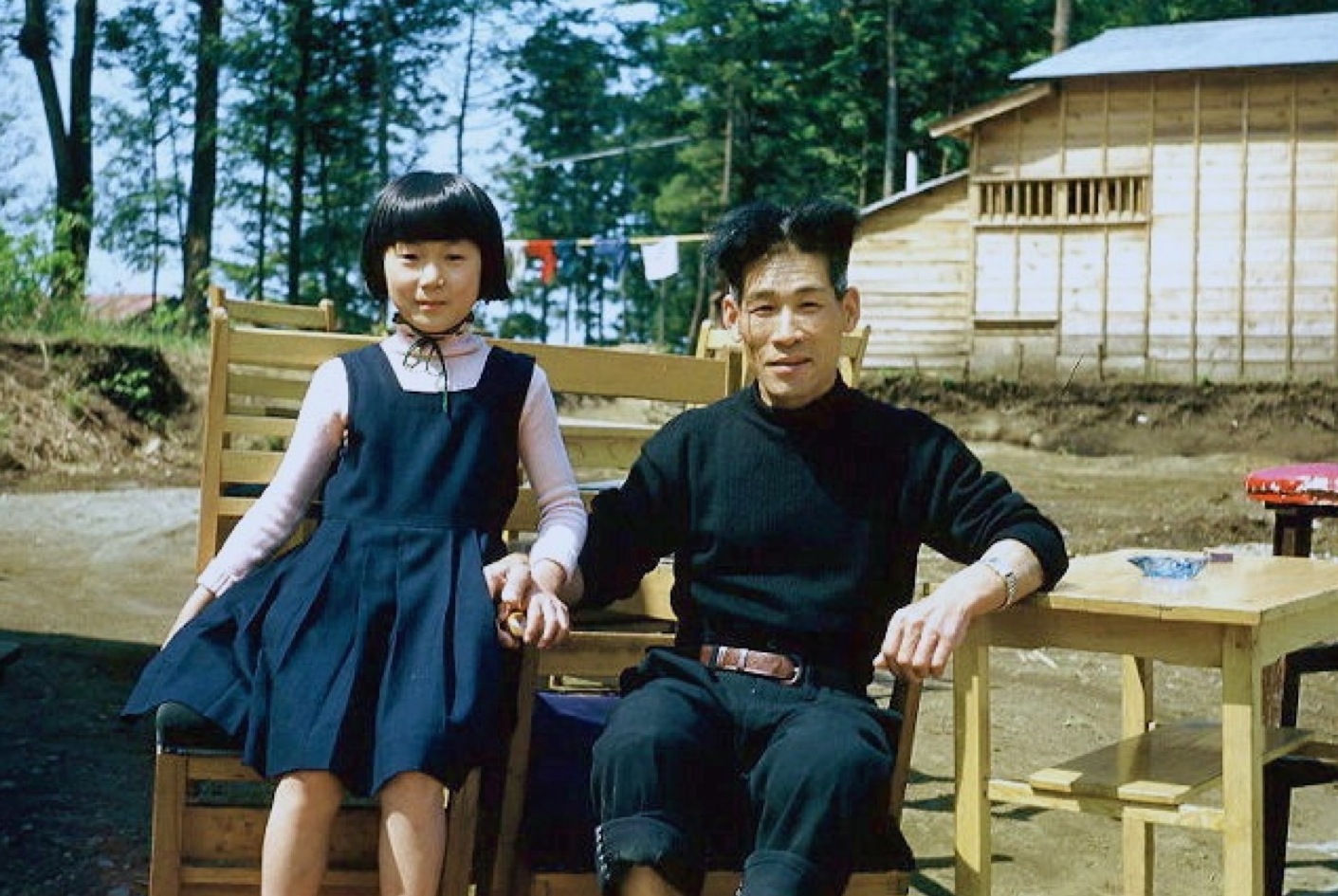
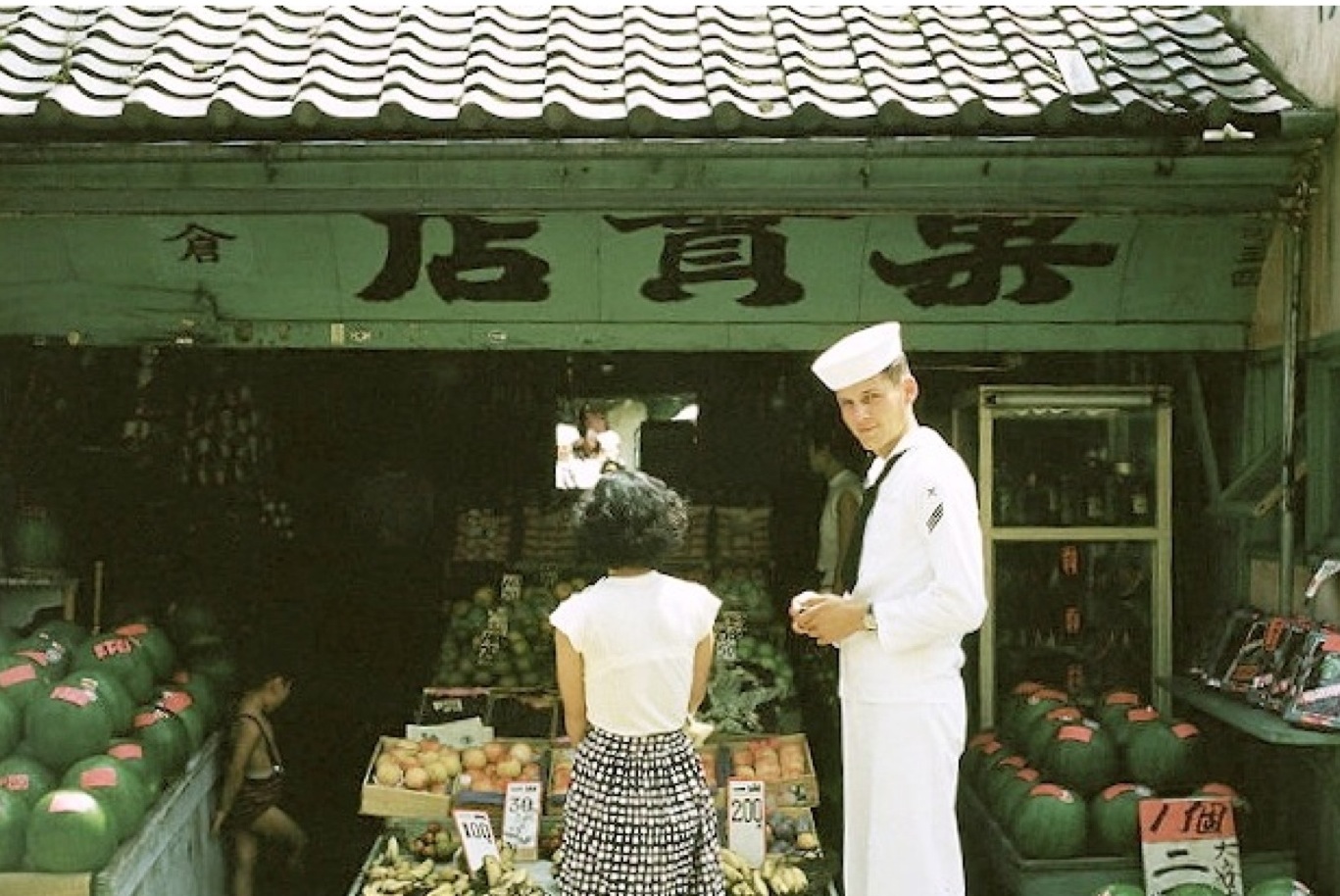
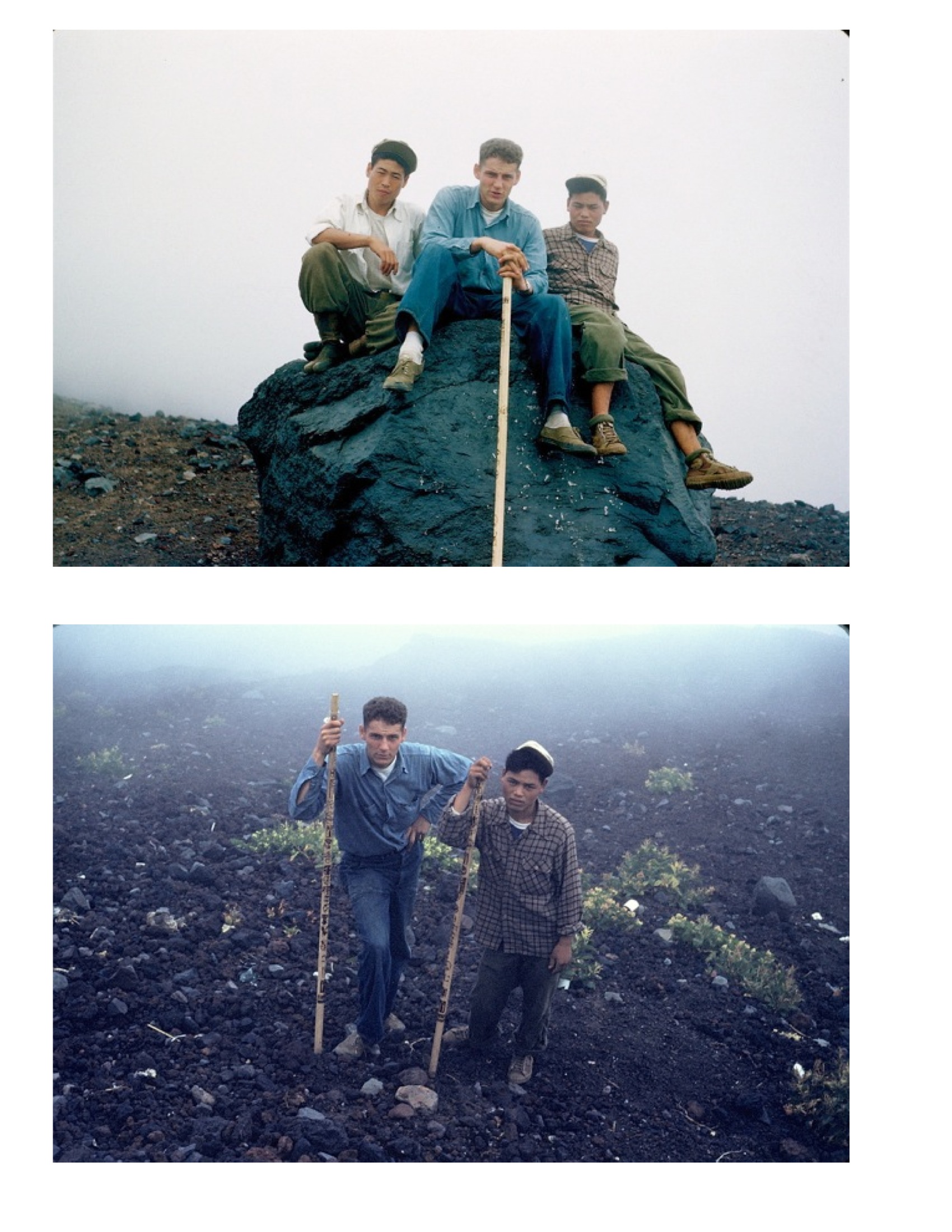
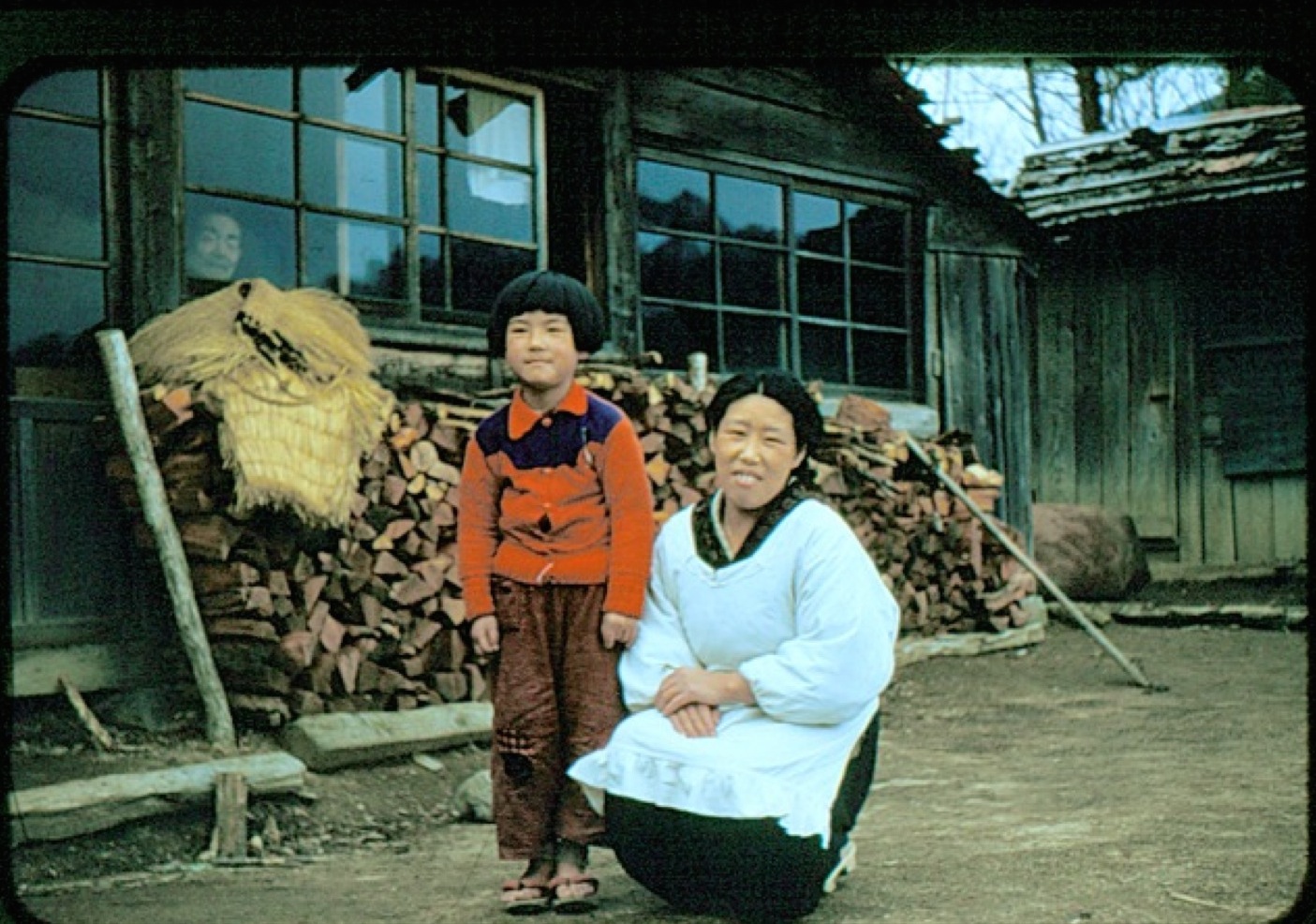
His father served in Japan after World War II, and I asked Chris for these fantastic images of his dad and people in that country.

Their clothes, including selvedge denim, are what collectors these days call “Heritage” and are sought after in both Japan and the United States.

Page-13

Page-12

Page-09Page-10