The Return of Light Rail


Screen_Shot_2017_09_05_at_6.57.53_AM.0Electric_car_in_North_HollywoodVan_Nuys_only_37_years_ago_a_grain_field_in_1911Early_view_of_Van_Nuys_BoulevardVan_Nuys_Boulevard copyVan_Nuys_BoulevardFor the future we now return to the past.

The black and white photos all show how Van Nuys Bl. looked in the period from 1911-1957.

Yesterday there was announcement from Metro.

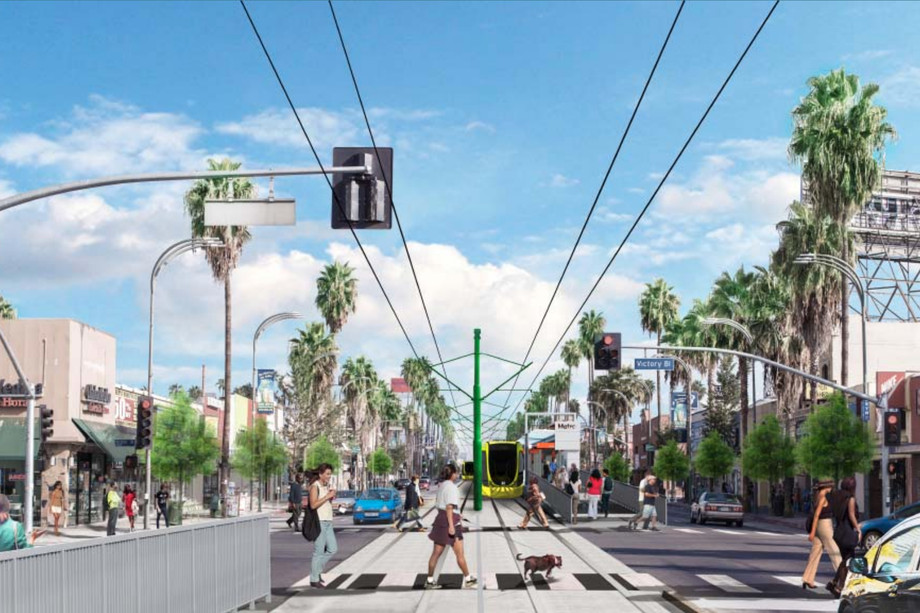
Metro will build a 9-mile-long light rail down the center of Van Nuys Boulevard, stretching from Sylmar to the Orange Line Van Nuys station near Oxnard St.

The light rail service yard for train maintenance will be built near Raymer St along the Metrolink tracks in the “Option B” area. “Option A” near Oxnard and Kester, that would have destroyed 58 buildings, 186 businesses and 1,000 jobs will not happen.


From the inception of Van Nuys in 1911 until the late 1950s, an electric rail car connected Van Nuys, North Hollywood and Hollywood and provided a means of public transportation from this part of the San Fernando Valley to the rest of Los Angeles.

The modernization of Los Angeles, which always put the car before anything else, led to the ripping out of the rail and its replacement with an enormously wide boulevard of ten lanes of asphalt.

Van Nuys Boulevard today is probably in its worst state of economic and social decline in its history. With its empty stores, shabby buildings, homeless men and women and neglected properties it stands as a civic disgrace.

DSCF3189

dscf2649dscf2605dscf2661dscf2640

Hopefully, the light rail will lead to a change in the betterment of Van Nuys, though local leaders, such as Councilwoman Nury Martinez are often lukewarm about public transportation, painting it in fearful terms of criminality and danger, or still characterizing it as a cattle car for maids and dishwashers to get to work, rather than as a means of transportation for every single citizen of Los Angeles to use.

Any incident of crime is unacceptable on a Metro train.

But how many private cars break the law every single day by speeding, running over pedestrians, going through red lights, and taking part in car chases, drive-by-shootings, hold-ups and child kidnappings?


Here is an article from Curbed LA describing the new project:

“Metro is moving forward with plans for a new rail line in the eastern San Fernando Valley.

One of the 28 projects that the agency plans to have up-and-running in time for the 2028 Olympics, the East San Fernando Valley Transit Corridor would run from the Orange Line station in Van Nuys to the Sylmar/San Fernando Metrolink station, about 9 miles to the north.

Metro had considered building the line as a rapid bus route, rather than rail, but on Thursday the agency’s board of directors approved plans that would advance the project as a light rail route similar to the existing Gold, Blue, and Green lines.

“I have long dreamed of a day when we would have more than two Metro train stops,” Stuart Waldman, president of the Valley Industry and Commerce Association, told the Metro board.

He called the line the “largest economic development project in the San Fernando Valley this millennium.”

Most of the line would travel along Van Nuys Boulevard, with trains traveling on tracks built in the center of the road. For the final 2.5 miles of the route, trains would travel on San Fernando Road to the northernmost stop.

Metro expects a trip from end-to-end would take about 29 minutes, and that the train could carry close to 50,000 riders per day by 2040. Eventually, the line could connect with a future transit project through the Sepulveda Pass.

That would give Valley residents significantly more options when navigating the city.

Since the line will be served by light rail, Metro will need to add a service station for trains that travel along the route. The agency had considered putting that facility on a parcel of land close to the Van Nuys station, but local property owners complained that the plan would displace hundreds of businesses.

Now, Metro plans to put that maintenance yard closer to the Van Nuys Metrolink station, where it would have to acquire fewer properties. Some businesses would still be displaced, and several business owners expressed concern Thursday that they could be forced to close up shop.

These businesses would be eligible for relocation fees, and on Thursday Metro Boardmember Sheila Kuehl also asked staffers to look into creating a fund to compensate business owners for disruptions caused by construction of the line.

The light rail tracks would serve 14 stations running through the communities of Van Nuys, Panorama City, Arleta, Pacoima, and the city of San Fernando. The entire project would cost about $1.3 billion to construct. Metro previously considered running a short leg of the line underground, but found that would more than double the project cost.

Now that Metro has settled on a design for the project, the agency will complete a final environmental review before preparing to begin construction.

Under the Measure M funding timelineapproved by LA County voters in 2016—the project would break ground in 2021. Construction is expected to wrap up by 2027.”

The Janitors’ Light Rail.


nury-martinez-dn
Nury Martinez, 2012. (Hans Gutknecht/Staff Photographer)

“If you’re a housekeeper, janitor or dish washer, you need to get to work every day on time,” she said. “Buses don’t move as many people and as quickly as the light rail. That’s why we’re excited about the project that would serve people who are transit dependent.”[1]

“As a mom, I can tell you it’s terrifying to sometimes think of having to get on the Red Line. I won’t for that very reason,” she said. “I don’t have to see the data collection to know that if I feel unsafe to ride the train with my kid, that I’m just simply not going to use it.”[2]

-Councilwoman Nury Martinez


Why are these two quotes important?

What does it matter what Councilwoman Nury Martinez of LA’s City Council District #6, representing Arleta, Panorama City, Lake Balboa, and Van Nuys thinks about public transportation, light rail, who rides it and who needs it?

It matters, I think, because it shows a way of describing non-car travel as something used by people who are the lesser people of the City of Angels: maids, janitors, dishwashers and perhaps even criminals.

Can agents at William Morris, that actor who stars on that sitcom, Hancock Park attorneys, the conductor of the LA Philharmonic, and Dodger Clayton Kershaw also ride trains? I wish they all did!

Strange that a political culture that panders to PC should grossly stereotype transit riders.

The prospect that Van Nuys, long languishing, is under her jittery guidance, and limited vision, is not especially comforting.  A public official who denigrates public transportation is not doing the people’s business very well.

For in her remarks she shows a remarkably retrogressive and depressing view of public transportation as something which is sometimes terrifying, unsuitable for mothers with children, and only made for unskilled workers commuting to low paying jobs in the NE Valley.

There has been, for a long time, an idea that if you had enough money in Los Angeles you would surely travel by car. And today, we have the spectacle of 24/7 traffic produced by a culture conditioned to expect that every journey must begin and end in a car.

Even as plans for expansion of light rail go on all over Los Angeles, there is an equally strong pushback against it.

  • Uber and Lyft are making it possible to take short distance trips by dialing up a ride on your phone.
  • Amazon is delivering everything from chewing gum to sofas with fleets of trucks that are also clogging our streets.
  • Parents who rightly shudder at their children attending a low rated local school chauffeur their kids 25 miles away to “better schools.”
  • Housing is now a luxury commodity but every law that seeks to expand it runs into the “where will they park?” crowd who wants to stop new apartments, new granny flats, new retail stores and multi-family dwellings near trains.

And instead of public officials offering imaginative, innovative and futuristic ideas, we have a throwback to the car culture that is unsustainable.

Los Angeles! This is 2018! This is not 1975, 1965 or 1945!

Light rail and subways are not dangerous. They are not only for criminals. They are not only for the woman who scrubs your floor. Properly policed, intelligently managed, excellently maintained, they can be pleasant, quick and enjoyable.

They are the way we ALL will get around Los Angeles when gridlock by private vehicle renders this city dysfunctional.


[1] https://www.dailynews.com/2018/06/03/heres-van-nuys-through-the-eyes-of-mr-van-nuys/

[2] http://www.latimes.com/local/lanow/la-me-ln-martinez-metro-sexual-harassment-20180124-story.html

Option A: Silence of the Nury.


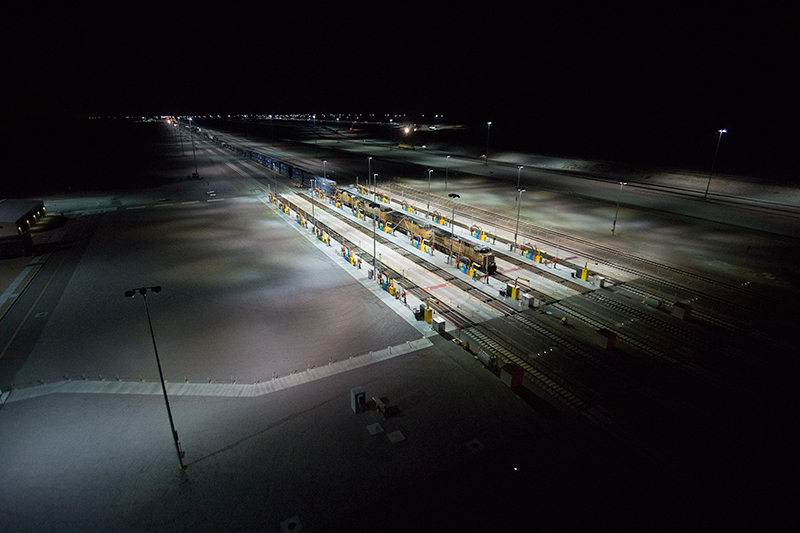
Rail Service Yard at Night. What Kester and Oxnard may look like for the next 100 years.

Option A is a Metro Los Angeles plan to construct a rail maintenance yard on 33 acres of industrial land currently occupied by 186 businesses employing as many as 1,500 people. The location radiates from the NE corner of Kester and Oxnard and will demolish every single building from Kester to Cedros along Oxnard, Aetna, Bessemer and the south side of Calvert.

Family run businesses, enterprises utilizing high tech computers to fashion exquisite cabinetry, decorative metals, and music recording studios, will be gone. Destroyed as well: low cost rentals for vintage Vespa restoration, boat yards, exotic mushroom growers, glassmakers, sauna builders, and Ford Mustang restoration.

The Option A area is walkable, diverse, affordable, and near downtown Van Nuys. If it is obliterated it will become a vast zone of emptiness, high security cameras, fences, walls, and rob Van Nuys of its last industrial area which serves as a creative incubator for artists, builders and skilled craftsmen.

Metro: In attempting to increase density, variety, diversity and walkability why would you destroy the very thing you wish to create?

Metro has three other option sites which are B, C, and D. The September 28, 2017 Daily News article explains.

Options B and C are on either side of Van Nuys Boulevard at the Metrolink Train Crossing.

Option D is at 7600 Tyrone Ave, 55 acres of land owned by the Department of Water and Power. It said it will NOT relinquish the land.

B, C, and D do not involve the displacement, destruction and eviction of 186 companies.

Options B, C and D
Option A: Destruction of 186 companies and 58 buildings and 1500 jobs.

Silence of the Nury

Despite the suffering and anxiety of so many men and women in Van Nuys, Councilwoman Nury Martinez has been completely silent on this issue since the official announcement of the Option A scheme was announced in mid-September.

Some in her office have conducted meetings with the worried owners in the Option A area. But she has not publically stood with the afflicted businesses. She has not voiced her support for them and she has not taken a stand opposing the vast hole of a train yard just steps from her office in Van Nuys.

Her Facebook page shows many photos of her attending events in the past few weeks.

  • She recognized a project to fund breast cancer research.
  • She welcomed a Panorama City project to mentor young people in work.
  • She supported National Food Day to promote nutrition.
  • She joined cops and politicians to oppose domestic violence.
  • She celebrated the retirement of a 30-year LAPD veteran.
  • Latino Heritage Month got a photo with her.
  • Dodger Manager Tommy LaSorda got a 90th Birthday photo with her.
  • The International Day of the Girl got a photo with her.
  • LA Family Housing got a photo with her.
  • Girls Empowerment got a photo with her.


“My Nury, my Nury, why have you forsaken me?”

Ivan Gomez, Pashupatina

Ivan Gomez, son of Mexican immigrants, grew up poor with his four siblings on Friar Street, dodged gangs, bullets, drugs and went on to self-mentor in the art of making fine metals, eventually opening a highly respected and technologically advanced company, Pashupatina, inside a restored building on Aetna St. He merits no photo op with Nury Martinez.

Peter Scholz, Showcase Cabinets

Peter Scholz, cabinet maker, lifelong resident of Van Nuys, owner of Showcase Cabinets, in business since 1987, employing skilled craftsmen who also live in Van Nuys, he has no photo op.

Scott Walton, Uncle Studios

Scott Walton of Uncle Studios, established 1976, legendary recording studio on Kester and Aetna, he may be obliterated, and he has no public support from Ms. Martinez.

Kristian Storli, Bar Italia Vespa.

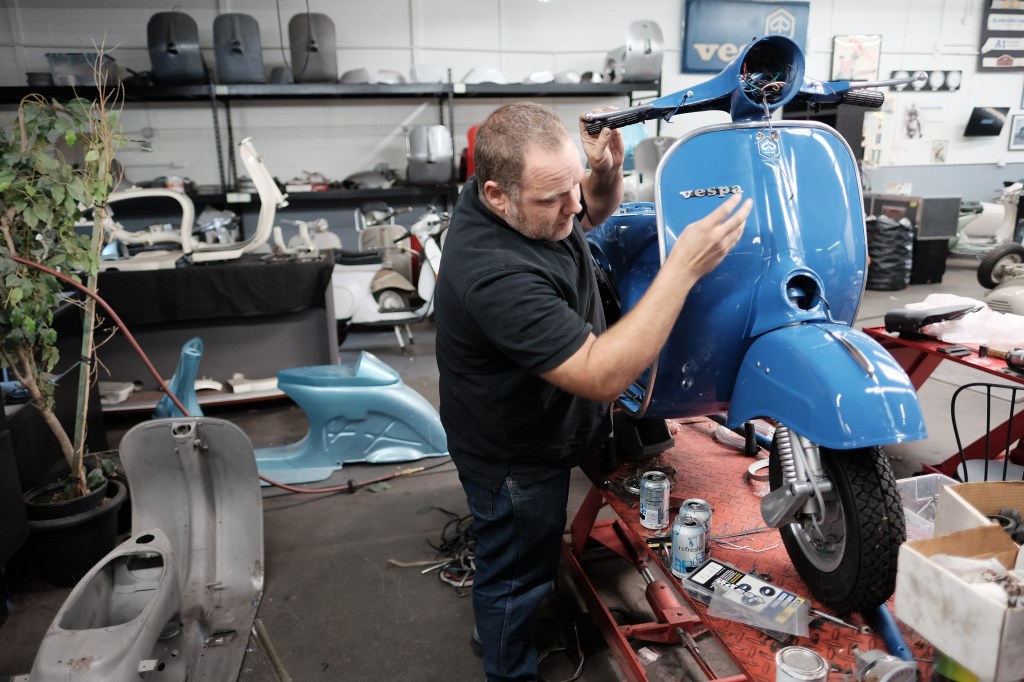
Kristian Storli, who restores vintage Vespas and has been evicted from two places on Calvert and Bessemer, and only finally found a home last year on Aetna, only to learn his shop may be wiped off the map. He has no photo op with Ms. Martinez.

Steve Muradyan of BPM Custom Marine

Steve Muradyan of BPM Custom Marine, who supports a wife, two children and two aged parents, rents a facility on Calvert St. (down the street from  MacLeod Ale) and he may lose his 6,000 SF space. Where will he go? There are no affordable, local industrial sites for 50-100 foot long racing boats. Does his plight matter to Ms. Martinez?

Skilled worker at Pashupatina

There are 1500 others who are obscure but working hard, trying to earn a living, doing the right thing here in Van Nuys.

Why is Nury silent on the plight of her most productive and contributing constituents? Why is she sticking her finger up in the wind to see which direction Metro Los Angeles blows rather than fighting for the community she purportedly represents?

Silence is not what people in jeopardy, at risk in losing everything they have worked for, expect from their elected leader.

Pashupatina: Ivan and Daniel Gomez in their shop which they completely renovated with their own hands and money in 2015.
At work at Pashupatina. Programming and designing intricate metals for decorative hardware.
Mustangs, Etc. Est. 1976
Pashupatina.

SaveSave

SaveSave

SaveSaveSaveSave

Option A: The Vespa Whisperer.


After WWII, Italy was poor, the roads were torn up by war, and the new democratically elected government was prohibited to build military hardware. Industrial revitalization was a must. So innovative militarists turned to consumer products to employ workers and restart the economy.

The Vespa (“Wasp” in Italian) grew out of this era.

It was designed and built by aerospace engineers to satisfy postwar transportation needs economically. They created a scooter, with all the mechanical parts enclosed, and a tall frontal splashguard, features which appealed to Italian men in suits and women in dresses. There was no grease to splatter on well-tailored woolens, and the versatile, small, well-engineered bike travelled well on narrow, pockmarked streets.

Piaggio & Co. introduced it and still owns and manufactures Vespa.

After its debut in 1946, it sold slowly, if solidly.

Then “Roman Holiday” (1952) starring Gregory Peck and Audrey Hepburn, filmed on location in Rome, skyrocketed the Vespa’s popularity. Suddenly 100,000 a year were selling. The popularity of films such as “La Dolce Vita” (1960) and the neo-realist Italian cinema of the 50s and 60s made all things Italian seem fast, young and glamorous. The mid 1960s Mod Subculture in Britain, dudes in Ben Sherman shirts and skinny ties and tapered trousers, furthered pushed the Vespa into pop culture.

The Mods, Britain, mid-1960s
In the US, even Sears imported Vespas and renamed them Cruiseaires. By 1981, the bike had lost popularity due to environmental laws. Yet again, in the early 2000s, Vespa restarted its American sales effort, opening its first boutique on Ventura Boulevard in Sherman Oaks, CA hoping to capitalize on our four CA freedoms: sunshine, mobility, novelty, and fun.

According to Wikipedia, there have been 34 different versions of the Vespa. Today, five series are in production: the classic manual transmission PX and the modern CVT transmission S, LX, GT, and GTS.


About 4 miles north of the Vespa retail store, at an unmarked building at 14819 Aetna St. in Van Nuys, Kristian Storli, 39 is quietly, diligently and artfully restoring Vespas, at his company, Bar Italia Classics, established 2006. According to Mr. Storli, it is the only shop of its type from here to Pennsylvania.

You pass through a gate into a courtyard packed with tools and bikes, all under some sort of repair, but then you enter a stylish, air-cooled, gray-painted, 3600 SF shop, unlike any you’ve ever been to, with vintage illustrations, glass shelves filled with awards and medals, antique framed advertising for Vespas, and a very large movie poster of Angie Dickinson atop a Vespa in “Jessica” (1962) directed by Jean Negulesco. 

Sicilian women plan to rid their village of a sexy American midwife (Angie Dickinson) by making her job obsolete.”

Angie Dickinson, 1962.

Obsolete is what haunts Mr. Storli, a stocky, blue-eyed, mechanical minded man of Norwegian descent who went to school to study musical composition, and ended up investing his life savings into his Vespa passion. He has had three shops in the last ten years: first on Calvert, then Bessemer, and now Aetna.

C, B, A….. Ominously for him there is no letter preceding A.

Each time, rents and leases ended. And this time, he fears, he may become redundant by Option A, if his shop, and 185 others are demolished by Metro Los Angeles for a 33-acre rail service yard.

Nevertheless, there is a rhythmic beat and output of bikes at the shop. Many restorations take 12-18 months and require each machine:


  • To be disassembled and inspected,
  • Stripped of old paint on engine and body parts,
  • Hardware sent out for plating,
  • Reassembling the machine to peak condition in both function and appearance.
  • Full payments are dependent upon delivery of the finished product to its owner.

It is a painstaking job, only undertaken by devotees and acolytes in the cult of Vespa, but the result, as one can see in a finished product, is the absolutely breathtaking beauty of the timeless and completely Italian product. The smooth and shiny gracefulness of a finished bike exudes sensuality and speed.

One day a few weeks back, working inside his dream factory, Mr. Storli was jolted with a bomb of an announcement: He might have to move to make way for a 33-acre demolition project bulldozing 186 businesses for a future light rail maintenance yard operated by Metro Los Angeles.

He had only moved into his third, and presumably final shop, this year, 2017. He lost over a year of income when he had to move the second time. Now he was threatened with new economic ruin, not by a downturn in business, but by an aggressive action of a government agency using Eminent Domain powers to evict lawful enterprises.

He told me that he is deflated, worried, and panicked. He has started, grudgingly, to look for other affordable space in Los Angeles. But the rental vacancy rate for industrial property is only one percent. And the competition is marijuana growers paying three times the asking rate to landlords.

To lose so many businesses is sad.

But it is doubly tragic to see a completely original and unique craftsman, Mr. Storli, thrown out of his space. It is one more step in the homogenization of Los Angeles, where shortsighted bureaucrats fail to protect unique and skillfully constructed products and services when they are operated by small businesses. But every corner store is CVS or Starbucks.

We need excellent public transport.

But grotesquely destructive and obliterating plans to build a light rail yard through viable and productive industrial tracts only harms Los Angeles -by destroying the real and the good -by promising the imaginary and the perfect.


Option A: “Memo to Metro: May We Survive?”


Mustangs, Etc.


DSCF1430
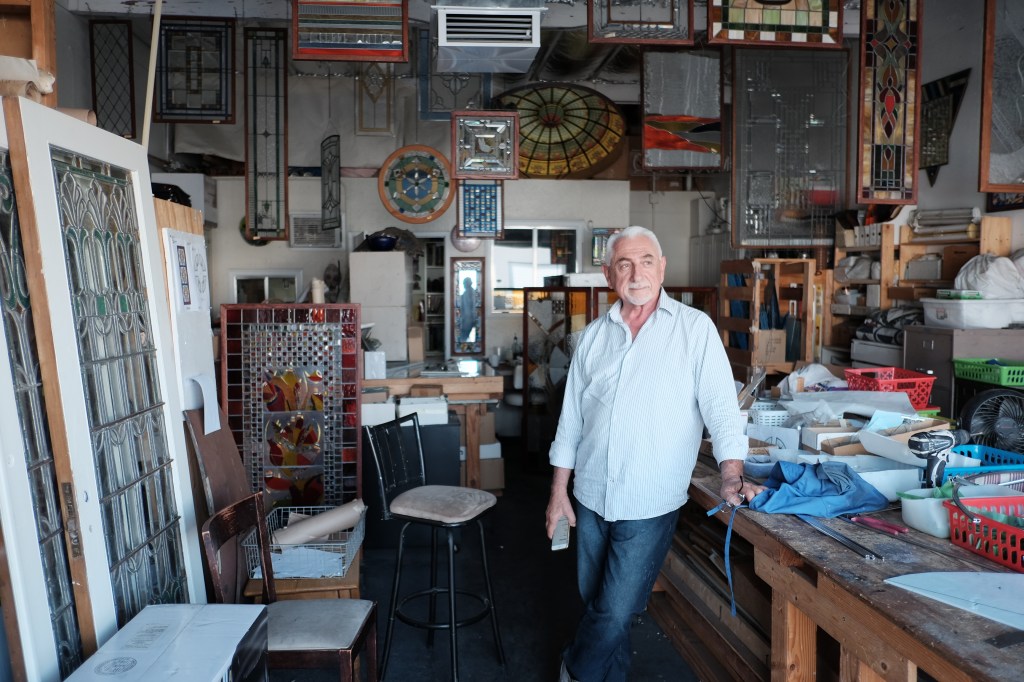
Simon Simonian, Progressive Art Stained Glass Studio
DSCF1407
Peter Scholz, owner, Showcase Cabinets.
DSCF1413
Craftsman at Showcase.


Yesterday, The San Fernando Valley Business Journal published an essay by Charles Crumpley, editor and publisher, concerning the scheme (“Option A) by Metro Los Angeles to destroy hundreds of small businesses near Kester and Oxnard for a proposed light rail repair center covering some 33 acres.

I am reprinting here for all to read. In it he castigates the insensitivity and deafness of local government, including Councilwoman Nury Martinez, who has seemingly stood by while hundreds of her constituents face financial ruin, dislocation and the upending of their businesses and economic security.  Prostitution and dumping cannot be the only constituencies that matter in City Council District 6.

If Metro is permitted to bulldoze the last vestige of small business in Van Nuys to make way for a Disneyland transportation scheme, already made redundant in the Uber/Lyft era, than we are all doomed.

Metro needs to find another site for its repair yard that does not destroy the lives, dreams, hopes and well-being of hard working entrepreneurs and working men and women in Van Nuys.


Memo to Metro: May We Survive?

By Charles Crumpley

Monday, October 16, 2017


The gulf between local government and the business community was on full display last week at the Van Nuys State Building Auditorium.

That’s where the Los Angeles County Metropolitan Transportation Authority held a meeting Oct. 10 to hear from businesses that stand to be evicted because Metro wants to clear land northeast of Oxnard Street and Kester Avenue to build a train maintenance yard to serve a new rail line.

The message from businesses seems simple and clear: Can’t you find a better place for your maintenance yard? Maybe one that doesn’t oust a train load of businesses – 186 of them, by one count.

The message from bureaucrats also seems simple and straightforward: Yawn.

Whether they know it or not, that’s the memo they sent to businesses. To Metro’s credit, it did hold the so-called informational meeting after it became clear that businesses were growing restive. On the other hand, Metro’s temper at the meeting was vaguely brusque and at times dismissive. To at least some of the businesspeople in attendance, it all came off as if Metro’s imperial overlords had been forced to travel to Van Nuys to sit through another dull meeting in which the plebian supplicants had to beg for their survival. (For more on businesses’ reaction, see the article on page 1.)

Here’s an example. The business group proposed an alternative site for the train yard. It seemed to make sense because it would only displace one business, an auto salvage yard, and a facility with some vacant land that’s owned by the Los Angeles Department of Water and Power, better known as the DWP.

But at the meeting last week, Metro Senior Executive Officer Manjeet Ranu announced: “Late this afternoon we got a letter from DWP that says they have specific plans and a construction timeline for use of that property.” So, no deal.

Well, excuse me, but are you seriously saying that DWP’s single plan is more important than the plans of 186 businesses?

Ranu did explain that eminent domain against a government entity like the DWP was difficult, you see.

Well, excuse me again, but isn’t this where we can count on our elected officials to step in and make the DWP yield? Maybe work out some compromise? Surely the DWP’s needs can be met while saving 186 businesses.

Alas, apparently not. The 186 businesses are in Councilwoman Nury Martinez’s district and she did not bother to attend the meeting. No representative from her office was announced at the beginning of the meeting, although her chief of staff said someone from the office later showed up.

The staffer sent me Martinez’s statement, which started by saying the new rail line, which will run from Oxnard Street to Sylmar, is needed and would bring economic revitalization to the area, which no one is arguing. She added this: “Metro indicates there will be some displacement due to the need for a maintenance facility, no matter which option is chosen. I will ensure that Metro continues to have an open and honest dialogue about the support, resources and assistance that will be available to these businesses, so they can plan for their short- and long-term future.”

Well, excuse me, but Martinez is missing the point. Some options for the train yard will have much less “displacement” than others. Focusing on the ones with less displacement is the point here. But I guess you’d have to actually talk to your business constituents to get that. And attend the meeting.

There’s a great gulf between local government and the business community here, and last week’s meeting displayed that.

Government officials see the need for a new train line and therefore a new train maintenance yard and that means some businesses will be evicted and that’s just the way it is. The affected businesses will complain, and part of the job is to yawn through some dull meetings and listen to them whine and patiently explain to them why their alternative proposals won’t work.

Business operators also see a need for a new train line and therefore a new train maintenance yard and that means some businesses will be evicted. But they don’t understand why government can’t be more judicious in selecting a site that is the least disruptive. They don’t understand why government officials can’t seem to see that it is not easy to relocate and could be permanently harmful, even fatal, to the businesses. They don’t understand why elected officials like Nury Martinez fail to come to their defense. They don’t understand why, if their alternative ideas don’t work, the government officials won’t help them come up with ones that do.

Surely there are other sites out there that would be less disruptive. Panorama City actually wants the train yard.

Let’s hope Metro and city officials look harder to come up with a new site that works well for the new train system without wrecking a swath of businesses.


Charles Crumpley is editor and publisher of the Business Journal. He can be reached at ccrumpley@sfvbj.com.

Moving the Encampment Somewhere Else.


img_3138

dscf0003

For a few months, a large encampment of homeless men and women established a village on the streets and sidewalks of Van Nuys near the corner of Bessemer and Cedros.

Tents, tarps, clothes, shopping baskets and many bicycles (?) were piled up on the sidewalks between the parking lot rented by Keyes Chevrolet from Metro. New cars were set on fire, and the homeless, some militant some not, became a frightening reality for small businesses who are located in the area.

img_3141

dscf0005

Embarrassed into action, Councilwoman Nury Martinez’s office, along with LA Homeless Services Agency, LAPD, The Department of Sanitation, and the LAFD came in early last week and removed, through bulldozer and dump trucks, all the debris of the Third World settlement.

img_3137

dscf0002

During the siege, legitimate businesses who depend on safe streets and the ability for their customers to have street parking, as well as get in and out of buildings had to give up their normal rights to accommodate a pervasive pathology.

For the time being, the streets are clean and present a photo opportunity.

Meanwhile, a new encampment is setting up on Aetna just west of Van Nuys Boulevard, near where the new Fire Station #39 was planned and later sued into defeat. Community opposition from homes south of Oxnard defeated the new fire station, but now those residents who fought firefighters will have to welcome homeless people on their doorstep.

img_3144

dscf0004