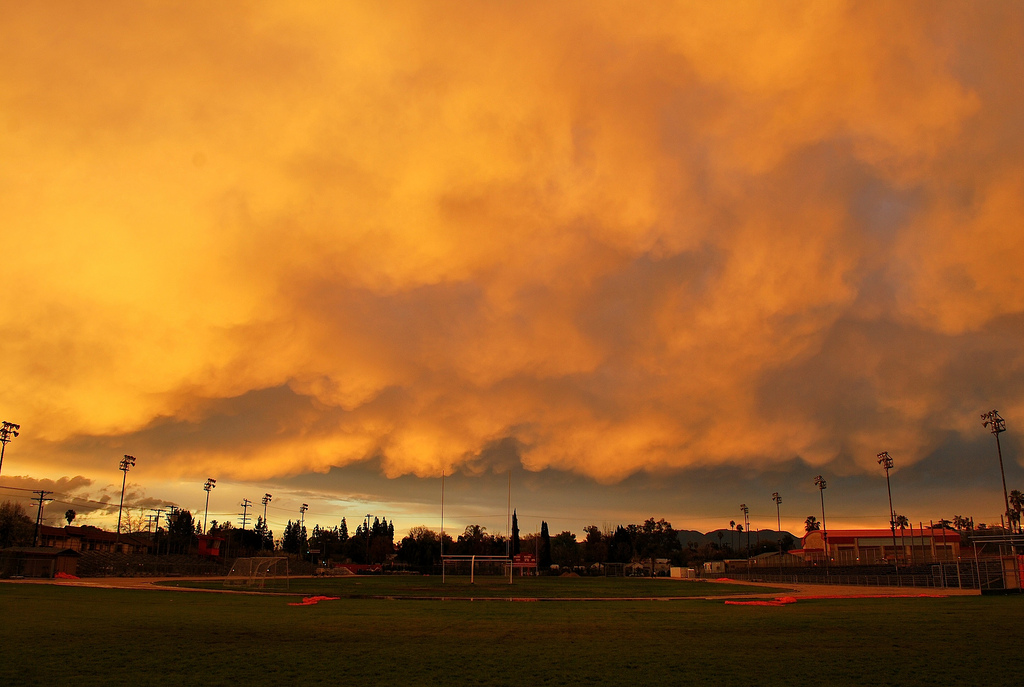
Crisis of the Month.


IMG_9229
Victory Bl. near Sepulveda.

Los Angeles sometimes wakes up to discover that not enforcing the law somehow becomes self-fulfilling.

If you allow anyone to sleep anywhere, if you permit trailers to park on the street and become permanent housing, if you think it’s OK, tolerant, liberal, open-minded, sympathetic, empathetic to turn parks, bus benches, 7Eleven, parking lots, cars, river banks, every square inch of public space, into a homeless encampment, then you will turn every square inch of public space into a homeless encampment.

You get on a Red Line train to ride it downtown, and you see five or six people and their belongings sleeping on board. Nobody does anything to stop it. Some kids get on the train, turn up a radio, start dancing and go around asking for donations. Nobody stops it. You are living in a loony bin. But it’s all cool….

If you think its Ok to see women defecate on Hollywood Boulevard, if you have to walk to the other side of LaBrea because a man is urinating on the sidewalk in front of you, it’s just the way it is. At least you are not homeless! So have some regard for everyone who is!

Those ten people with shopping baskets who moved in next door. Just ignore it. Let it be. Those twenty people living in tents on Bessemer and Cedros? Just use the 311 App. The city will clean it up. Mayor Garrett and the LAPD and Ms. Nury Martinez know about the situation. There is nothing law enforcement, city government, or the military can do.

Sometimes the city becomes alarmed. The LA Times writes profound editorials that  nobody reads. It is March 2, 2018. The problem, the crisis, the war on affordable housing, all of it must be a priority!

An emergency is called. The government asks citizens to pay a tax to solve a problem which the government created by not enforcing the law.

And suddenly it becomes normal to live in a filthy garbage dump of a city, Los Angeles, and nothing can be done about it.

In neighborhoods all over the city: break-ins, thefts, assaults, burglaries, stolen bikes, panhandling, illegal drugs, drinking in public, all of it is cool man, it’s OK dude. No worries…..


Option A: International Affairs, A Back Story.


Perhaps the quintessential Option A story grows out of the life of Ivan Gomez (b. 1972) the owner of Pashupatina, a fine custom decorative metal shop on Aetna.

He was born in Mexico, by chance. His other four siblings (one sister and three brothers) were all born in the USA.

They were raised in Pacoima and later Friar St. in Van Nuys. Ivan experienced the turmoil and insecurity of being a little boy who had to register with the INS every few years.

He later went to school in Tarzana, and saw the other world of privileged children. Never bitter, always ambitious, he worked in Van Nuys at Bargain Books, devouring books on design and mechanical art. He graduated from Van Nuys High School where he met his current wife, a Lebanese immigrant, Natalie Magarian. He did not go to college, but worked at Tower Records, and Aah’s on Ventura Bl.; Taco Bell, and most importantly, at a cabinet shop in South Central where he learned about the manufacturing, design and installation of custom woodwork.

Ivan formed a band called Stikman (1989-92) and they often played in the dug out ruins of old factories near downtown Los Angeles. He went to raves, but remarkably, he remained clean of drugs. His strong character resisted violence, self-destruction and falling into the traps of depravity all around him.

He does not smoke or drink. He has a wife, two children, a thriving business, a home in Lake Balboa. And both sets of in-laws live nearby.

I thought it instructive and interesting to explore the city of Los Angeles in the first 20 years of Ivan’s life, to give some context for what it felt like to be a young immigrant absorbing all the culture, music, crime, drugs, police brutality that fell atop the intelligent, observant, fervent, creative mind of Ivan Gomez.

All statistical facts in this article are from original sources and are footnoted.


The Idyll

Photo by John Divola

In 1970, there were some 966,240 persons in 26 San Fernando Valley communities in Los Angeles. The population was young. And the average age was 29.

There were small percentages of racial minorities in every community in the Valley, except Pacoima where 33% were black. 4% of Sun Valley was minority, mostly Mexicans.

In Woodland Hills, the average rent was $172, the highest in the Valley. And the minority population was 1%, the same as in Tarzana.

Encino had the most expensive homes, averaging $50,000 in value.[1]

Many worked in the defense-aerospace industry, 348,000 jobs in Los Angeles County. Some of the San Fernando Valley employers: Lockheed in Burbank, Boeing Co.’s Rocketdyne Propulsion and Power in Woodland Hills, Hughes Missile Systems in Canoga Park. Bendix Aviation, Ramo-Woolridge Laboratories, Litton Industries, RCA, Atomics International and Bunker-Ramo. [2]

There had also been cutbacks in the defense industries, ironically due to the Vietnam War. Research and development, which was a large part of defense contracting work, took a back seat to output and manufacture of weapons. When the war was on, rockets and planes were needed, fast. Employment fell from 616,000 in the state in 1967 to 400,000 in 1972. 70% in Los Angeles still depended on aerospace to earn their living. [3]

Military attack aircraft, surface to air missiles, rockets, bombs, satellites, electronic controls for weapons systems, defense-related communications systems, The Stealth and the P-3 antisubmarine craft, were only some of the advanced weaponry produced here.

All these weapons of war, sent around the world, would ignite and fuel conflicts that one day would come back to the San Fernando Valley and upend the placidity, the normality, the blessed banality of pools, homes, burgers, convertibles and blond-haired boys and girls riding bikes around safe and clean neighborhoods.

ph: Mike Mandel, People in Cars, North Hollywood, 1970.
Photo by John Divola, San Fernando Valley, circa 1970.

If you were wealthy in 1972, and could spend more than $100,000 on a home, you might want to live in Brentwood.


A Confluence of Events

**ADVANCE FOR SUNDAY, JUNE 8–FILE** In this April 29, 1975 file photo, mobs of Vietnamese people scale the wall of the U.S. Embassy in Saigon, Vietnam, trying to get to the helicopter pickup zone, just before the end of the Vietnam War. (AP Photo/Neal Ulevich, file)

In the late 1970s, a confluence of international events; wars, revolutions, and genocides swirled around the globe. Under the umbrella of American anti-communism, military interventions produced results that eventually washed back up onto the shores of Southern California.

In Vietnam, in 1975, the fall of the Saigon government, the helicopter evacuation of the US Embassy, and the triumph of Ho Chi Minh brought a new influx of refugees to the US. At the same time, in neighboring Cambodia, Pol Pot captured Phnom Penh and instigated a deadly forced labor and collective farms movement causing the deaths of millions. Cambodians who could, got out.

In US allied South Korea, still developing its economy, an uneasy and tense truce lingered. Fearful of a new war, the government encouraged some citizens to emigrate to the US and send money back home. Millions left and settled predominately in Los Angeles.

Filipinos who had served in the US military during WWII were allowed to become US citizens, and many war brides came to America. Relatives of people already in this country were permitted to come here and gain citizenship.

Los Angeles also became home to the largest group of Thai people outside of Thailand.

The engine for all the changes in allowing new countries to migrate to the US came after 1965.

The U.S. Immigration and Nationality Act of 1965 (also known as the Hart-Cellar Act) eliminated national origins quotas and gave priority to immigrants with skills. In addition, the law allowed the spouses, unmarried minor children, and parents of U.S. citizens to enter as non-quota immigrants.[4]

Previously the law had favored northern and western Europeans. The involvement of the US in Asian affairs prompted Congress to change laws. The US needed to look magnanimous in Far Eastern eyes so that our role in Vietnam might be justified.

In Taiwan and Hong Kong, the prospect of American retrenchment and Red China’s rise fueled new immigration to the US. The San Gabriel Valley, once a bastion of whites, became a sprawling Chinese community.[5] Asian-Americans would become the largest immigrant group by 2014.

In 1979, the Shah of Iran, an ally of the US, was overthrown and replaced by an Islamic fundamentalist government. Fifty-two American diplomats and citizens were held hostage for 444 days (November 4, 1979, to January 20, 1981) after a group of Iranian students took over the U.S. Embassy in Tehran.

The Shah had been a large weapons purchaser and his regime was seen as a bulwark against Russian expansionism.

By miraculous coincidence, all the US hostages were freed on the very day of Ronald Reagan’s inauguration. An overjoyed nation overlooked what some might call collusion.

Persian immigration to Los Angeles spiked. Beverly Hills and Westwood became the heart of a new community of refugees from Tehran and vicinity. Christian Armenians, many of them living in Iran, also came to Los Angeles and settled in East Hollywood and later Glendale. The Soviet Union also eased up on restrictions and allowed many Armenians to leave the communist ruled nation.

Notable too was the Soviet Union’s invasion of Afghanistan in 1980. It lasted over nine years, from December 1979 to February 1989. Insurgent groups known as the mujahideen fought against the Soviet Army and the Democratic Republic of Afghanistan government. These groups, which later morphed into Al Queda, were backed by the United States and Pakistan, making it a Cold War proxy battle. Between 562,000[27] and 2,000,000 civilians were killed. [6]

In Lebanon, a power struggle between ruling Maronite Christians, Shia Muslims, as well as the influx of Palestinians, resulted in Civil War, lasting from 1975-90, killing 120,000. Wealthier Lebanese, many fluent in Arabic, French and English, fled the country.


The War Against Central America

John Hoagland, El Playon, El Salvador, a well-known location where bodies of the “disappeared” are often found, Sonsonate, 1980.

In Central America, civil war broke out in El Salvador (1980-92). The government, with the support of the US, fought against guerillas who sought to bring social justice reforms. 75,000 people died. And the US spent $6 billion to aid a repressive regime.[7] President Reagan made a stand against the expansion of communism in the Western Hemisphere by brutally ramping up the wars to contain it.

In neighboring Honduras, Contra Guerillas fought against socialist Nicaragua’s Sandinista Government. Reagan also supported the Contras. A secret plan, hatched up in the White House, used illegal weapons sales to Iran to finance anti-communist Nicaraguan guerillas.

In El Salvador, Honduras, Guatemala and Nicaragua, millions were killed, and the murder rate, even today, remains the highest in the world. By 2011, 564,000 Central Americans would live in Los Angeles.


Mexico: Our On Again, Off Again, Family.


Mexican workers await legal employment in the United States, 1954 (LAT)
Braceros working in US farm fields.

Mexico and the US have had a long love/hate relationship . The northern colossus relied on migrants to harvest crops, and allowed free, casually monitored movement of Mexicans who supplied low-cost labor to US industries.

A mercurial, schizophrenic, self-centered immigration policy alternated between friendly and hostile. The pawns were poor Mexicans on foot, seeking work, escaping poverty, exiles from two nations, never fully at home in either one.

In 1930, after the Depression hit the US, half a million Mexicans, including children born in the US, were deported.

Then in 1942, the Bracero Program was established to bring in Mexican agricultural workers to fill in for war workers sent overseas or into weapons manufacturing.

But in 1954, “Operation Wetback” launched by the INS, arrested 1 million Mexican immigrants at their workplaces and many were again sent back.

In 1986, President Reagan, now a lame duck, signed an amnesty bill into law for 3 million illegal immigrants. Half of these stayed in California. In Los Angeles, 33% were foreign born in 1990, compared to 11% in 1970.[8] By 1989, Los Angeles had the largest population of Mexicans outside of Mexico City.

How did this tidal wave of immigration happen in such a brief period of time in the 1980s? One explanation:

“Mexico, burdened by international debt, imposed economic austerity measures further hurting the poorest members of its society, which caused thousands to make the dangerous trek north for economic survival. Guides who could lead families across the border to a better life in “El Norte” were nicknamed “coyotes.” Signs along the northbound interstate freeway in San Diego County graphically warned motorists to avoid hitting families fleeing across the highway.

More than 2.3 million foreign-born Latino residents in the U.S. took advantage of this [amnesty] program, leading to naturalization and green-card status. However, most foreign-born laborers did not want to give up their Mexican citizenship, preferring to work in California on a temporary basis and then return home. The IRCA required people to make a choice. Most choose to stay in the U.S. and sent for their family to join them. Under Reagan’s leadership, Congress had tried to limit Latino immigration, but instead, they created incentives that would lead to its increase.”[9]

Last year, some in the Mexican-American community shrugged their shoulders at Trump’s invectives. It had always been that way.


Imagine this man, a make believe character, a true, fine, successful, once famous Angeleno:

Up on Mulholland Drive, east of Beverly Glen, sometime in 1980, there is an old, white songwriter, Len Shnauzerman, attended by his housekeeper Esmerelda, sipping wine on the deck of his estate, overlooking the Valley, purchased for $39,000 in 1949. He’s still collecting large monthly residuals for a few songs he wrote 35 years earlier (“Mippity-Dippity”,”The Cow Girl’s Serenade”, “Hoopy Doopy Waltz”, “Pretty Girls and Peanuts!”). He used to love LA, but it was now a cesspool. He is angry at those illegals, riding the bus to work, mopping floors, digging trenches, pouring concrete, those illegals collecting benefits in his country.

He may be fiction but there were plenty like him and perhaps there still are. Just because you worked hard, doesn’t mean you didn’t get lucky.


Plagues of the 1980s

The 1980s also became the high water mark of the Cocaine Era, much of it originating in Colombia and sent up through Central America. Crack-cocaine addiction destroyed poorer communities, and ended up with the arrest and incarceration of millions of black Americans.

The Angel of Death, AIDS, arrived just about 1980 mowing down the young, the brilliant, the innocent, the uninhibited.

The party was over.

Los Angeles would undergo challenges to its identity and survival never anticipated.

Suddenly the faces one passed on the freeway were strange, exotic, and menacing.

Cindy Brady was replaced by MS-13.


 Communism Ends

The fall of the Berlin Wall in 1989, meant the end of the Soviet Union, and the death of the Communist Revolution. Soon, client states like Cuba could no longer count on Russian help.

The end of the Cold War affected the military-industrial complex in the US. There was a decline in spending at the Pentagon, and this was felt, most deeply, in California, where defense industries were a backbone of the state economy.

Skunk Works, Lockheed, Burbank, CA.

Beyond the Beach


Life Magazine, 1970.

To the average Angeleno, politics in the late 1970s was something that only mattered when it came to local issues: freeway traffic, water rates, school boards, fire protection, crime and safety.

The chosen ignorance of the larger world, the anti-intellectualism of the American Mind, would come back to haunt pleasure loving California, which did not make the connections between the military-industrial-political-money machine, and its role in eventually undermining the peace and security of domestic life in the Southland.

Many loved the Republicans who were tough on crime, tough on communism, tough on deviants, tough on high taxes. They carried the flag high, and promised a restoration of law and order and the banishment of all enemies, foreign and domestic.

Insulated from international traumas, residing in a bubble of postwar prosperity, enjoying a beer and a cigarette on the beach, the people frolicked in the surf on the edge of instability, oblivious to the coming tsunami of social upheaval in Los Angeles.

The low point of it all came in the early 1990s when riots, an earthquake, the Rodney King beating, and the OJ Simpson murder case, seemed to encapsulate a region unhinged. Random people were murdered. There were drive by shootings every day, gang warfare, and a feeling that Los Angeles was just a giant cesspool of dystopian failure.

5/19/92 LA Times


The 21st Century: A New City of Many Nations.

Through all the tribulations of violence, economic hardship, racial injustice, environmental degradation, social dislocations, skyrocketing housing, education and health care costs, the Californian pushed ahead to forge new horizons in virtual reality, public transportation, immigration policies, social justice, police reform, housing codes, environmental, gender and age protections.

And the remaking of Los Angeles, painful yet exhilarating, a city that would once again embrace so many different people, living in so many unique ways, that future also came to pass, a hopeful passage into the future; creative, imaginative, innovative, multi-dimensional, internationally engaged.

All this brings me back to Van Nuys and Ivan Gomez.

More on his life, and the meaning of Los Angeles and here in Van Nuys, to come……

Pashupatina: Ivan and Daniel Gomez in their shop which they completely renovated with their own hands and money in 2015.


[1] Valley Population Near Million; Growth Slows

–LA Times, April 29, 1971


[2] AEROSPACE LAYOFFS: THE HUMAN TOLL

Gottschalk, Earl C, Jr

Los Angeles Times May 2, 1971;

[3] http://articles.latimes.com/1999/dec/18/local/me-45171

[4] http://immigrationtounitedstates.org/673-korean-immigrants.html

[5] http://www.nytimes.com/2013/04/29/us/asians-now-largest-immigrant-group-in-southern-california.html

[6] https://en.wikipedia.org/wiki/Soviet–Afghan_War

[7] https://www.huffingtonpost.com/theta-pavis/decades-of-us-interventio_b_5610684.html

[8] http://articles.latimes.com/1993-11-14/news/mn-56940_1_illegal-immigrants

[9] http://picturethis.museumca.org/timeline/reagan-years-1980s/mexican-american-culture/info

SaveSave

We Put Up With A Lot in Van Nuys


DSCF0026dscf2676img_3143

6224 Cedros Avenue
Van Nuys, CA 90401 Built: 1929 Owners: Shraga Agam, Shulamit Agam

DSCF2645DSCF2529DSCF2568

Last year, there was a large estate for sale on a very nice block of Orion St. north of Victory. The house was on half an acre. It had a pool, a guest house, gates, a security system, c.c cameras, a new kitchen, four bedrooms, three bathrooms and about 4,500 s.f. of space. The asking price was about $1.2 million.

I went to an open house and met the realtor. He told me the owner had bought the place only 9 months earlier, but had decided to sell after he realized his street was in a prostitution area.

The home stayed on the market for some six months and then was taken off. I don’t believe it was ever sold.

There are conditions all around Van Nuys right now that we are asked to be compassionate about.

Our beautiful and verdant Orange Line bike path, built and landscaped in 2005, is now home to some 20-30 homeless people who set up tents and temporary housing in the bushes, under the trees, between Sepulveda and Kester.  Nury Martinez’s office summoned cleaners, trucks, men and machines last Friday morning at 10:30am to clean up the mess. And by 1pm the stragglers were back setting up their encampment.

The same situation exists in Woodley Park where the bird sanctuary, the hiking trails and the thick woods are now carved out with garbage, make shift trailers, old cars, tents and debris.

Why is this allowed! Why?

There once was a lovely, large, gorgeous park where you went to hike, bike, walk, run, fly model airplanes and play golf. Now you are trespassing on a halfway house for people between beds, whose bad luck and bad life you must make exception for. You once picked flowers here. Now you pick up needles.

Illegal dumping. Grass uncut for five years. Sober living opening next door. Prostitution in broad daylight. Cars running red lights. Burglaries, robberies, kids drinking beer in the car and throwing their cans on the street. Kids getting high and dropping their marijuana containers on the curb. Sticky condoms on the street.

You ask why a homeless man can move into an empty house on Kittridge and Columbus and live there for a year, using the entire property as his outdoor storage unit, with household debris covering the back and front yards and up and down the driveway. And it takes a year to get him out. 50 emails were needed. Countless letters, phone calls.

And across the street, an unsold property on Columbus is now used as a storage lot for old dilapidated cars. There are some 40-50 sitting in the backyard, their oil leaking into the ground, their gasoline tanks ready to be ignited so that an explosion might happen any day in the heat and the wind.

Another property owner buys a single family house zoned for one house and builds another, rents them both out, and even has two addresses on one single family lot. And he gets away with it.

All the aforementioned were told to Nury, told to the LAPD, discussed on Next Door, written about on this blog, Tweated, Facebooked and officially complained of by residents here.


We put up with a lot in Van Nuys.

And sometimes we are told that calling out what we see- by what it is- makes us insensitive or callous.

On Next Door, I was told that I used a “vile word” when I described whores walking on Sepulveda. The most searched term on this blog is “whores on Sepulveda” and has been for eleven years. There is some connection between Van Nuys, Sepulveda, and prostitution. The entire city knows it. Why deny it? Why is “whore” suddenly a forbidden word? Didn’t Dolly Parton and Burt Reynolds star in a movie musical called “The Best Little Whorehouse in Texas?”

images

And now we are told to have a heart for the new euphemism, “Human Trafficking.”

But who has the heart for the homeowner stuck with a white elephant house he cannot sell because he lives in the Paid Pleasure Person’s district?

Who cares about hundreds of thousands of dollars shaved off home values for people in Van Nuys, always pushed into compassion for every life except their own?

And who makes the law and who enforces it and why is it that the law nowadays is interpreted so gently, so liberally, so ridiculously against common sense and the common good that it has the strength of a wet Kleenex held up to deflect a nuclear missile?

We put up with a lot in Van Nuys.


Crime Art


img_4191-1024x1024
Photo by Andreas Samson.


Andreas Samson, who writes the blog “Up in the Valley” has penned a new post about a convenience store owner, fed up with thieves, who now posts photos of them on his wall.

“Since the passage of Prop. 47 in 2014, theft of less than $950 is considered to be a misdemeanor. With the concurrent passage of AB 109, the state prison system is mandated to transfer much of its population to county jails to ease overcrowding, leaving no room locally to hold those on misdemeanor offenses.  Unless you assault someone, you can steal with impunity in Los Angeles,” he writes.

The photos are some kind of modern crime art and are reminiscent of the work of Ray Johnson.

Fire Party


The enormous Valentine’s Day conflagration that consumed the former home of prostitutes and drugs called the Voyager Motel brought out hundreds of firefighters.

And hundreds of spectators, photographers, cars and neighbors who eagerly and gleefully watched smoke and flames from safe vantage points near the fire site at Sepulveda and Hamlin Streets.

Children were hoisted atop parental shoulders, laughing bicycles circled streets, black clad XXL’s  in their Sunday best waddled to box seats near the flames.

Voyager Fire/Hamlin
Voyager Fire

DSCF0036

It was the greatest entertainment in our area since an elephant stood on a driveway and hosed a car on an episode of Workaholics.

We had been driving from downtown, and on the 101 near Laurel Canyon could see a funnel cloud of dark smoke, somewhere in the NW distance, and then heard on the radio, an announcement, that there was an enormous blaze happening right near our home.

When we drove up Hamlin, the strong winds were blowing the acrid fumes south, away from our street, as if God herself had intervened to produce something dangerous and exciting within hundreds of feet from our house, without endangering any of us.

DSCF0059
Voyager Fire

DSCF0060 DSCF0062

The life risks were undertaken by 170 firefighters who spent almost three hours dousing the fire, killing it by drowning it until its fearsomeness and ferociousness fled.

For years, the Voyager Motel was a constant blight on the area. Nothing could end that local monster whose clientele paid by the hour, and whose rooms and reputation stained and demoralized everything around it. The sex and drug trade flourished. Nightly sirens and helicopters and cops buzzed the fleabag whorehouse. And then, last year, the motel was shut down, or went out of business.

One problem ended in Van Nuys, as 666 other criminal activities flourished.

Yesterday, Satan returned to finish his business at the Voyager Motel, his personal university in Van Nuys, and did it in his usual surprise way.

DSCF0068 DSCF0074

VNCC Member Penny Meyer (L) pays an official visit to the fire scene.

The Local Sweeties and Public Safety.


IMG_9555

Courtesy of a community minded neighbor, we folks gathered tonight in a computer lab inside Casa Loma College on Kester to hear Senior Lead Officer Erica Kirk, Gang Officer DeLeon and a man from the Los Angeles Department of Building Safety speak about property crimes, prostitution and gangs.

The people were mostly older, largely white, and on friendly terms with one another. Before the speakers began, two chatted up about church, “I don’t hear the bells ringing any more!” and on grandchildren, “My granddaughter still works in Woodland Hills for a sod broker!”

Around the building, within spitting distance, ghetto apartments were sprayed with gang signs, prostitutes walked freely, speeding cars plowed through red lights, and old refrigerators and couches were dumped alongside the road.

But inside the room, reassuring voices of authority, festooned with badge and pistol, spoke of laws and arrests, patrols and progress against criminal activity.

Abandoned houses, trashy front yards, barking dogs at 3am, explosions, gunfire, helicopters, stolen cars, discarded marijuana containers, dumping, ubiquitous sex trade, stinky winds that blow sewage smells into the bedroom, none of these facts of life in Van Nuys would soon disappear, but some attendees were damn angry and determined to speak up and put a stop to the madness.

“Why don’t you arrest these prostitutes and ship them up to Nevada where it’s legal!” one man yelled. “They’ve been at it for forty years on Sepulveda.” And I pictured a sad whore, walking in the sun since 1975, wrinkled, abused and hated by local homeowners.

Another new arrival to Orion came with his pretty wife and spoke about his accounting of the used condoms found on streets around his beautiful estate.

“Since August 1st I’ve counted 33 condoms on Blucher, 44 on Langdon, 53 on Peach Avenue and 27 on Blucher!” he announced. My mind, always visual, imagined a sticky, gooey condom near a peach. For his wife, inviting the grandchildren into the front yard while a sex act was going on in front of the roses and white picket fence was quite appalling.


Some gentle people seemed innocent as to the fact that they lived amongst violence and anarchy. “The Mexican Mafia? What’s that?” a woman asked.

Another older woman spoke of her son coming home at 3am and passing three young men tagging a stop sign near Valley Presbyterian Hospital. “He stopped his car and rolled down his window and asked them why they were doing that,” she said. Officer DeLeon advised that it was, perhaps suggestible, not to confront three taggers at 3am in Van Nuys.

If Donna Reed and her family were transported to tonight’s meeting they would fit right in. That old time Angeleno, who came of age after WWII, whose life was formed in a sea of childish televised wonderment , made an appearance tonight, as delightful and improbable as Walt Disney meeting the Devil.

The local sweeties who came for this meeting were the nice ones who make up the silent and invisible and powerless backbone of Van Nuys. They cannot compare, in numbers or influence, these citizens, to the 180,000 who are in Van Nuys illegally, and whose presence regularly is spoken of in terms reverential and pandering, as when immigration reform comes up, as if we as a nation are commanded to do something to break the system further and destroy national sovereignty in the name of political correctness.

These people who gathered here tonight are regularly told there is not enough money for law and order, but when I spoke up and asked the crowd if they would pay fifty cents a gallon tax on gasoline to double the size of the (13,000) LAPD and bolster it, nobody raised their hand. “Why don’t you tax cigarettes?” a female cancer patient asked.

There will no doubt be more community meetings in the future, but the prospect for improvement in Van Nuys is dim. Without leadership, even the best intentioned community group, even the best cops on the beat, cannot hope to overcome the nonsensical and insane carnival of crime that dances all around us day and night. IMG_9557 IMG_9552