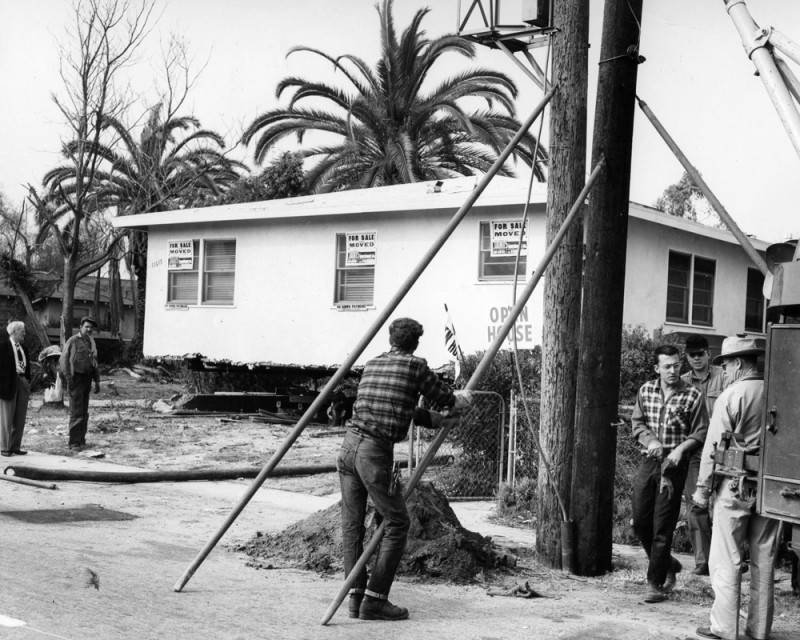
Clearing Away Parks and Houses for the Hollywood Freeway.


In the 1950s and early 60s, the expansion of the Ventura and Hollywood Freeways was accomplished by massive bulldozing of parks and houses.

North Hollywood, never rich in parkland, suffered the loss of some 20 acres of parkland to accommodate the construction of the 170 which today slices through and forms a new border between more affluent “Valley Village” and less wealthy North Hollywood.

It was cheaper to take parks than pay private property owners to seize land for the highways. Yet there were also many thousands of buildings moved or destroyed when California embarked on its mad program to make us completely dependent on motor vehicles.

Today we live in a reality that we think is normal but was paved and paid for by our elected ancestors. Car chases, global oil with wars and climate change, air pollution, shopping centers that took away orange groves, every five-minute traffic reports, the self-defeating obsession with oil prices, the decline of walking and the promotion of obesity are all linked in some way to the freeway system.

Our fervor to ride our cars to the Starbucks and drop our kids off at school, empowers Saudi Arabia, Russia, Iran. 

Our question for every apartment building and every house built in California: where will they park? Nothing architectural or aesthetic, nothing about the urgency of housing, only one thing on everyone’s minds:

Where will they park? Where will they park? Where will they park? Where will they park?

If by some miracle there was a proposal to build Rockefeller Center in the middle of a parking lot in Van Nuys behind rows of empty storefronts, there would still be only one question: where will they park?

We would rather live in environmental degradation than rethink our freeway and road addictions.

But in the 1950s every destructive program was considered an improvement.

Photo credits: LAPL/Valley Times.


Option A: Just Plain Places


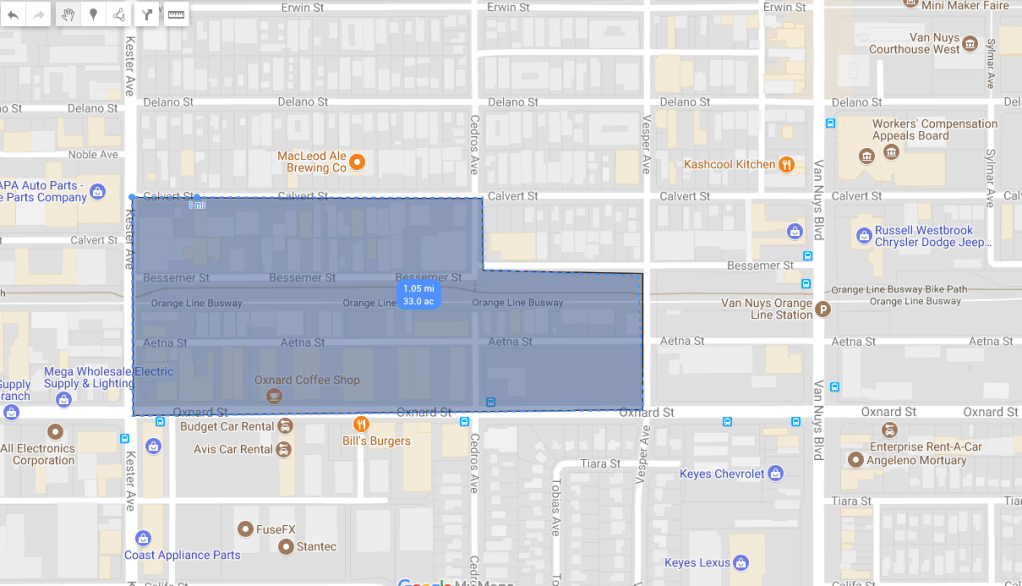
This blog has written 13 other times on “Option A”, a Metro LA proposal by the public transportation agency to wipe out 33 acres of industry in Van Nuys, near the junction of Oxnard and Kester, and replace it with a light rail service yard. It would destroy 1,000 jobs, displace 186 businesses and flatten 58 buildings.

Though the scheme has been public knowledge since September 2017, property owners, workers, renters and the neighbors near here still stand on thin ice, awaiting official June 2018 word whether this whole district is sentenced to death, or if another site (B, C, or D), near the Metrolink tracks up on Raymer Street will be chosen instead.

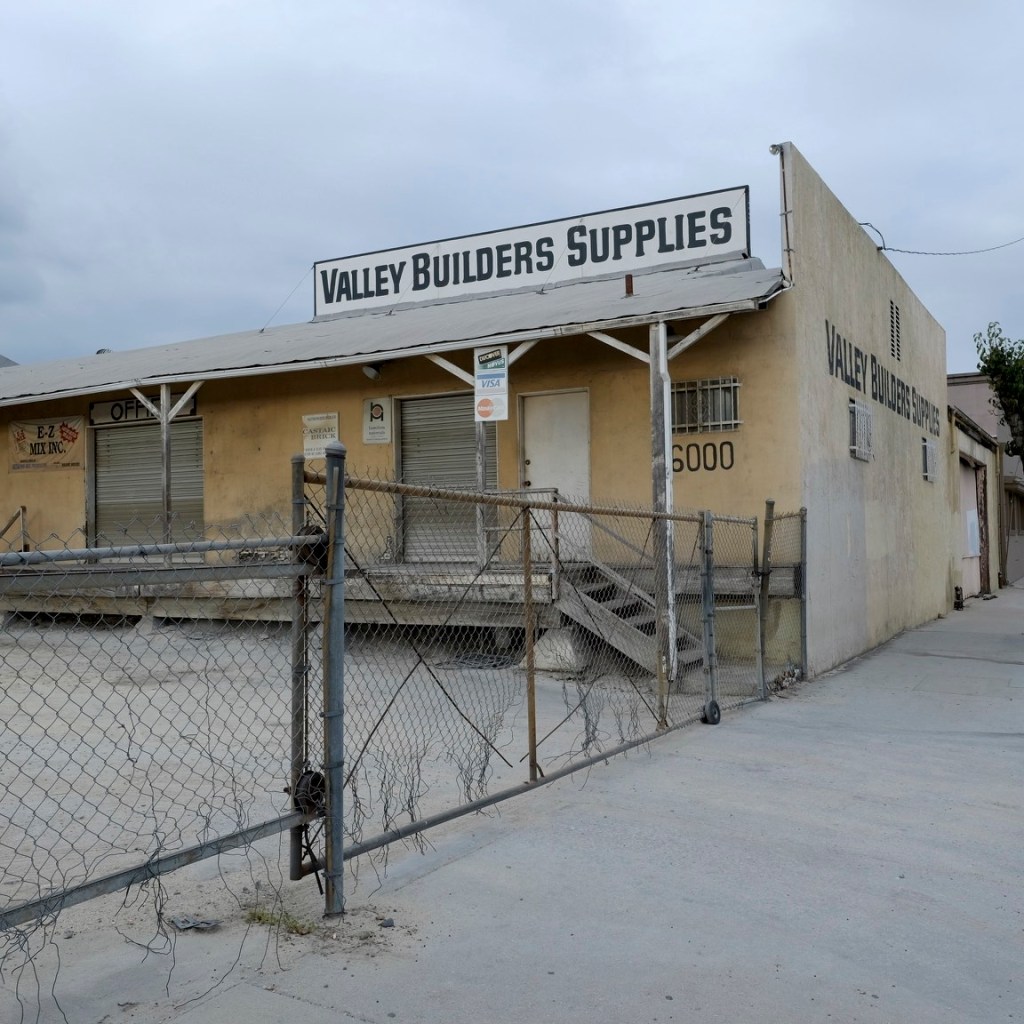
A photo walk around here yesterday, along Oxnard, Aetna, Bessemer and Calvert, to document some buildings that may be gone in a few years, was also an opportunity to show that this area has great potential beyond its current light industrial use.

In gravel yards, on cracked and broken asphalt, under decaying wood, on treeless, depopulated and narrow roads, there are ingredients for a nice urban area of some new housing, some new cafes, some places where trees, lighting, discreet signage and pavement of cobblestones could bring an infusion of 24/7, urban, walkable, bikeable activity to the neighborhood.

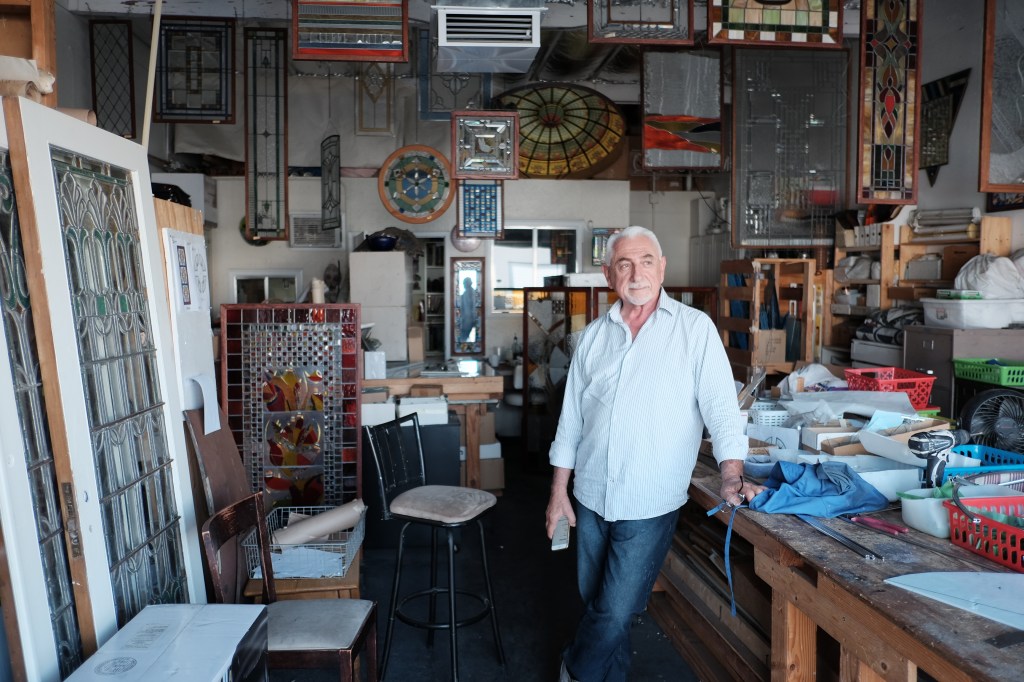
It is already an incubator of creativity with makers of exquisite decorative hardware, superb custom cabinetry, music recording studios, Vespa and Mustang restorers, stained glass makers, welders, boat builders, and kitchen designers. These businesses, incidentally, are staffed by mostly local owners and workers, many of whom are but minutes away, or take the bus or even walk to work.  Rents are currently affordable, often 50 cents, $1 or $2 a square foot.

MacLeod Ale, maker of fine British style beers, since 2014, is on the north side of Calvert and is not threatened with demolition but its existence and success is a testament to the potential for innovation in this area.

Ironically, the very wonderful addition of a landscaped bike path and the Metro Orange Line bus in 2005 is now threatening the area because of future conversion to a light rail system. Yet the “Option A” district is thriving, even if it is shabby in places, because it is a work zone of skilled, employed, productive people.

Politicians who often talk ad nauseum about “diversity”  should come here with mouths closed and observe men and women: Mexican, Armenian, Norwegian, German, Persian, Guatemalan, Salvadoran, Irish, Scottish, Israeli-Americans, all the hyphenations of ethnicity and gender, who don’t care about where anyone came from, but only about where they are going in life.

This is Los Angeles. This is diversity. This is economic prosperity. This is within walking distance of “downtown Van Nuys.”

Yet short-sighted officials, bureaucratic ignoramuses with grandiose titles, flush with public money, would consider wiping out the very type of neighborhood whose qualities are needed, wanted and venerated.

Option A must not happen. This is what it looks like now.

Imagine what it could look like with the right, guiding hands of investment, preservation, planning and protection.


SaveSaveSaveSave

SaveSave

Option A: What the Neighbors Think.


A light rail service yard in Washington state.

Metro is planning a light rail train down the center of Van Nuys Bl. extending from Pacoima to Van Nuys, stopping at Oxnard St. Less probable is a dedicated bus line.

Their final decision, as to what type of transport to build (bus or train) and where to service these will come in June 2018.

Four areas in Van Nuys are under consideration for eminent domain demolition and the building of a light rail maintenance yard.

These are called the “Option” areas and they are A, B, C, and D.

Options B, C, and D

B, C, and D all straddle the existing Metrolink heavy passenger rail tracks along Raymer St. near the former GM plant on the Van Nuys/Panorama City border.


OPTION A:

Option A

Only “Option A” is located in another area: this is a 33-acre spread of light industry comprising 186 businesses, 58 structures and as many as 1,000 workers who are located NE of Oxnard and Kester along Oxnard, Aetna, Bessemer and Calvert Streets.

This blog has reported extensively, since September 2017, on the “Option A” community: a unique, productive, and innovative group of entrepreneurs who make fine decorative hardware, custom shelving; record music, weld metals, clean carpets, fashion artistic stained glass, and restore vintage Mustangs, Vespas and large yachts.

Skilled craftsman at Pashupatina

Garrett Marks, CEO, Mustangs, Etc. (est. 1967)

Peter Scholz, owner Showcase Cabinets (est. 1987)

Simon Simonian, Progressive Art Stained Glass Studio

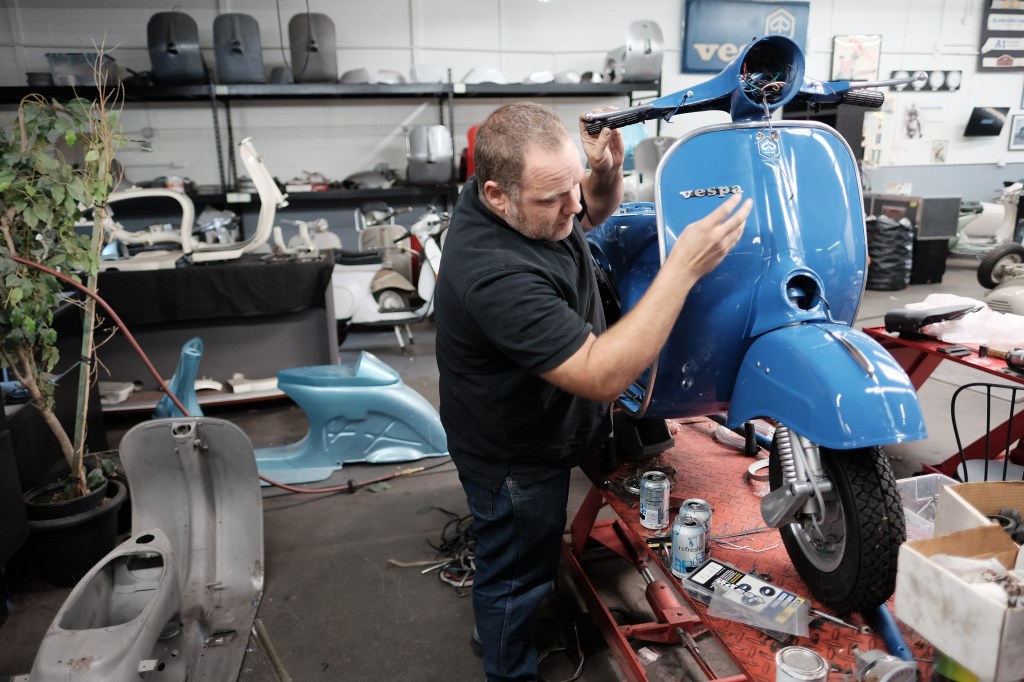
Kristian Storli, Owner: Bar Italia Vespa

Steve Muradyan of BPM Custom Marine

They employ local workers, many of whom walk to work. There are immigrants here, but there are also people who started companies 30, 40 and even 50 years ago who would be forced to move from their little supportive community and fight to rent new space competing against cash rich marijuana growers who are swallowing up space for their noxious, lethargy inducing, industrial scale weed.


I was curious what residents in the area think of “Option A” so I went online and visited Next Door.

My Next Door app page has 2,000 community members from Burbank Bl. north to Roscoe, from the 405 to Hazeline.


I posted a question asking if people opposed or supported “Option A.” Overwhelmingly, by a vote of 87% to 13 (94 total votes), they said they were against it.


Peter Scholz and employee at Showcase Cabinets


 Here are some of the comments:

“It seems like a giant repair yard would be an eye sore and would attract litter, homeless encampments and shady activities since it will have very little activity especially at night. I don’t see how that is worth uprooting all these businesses who contribute to our community and have been here for all of these years.”

“I prefer local businesses any day. Plus, with numerous new apartment buildings popping up all around the area, we have potential for more retail/cafes to move in to the buildings up for lease. However, if all of that space gets used up by ugly rail yards, then the Van Nuys economy will never thrive to its full potential. I’m sick of this city being treated as a dumping ground.”

“The downside of Option A is not only a large rail yard in main area of Van Nuys (which MTA promises would be modern and attractive) but as well, that it would take out approximately 200 small and thriving Van Nuys businesses that each employ, one, two, three, five or more employees, whereas the other two main options hold a minuscule number of businesses. Eminent domain [against] all these businesses in the heart of VN would hurt us in several ways, besides uprooting the businesses and the citizens who work there, there are limited number of commercial properties currently available close by, so many of the businesses could not relocate close by, would not be able to keep locale clientele. For many who live nearby, if new properties could be found, commutes would be added. And for all those businesses relocating outside our community, or for those that would simply be forced to fold, Van Nuys would lose a healthy business tax base. Again, the other two options provided by the city for the yard (if needed based on what the final decisions are) do not suffer from anywhere near the same extent of overall downside.”

“I own a house on Hatteras near the Option A area. And I also rent a building on Aetna which would be demolished. If this happens I will sell my house, which I just purchased two years ago and I will move out of Los Angeles. There is not a reason in the world to pick our district for demolition when so many jobs and lives are at stake. If Nury Martinez allows this she should be recalled.”

Clearly, people who live near the Option A zone are insightful and understand how important it is to preserve small business in Van Nuys. They know that an enormous, gaping hole would not revitalize Van Nuys, but further degrade it.


The community residents, as well as the businesses near Kester and Oxnard, are united in opposing the destruction of viable businesses and local jobs.

Option A: Still Waiting


In September 2017, 180 small businesses, 58 properties and 1,000 workers in Van Nuys learned they might be in the way of a 33-acre demolition project, Option A, proposed by Metro Los Angeles for a light rail service yard. Oxnard, Aetna, Bessemer and part of Calvert St., from Kester east to Cedros might be condemned.

A total of four options: A, B, C, and D are under consideration.

B, C and D are centered on the areas adjacent to Metrolink North (which are existing train tracks) and all involve far less demolition and displacement than Option A.

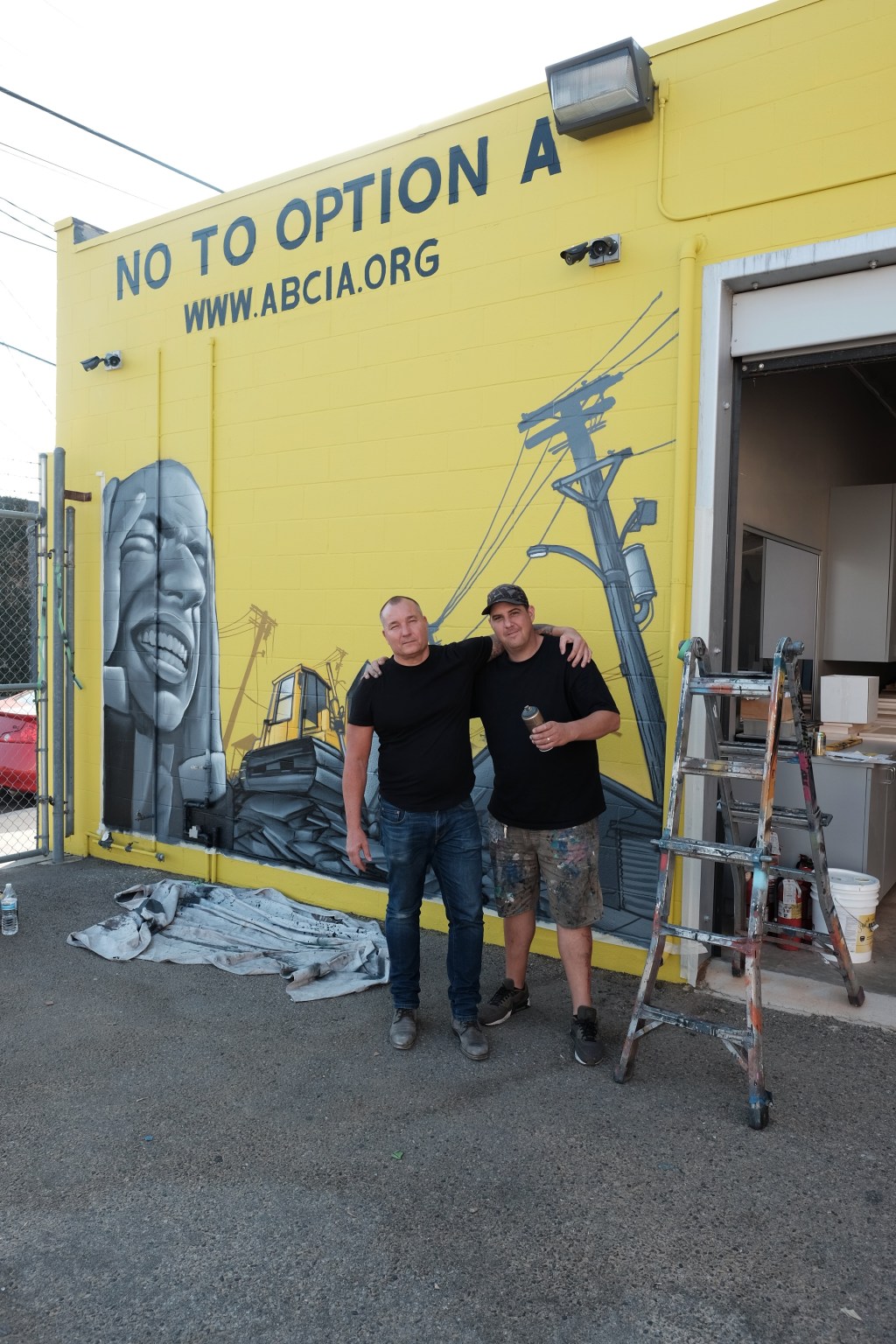
The bright, lemon yellow banners one sees all over the Kester/Oxnard area come from opponents of Option A who include community leaders, business owners and also the Office of Councilwoman Nury Martinez, who is firmly against something that would wipe out thriving, small companies who repair cars, build cabinets, record music, clean up flooded properties, plumb, weld, design and innovate right near downtown Van Nuys.

Ms. Martinez knows that the loss of these small businesses: walkable, diverse, local and entrepreneurial; would be disastrous for Van Nuys which has already been gutted out by the departure of GM a generation ago.

After multiple meetings downtown, speaking in front of the Metro Board, as well as Mayor Eric Garcetti and Board Member Sheila Kuehl, the Option A community was assured that an official announcement was forthcoming in January 2018. Walt Davis, Metro Transportation Planning Manager, was almost sanguine and breezily casual about how quickly the decision would be made to NOT APPROVE OPTION A.

 But, as of March 1, 2018, there have been no Metro announcements.

Option A still sits on the table. And people are increasingly nervous about the delay.


Showcase Cabinets’ Peter Scholz speaks with Marilyn Balduff, property owner of 14807 Aetna St.

Anxious and alarmed includes Ms. Marilyn Balduff, 75ish, a widow who owns 14807 Aetna St., a 10,000 square foot building housing half a dozen businesses providing her rental income and retirement assurance.

For fifty years, her late husband Bill ran Little Willy’s garage here. Marilyn worked as a CPA upstairs and kept an eye on the factory floor below from her elevated perch.

She is a smart, numbers ordered woman who knows how to invest, balance books, and manage real estate. She is not a super wealthy person, but rather a working woman who used 14807 to leverage the purchase of other properties. She is still paying off the mortgage, and the prospect of losing her family’s building saddens and frightens her.

For 14807 cannot be sold or rented to new tenants while the uncertainty of Option A hangs in the air.

I spoke with her when she came to visit her property today, and was handed a rent check by one of her tenants, Tom Bolan, a plumber.

Marilyn Balduff and Tom Bolan, tenant.

Jeff Montag, Marilyn Balduff and Jim Tabolsky.

She was also greeted by her largest tenants, Jeff Montag and Jim Tabolsky, owners of Regent 24/7 Carpet Cleaning, a company that has ten employees who clean out flooded properties, and work with property owners and insurance companies to remediate water damage.

Jeff and Jim, best friends and business partners, grew up in Sharon, MA and came to Los Angeles in the late 1980s. Jeff has four kids and three grandchildren and Jim has five children. They are solid, hard-working, experienced, and well-respected.

14807 is perfect for Regent because trucks can drive right into the building and unload water logged cabinets, furniture, and rugs. And equipment to clean the carpets can be put right on the truck. The 405 is nearby, and the workers also come local. It is an ideal place to have a small business.

Marilyn Balduff may have a business head, but she also has a sentimental heart. She spoke of her life, born and raised in Los Angeles, marrying Bill at age 18, the days they spent at Little Willy’s garage, and their mutual interest in specialty cars, including a 1908 Thomas-Detroit Runabout that Marilyn bought from Harrah’s (the former Harrah’s Automobile Collection at Reno) in 1983 when she saw its picture in the auction brochure and fell in love with the car.

Marijuana growers, who are gobbling up space all over Los Angeles, and out-bidding legitimate enterprises, by offering all cash and higher rents to owners, have approached her.

“I don’t want them. The mold and the humidity will ruin the building. And it’s not only the moral issue, it’s a degradation of the place,” she said.


Over on Calvert Street, Israeli born car repair mechanic Doron Danisky, 53, runs a scrupulously clean, orderly shop, D Best Automotive. His topless red Jeep with Hebrew lettering is parked along the curb near MacLeod Ale. (The Luck of the Scottish brewery, on the north side of Calvert, is outside of the area threatened by demolition.)

Doron bought his 3200 square foot building in 2011, and he uses his mechanical know-how from the Kibbutz (Yagur) to fix large trucks, jeeps and any old school vehicle. He has three rotary lifts and two employees. The atmosphere is airy, friendly, and low key.

Doron Danisky, owner of D Best Automotive.

“I’m not worried,” he said, offering cold water, soda and chocolates to me as we sat in his office. “Eat chocolate, it’s good for you.” He seemed fatalistic about Option A.

Perhaps coming from tense, on-alert, survival conscious Israel makes other concerns seem smaller.

“It’s a dream location, and when I heard about Option A, I was quite upset. But now I am OK with whatever happens,” he said.

D Best


But most, who depend on this district to earn a living, are not OK, until they hear the decision from Metro.

Apprehension and dread hang in the air along with the acrid fumes of car paint and the sour smoke trails of cannabis.

If eminent domain comes to Van Nuys, as it did with the tragically failing ghost-slum Civic Center (1960), another viable, historic, community-oriented, and socially supportive area will be ripped out and replaced by a post-apocalyptic emptiness.

Will the bureaucrats and elected officials make the right decision?

The people of Van Nuys are waiting.


SaveSave

Option A: The Vespa Whisperer.


After WWII, Italy was poor, the roads were torn up by war, and the new democratically elected government was prohibited to build military hardware. Industrial revitalization was a must. So innovative militarists turned to consumer products to employ workers and restart the economy.

The Vespa (“Wasp” in Italian) grew out of this era.

It was designed and built by aerospace engineers to satisfy postwar transportation needs economically. They created a scooter, with all the mechanical parts enclosed, and a tall frontal splashguard, features which appealed to Italian men in suits and women in dresses. There was no grease to splatter on well-tailored woolens, and the versatile, small, well-engineered bike travelled well on narrow, pockmarked streets.

Piaggio & Co. introduced it and still owns and manufactures Vespa.

After its debut in 1946, it sold slowly, if solidly.

Then “Roman Holiday” (1952) starring Gregory Peck and Audrey Hepburn, filmed on location in Rome, skyrocketed the Vespa’s popularity. Suddenly 100,000 a year were selling. The popularity of films such as “La Dolce Vita” (1960) and the neo-realist Italian cinema of the 50s and 60s made all things Italian seem fast, young and glamorous. The mid 1960s Mod Subculture in Britain, dudes in Ben Sherman shirts and skinny ties and tapered trousers, furthered pushed the Vespa into pop culture.

The Mods, Britain, mid-1960s
In the US, even Sears imported Vespas and renamed them Cruiseaires. By 1981, the bike had lost popularity due to environmental laws. Yet again, in the early 2000s, Vespa restarted its American sales effort, opening its first boutique on Ventura Boulevard in Sherman Oaks, CA hoping to capitalize on our four CA freedoms: sunshine, mobility, novelty, and fun.

According to Wikipedia, there have been 34 different versions of the Vespa. Today, five series are in production: the classic manual transmission PX and the modern CVT transmission S, LX, GT, and GTS.


About 4 miles north of the Vespa retail store, at an unmarked building at 14819 Aetna St. in Van Nuys, Kristian Storli, 39 is quietly, diligently and artfully restoring Vespas, at his company, Bar Italia Classics, established 2006. According to Mr. Storli, it is the only shop of its type from here to Pennsylvania.

You pass through a gate into a courtyard packed with tools and bikes, all under some sort of repair, but then you enter a stylish, air-cooled, gray-painted, 3600 SF shop, unlike any you’ve ever been to, with vintage illustrations, glass shelves filled with awards and medals, antique framed advertising for Vespas, and a very large movie poster of Angie Dickinson atop a Vespa in “Jessica” (1962) directed by Jean Negulesco. 

Sicilian women plan to rid their village of a sexy American midwife (Angie Dickinson) by making her job obsolete.”

Angie Dickinson, 1962.

Obsolete is what haunts Mr. Storli, a stocky, blue-eyed, mechanical minded man of Norwegian descent who went to school to study musical composition, and ended up investing his life savings into his Vespa passion. He has had three shops in the last ten years: first on Calvert, then Bessemer, and now Aetna.

C, B, A….. Ominously for him there is no letter preceding A.

Each time, rents and leases ended. And this time, he fears, he may become redundant by Option A, if his shop, and 185 others are demolished by Metro Los Angeles for a 33-acre rail service yard.

Nevertheless, there is a rhythmic beat and output of bikes at the shop. Many restorations take 12-18 months and require each machine:


  • To be disassembled and inspected,
  • Stripped of old paint on engine and body parts,
  • Hardware sent out for plating,
  • Reassembling the machine to peak condition in both function and appearance.
  • Full payments are dependent upon delivery of the finished product to its owner.

It is a painstaking job, only undertaken by devotees and acolytes in the cult of Vespa, but the result, as one can see in a finished product, is the absolutely breathtaking beauty of the timeless and completely Italian product. The smooth and shiny gracefulness of a finished bike exudes sensuality and speed.

One day a few weeks back, working inside his dream factory, Mr. Storli was jolted with a bomb of an announcement: He might have to move to make way for a 33-acre demolition project bulldozing 186 businesses for a future light rail maintenance yard operated by Metro Los Angeles.

He had only moved into his third, and presumably final shop, this year, 2017. He lost over a year of income when he had to move the second time. Now he was threatened with new economic ruin, not by a downturn in business, but by an aggressive action of a government agency using Eminent Domain powers to evict lawful enterprises.

He told me that he is deflated, worried, and panicked. He has started, grudgingly, to look for other affordable space in Los Angeles. But the rental vacancy rate for industrial property is only one percent. And the competition is marijuana growers paying three times the asking rate to landlords.

To lose so many businesses is sad.

But it is doubly tragic to see a completely original and unique craftsman, Mr. Storli, thrown out of his space. It is one more step in the homogenization of Los Angeles, where shortsighted bureaucrats fail to protect unique and skillfully constructed products and services when they are operated by small businesses. But every corner store is CVS or Starbucks.

We need excellent public transport.

But grotesquely destructive and obliterating plans to build a light rail yard through viable and productive industrial tracts only harms Los Angeles -by destroying the real and the good -by promising the imaginary and the perfect.


Option A: “Memo to Metro: May We Survive?”


Mustangs, Etc.


DSCF1430
Simon Simonian, Progressive Art Stained Glass Studio

DSCF1407
Peter Scholz, owner, Showcase Cabinets.

DSCF1413
Craftsman at Showcase.


Yesterday, The San Fernando Valley Business Journal published an essay by Charles Crumpley, editor and publisher, concerning the scheme (“Option A) by Metro Los Angeles to destroy hundreds of small businesses near Kester and Oxnard for a proposed light rail repair center covering some 33 acres.

I am reprinting here for all to read. In it he castigates the insensitivity and deafness of local government, including Councilwoman Nury Martinez, who has seemingly stood by while hundreds of her constituents face financial ruin, dislocation and the upending of their businesses and economic security.  Prostitution and dumping cannot be the only constituencies that matter in City Council District 6.

If Metro is permitted to bulldoze the last vestige of small business in Van Nuys to make way for a Disneyland transportation scheme, already made redundant in the Uber/Lyft era, than we are all doomed.

Metro needs to find another site for its repair yard that does not destroy the lives, dreams, hopes and well-being of hard working entrepreneurs and working men and women in Van Nuys.


Memo to Metro: May We Survive?

By Charles Crumpley

Monday, October 16, 2017


The gulf between local government and the business community was on full display last week at the Van Nuys State Building Auditorium.

That’s where the Los Angeles County Metropolitan Transportation Authority held a meeting Oct. 10 to hear from businesses that stand to be evicted because Metro wants to clear land northeast of Oxnard Street and Kester Avenue to build a train maintenance yard to serve a new rail line.

The message from businesses seems simple and clear: Can’t you find a better place for your maintenance yard? Maybe one that doesn’t oust a train load of businesses – 186 of them, by one count.

The message from bureaucrats also seems simple and straightforward: Yawn.

Whether they know it or not, that’s the memo they sent to businesses. To Metro’s credit, it did hold the so-called informational meeting after it became clear that businesses were growing restive. On the other hand, Metro’s temper at the meeting was vaguely brusque and at times dismissive. To at least some of the businesspeople in attendance, it all came off as if Metro’s imperial overlords had been forced to travel to Van Nuys to sit through another dull meeting in which the plebian supplicants had to beg for their survival. (For more on businesses’ reaction, see the article on page 1.)

Here’s an example. The business group proposed an alternative site for the train yard. It seemed to make sense because it would only displace one business, an auto salvage yard, and a facility with some vacant land that’s owned by the Los Angeles Department of Water and Power, better known as the DWP.

But at the meeting last week, Metro Senior Executive Officer Manjeet Ranu announced: “Late this afternoon we got a letter from DWP that says they have specific plans and a construction timeline for use of that property.” So, no deal.

Well, excuse me, but are you seriously saying that DWP’s single plan is more important than the plans of 186 businesses?

Ranu did explain that eminent domain against a government entity like the DWP was difficult, you see.

Well, excuse me again, but isn’t this where we can count on our elected officials to step in and make the DWP yield? Maybe work out some compromise? Surely the DWP’s needs can be met while saving 186 businesses.

Alas, apparently not. The 186 businesses are in Councilwoman Nury Martinez’s district and she did not bother to attend the meeting. No representative from her office was announced at the beginning of the meeting, although her chief of staff said someone from the office later showed up.

The staffer sent me Martinez’s statement, which started by saying the new rail line, which will run from Oxnard Street to Sylmar, is needed and would bring economic revitalization to the area, which no one is arguing. She added this: “Metro indicates there will be some displacement due to the need for a maintenance facility, no matter which option is chosen. I will ensure that Metro continues to have an open and honest dialogue about the support, resources and assistance that will be available to these businesses, so they can plan for their short- and long-term future.”

Well, excuse me, but Martinez is missing the point. Some options for the train yard will have much less “displacement” than others. Focusing on the ones with less displacement is the point here. But I guess you’d have to actually talk to your business constituents to get that. And attend the meeting.

There’s a great gulf between local government and the business community here, and last week’s meeting displayed that.

Government officials see the need for a new train line and therefore a new train maintenance yard and that means some businesses will be evicted and that’s just the way it is. The affected businesses will complain, and part of the job is to yawn through some dull meetings and listen to them whine and patiently explain to them why their alternative proposals won’t work.

Business operators also see a need for a new train line and therefore a new train maintenance yard and that means some businesses will be evicted. But they don’t understand why government can’t be more judicious in selecting a site that is the least disruptive. They don’t understand why government officials can’t seem to see that it is not easy to relocate and could be permanently harmful, even fatal, to the businesses. They don’t understand why elected officials like Nury Martinez fail to come to their defense. They don’t understand why, if their alternative ideas don’t work, the government officials won’t help them come up with ones that do.

Surely there are other sites out there that would be less disruptive. Panorama City actually wants the train yard.

Let’s hope Metro and city officials look harder to come up with a new site that works well for the new train system without wrecking a swath of businesses.


Charles Crumpley is editor and publisher of the Business Journal. He can be reached at ccrumpley@sfvbj.com.