Valerio at Van Nuys Boulevard


screenshot_356

A few weeks ago I posted a two-part photo essay about my walk around Van Nuys Boulevard north of Sherman Way:

Part 1

Part 2


DSCF1084 DSCF1085

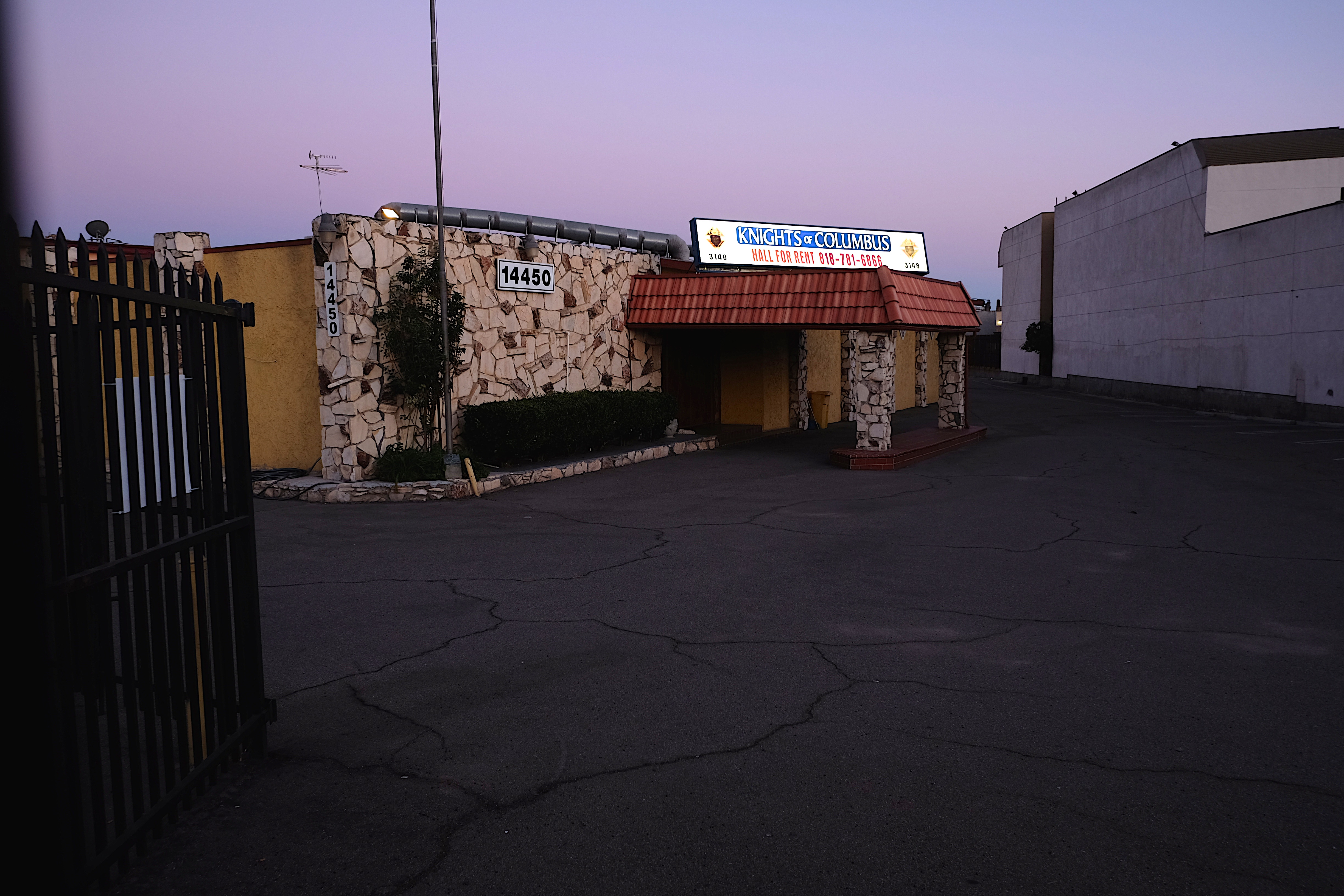
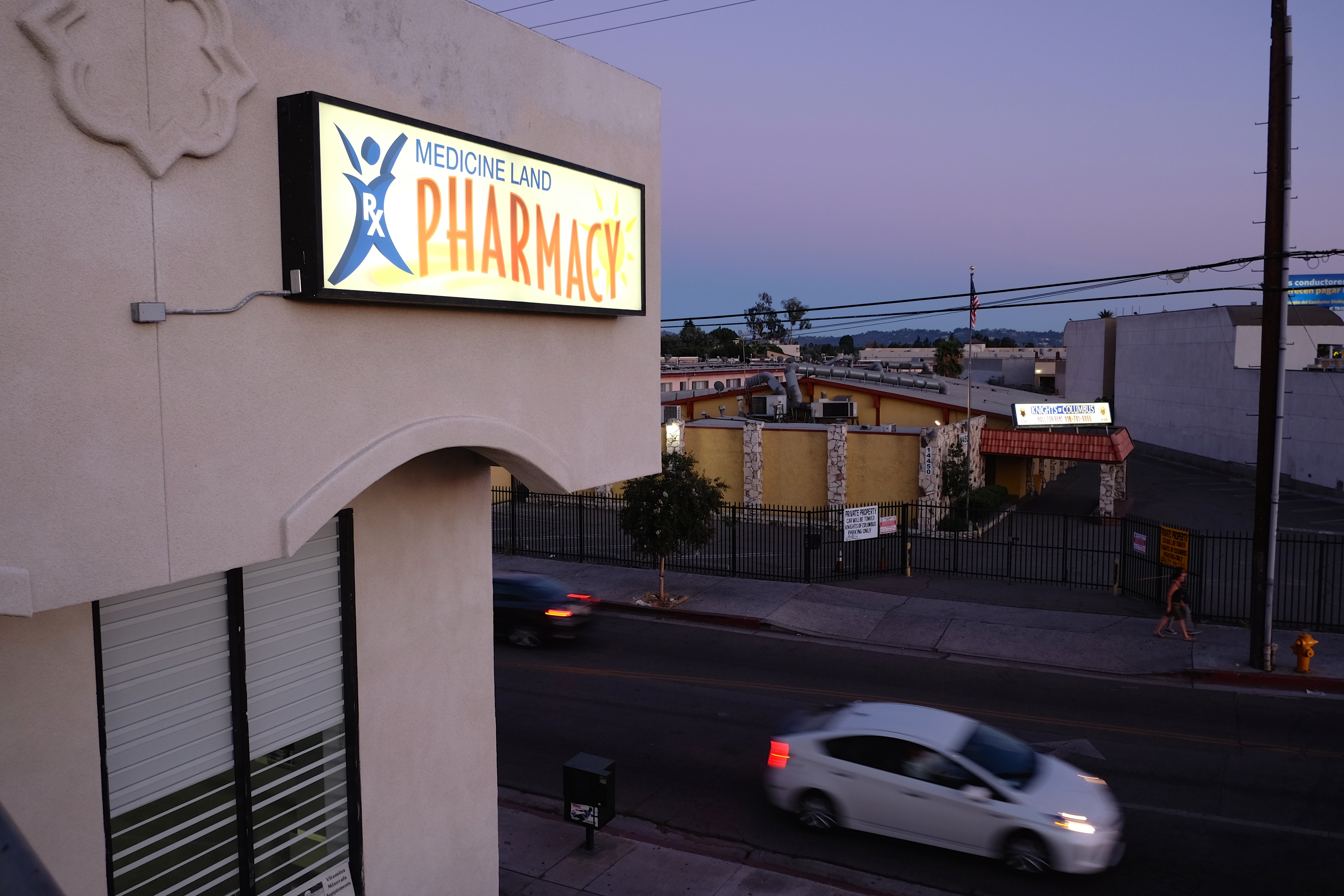
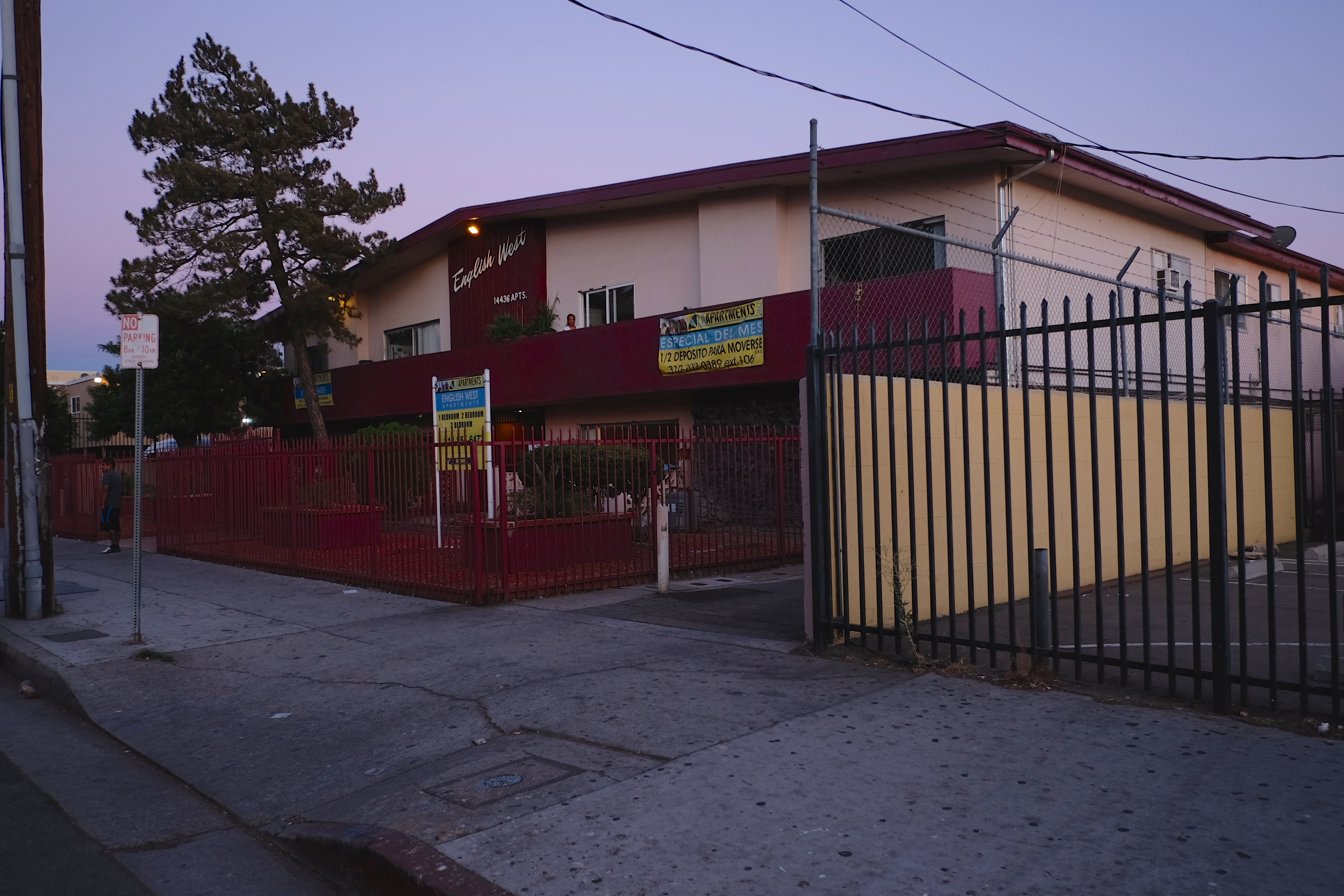
I’m posting a few more images here, of buildings and businesses at the corner of Valerio and Van Nuys Boulevard.

I caught them at dusk, which was close to 8pm on August 4th.

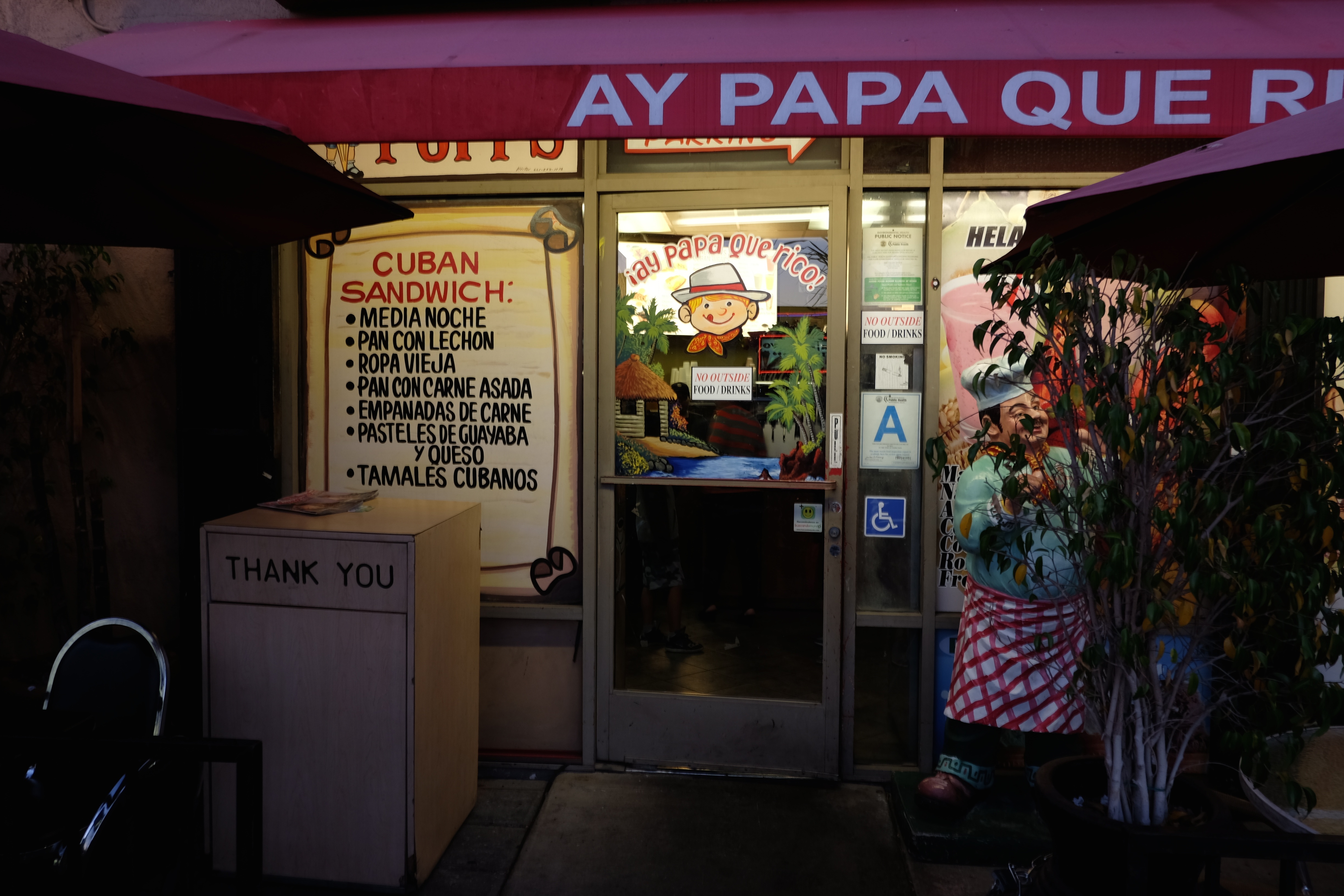
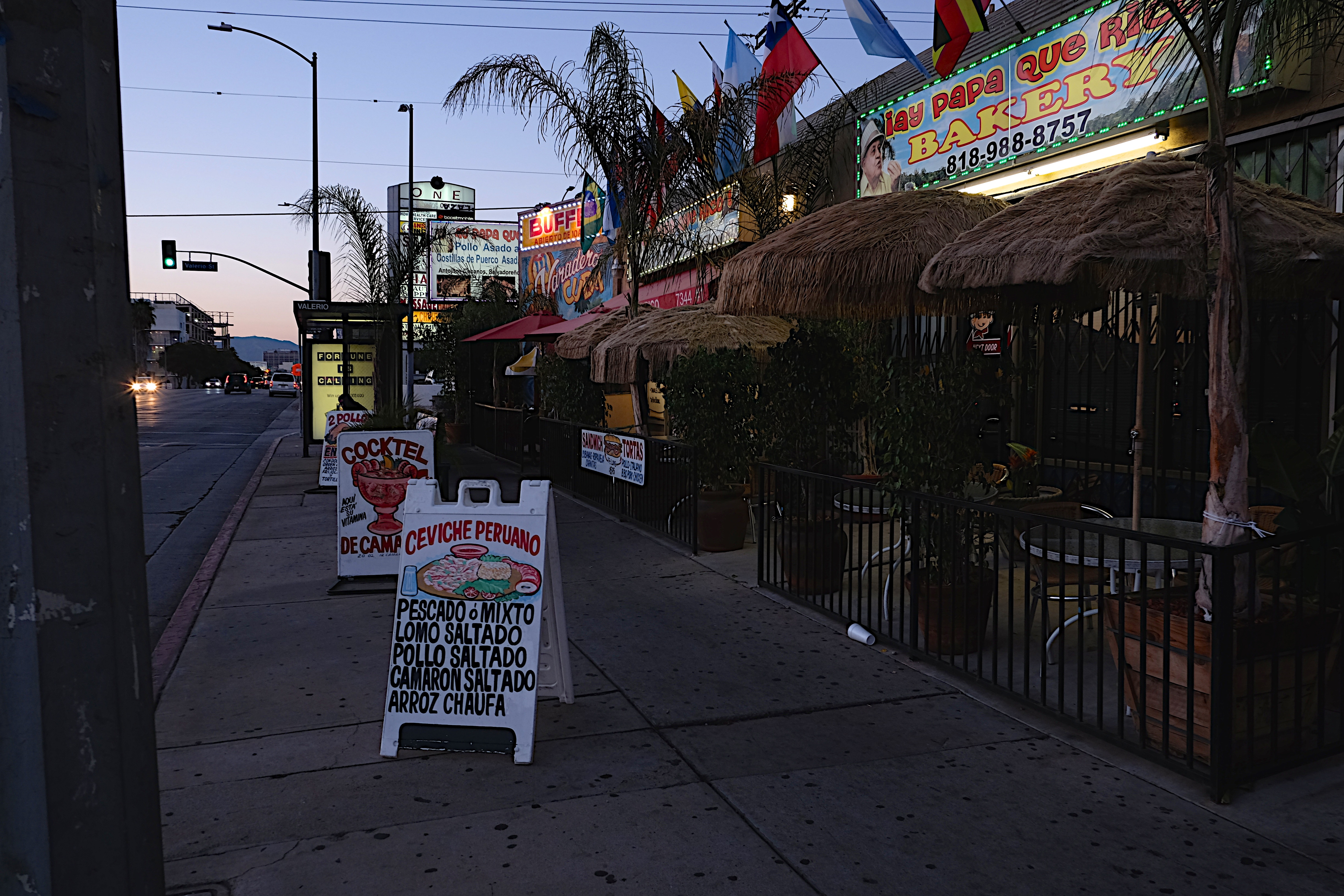
Ay Papa Que Rico Ay Papa Que Rico

Ugly during the day, the strip malls and the small businesses mellow out as the sun goes down.  Hard working people come home. Some stop off for grilled chicken, fried plantains, cool and delicious aguas frescos, roasted peppers and yellow rice at Ay Papa Que Rico.

Some climb to the top of a second story mall to smoke a cigarette in an open air parking lot.

DSCF1087 English Westz

And dwellers from Guatemala, Mexico, El Salvador and Honduras live at English West, 14436 Valerio, a building whose name, perhaps, sounds foreign to their ears.

All photos were shot by me: Andrew B.Hurvitz.

A Winter’s Tale


Processed with VSCOcam with m4 preset

Processed with VSCOcam with t1 preset

Processed with VSCOcam with k3 preset

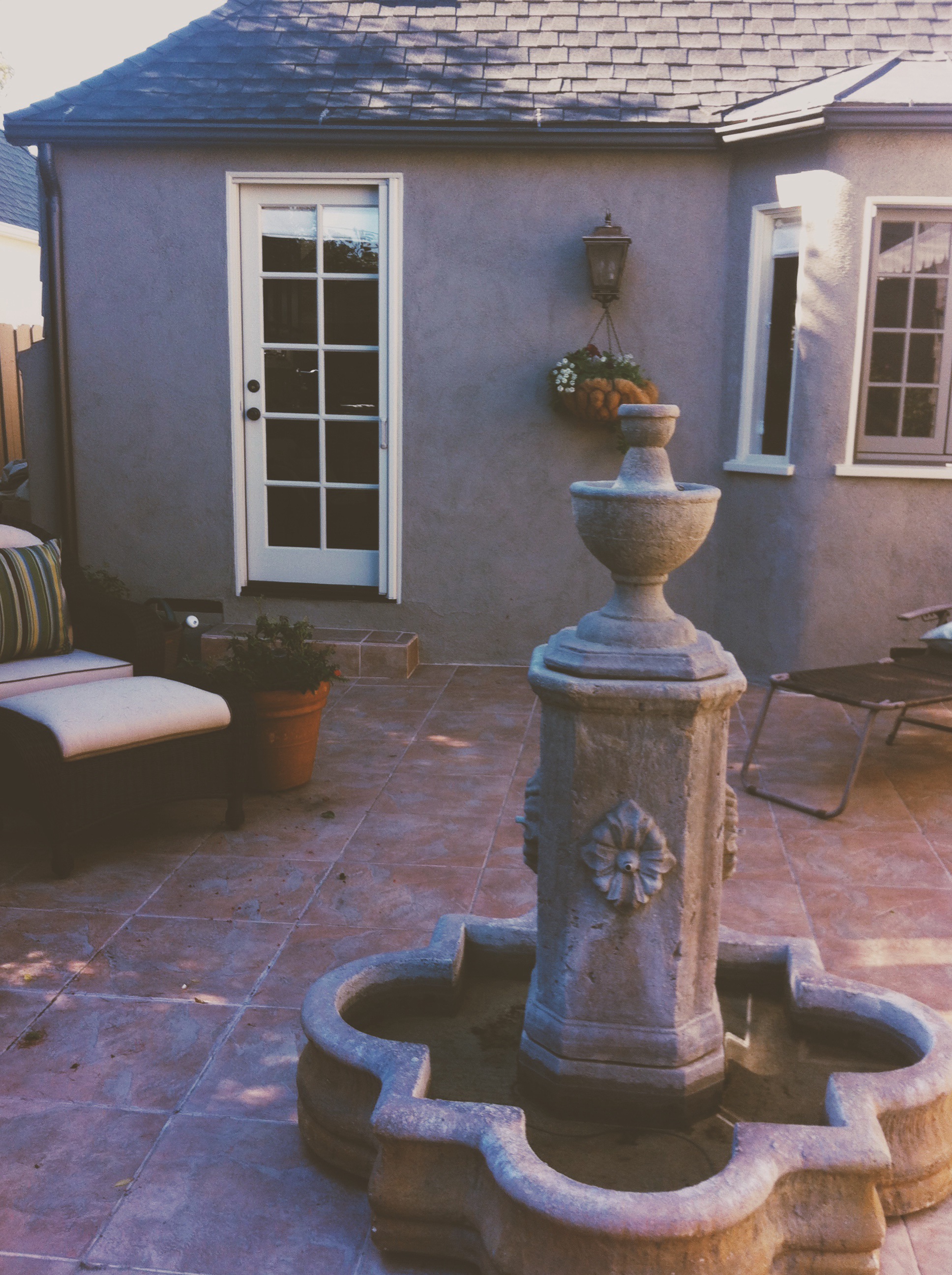
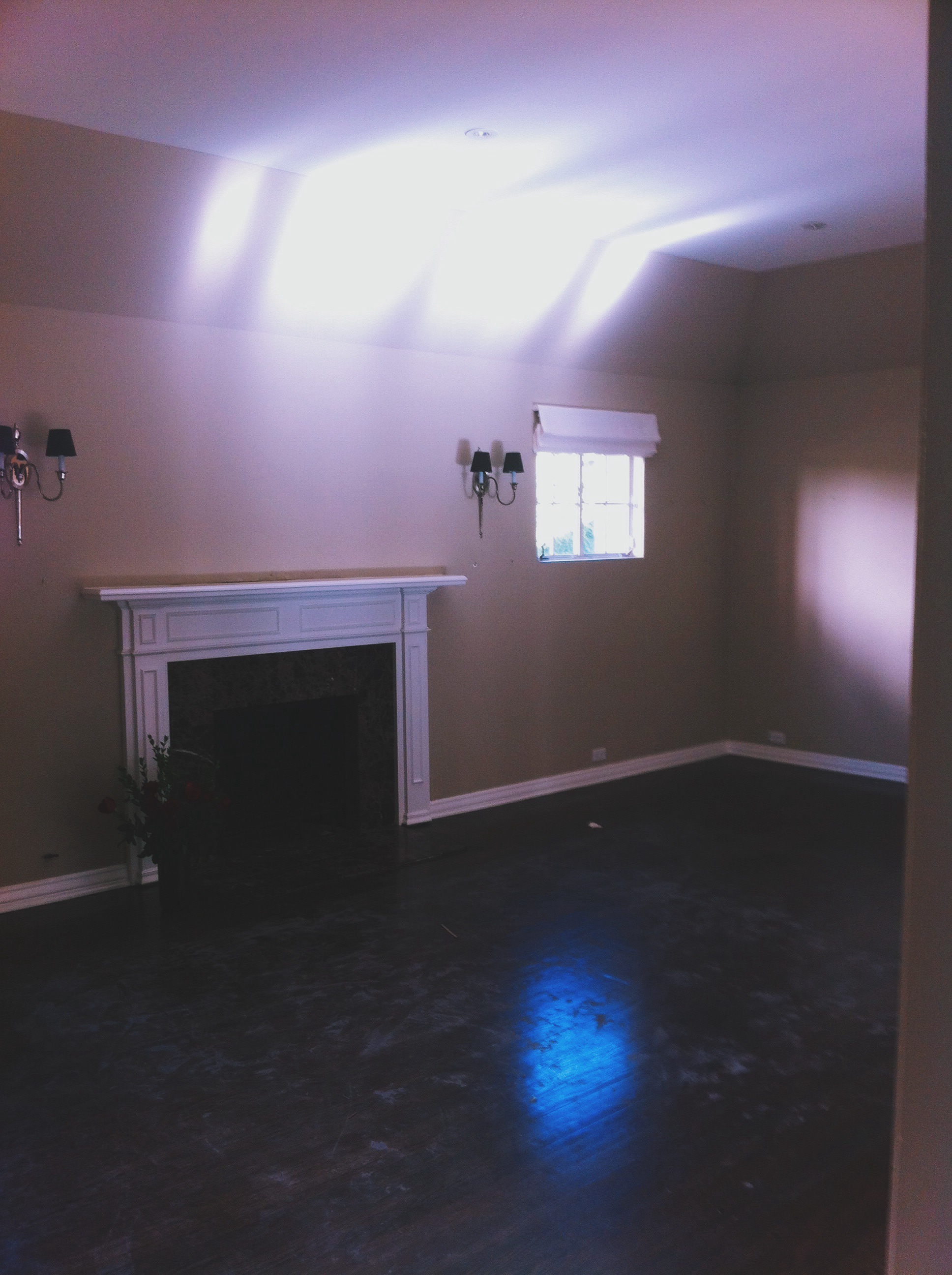
A man was moving out of his English cottage, and I was walking by, and he invited me in, to see it before he left for good, on a Toluca Lake street (where I’ve set my next short story), into a home, emptied of content, yet still full of emotion; an ideal cottage in the low millions, outfitted with dark wood floors, marble bathrooms, and discreetly elegant paneling; electric sconces, French doors, and striped awnings hung on black spears. And a subtly vaulted living room where cool winter light streamed through little steel windows splashing in blue light a brown, stained, scuffed floor.

He had lived here for seven years, placed in Los Angeles by a now bankrupt mortgage company who had conceivably compensated him well enough, but left him to hang out to dry when they collapsed. He became that very tragic figure: the enviable executive who lives in a beautifully decorated house where Roman shades, silent burger alarms, wi-fi, and built-in cabinetry mask financial illness.

He showed me photos from a glossy real estate brochure, of symmetrical rooms where couches and chairs mingled politely and toilet tanks stood erect in upright, polished splendor. He spoke wistfully of his 84 months here, 2,555 days of certain sunshine and uncertain liquidity.

I wondered if he had contemplated suicide, as I had many times, up awake at 3am, convinced I would never find work, angry at myself and my life choices, in fear of not paying my mortgage or getting the money for property taxes, medical bills and AT&T. Did the lush aesthetics of this house, with its fountains and sunlit corners, soothe the frightened beast inside of us all, the frail human alone as his nation commits economic genocide? Did hunger ever enter the confines of the redone kitchen? Did tears pour out of his eyes as he stood near the pivoting water spigot over the chef’s stove?

I did not ask.

A Jaguar, packed with plastic mattress covers and suitcases, sat on the driveway, and the backyard was full of rose bushes and two lounge chairs set on the green lawn. We walked through cerebral, reserved, tranquilizing rooms painted in healing greens and mournful blues from those cursed years after 9/11.

Every corner was well crafted and exquisite, from the ornate iron registers to the crown molding, to the high hat recessed lights, to the 50-year slate/asphalt roof, copper gutters, matte celadon backsplash tile, stone patio, Tuscan fountain and hi-efficiency heating.

White haired and kind voiced, with an intonation I remembered from New York, the man spoke with optimism and hope about losing the house profitably. He would soon set up his life somewhere in Sherman Oaks, holding a wet finger into the wind on Beverly Glen, hoping that this sale might release another California dream to carry him into future love and security.

Los Angeles, Oregon.


DSC_4123

DSC_4160

DSC_4135

DSC_4142

Los Angeles is not, by nature, an introverted, bundled up, snuggly, gray, rainy city.

But this year, the rains came early.

And we have had several weeks of storms, cold nights, blustery evenings.
And sparkling days with intermittent showers and drizzles, puddles and frost.

Nearby, up in the mountains, the nights are much colder and snow has fallen, snow that is visible way down here in the San Fernando Valley.

These few days, between Christmas and New Year’s, transformed and tamed the City of Angels into a Portlandia: wool sweaters, hot green tea in gloved hands, dog walkers and hikers encased in down jackets and flannel shirts, Icelandic wool caps and long scarves.

In Studio City, at 3pm on a Thursday afternoon, Laurel Tavern was filled with down-vested drinkers.

In Van Nuys, there were hardly any barking dogs left outside at night.
Only the occasional swoop of the helicopter…

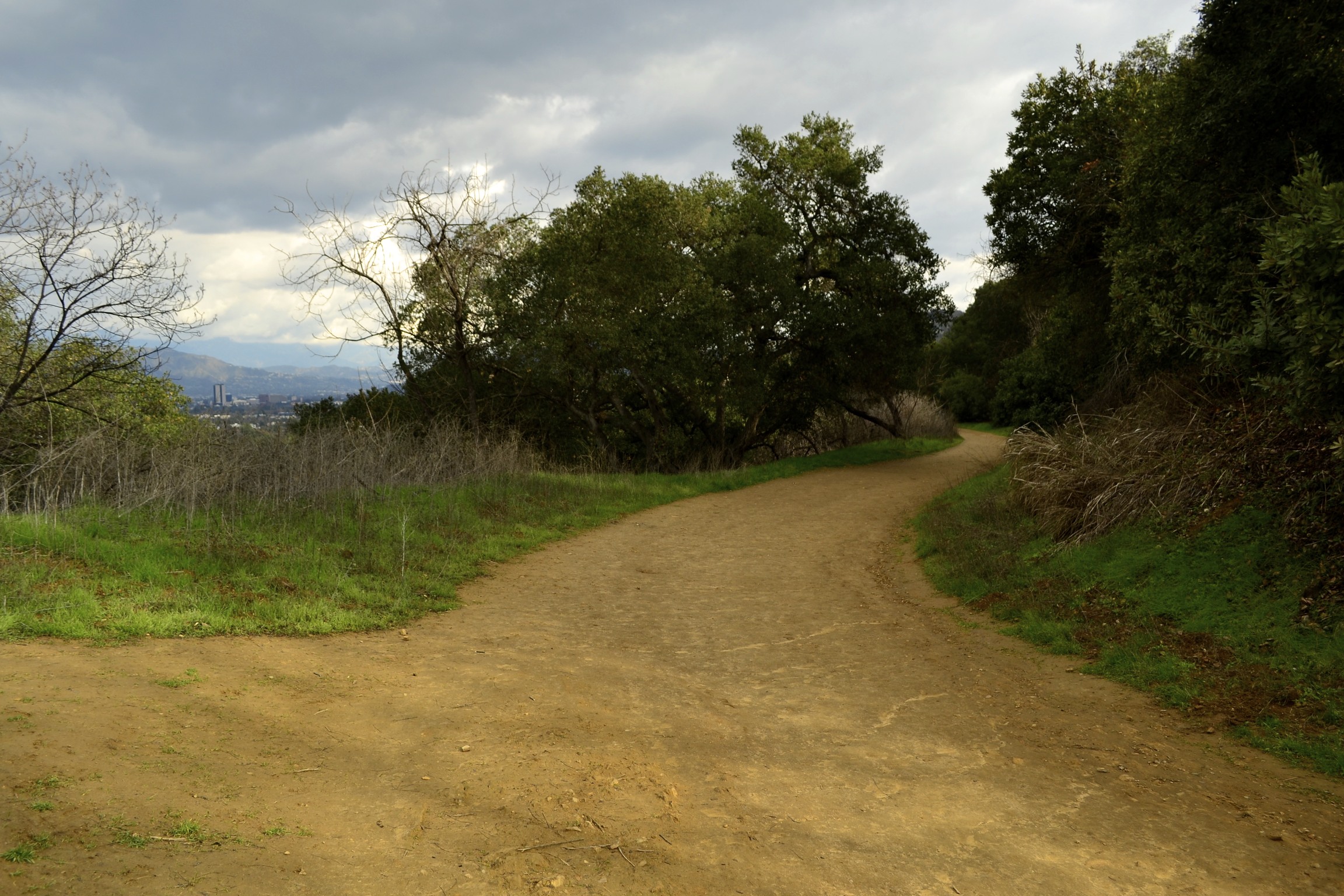
I went up to the rocky, steep and trampled dirt of Runyon Canyon a few days ago. From that high altitude, I climbed higher to a mountain overlook, a physical cliff, where the streets spread out below in every direction and I could see for miles from downtown to Catalina Island.

This is where you come with your parents when they visit from out of town.
And you can sometimes convince them of this city’s virtues, because they meet its bright views absent its shady people.

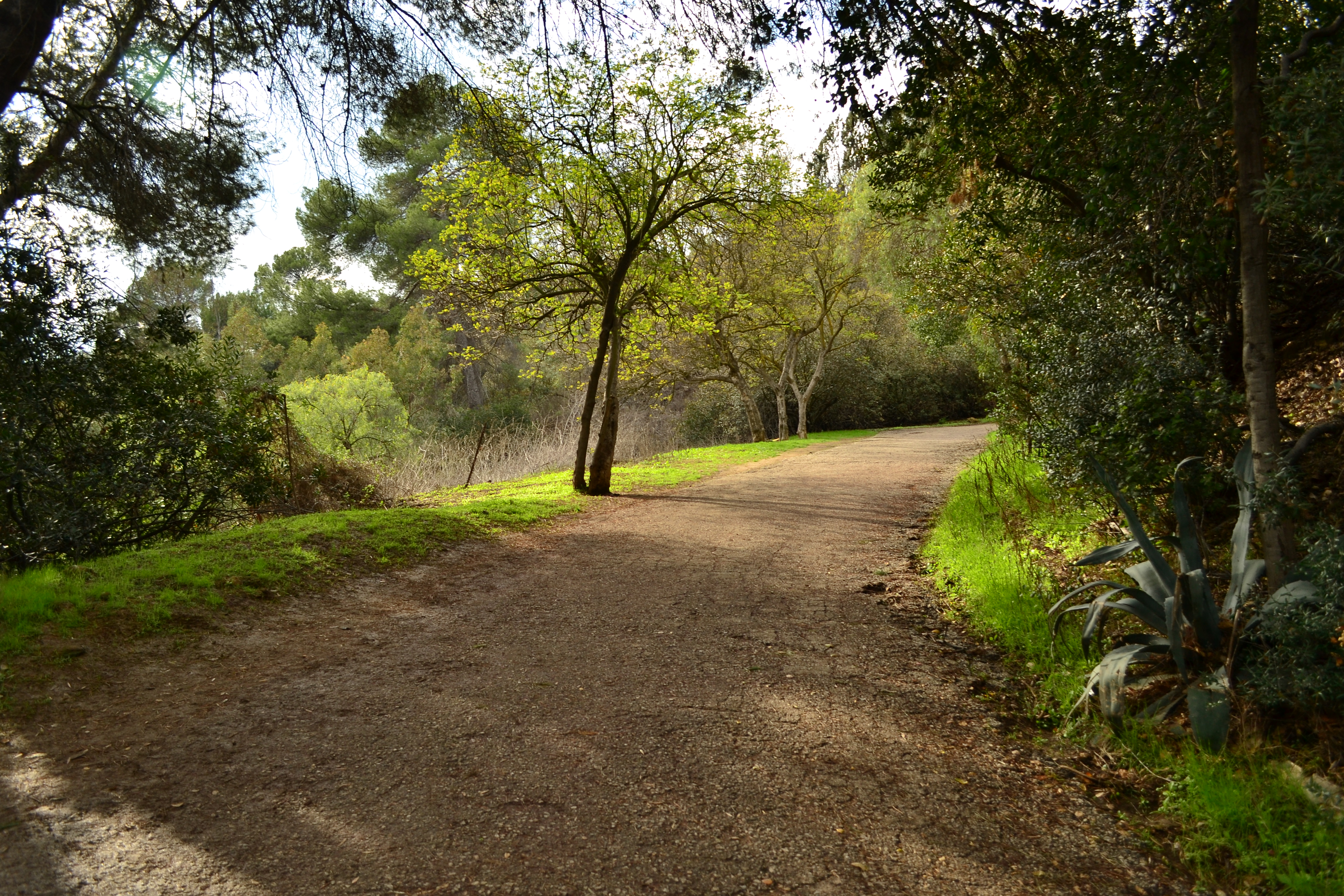
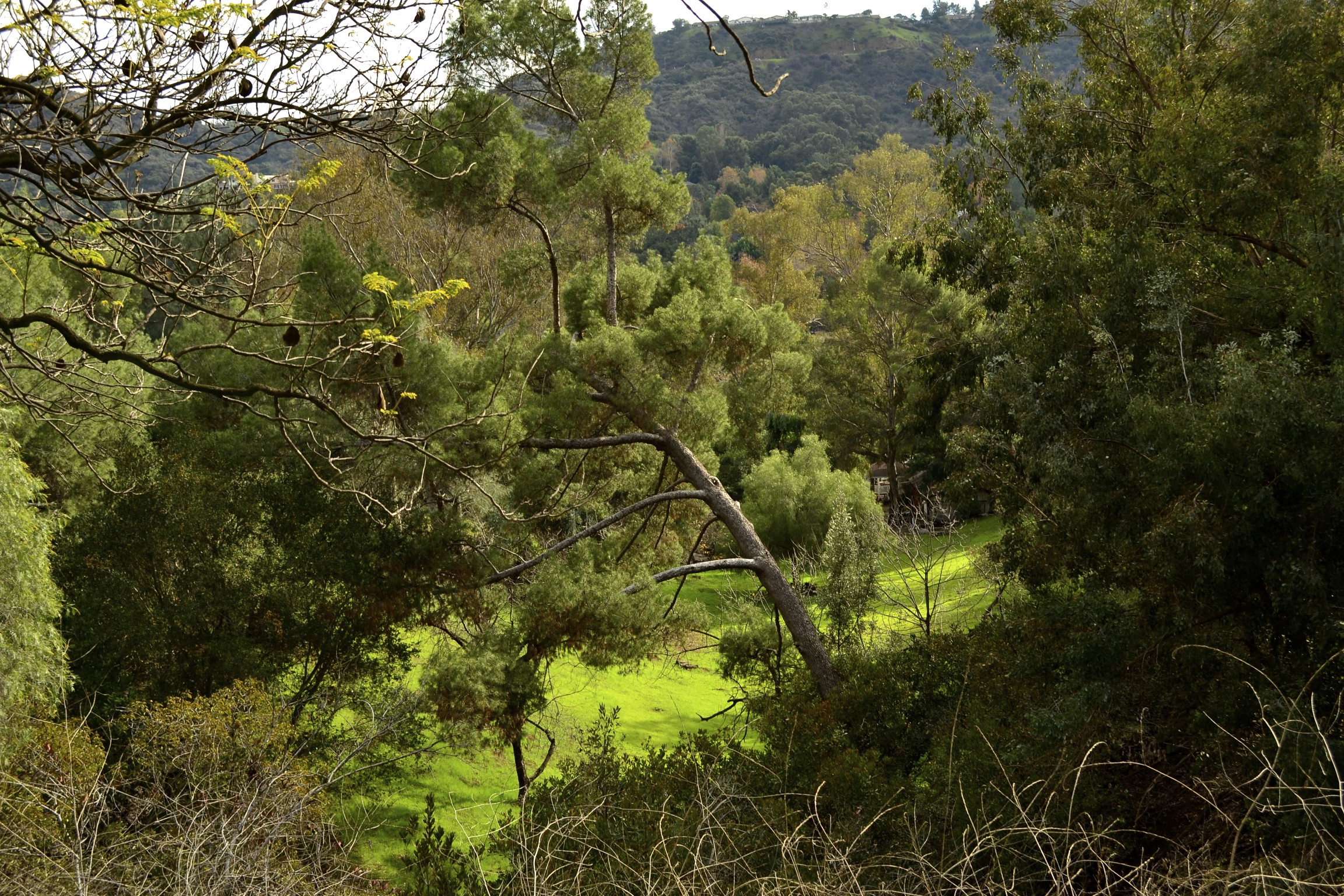
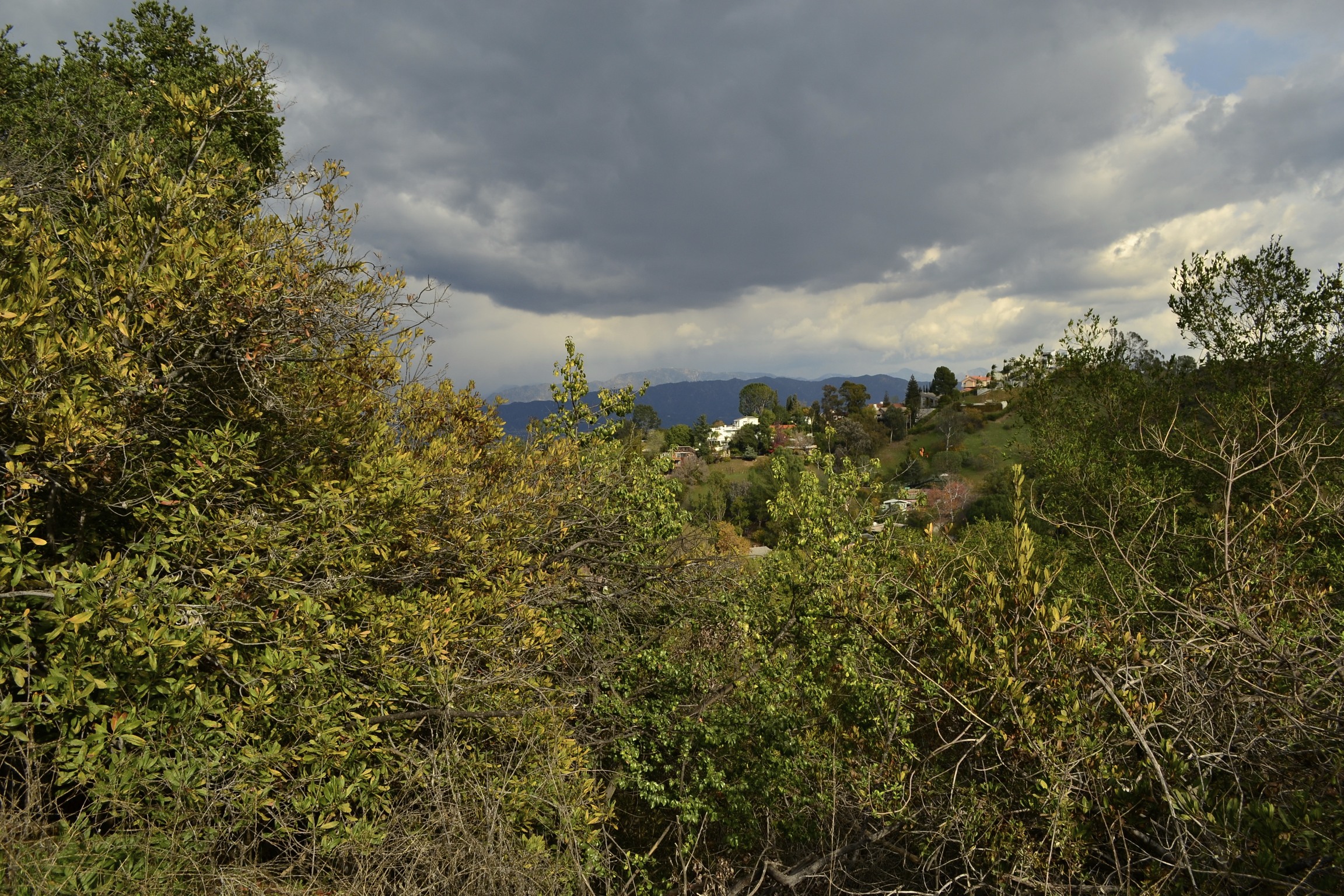
And again today I went up into Wilacre Park above Studio City to capture something as brief and beautiful as a child walking for the first time: a sun and smog cursed city magnificently and somberly draped in dark and gray clouds, chilled, sobered and intellectualized by the absence of suffocating heat and blinding light.

A meteorological delusion. This is not Los Angeles. But the camera captured it. It must be real.

Refreshed and purified, swept clean for the New Year, the city and the region, ready to welcome 2013, another year, which will once again dump its toxins of illness, worry, debt, violence, deceit, sadness and broken hearts into our lingering days.

I could live here happily if it just looked sadder a few more months of the year.

Exit Grace.


4117770226_eb64f38407_o
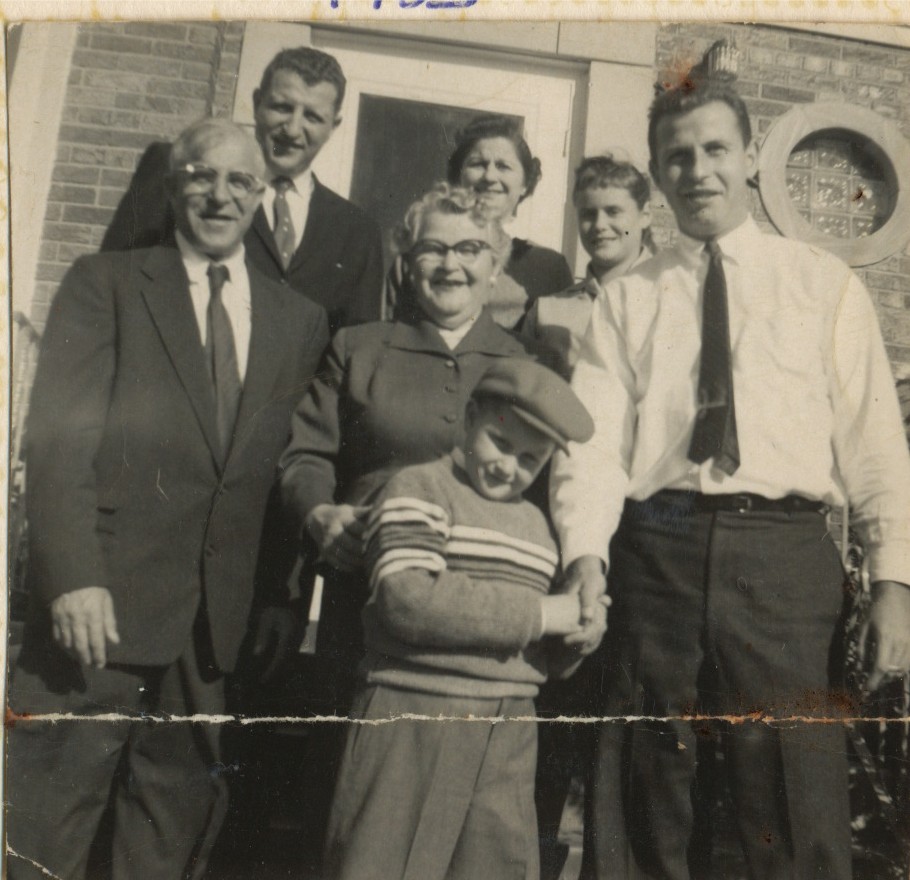
1955 Chicago Hurvitz, originally uploaded by Here in Van Nuys.

The 20th Century died 11 years ago, and now some of my most beloved family from that epoch, are dying, fading off, and exiting. And I hardly had a chance to get acquainted.

Born two years after the Versailles Treaty ended WWI, before Lindbergh crossed the Atlantic, before penicillin, direct dial telephone, credit cards, air-conditioning, television and the discovery of the planet Pluto, Harold Hurvitz (1921-2011) was the eldest of three born to Harry and Fanny Hurvitz, who were also the parents of Frances Cohen (1923) and my father Sol (1932-2009).

Harold’s life, biographically and chronologically, encompassed engineering, WWII, husband-hood and father-hood and the building of a successful, multi-generational heating and air-conditioning company that outfitted the many steel and glass buildings anchored low and towering high in the City of Big Shoulders.

Tall, blue-eyed, sharp, intelligent, and possessed of a calm fortitude and self-assurance befitting a man who knew his place in the world, Uncle Harold was for years the gold standard in our family for character, kindness and an inability to be disloyal.

He was married, in 1943, to a woman he had already known for perhaps a decade, (Aunt) Evey. They lived on the South Side, in those intact Jewish neighborhoods of apartment houses, synagogues, delis and social clubs. Those were the days, of Benny Goodman and Drexel Avenue, Hyde Park and Maxwell Street, of black cows and red meat, shvartzes and Chinamen, Inland Steel and the Outer Drive, the Union Stockyards, Soldier’s Field, Irv Kupcinet, the Chicago Daily News, Dad’s Root Beer and Jack Brickhouse.

After the war, Harold and Evey had three kids: Adrienne, Michael and Bruce, and these three went on, under the benevolent leadership and example of their father and mother, to create families of their own, made up of people who have mostly worked to build prosperity, build family connections and create a unity and purpose for life.

How I imagine I fit into my own family, and how my father imagined he fit into his family are curiously and strongly connected to the life of Harold Hurvitz.

I found, after my father died in 2009, that I was more cautious about the mythology of autobiography. A human being creates his own story, and he adheres to it, whether true or false. Let three children come out of the same womb, and each child will have his own version of family life and how well he was raised.

The death of Uncle Harold is strange, strange because his tenure on Earth was so long, and his presence, like the columns holding up the Parthenon: structural and eternal, resistant and real.

My own relationship to Uncle Harold was fashioned by the mythologies and stories filtered to me through my parents who thought Harold and Evey and their progeny had it made…..

They were going on a cruise. They were getting married. They just had a baby. Simi and Mickey, Evey and Harold, the two Mikes, the two Sues. It was a drum-roll of hearing about family through the stories of other people, rather than experiencing them yourself. And through many years, my father, in NJ, spoke on the phone with his brother through artful dissonance and polite chit-chat.

The good news that emanated from the golf course, from Rancho Mirage and Lake Shore Drive, from Deerfield and Highland Park….the stories that I heard, were stories of laughter and success, of camaraderie and closeness, procreation and prosperity illuminated by the floodlights of the Palmolive Building, orchestrated by a band playing in the Drake Hotel, for the majesty of a candlelit apartment in a high-rise, accompanied by many well wishers and lots of food.

In every photo: baby-faced boys and well-fed girls, golf courses and cruise ships, summer camp, yarmulkes, bar mitzvahs and bat mitzvahs, Water Tower Place and Frango Mints, Scottsdale, Boca Raton; Filet Mignon, and chopped liver; enormous platters of cold cuts on silver trays. This is how it seemed. And one never knew the tedious, back-breaking and time-consuming labor that built it all inside a windowless warehouse somewhere north of Touhy.

And sometimes the image of Harold’s family stood in opposition to the hard times we had in our smaller family of Sol. I had thought, maybe unfairly, that my own father minimized himself and aggrandized his older brother, to his own detriment. But my father relished his own artistic and independent streak. And he was not the first-born, but raised to idolize and respect and look up to the first- born.

My father had epilepsy, difficulty earning a living, back problems and a disabled child. And finally he succumbed, quite early, to a degenerative cerebral illness that robbed him of the ability to speak and walk. But if he were alive, he would tell me not to write any of this and just to remember that he was a good father and a good husband.

After my father died, I went out to Rancho Mirage and visited Uncle Harold, 11 years older than my father, but still alive and smiling. He was attached to his own plastic oxygen tube . And wheeled, by a home care aide, around a vaulted ceiling desert ranch house where he and Aunt Evey had spent thirty summers, and were now confined year around.

Uncle Harold said he was “an anomaly” because he had almost died earlier that year. He said he believed mostly in “blind dumb luck”.

And luckily, he was born a Jew, not in Poland or Germany, but Chicago; and luckily he met a woman he loved and stayed with for seven decades; and luckily he had great children who venerated and adored their father; and luckily he lived to see and touch and kiss grand-children and great-grandchildren.

And despite his time spent in the West, Harold, like my father Sol, was a Chicagoan, raised to think that if you just worked hard, thought logically, did the right thing, told the truth, you might just succeed.

He had absorbed the ethos of Chicago, a self-confident city of fighters and survivors, given to powerful winds and brutal snowstorms, blinding rain and suffocating summers, violent crime and astonishing wealth, yet boisterously productive, practical, energetic and hopeful.

Harold managed to endure and to leave to the rest of us, a lesson that success is not about mastering the latest technology, but by living according to those codes of honor that never die.

And family….above all… The Family. It stands supreme, and is there for those who are weak or falling down, and for those who are strong and on their way up, young and naïve, old and wise, middle-aged and stressed out. They all have a place in this family.  And they must not forget that they are not alone.

The Holdouts.


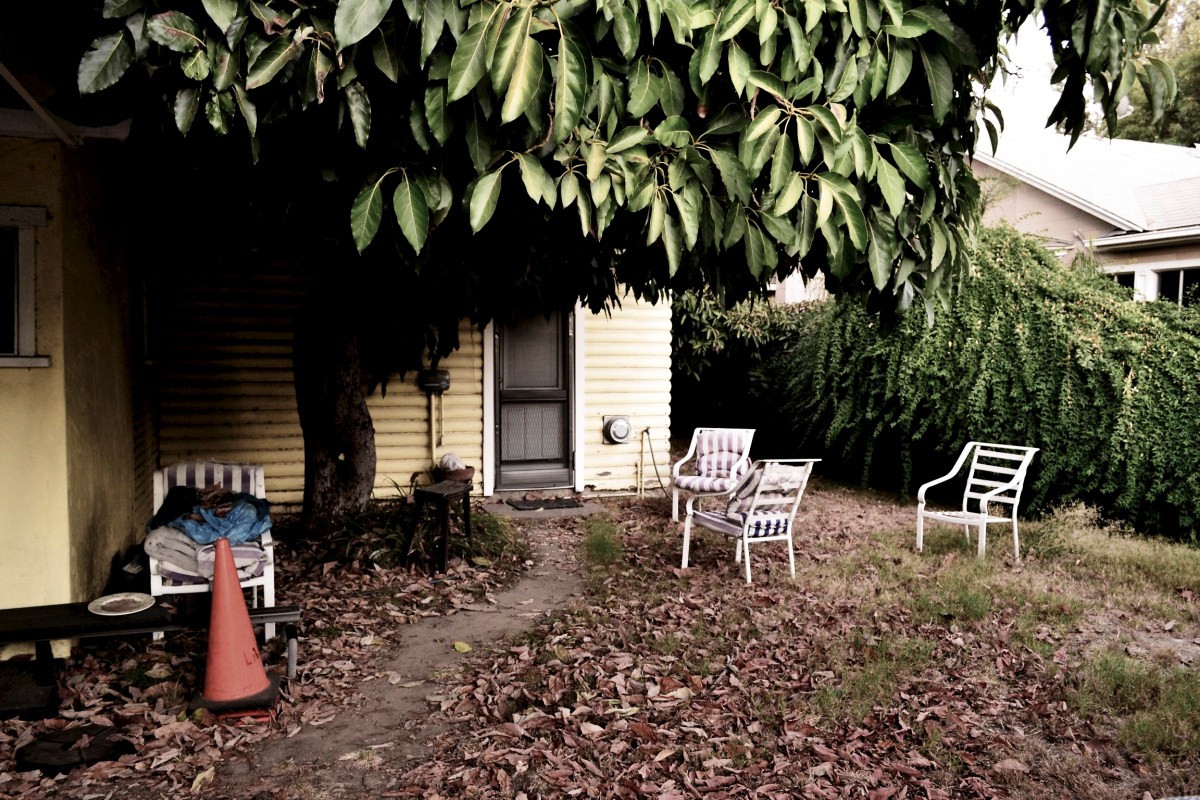
Not far from my house in Van Nuys, there is an unimproved street without gutters or sewers, where the blacktop was probably laid down 80 years ago, past large parcels where grew walnuts, oranges and figs.

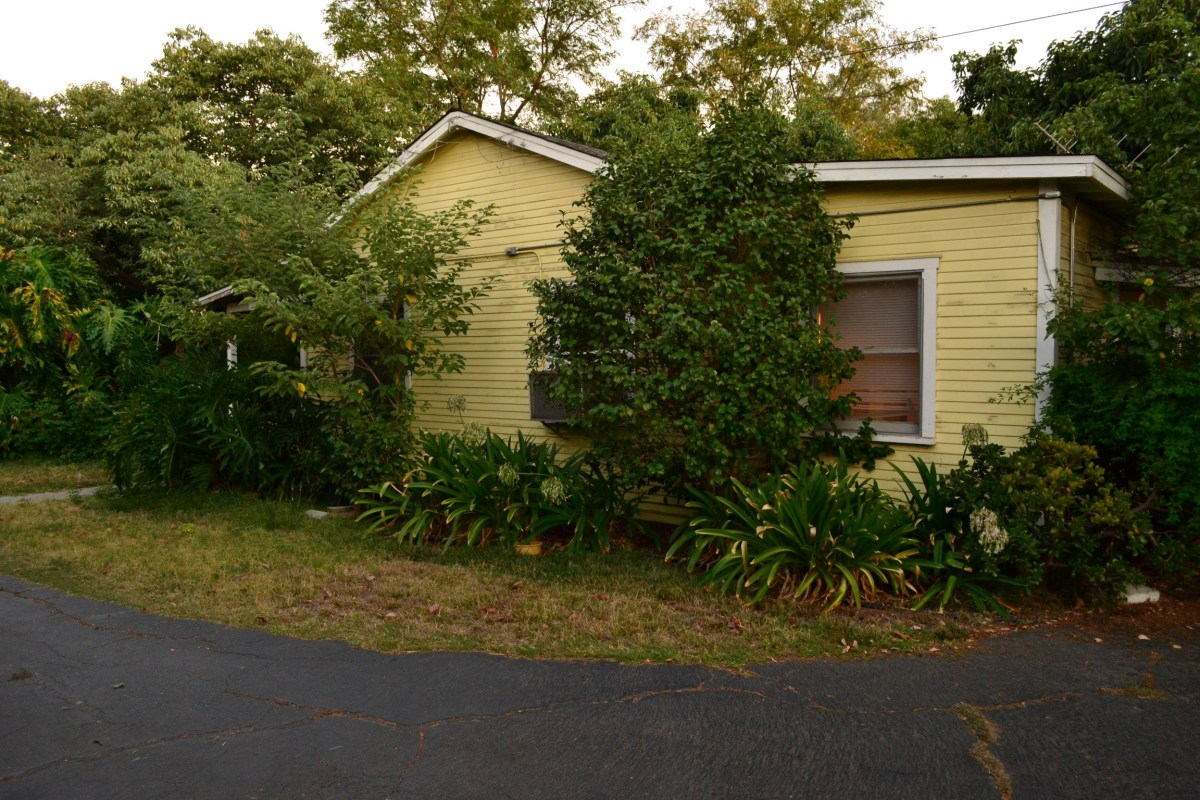
On Columbus Avenue, there are perhaps five properties of 20-30,000 square feet each. Most of the houses are rented, ramshackle places with overgrown weeds, dry grasses, cyclone fences, trucks parked on the meridian, and slanted roof cottages housing lawful people and unindicted felons who hide behind tall lumber and cinder block and eek out a living as gardeners, actors, piano tuners and truckers.

Up until the last wave of prosperity crashed into itself, speculators had bought up some of these places, intending to tear them down and stack together stucco developments.

Some of these places, which nobody can sell, might be worth $300,000. But a few years ago they were asking $700,000 and now the owners are defaulting and trying to unload their gambles.

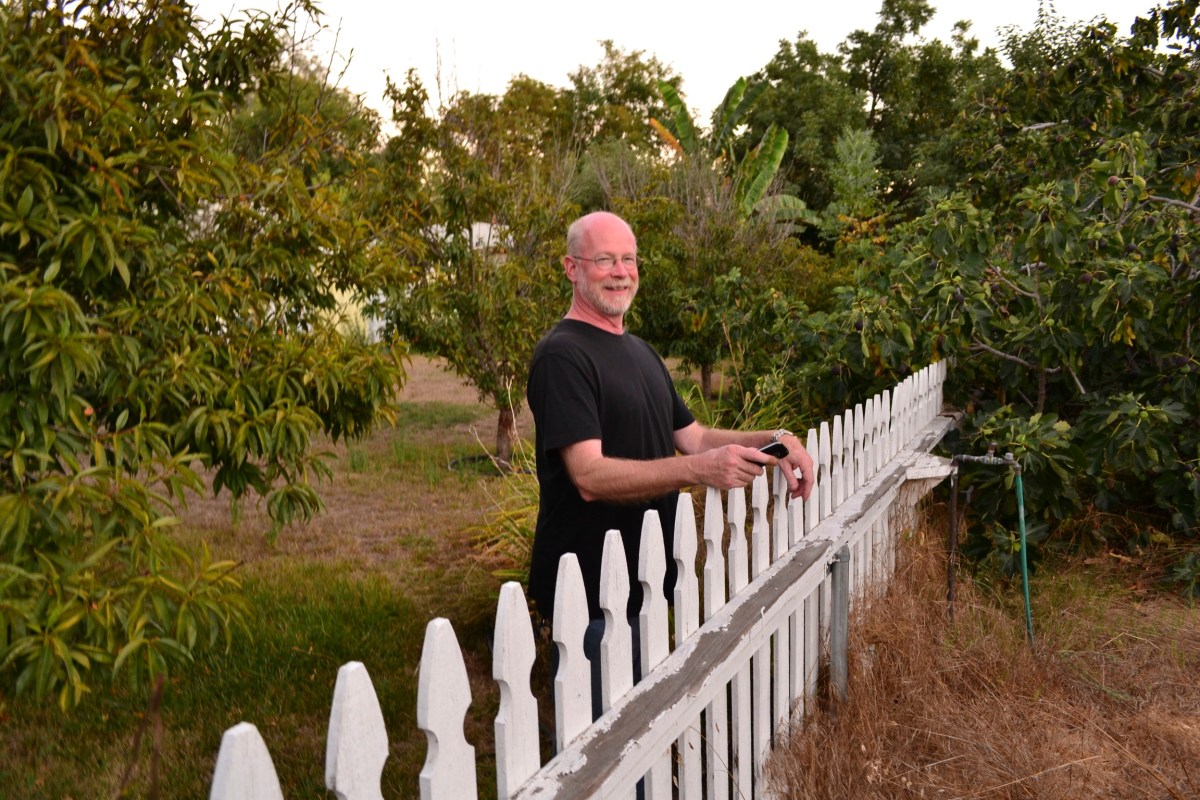
I rode my bike last week and passed a man who I see once a year at my neighbor’s Christmas party and he invited me into his compound where I met dozens of cats, picked figs off the trees, and walked into a Depression Era scene that might have come out of Bonnie and Clyde.

While we talked, another man, a younger man, carrying a Canon DSLR, walked up the very long driveway, and joined us. He was a location scout interested in photographing the place.

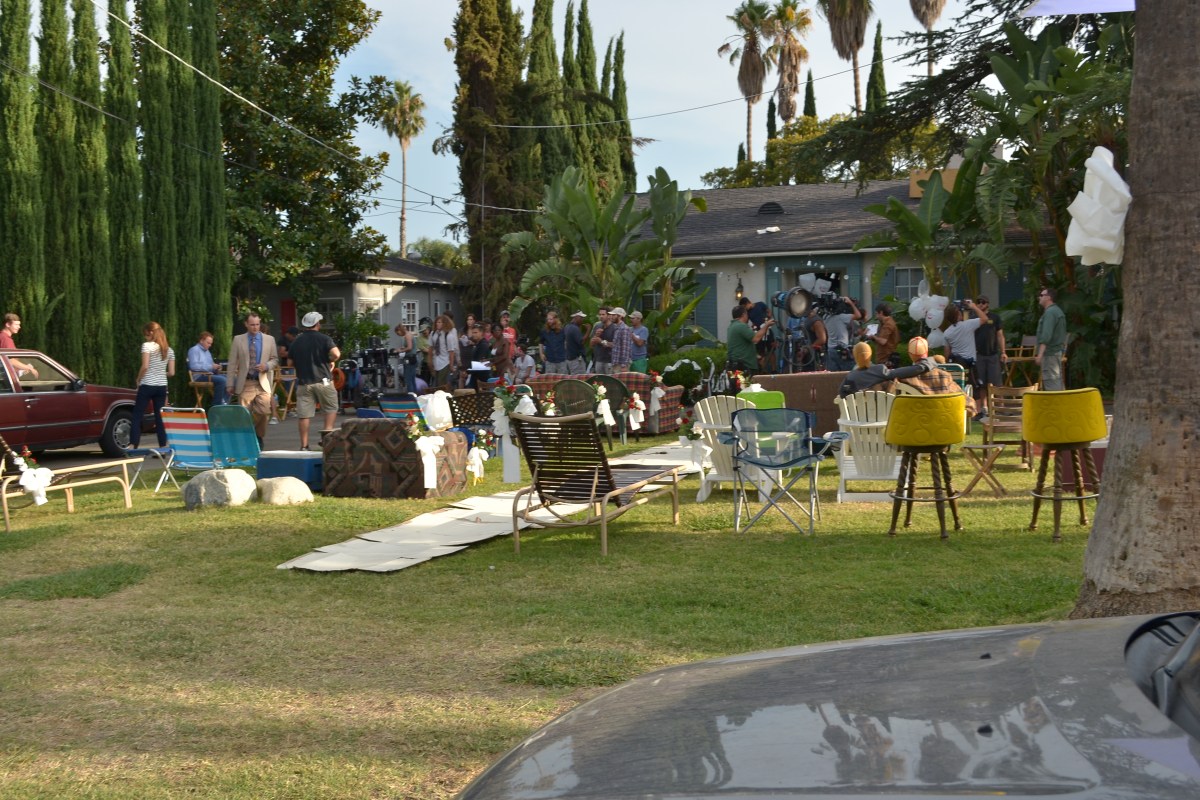
There is a lot of filming in our area. A show called “Workaholics” is shooting here now, on a street where many people are jobless but where some young post-collegiate comedians posted a Youtube video and sold a show to Comedy Central.

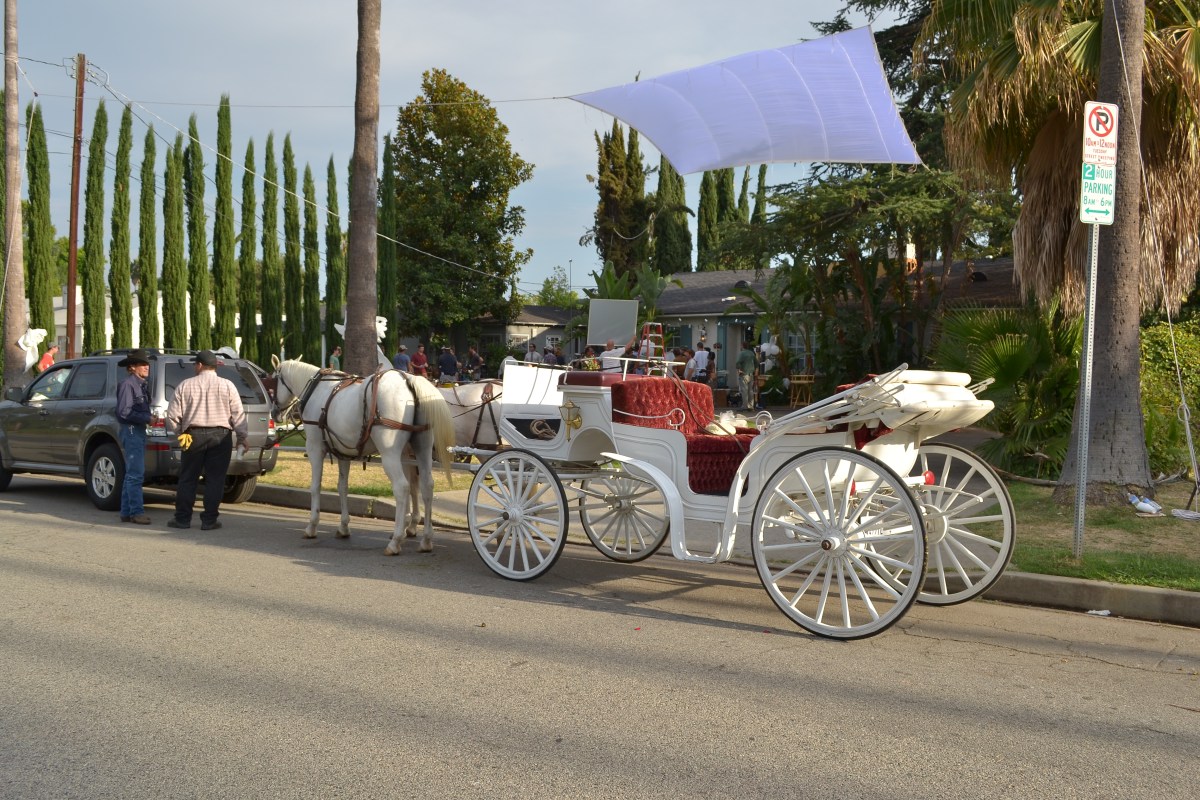
One might drive past the Workaholics House and see a horse and carriage, or a rowboat tacked up on the roof, and on other occasions I may have seen an elephant hosing down a car, and some old lady with a broom chasing straw hatted kids on skateboards.

Every other week, dozens of trucks and hundreds of crew- members come here, and film a fiction about life in Van Nuys, using our real world as a cheap and ironic backdrop for the callow humorlessness of modern hip Hollywood.

My idea of funny is still “The Dick Van Dyke Show” or “All in the Family” just as my idea of a film is “The Best Years of Our Lives” and my favorite singer is Frank Sinatra and I don’t think any house built after 1945 is attractive.

So I live in the past and I run from the present and wander through this city with a camera and a laptop computer. And hope that someone will anoint me with gold dust.

And escapism, and the ability to dream and imagine, and produce and prosper, that is only for a lucky few in Van Nuys.

The rest are holdouts, living in rented places, or hanging onto places they own but will never own and may lose before they die.

On the Train to Hollywood.


Your Best, originally uploaded by Here in Van Nuys.

I rode the train down to Hollywood and Highland the other day, my way to enter the city that is part protest and part convenience.

Los Angeles is fast becoming a city. It is true that millions live here on mountain and plain extending from Palm Springs to the Pacific, but to disembark from a Hollywood subway and walk up into a dense conglomeration of bars, restaurants, stores, apartments, and theaters; that has eluded the City of Angels which prefers to offer up asphalt and sunshine and days spent inside looking at the TV in air-conditioned isolation. But things are changing.

Near Hollywood and Whitley, there was police action. A Mexican bicyclist had accidentally clipped off the side mirror of a Bentley and the owners, two black men, beat and bloodied his face. The bruised Latino sat on the sidewalk, while several cops filed reports and dozens of witnesses watched.

Across the street, another young man on a bike, Derrick, told me that he just came here from San Antonio, TX and was staying at the Roosevelt but had been robbed and had nowhere to stay so he just rode around the city all day. He had come to LA to get away from bad people in Texas and now he was living the dream here.

Hollywood Boulevard, incidentally, has some of the ugliest clothes in LA seen north of Melrose. Everything tacky from five years ago: graphic t-shirts, baggy jeans, garish jackets, they all are presented with vast indifference by smoking shopkeepers. The sidewalks outside of the store smell like urine. The north side is baked in sun and smog, and the south side in perpetual darkness and shade.

I was down here on one of my “jobs”, photographing a model who, in his demeanor and looks, emits privilege, elegance, health and happiness. And on his Twitter stream, asks for dog-sitting jobs, begs for car rides to Silver Lake, and tweets of eviction, depression, exhaustion, sinus infections, flu and seeing Jennifer Anniston on the street.

You want to warn young hopefuls not to be, to advise them to get out of here before they get old and fat and move to Woodland Hills to work for Anthem, but it is futile when you have a mouth full of white teeth on an unlined face and your body fat is only 3 percent.

On the train back to North Hollywood, there was a bicyclist, holding his new thin-tired machine evocative of Italy and leanness. He told me how he rides from Van Nuys to Hollywood and got hit by a car last year. He was sanguine and not-at-all bitter about his injury, and seemed to be a genuine chipper urbanite of the new, denser Los Angeles who looks beyond his car, engaging the urban life with feet and rapid heart beat.

Later that night, we went to my favorite cheap sushi restaurant in Valley Village. As I sat eating, a young man walked by the window. He had greasy long blond hair and sad eyes. He looked, not with lust but in need, directly at me.

After we left the restaurant and got into the car the haunted young man walked up to my window and asked me if I had any change to spare.

And I didn’t have the kindness, I admit, to give him anything.

So I was back in the Los Angeles, not in Hollywood, not in the train, but in the land where nobody has money but people with money.