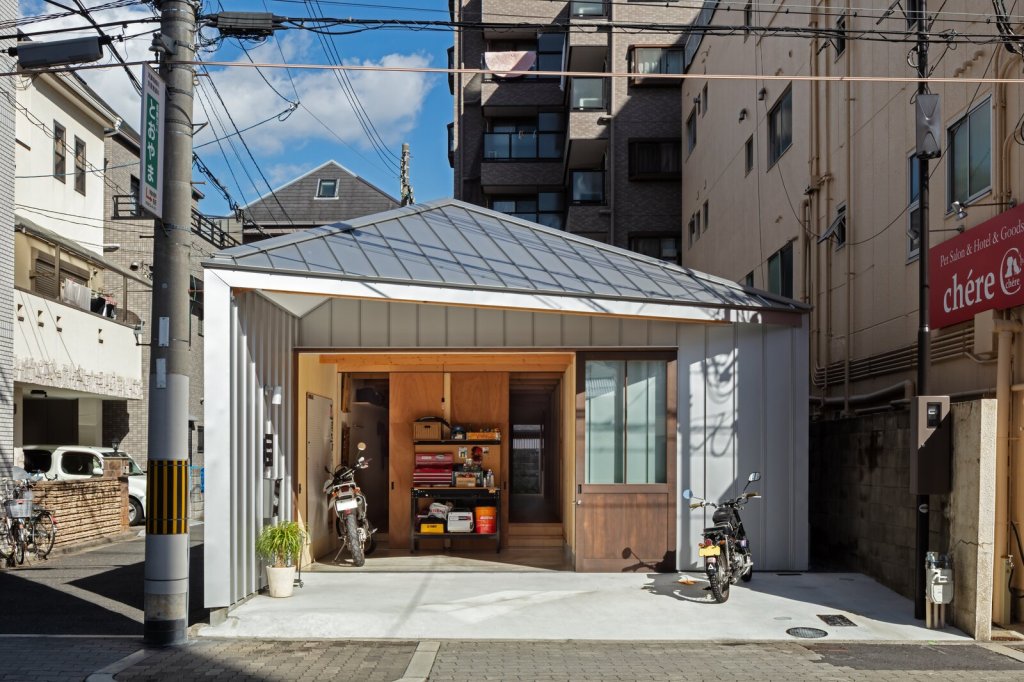
From Dwell Magazine, an example of a tight, urban house in a densely populated area of Osaka.
As I have asked many, many times: why can’t this type of housing be constructed in the commercially zoned areas of Van Nuys? Near the Orange Line? Near the Civic Center?
Imagine this fitted behind an alley in Van Nuys? As a modern, clean, civilized upgrade for the slum housing one sees along Bessemer, Calvert, Delano, Cedros, Erwin, Friar.
Photo by Kwasi Boyd-Bouldin.Imagine a grouping of twelve of these around a garden on a former parking lot? On a lot that was once a gas station.Slum Housing on Cedros.
“At first glance, it can be hard to spot the Toolbox House. Tucked away on a long, narrow lot in the downtown area of Osaka, Japan, the silvery home sits much lower than its high-rise neighbors. Yoshihiro Yamamoto of the local firm YYAA designed the dwelling for a couple and one of their mothers, who sought a single-story house that is “compact and easy to use, like a toolbox.”-Dwell Magazine.
Housing, it seems, is everything these days, the foremost topic on the minds of Angelenos.
Those who can afford it fear those who cannot.
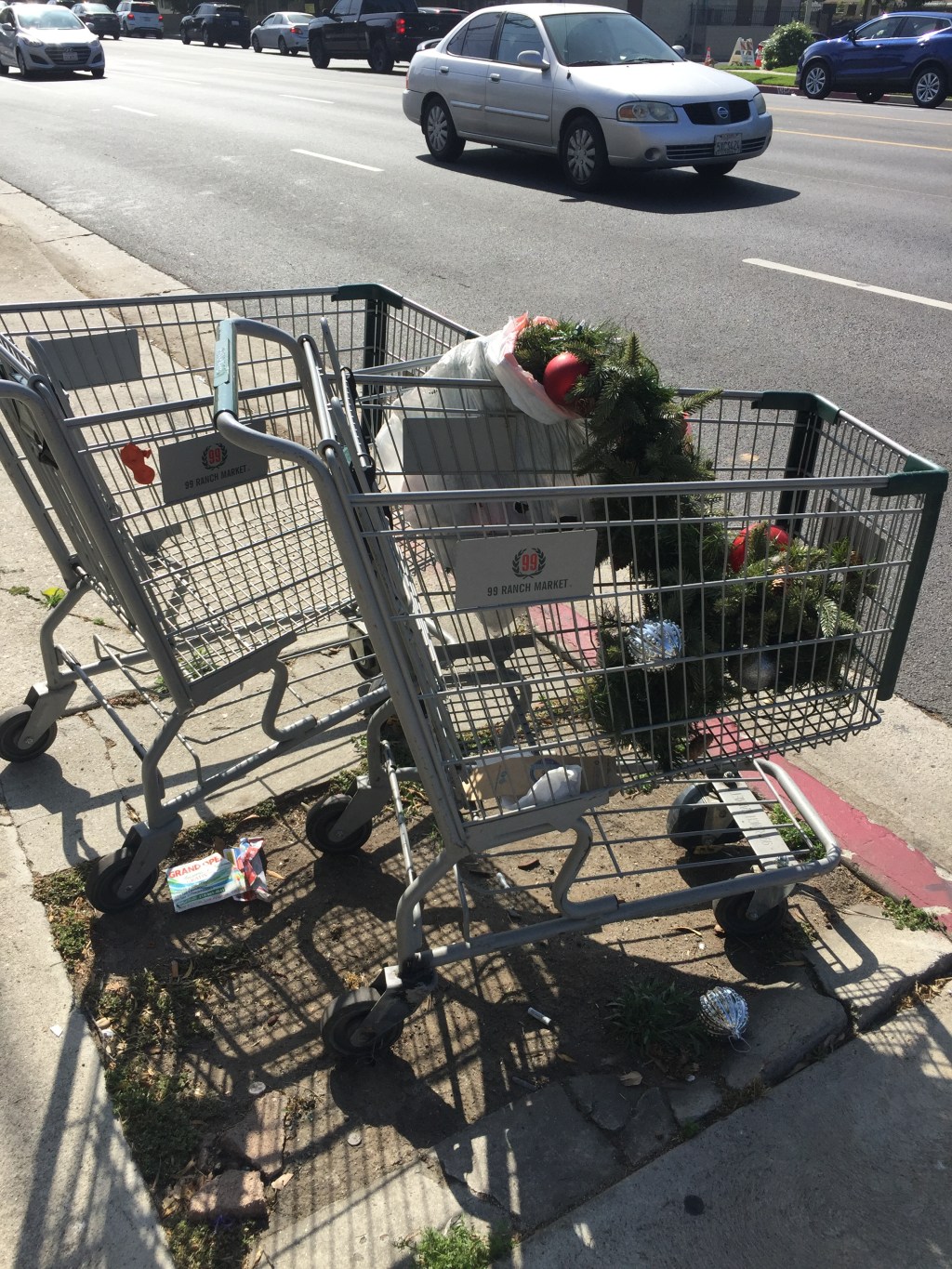
Fearsome, it seems, is our ragtag army of many thousands of un-housed vagrants who have established anti-communities out of shopping carts and tents, and made bedrooms, bathrooms and living rooms out of bus benches, trains, bridge underpasses and alongside our freeways. Covered in dirt and tortured by circumstance, pulling three bikes with two legs, they remind our fortunate ones that life often goes bad even for the good.
3/5/18 Bessemer at Cedros.
SB50, the state proposed override of single family zoning, struck terror into the hearts of many in Los Angeles who feared that the single family home, housing twelve unrelated people, might soon be replaced by twelve unrelated people in four houses on one lot.
“Leave it to Beaver” (circa 1959) the imaginary ideal of Los Angeles.
“Leave it to Beaver”, “Dennis the Menace”, “Hazel” and the rest of the 1950s and 60s back lots of Columbia and Warner Brothers are how many, now aging, but still ruling this city, think of Los Angeles, and how it should look.
When Dennis the Menance came home he didn’t enter into a lobby with an elevator. When Dr. Bellows drove up Major Nelson’s street, it was clean, tidy and sunny.
Home of Major Anthony Nelson, “I Dream of Jeannie” (1965-70)The cast and crew of the remodeled “Brady Bunch” home in Studio City, CA. (HGTV)
HGTV is now remodeling the real life home in Studio City that was used as the location for Mike and Carol Brady and their bunch, recreating in reality a 1970s home, inside and out, following an architectural blueprint from the set pieces of an inane, 50-year-old television show that seemed saccharine the night it premiered in 1969.
It is heartwarmingly creepy to see the now white-haired kids throw a football in an astroturf backyard, retirees feigning juvenile excitement as a synthetic reality show impersonates their old sit-com and pumps new advertising blood out of Geritolized veins.
But life is not a syndicated sitcom. What’s on TV is not what’s beyond our windshield.
We live in Los Angeles, and die a bit here, day by day. The city is getting worse in every imaginable way: housing, health, transportation, taxes and education.
Homeless on Aetna St. Feb. 2016
On the roads, in real life, in 2019, cars are now parked and packed alongside every obscure street because it takes four working, driving adults to afford one $3,200 a month apartment.
Building more apartments doesn’t mean more cars, it simply means less apartments. And less apartments means more rent, so Los Angeles keeps eating itself up in contradictions of cowardice and myopia.
__________________________________
Japan
As I travel around Los Angeles and see all the enormous parking lots and one-story buildings alongside eight lane wide roads, I wonder why we are so unable to build enough houses to house everyone.
California is not nearly as crowded as Japan, yet that country ingeniously designs small dwellings that artistically and creatively provide homes for every type of person.
On the website Architizer, I found the work of a firm called Atelier TEKUTO.
Homes shown on Architizer by Atelier Tekuto are really tiny, but they are built solid, with each dwelling quite individual in style and form, an irony in a country where every black haired man coming from work is dressed in a white shirt and dark suit.
But Japan somehow pulls together the artistic and the structural to provide enviable and well-designed homes in well-protected, spotless communities. Violence is rare, except yesterday, but nobody goes out at night fearing random mass shootings, it is safe to say.
We can’t, or should not, want to remake the depravity of our dirty, violent LA into clean, peaceful, obedient Japan, with its fast trains and scrubbed sidewalks, but we might borrow some of their ideas. After all, we conquered them in 1945, can’t we take home some intellectual souvenirs?
Imagine if Van Nuys took the courageous and innovative step to redo the large, unused parking lots behind all the abandoned shops on Van Nuys Boulevard with a mix of little houses like these and perhaps some larger structures several stories high?
What we have now is this:
Near Cedros and Delano.
P
Bessemer St.
Van Nuys, CA 90401
Built: 1929
Owners: Shraga Agam, Shulamit Agam
Van Nuys, CA
Don’t we have a Christopher Hawthorne now, Chief Design Officer, working under Mayor Gar[BAGE]cetti? Former architecture critic at the LA Times, he may know one or two architects from his old job. Perhaps Mr. Hawthorne can take action?
What have we got to lose?
We are so far down in quality of life that we must engage our energies to pursue a remade Los Angeles.
A city that does not harm us but lifts us up.
As Japan shows, you can have enlightened ideas without living alongside mounds of trash and outdoor vagrancy.
There is no logical connection between toleration of outdoor garbage dumps and political tolerance in general. In fact the worse our surroundings get, the more people will turn right and maybe even hard right.
On these torrid July days, when the temperature is 105 degrees, and a walk down Van Nuys Boulevard near the Orange Line Metro stop brings you face-to-face with people sprawled out on the sidewalk, living in tents, sleeping on dirt, it is instructive and bracing to think of other civilizations, such as Japan, where human beings live under more benevolent and intelligent rulers.
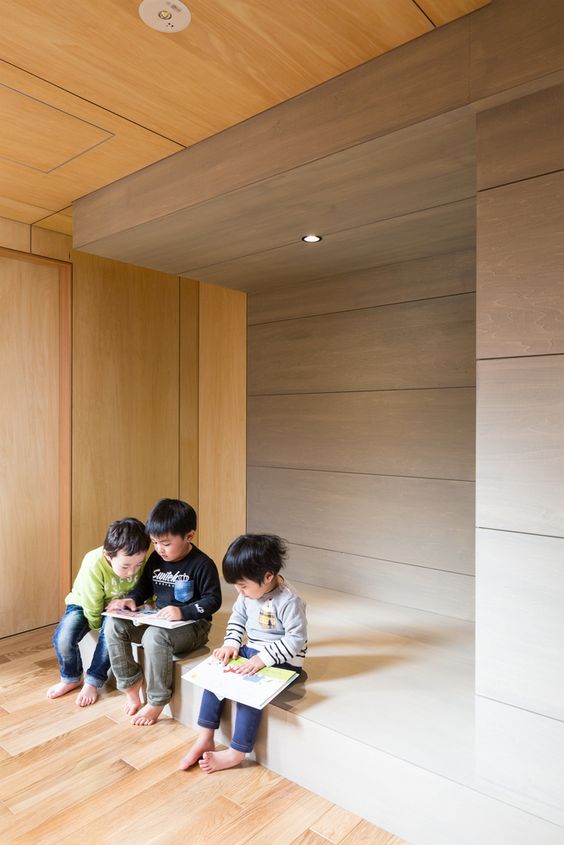
Instead of parking lots furnished with the shopping baskets of homeless people, instead of garbage piles on the sidewalk, instead of empty streets filled with only the cries of mentally ill men and women, Japan offers low-rise, modern houses where children are cared for, and people work together to make contributions to society.
Every day we live amongst a remarkable level of filth, violence and rampant barbarity in Los Angeles; thinking it normal that a Trader Joes manager is shot dead walking to her store entrance to see what the commotion is; or that a camping father with his family is murdered, randomly, in Malibu State Park; or accepting as “normal” the idea that 100,000 people sleep on sidewalks, and RVs and cars, and live in tents in the city of the Kardashians, the Cruises, the Broads, the Carusos and the Spielbergs.
How can so much money, so much power, so much fame do so little for their city? How obscene it all is.
Near Cedros and Calvert, Van Nuys, CA.
Empty Buildings on Delano near VNB.
Slum Housing on Cedros. Owners: Shraga Agam, Shulamit Agam
There are places where guns don’t kill people every single day, and children live in clean, well-cared for apartments and houses next to spotless streets, where the trains run on time and people stand in line to wait for the next one to arrive.
We can’t completely transform what Los Angeles is, but we ought to engage our imagination to other places where they do a far better job of taking care of people and emulate those finer qualities of faraway lands.
Architects: HIBINOSEKKEI
Location: Sagamihara, Kanagawa Prefecture, Japan Project Year: 2017
The architectural blog Dezeen has a cornucopia of outstanding designs from around the world.
They have many projects from Japan, including small homes, which the Japanese have constructed all around the densely populated country.
The Gap House, by MUU Store Design Studio, (shown above) only covers a total area of 200 square feet, yet it embodies an inventive, imaginative and practical way to live, with its light-filled interior and clean, modern layout.
It is sandwiched between two other buildings, yet it does not feel claustrophobic. The house is located in a residential area near Sagami Bay in Kanagawa Prefecture,Japan.
Alleys are where these small homes are constructed. In Japan, most alleys are fastidiously neat. Nobody desecrates their environment in Japan.
Here in Van Nuys our alleys tell our stories of how we value ourselves, our city and our nation:
Van Nuys
Van Nuys
Around Van Nuys there are numerous places where this type of housing could be erected, and the benefits of building this type are many.
They are more affordable, they could provide walkable, new, community oriented housing near Van Nuys Boulevard, and they would help in the revitalization of our community.
Right now, Van Nuys is zoned to deny imaginative solutions to our housing crisis. We need to free up zoning to allow, encourage and incentivize developers, architects, investors and small-home builders to build more with less restrictions.
The alternative is the bleak, expensive, dirty, dilapidated slum of current day downtown and vicinity Van Nuys. It is appalling but it must not be our future. We must step up and change it for the better.
On a recent visit to Vancouver, I met a naturalized Canadian named Christopher Foley, who by coincidence comes from a family that settled into the San Fernando Valley in the early 1930s. Chris lived in both the SFV and San Francisco and later emigrated to British Columbia.
He showed me, in his digital scrapbook, some fascinating old pictures.
His grandfather, a movie photographer, had moved from West Virginia in the early 1930s to work in the studio system. Later on, the family opened up a donut shop in North Hollywood called, not surprisingly, “Foley’s”.
His mom, actress Mary Foley, played a band member in “Some Like it Hot” (1959/Dir. Billy Wilder) which starred Marilyn Monroe, Tony Curtis and Jack Lemmon.
His father served in Japan after World War II, and I asked Chris for these fantastic images of his dad and people in that country.
Their clothes, including selvedge denim, are what collectors these days call “Heritage” and are sought after in both Japan and the United States.
Last year, on a visit to Japan, I discovered alleys that were vibrant, clean and functional.
In a country where 127m live on land mass that is smaller than California, space is put to good use.
Little houses, imaginatively designed, are integrated into narrow streets and alleys. (Photos: Dezeen)
Whether an entrance is in front or back makes no difference to a Japanese house.
What counts is the integrity and artistry of the architecture.
LA, and the entire state of California, has an extreme shortage of affordable and civilized housing.
Why not emulate Japan and make use of our alleys, the back of our buildings, and enormous asphalt parking lots to create civilized spaces for residential development?
You must be logged in to post a comment.