SB 79 and Our Hood


SB 79 is a new law, authored by State Senator Scott Wiener, approved by the legislature, and recently signed by Governor Gavin Newsom, to allow the state to overrule local zoning laws and permit the construction of multi-family housing on lots which are zoned for single family housing when these properties are within a half or quarter mile of a bus or light rail stop.

In Los Angeles, the law will allow much denser and higher development along not only wide boulevards, but inside old, intact, single-family streets, “side streets” which never had apartments or multi-unit housing.


A guide to the law along with maps is here.

Tiered density: The allowable height and density for projects are determined by the quality of the transit stop and the project’s proximity to it.

Tier 1: Applies to projects near high-frequency commuter rail or heavy rail transit, like BART and LA Metro.

Tier 2: Applies to projects near light rail and bus rapid transit lines.

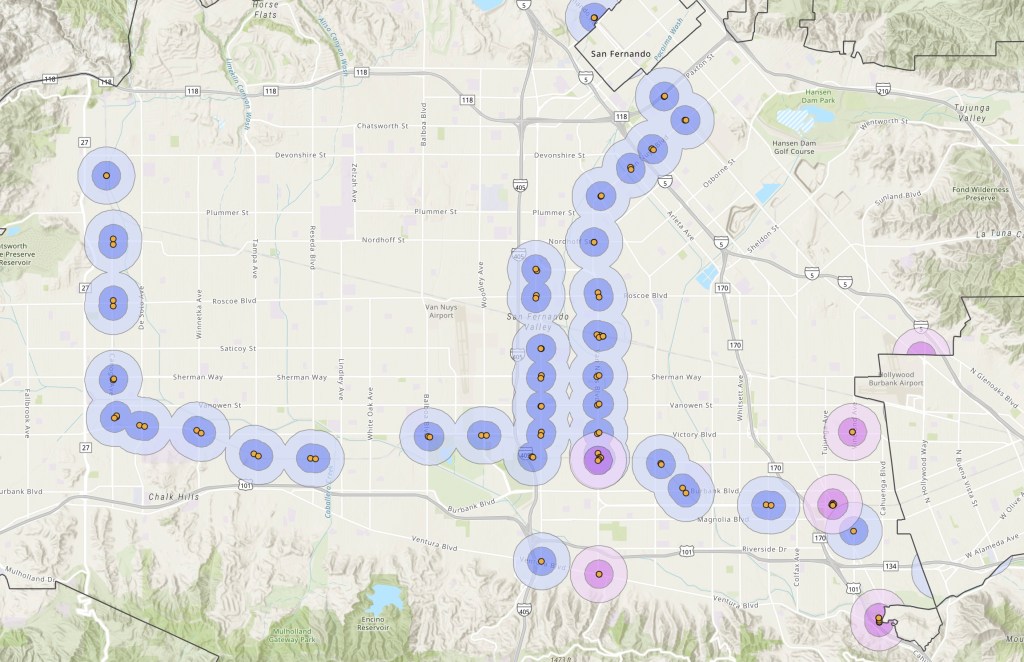
Along Sepulveda and Van Nuys Boulevard the proposed zoning map looks like purple bullet holes that radiate from transit stops. These circles are centered around the transportation stops and take no consideration into the historic or local character of any neighborhood. 

For example, I live on Hamlin Street which is a “Tier 2” zone because we are within a ¼ of Sepulveda Boulevard bus stop. My street, built on old walnut orchards, from 1936 onwards, is lined with palm trees, and then curves along with oak trees. The street has two-hour parking because of its proximity to Van Nuys High School.

If the law succeeds, my section of Hamlin Street would allow 65-foot-high buildings (six and half stories).

But the part of Hamlin Street a few hundred feet east from me would remain single family.

West of Sepulveda, south of Victory, is the beautiful and often filmed Orion Avenue with large colonial style houses planted with rose bushes and ranch fences, the location for many commercials seeking “a typical American street” that doesn’t exist anymore. With SB 79, the east side of the street could be obliterated with apartments that destroy the very beauty residents and film makers pay dearly for.


Yesterday, I had a real life encounter of what Hamlin St. and other locations nearby could become when I parked my car near 3052 West Boulevard in the Jefferson Park neighborhood of Los Angeles, east of Culver City. I was there to visit a new, multi restaurant creation, Maydan Market.

This area was given an economic boost by the Expo Line, a light rail system that connects downtown with Santa Monica. The good parts are investment, cleaner streets, the lowering of crime and the raising of the cultural and civic activities. 

The ugly parts are the disfiguring, ad hoc apartments that pop up on formerly coherent streets of 1920s bungalows. My eyes hurt looking at 3045 West Boulevard, a black and gray box suspended over a cinderblock faced garage, with a massive four story high open-air staircase on the side of the building. It looms like a monster over the street, with no respect or sensitivity to the vernacular that had existed here for 90 years.

Am I a hypocrite for decrying liberalized zoning that will change my backyard? Yes, I am. Sort of.

This blog has argued for years for the construction of new, multi-family buildings to replace unused parking lots behind abandoned shopping centers, or where there is a sea of asphalt like the Orange Line parking area along Sepulveda which was constructed for thousands of vehicles and is now empty.  I have fought for the idea of an architectural, coherent, community wide style that would incorporate history and embrace modernism but do it without destroying but enhancing the community of Van Nuys. 

And I’ve always cast a cold, unforgiving, forensic eye on the political neglect of Van Nuys by elected officials who seem to always be performing social media acts of kindness for oppressed groups while neglecting the needs of residents in this district. 

There are commercial zones galore that cry out for taller residential buildings along the wide boulevards of Van Nuys and greater Los Angeles. The one-story tall shops with parking lots in front are so defunct and useless that their very presence destroys civilized life and endangers the health of pedestrians. 

There are blighted buildings, such as this one at 7101 Sepulveda, that have been empty for years, packed with derelicts, unable to be demolished, yet crying out for replacement. As a bitter pill, the residents in the tree lined, charming, quiet streets behind must now expect multi-family housing to replace their 1940s ranchettes.

What do our elected leaders in Sacramento do with the quandary of building more housing? They embrace a fantasy of destroying single family homes and backyards. 

Will your neighbors and you, the elderly couple in the corner house, desire to ride buses (with homeless, drug addicts, crime?) and come home, late at night, from a bus stop on Sepulveda, and enter a new world of yet more cars, loud music, marijuana, dumped mattresses, and YouTube/TikTok/OnlyFans influencers smoking on the balcony next door? I doubt it.

Is that the paradise of tomorrow? Circles on a map, purple splotches of political malfeasance, indicating nothing but more mayhem, disorder and chaos.

I hope I’m long gone, either from life or Van Nuys, before this happens. 

Our Lost Vitality


Sepulveda and Erwin, Van Nuys, CA.

Housing, it seems, is everything these days, the foremost topic on the minds of Angelenos. 

Those who can afford it fear those who cannot.

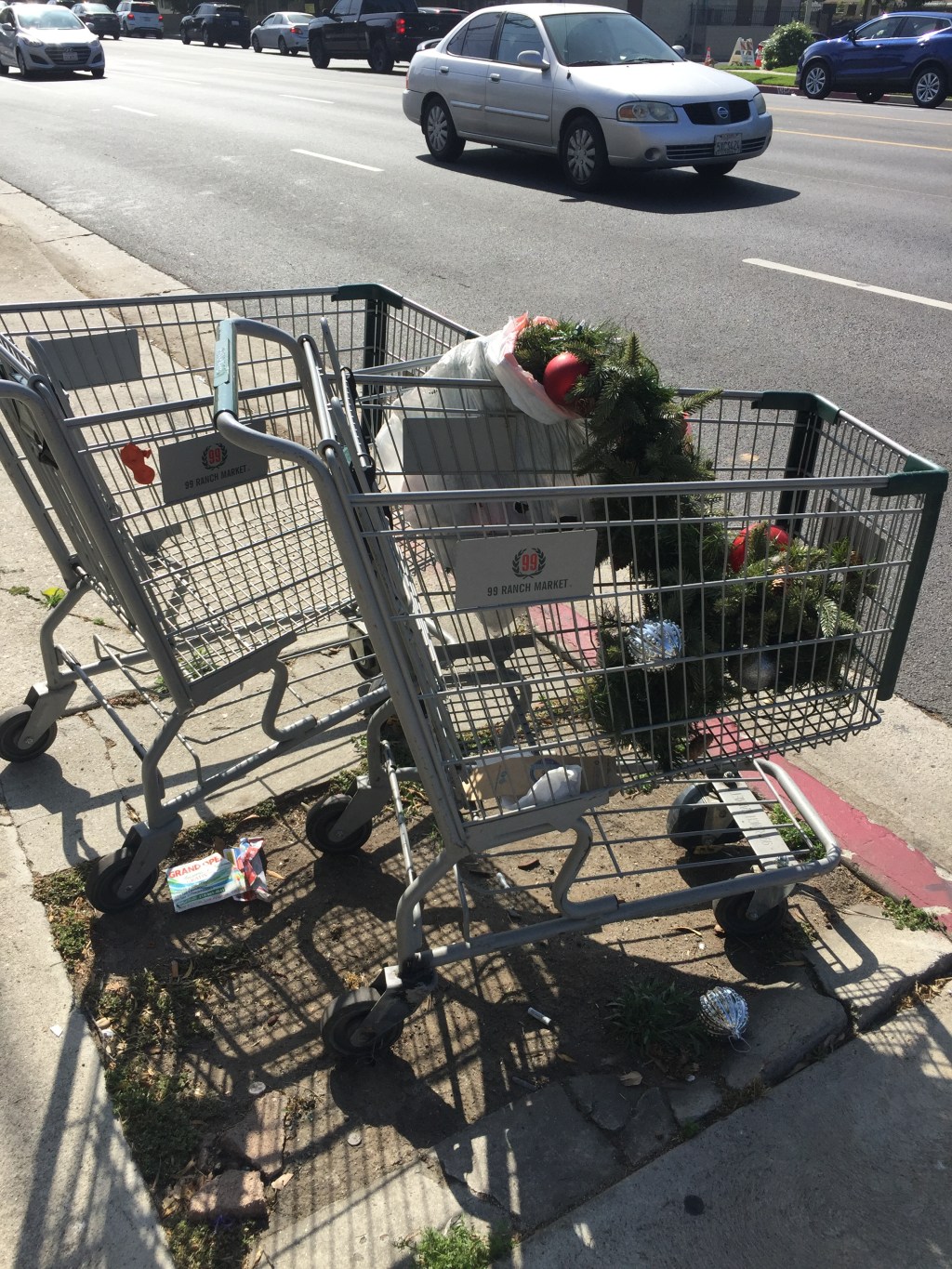
Fearsome, it seems, is our ragtag army of many thousands of un-housed vagrants who have established anti-communities out of shopping carts and tents, and made bedrooms, bathrooms and living rooms out of bus benches, trains, bridge underpasses and alongside our freeways. Covered in dirt and tortured by circumstance, pulling three bikes with two legs, they remind our fortunate ones that life often goes bad even for the good.

3/5/18 Bessemer at Cedros.

SB50, the state proposed override of single family zoning, struck terror into the hearts of many in Los Angeles who feared that the single family home, housing twelve unrelated people, might soon be replaced by twelve unrelated people in four houses on one lot.   

“Leave it to Beaver” (circa 1959) the imaginary ideal of Los Angeles.

“Leave it to Beaver”, “Dennis the Menace”, “Hazel” and the rest of the 1950s and 60s back lots of Columbia and Warner Brothers are how many, now aging, but still ruling this city, think of Los Angeles, and how it should look. 

When Dennis the Menance came home he didn’t enter into a lobby with an elevator. When Dr. Bellows drove up Major Nelson’s street, it was clean, tidy and sunny. 

Home of Major Anthony Nelson, “I Dream of Jeannie” (1965-70)
The cast and crew of the remodeled “Brady Bunch” home in Studio City, CA. (HGTV)

HGTV is now remodeling the real life home in Studio City that was used as the location for Mike and Carol Brady and their bunch, recreating in reality a 1970s home, inside and out, following an architectural blueprint from the set pieces of an inane, 50-year-old television show that seemed saccharine the night it premiered in 1969.

It is heartwarmingly creepy to see the now white-haired kids throw a football in an astroturf backyard, retirees feigning juvenile excitement as a synthetic reality show impersonates their old sit-com and pumps new advertising blood out of Geritolized veins.

____________________________________________________________________________

Woodley Park, 2018.

But life is not a syndicated sitcom. What’s on TV is not what’s beyond our windshield.

We live in Los Angeles, and die a bit here, day by day. The city is getting worse in every imaginable way: housing, health, transportation, taxes and education.

Homeless on Aetna St. Feb. 2016

On the roads, in real life, in 2019, cars are now parked and packed alongside every obscure street because it takes four working, driving adults to afford one $3,200 a month apartment.

Building more apartments doesn’t mean more cars, it simply means less apartments. And less apartments means more rent, so Los Angeles keeps eating itself up in contradictions of cowardice and myopia.

__________________________________

Japan

As I travel around Los Angeles and see all the enormous parking lots and one-story buildings alongside eight lane wide roads, I wonder why we are so unable to build enough houses to house everyone.

California is not nearly as crowded as Japan, yet that country ingeniously designs small dwellings that artistically and creatively provide homes for every type of person.

On the website Architizer, I found the work of a firm called Atelier TEKUTO.

Homes shown on Architizer by Atelier Tekuto are really tiny, but they are built solid, with each dwelling quite individual in style and form, an irony in a country where every black haired man coming from work is dressed in a white shirt and dark suit.

But Japan somehow pulls together the artistic and the structural to provide enviable and well-designed homes in well-protected, spotless communities. Violence is rare, except yesterday, but nobody goes out at night fearing random mass shootings, it is safe to say.

We can’t, or should not, want to remake the depravity of our dirty, violent LA into clean, peaceful, obedient Japan, with its fast trains and scrubbed sidewalks, but we might borrow some of their ideas. After all, we conquered them in 1945, can’t we take home some intellectual souvenirs?

Imagine if Van Nuys took the courageous and innovative step to redo the large, unused parking lots behind all the abandoned shops on Van Nuys Boulevard with a mix of little houses like these and perhaps some larger structures several stories high?

What we have now is this:

Don’t we have a Christopher Hawthorne now, Chief Design Officer, working under Mayor Gar[BAGE]cetti? Former architecture critic at the LA Times, he may know one or two architects from his old job. Perhaps Mr. Hawthorne can take action?

What have we got to lose? 

We are so far down in quality of life that we must engage our energies to pursue a remade Los Angeles.

A city that does not harm us but lifts us up.

As Japan shows, you can have enlightened ideas without living alongside mounds of trash and outdoor vagrancy.

There is no logical connection between toleration of outdoor garbage dumps and political tolerance in general. In fact the worse our surroundings get, the more people will turn right and maybe even hard right.

A Twelve-Acre Parking Lot


Erwin at Sepulveda, Metro Orange Line Parking Lot.

When the Metro Orange Line opened in October 2005, it was a stunningly different type of transport system which combined a bus only road with a landscaped bike path that ran alongside. It cost about $325 million.

It connected North Hollywood with Woodland Hills, and eventually carried over 30,000 riders a day. Since 2015, due to Uber and Lyft, ridership has fallen to about 22,000 a day.

Hundreds of homeless encampments have sprung up on the bike trail.

But Metro forges ahead!

There are plans to create gated crossings at intersections to speed up bus travel. There are long-term ideas to convert the entire system to light rail and also build elevated bridges over Van Nuys Boulevard and Sepulveda.

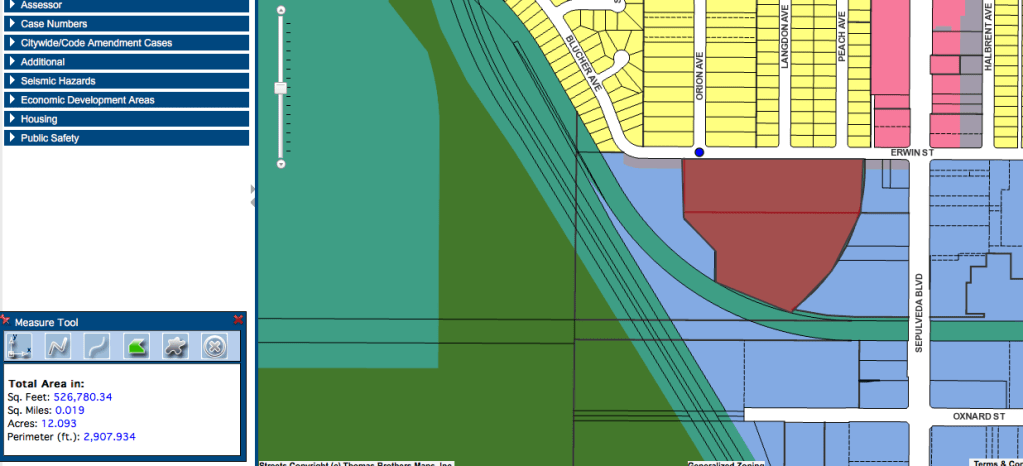
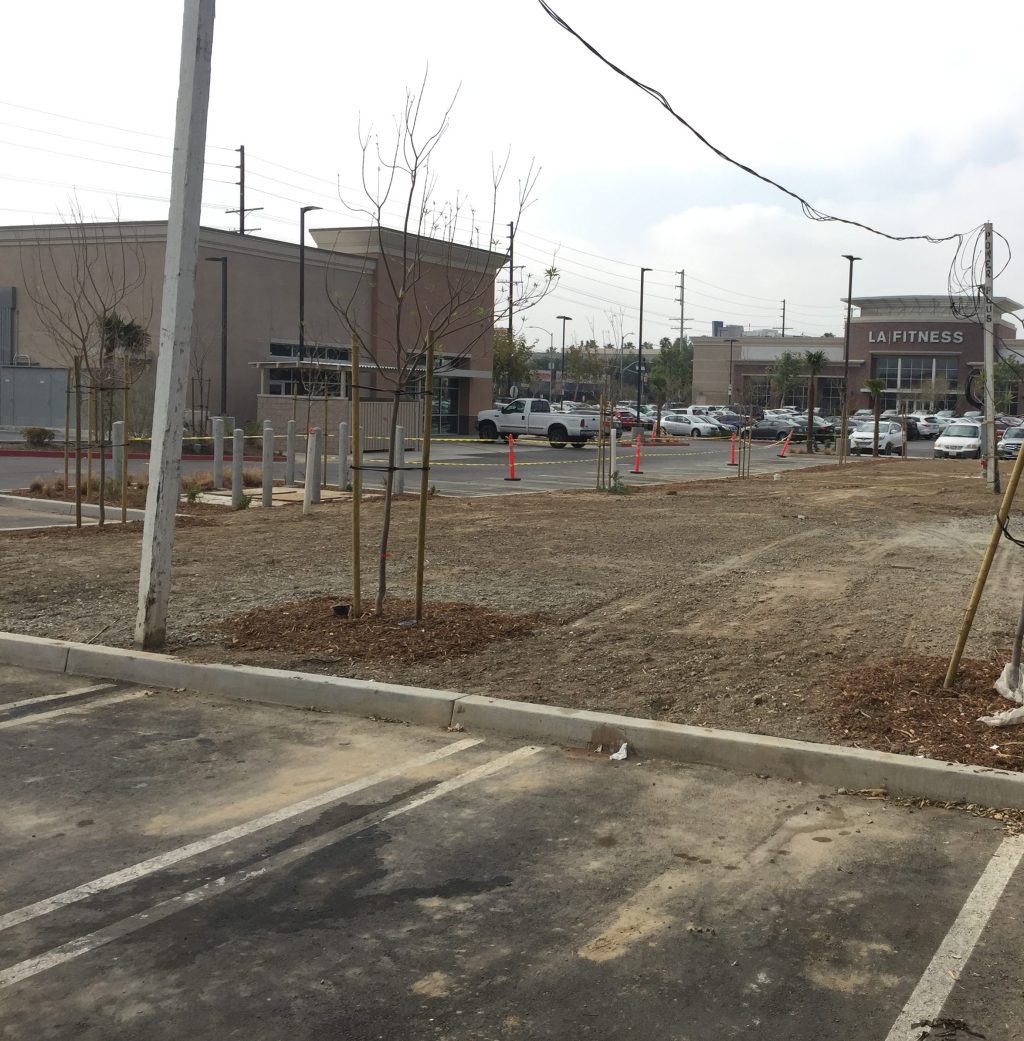
In Van Nuys, at Sepulveda and Erwin (north of Oxnard), there is a car parking lot for the Orange Line Metro riders. It is over 526,000 square feet, paved in asphalt, planted with trees and shrubs, and comprises over 12 acres.

Today, over 2/3 of it is used as an outdoor storage lot for Keyes Auto.

Red area is the parking lot of the Orange Line. It is now used predominately to store autos from Keyes Audi. (Source: ZIMAS)

The Sepuvleda/Erwin site is “Exhibit A” in the DNA of Los Angeles, because the right thing to do would be constructing 10-20 story apartments along the public transit route and creating incentives for residents to ride buses, take trains and use bikes for daily commuting.

Singapore Housing Estate with parks and nearby public transportation.

If LA were Singapore, Tokyo or Toronto we would do that.

Instead our city languishes and fights and wishes to preserve a 1950s idea of everyone going somewhere by car. 

And thousands of new cars are lovingly housed on land paid for by public taxes which should be used as housing and parks for the greater good of this city.

Nothing beneficial for Los Angeles ever happens overnight. It takes years of planning and legal battles, for example, to build assisted or low cost housing, or parks. 

One can imagine the fury and fear that might arise if a 12- acre park and housing development were planned on this parking lot ranch.

Imaginery view from Sepulveda and Erwin looking west. In reality, Singapore.

What, by miracle of God, might be possible here in terms of a park or high-rise group of apartments, placed near the bus line, with a buffer of trees, water features, and gardens between the new residential city and the single-family houses to the north of the site?

Yet here, alongside a public transit route, taxpayer funded Metro Los Angeles chooses to rent its land for an auto dealership. How does that benefit the surrounding residents?

For people who are obsessed with traffic, imagine that thousands of vehicles are parked here ready to be turned on and put onto the roads. How does that feel Van Nuys?

If the new planned housing estate were policed, regulated, secure, and it also provided a new park wouldn’t that be an improvement?

Orange Line Metro Parking Lot at Sepulveda/Erwin

The Return of Light Rail


Screen_Shot_2017_09_05_at_6.57.53_AM.0Electric_car_in_North_HollywoodVan_Nuys_only_37_years_ago_a_grain_field_in_1911Early_view_of_Van_Nuys_BoulevardVan_Nuys_Boulevard copyVan_Nuys_BoulevardFor the future we now return to the past.

The black and white photos all show how Van Nuys Bl. looked in the period from 1911-1957.

Yesterday there was announcement from Metro.

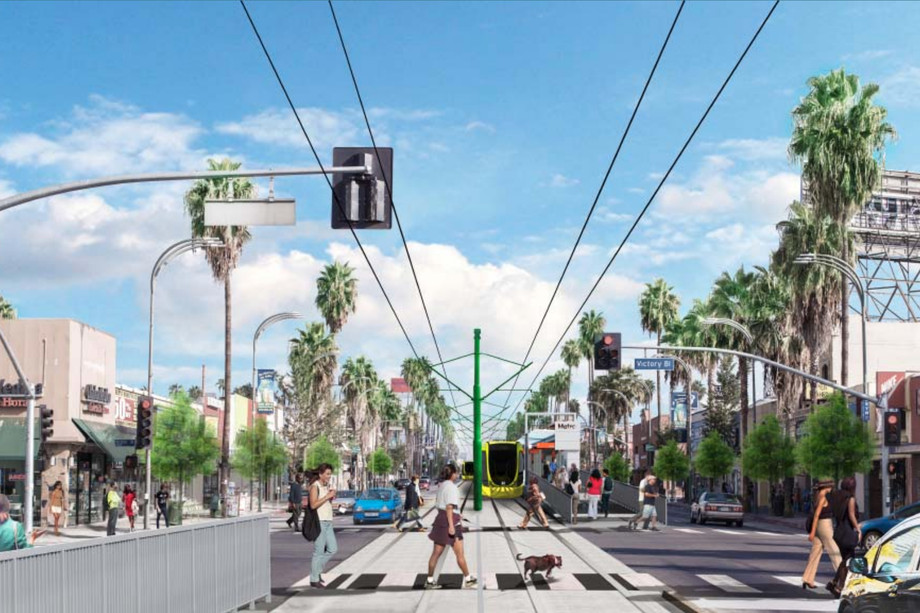
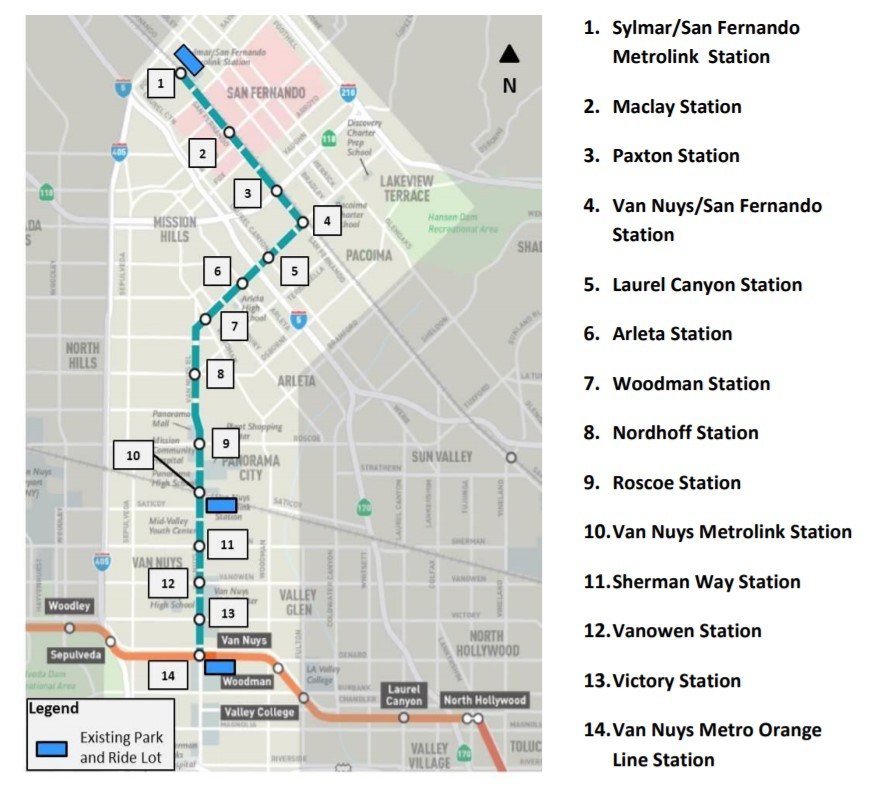
Metro will build a 9-mile-long light rail down the center of Van Nuys Boulevard, stretching from Sylmar to the Orange Line Van Nuys station near Oxnard St.

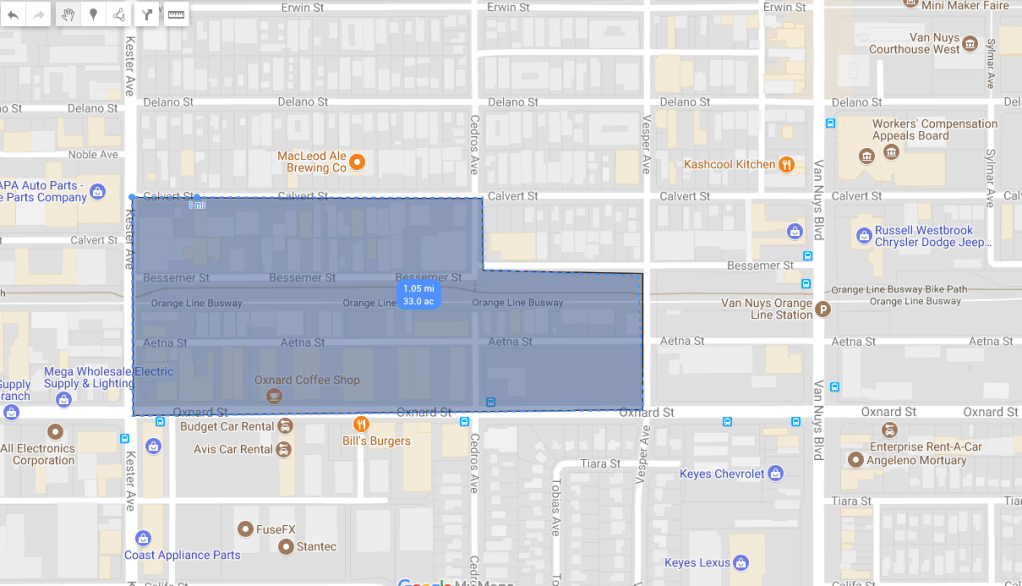
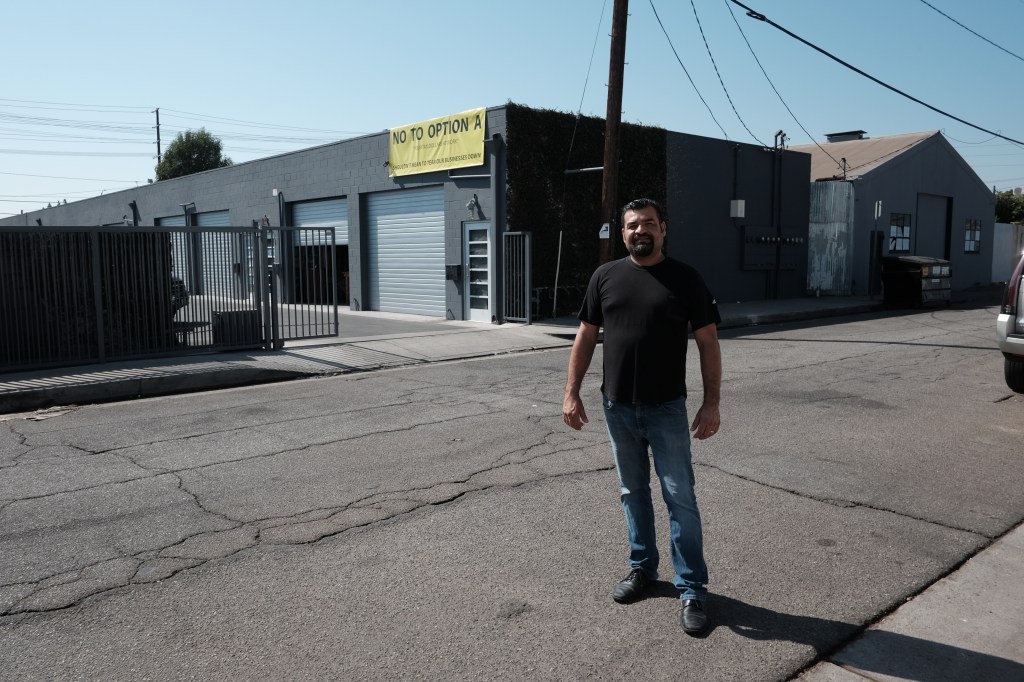
The light rail service yard for train maintenance will be built near Raymer St along the Metrolink tracks in the “Option B” area. “Option A” near Oxnard and Kester, that would have destroyed 58 buildings, 186 businesses and 1,000 jobs will not happen.


From the inception of Van Nuys in 1911 until the late 1950s, an electric rail car connected Van Nuys, North Hollywood and Hollywood and provided a means of public transportation from this part of the San Fernando Valley to the rest of Los Angeles.

The modernization of Los Angeles, which always put the car before anything else, led to the ripping out of the rail and its replacement with an enormously wide boulevard of ten lanes of asphalt.

Van Nuys Boulevard today is probably in its worst state of economic and social decline in its history. With its empty stores, shabby buildings, homeless men and women and neglected properties it stands as a civic disgrace.

DSCF3189

dscf2649dscf2605dscf2661dscf2640

Hopefully, the light rail will lead to a change in the betterment of Van Nuys, though local leaders, such as Councilwoman Nury Martinez are often lukewarm about public transportation, painting it in fearful terms of criminality and danger, or still characterizing it as a cattle car for maids and dishwashers to get to work, rather than as a means of transportation for every single citizen of Los Angeles to use.

Any incident of crime is unacceptable on a Metro train.

But how many private cars break the law every single day by speeding, running over pedestrians, going through red lights, and taking part in car chases, drive-by-shootings, hold-ups and child kidnappings?


Here is an article from Curbed LA describing the new project:

“Metro is moving forward with plans for a new rail line in the eastern San Fernando Valley.

One of the 28 projects that the agency plans to have up-and-running in time for the 2028 Olympics, the East San Fernando Valley Transit Corridor would run from the Orange Line station in Van Nuys to the Sylmar/San Fernando Metrolink station, about 9 miles to the north.

Metro had considered building the line as a rapid bus route, rather than rail, but on Thursday the agency’s board of directors approved plans that would advance the project as a light rail route similar to the existing Gold, Blue, and Green lines.

“I have long dreamed of a day when we would have more than two Metro train stops,” Stuart Waldman, president of the Valley Industry and Commerce Association, told the Metro board.

He called the line the “largest economic development project in the San Fernando Valley this millennium.”

Most of the line would travel along Van Nuys Boulevard, with trains traveling on tracks built in the center of the road. For the final 2.5 miles of the route, trains would travel on San Fernando Road to the northernmost stop.

Metro expects a trip from end-to-end would take about 29 minutes, and that the train could carry close to 50,000 riders per day by 2040. Eventually, the line could connect with a future transit project through the Sepulveda Pass.

That would give Valley residents significantly more options when navigating the city.

Since the line will be served by light rail, Metro will need to add a service station for trains that travel along the route. The agency had considered putting that facility on a parcel of land close to the Van Nuys station, but local property owners complained that the plan would displace hundreds of businesses.

Now, Metro plans to put that maintenance yard closer to the Van Nuys Metrolink station, where it would have to acquire fewer properties. Some businesses would still be displaced, and several business owners expressed concern Thursday that they could be forced to close up shop.

These businesses would be eligible for relocation fees, and on Thursday Metro Boardmember Sheila Kuehl also asked staffers to look into creating a fund to compensate business owners for disruptions caused by construction of the line.

The light rail tracks would serve 14 stations running through the communities of Van Nuys, Panorama City, Arleta, Pacoima, and the city of San Fernando. The entire project would cost about $1.3 billion to construct. Metro previously considered running a short leg of the line underground, but found that would more than double the project cost.

Now that Metro has settled on a design for the project, the agency will complete a final environmental review before preparing to begin construction.

Under the Measure M funding timelineapproved by LA County voters in 2016—the project would break ground in 2021. Construction is expected to wrap up by 2027.”

Option A is Off


The Metro Planning Board will not recommend the demolition of 33 acres of light industry near Kester and Oxnard that would have obliterated 58 buildings, 186 businesses and endangered 1,000 jobs within walking distance of downtown Van Nuys.

“Option A” was a proposed light rail service yard that would have serviced a 9.2 mile public transit train line that will be built from Sylmar/San Fernando to Van Nuys.

Instead, the board said “Option B”, a site around Keswick and Van Nuys Bl., near the existing Metrolink trains, is a better choice for the new site of the service yard.

Construction is anticipated to begin in 2021, with the line opening in 2027.

There are businesses in the “Option B” area that must relocate and they are, predictably and understandably, upset by the decision.

But the “Option B” district is not adjacent to a residential area, and has far fewer parcels, making it a cheaper and faster choice for Metro to demolish and compensate property owners.


Option A 

Imagine this as a beer garden, an outdoor restaurant, a park, or a site for new courtyard housing.

“Option A” runs along the Orange Line with its bike path and bus line slated for conversion to light rail.

It is a bustling and well-located area of affordably priced light industry which one day could also be used for inserting cafes, small retail stores, low profile apartments and multi-family dwellings, providing a new residential/work/recreation district in Van Nuys.

To lose it to the bulldozer would have been a tragedy, and let us hope that community activists, architects, investors and city planners will recognize the potential in the “Option A” area and design a new prototype for progressive living in Van Nuys.


The Janitors’ Light Rail.


nury-martinez-dn
Nury Martinez, 2012. (Hans Gutknecht/Staff Photographer)

“If you’re a housekeeper, janitor or dish washer, you need to get to work every day on time,” she said. “Buses don’t move as many people and as quickly as the light rail. That’s why we’re excited about the project that would serve people who are transit dependent.”[1]

“As a mom, I can tell you it’s terrifying to sometimes think of having to get on the Red Line. I won’t for that very reason,” she said. “I don’t have to see the data collection to know that if I feel unsafe to ride the train with my kid, that I’m just simply not going to use it.”[2]

-Councilwoman Nury Martinez


Why are these two quotes important?

What does it matter what Councilwoman Nury Martinez of LA’s City Council District #6, representing Arleta, Panorama City, Lake Balboa, and Van Nuys thinks about public transportation, light rail, who rides it and who needs it?

It matters, I think, because it shows a way of describing non-car travel as something used by people who are the lesser people of the City of Angels: maids, janitors, dishwashers and perhaps even criminals.

Can agents at William Morris, that actor who stars on that sitcom, Hancock Park attorneys, the conductor of the LA Philharmonic, and Dodger Clayton Kershaw also ride trains? I wish they all did!

Strange that a political culture that panders to PC should grossly stereotype transit riders.

The prospect that Van Nuys, long languishing, is under her jittery guidance, and limited vision, is not especially comforting.  A public official who denigrates public transportation is not doing the people’s business very well.

For in her remarks she shows a remarkably retrogressive and depressing view of public transportation as something which is sometimes terrifying, unsuitable for mothers with children, and only made for unskilled workers commuting to low paying jobs in the NE Valley.

There has been, for a long time, an idea that if you had enough money in Los Angeles you would surely travel by car. And today, we have the spectacle of 24/7 traffic produced by a culture conditioned to expect that every journey must begin and end in a car.

Even as plans for expansion of light rail go on all over Los Angeles, there is an equally strong pushback against it.

  • Uber and Lyft are making it possible to take short distance trips by dialing up a ride on your phone.
  • Amazon is delivering everything from chewing gum to sofas with fleets of trucks that are also clogging our streets.
  • Parents who rightly shudder at their children attending a low rated local school chauffeur their kids 25 miles away to “better schools.”
  • Housing is now a luxury commodity but every law that seeks to expand it runs into the “where will they park?” crowd who wants to stop new apartments, new granny flats, new retail stores and multi-family dwellings near trains.

And instead of public officials offering imaginative, innovative and futuristic ideas, we have a throwback to the car culture that is unsustainable.

Los Angeles! This is 2018! This is not 1975, 1965 or 1945!

Light rail and subways are not dangerous. They are not only for criminals. They are not only for the woman who scrubs your floor. Properly policed, intelligently managed, excellently maintained, they can be pleasant, quick and enjoyable.

They are the way we ALL will get around Los Angeles when gridlock by private vehicle renders this city dysfunctional.


[1] https://www.dailynews.com/2018/06/03/heres-van-nuys-through-the-eyes-of-mr-van-nuys/

[2] http://www.latimes.com/local/lanow/la-me-ln-martinez-metro-sexual-harassment-20180124-story.html