Beware of Big Promises: 1963


Community leaders, developers, planners, business people, and boosters are forever promising a brighter day tomorrow.

So it was in Van Nuys nearly 60 years ago.

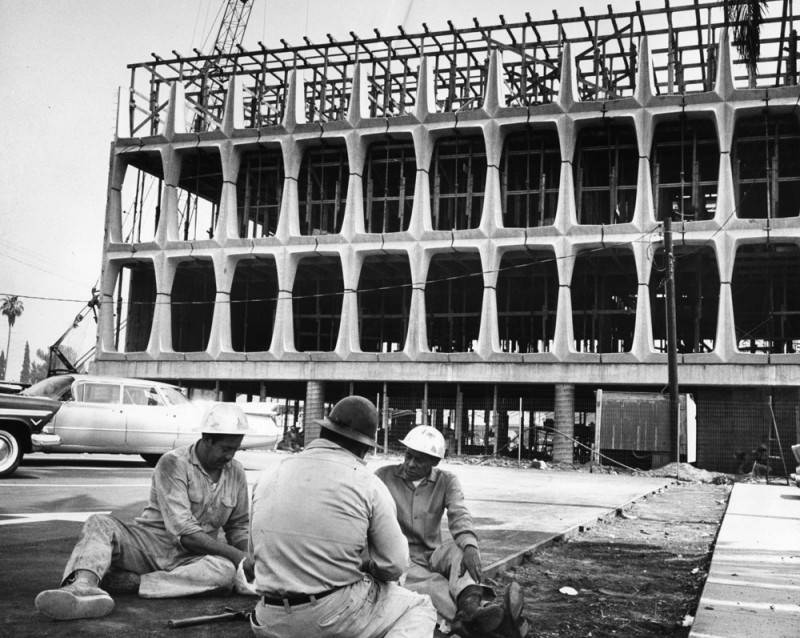
The new police station, a striking piece of $5 million dollar architecture, whose inspiration appears to be many vertically positioned Philco televisions, was nearing completion on March 29, 1963. The grand civic center, a pedestrian promenade, a library, and several court buildings would complete the ensemble.

On February 16, 1963, 400 well-groomed white people gathered at the Masonic Temple Lodge on Sherman Way to view the exciting land use plans unveiled by the Los Angeles Planning Department governing the future development of Van Nuys.

A mystery remains: Why was a law enforcement structure removed from the street and shoved way back behind a deserted pedestrian mall?

The idea that a police station, whose presence is ostensibly there to prevent crime, should be buried far from the streets where officers patrol, is one of the confounding results of architectural planning which often presents glorious schematics but fails to consider practical results. Van Nuys Boulevard today is a ghost town, except for those who are there to make crime. A cop or two might reassure diners, drinkers, and those who are out for a nighttime stroll.

And the plans for Van Nuys? What have they produced in the last six decades? Probably the largest conglomeration of urban ugliness, environmental catastrophe and social upheavals within the entire United States.

Our surroundings are here to serve only the needs of cars, our air is dirty, our parks few and overrun with garbage and homeless, and we live under the daily and nightly sounds of gunfire, fireworks, sirens and patrolling helicopters. Our rivers are concrete, our boulevards are decorated with billboards and wooden traffic poles, our corner stores are marijuana outlets or parking lots, and the sidewalks are festooned with shopping carts, discarded sofas and tents.

Though most everything along the wide streets looks like impoverished crapola, the rents are exorbitant, and a “starter” home is $800,000. Any efforts to build higher than four stories brings out the angry loudmouths on NextDoor, and developers are maligned and despised by the general public while bearing ridiculous regulations that require onerous fees and expensive construction that inflates costs and discourages new housing. The little old lady, who inherited the three bedroom ranch house from her parents, and pays $300 a year in property taxes, is usually the bitterest one of all.

“I pay taxes! Why does everything look like shit!” she screams.

What kind of city do we live in? What is wrong with us?

Our system of life on Earth is failing globally, and especially here in Van Nuys.

The lesson: beware of great promises made by the powerful for they only care about themselves.

Credit: LAPL/Valley Times Photo Collection

A Twelve-Acre Parking Lot


Erwin at Sepulveda, Metro Orange Line Parking Lot.

When the Metro Orange Line opened in October 2005, it was a stunningly different type of transport system which combined a bus only road with a landscaped bike path that ran alongside. It cost about $325 million.

It connected North Hollywood with Woodland Hills, and eventually carried over 30,000 riders a day. Since 2015, due to Uber and Lyft, ridership has fallen to about 22,000 a day.

Hundreds of homeless encampments have sprung up on the bike trail.

But Metro forges ahead!

There are plans to create gated crossings at intersections to speed up bus travel. There are long-term ideas to convert the entire system to light rail and also build elevated bridges over Van Nuys Boulevard and Sepulveda.

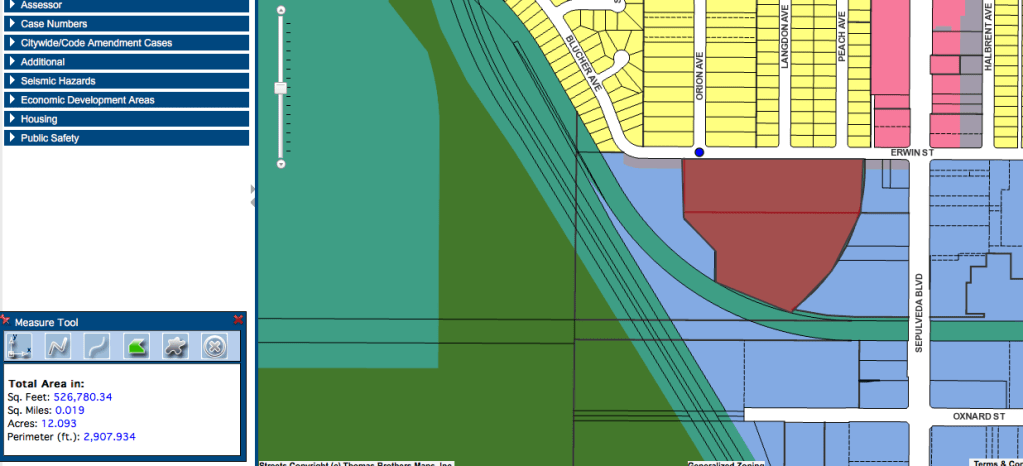
In Van Nuys, at Sepulveda and Erwin (north of Oxnard), there is a car parking lot for the Orange Line Metro riders. It is over 526,000 square feet, paved in asphalt, planted with trees and shrubs, and comprises over 12 acres.

Today, over 2/3 of it is used as an outdoor storage lot for Keyes Auto.

Red area is the parking lot of the Orange Line. It is now used predominately to store autos from Keyes Audi. (Source: ZIMAS)

The Sepuvleda/Erwin site is “Exhibit A” in the DNA of Los Angeles, because the right thing to do would be constructing 10-20 story apartments along the public transit route and creating incentives for residents to ride buses, take trains and use bikes for daily commuting.

Singapore Housing Estate with parks and nearby public transportation.

If LA were Singapore, Tokyo or Toronto we would do that.

Instead our city languishes and fights and wishes to preserve a 1950s idea of everyone going somewhere by car. 

And thousands of new cars are lovingly housed on land paid for by public taxes which should be used as housing and parks for the greater good of this city.

Nothing beneficial for Los Angeles ever happens overnight. It takes years of planning and legal battles, for example, to build assisted or low cost housing, or parks. 

One can imagine the fury and fear that might arise if a 12- acre park and housing development were planned on this parking lot ranch.

Imaginery view from Sepulveda and Erwin looking west. In reality, Singapore.

What, by miracle of God, might be possible here in terms of a park or high-rise group of apartments, placed near the bus line, with a buffer of trees, water features, and gardens between the new residential city and the single-family houses to the north of the site?

Yet here, alongside a public transit route, taxpayer funded Metro Los Angeles chooses to rent its land for an auto dealership. How does that benefit the surrounding residents?

For people who are obsessed with traffic, imagine that thousands of vehicles are parked here ready to be turned on and put onto the roads. How does that feel Van Nuys?

If the new planned housing estate were policed, regulated, secure, and it also provided a new park wouldn’t that be an improvement?

Orange Line Metro Parking Lot at Sepulveda/Erwin

Option A is Off


The Metro Planning Board will not recommend the demolition of 33 acres of light industry near Kester and Oxnard that would have obliterated 58 buildings, 186 businesses and endangered 1,000 jobs within walking distance of downtown Van Nuys.

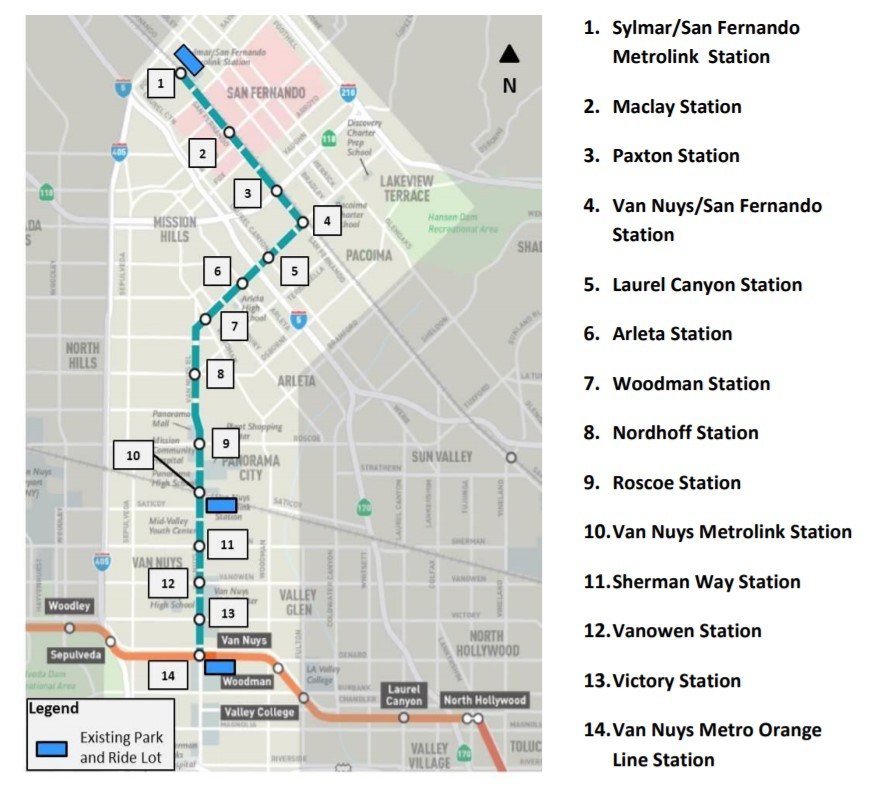
“Option A” was a proposed light rail service yard that would have serviced a 9.2 mile public transit train line that will be built from Sylmar/San Fernando to Van Nuys.

Instead, the board said “Option B”, a site around Keswick and Van Nuys Bl., near the existing Metrolink trains, is a better choice for the new site of the service yard.

Construction is anticipated to begin in 2021, with the line opening in 2027.

There are businesses in the “Option B” area that must relocate and they are, predictably and understandably, upset by the decision.

But the “Option B” district is not adjacent to a residential area, and has far fewer parcels, making it a cheaper and faster choice for Metro to demolish and compensate property owners.


Option A 

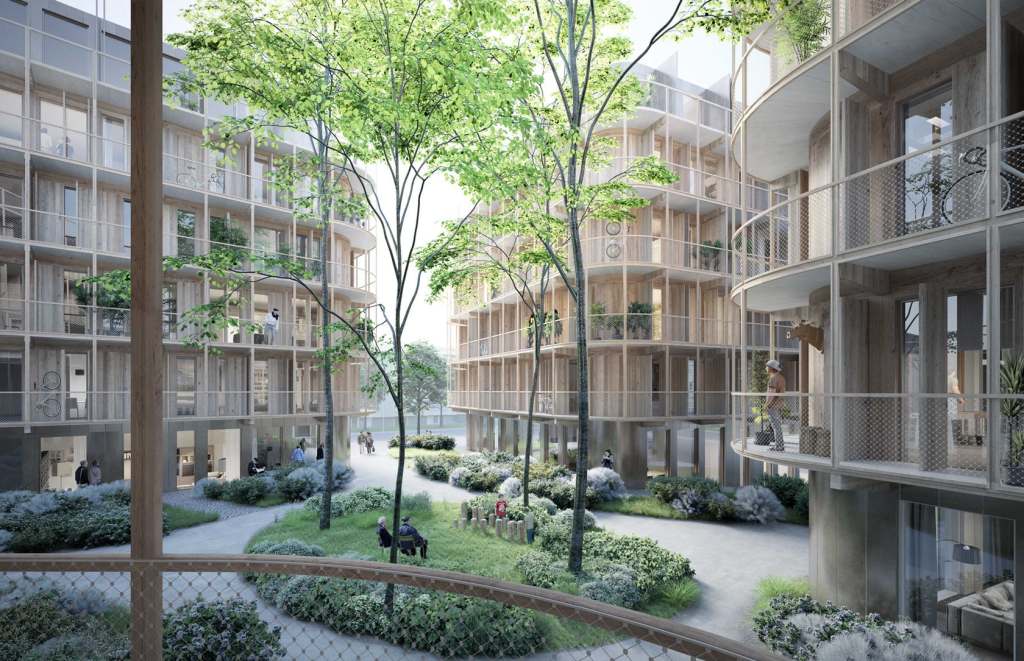
Imagine this as a beer garden, an outdoor restaurant, a park, or a site for new courtyard housing.

“Option A” runs along the Orange Line with its bike path and bus line slated for conversion to light rail.

It is a bustling and well-located area of affordably priced light industry which one day could also be used for inserting cafes, small retail stores, low profile apartments and multi-family dwellings, providing a new residential/work/recreation district in Van Nuys.

To lose it to the bulldozer would have been a tragedy, and let us hope that community activists, architects, investors and city planners will recognize the potential in the “Option A” area and design a new prototype for progressive living in Van Nuys.


One Day, Soon.


One day, soon, there will be a revitalization of Van Nuys Boulevard.

Gone forever will be the hopeless days when people laughed to mock it, or ran away in revulsion.

All the central gathering places that should be occupied by civilized things, all the lots that hold parking, all the empty buildings along Van Nuys Boulevard, will be replaced with vibrant, happy, upbeat, successful businesses and residents.

It will take nothing more than $5 billion dollars to invest in new transit, new apartments, new multi-family housing, new police officers, a new police station, an army of street cleaners, and law enforcement people who will ticket illegally parked cars, handicap placard abusers, unregulated street sellers, unlicensed signs, and unpermitted businesses.

The narrowing of Victory Boulevard, the planting of 200 oak trees from Kester to Van Nuys Boulevard, will bring about a revitalization of the formerly crappy strip of low rent mini-malls, slum apartments and empty stores. The LAPD Victory Precinct at the corner of Van Nuys Boulevard and Victory, and its drop-in center there will be open 24 hours a day, 7 days a week.

150 new LAPD officers, out of a police force of some 10,000 will be specifially assigned to the area.

Some 50 new apartment buildings, from Sherman Way to Oxnard, with 10,000 new apartments, will be built and 20% of them will rent for under market value.

Security cameras will enforce the law to prevent speeding, red light running, assault, vandalism, burglaries of properties and hold-ups on the street.

There will be decorative streetlights, three new parks, new benches, and thousands of shade trees planted along the boulevard to protect against temperatures that get hotter every year.

Bike lanes, light rail, automobiles and pedestrians will share a new Van Nuys Boulevard divided between all types of transport, from foot to motor to public.

And the architecture will be inventive, modern, and integrate environmentally such necessities as solar energy and district wide free wi-fi.

In a nod to the old Van Nuys, the first orange grove planted in the Valley in 90 years will be manned by formerly homeless men and women who will guard the orchards as they would their own children. There will be 10 houses planted around the grove to ensure the safety and security of the new urban agriculturalists.

The low industrial buildings in the neighborhood around Kester and Oxnard, all 33 acres, were preserved in 2018, and later became an incubator for creatives who settled in the area and built narrow houses near the Orange Line, and worked and lived next to artisans, musicians, brewers, car restorers and craftspeople of every skill.

All of this is possible.

The people who will decide whether this is fantasy or reality are reading this post.


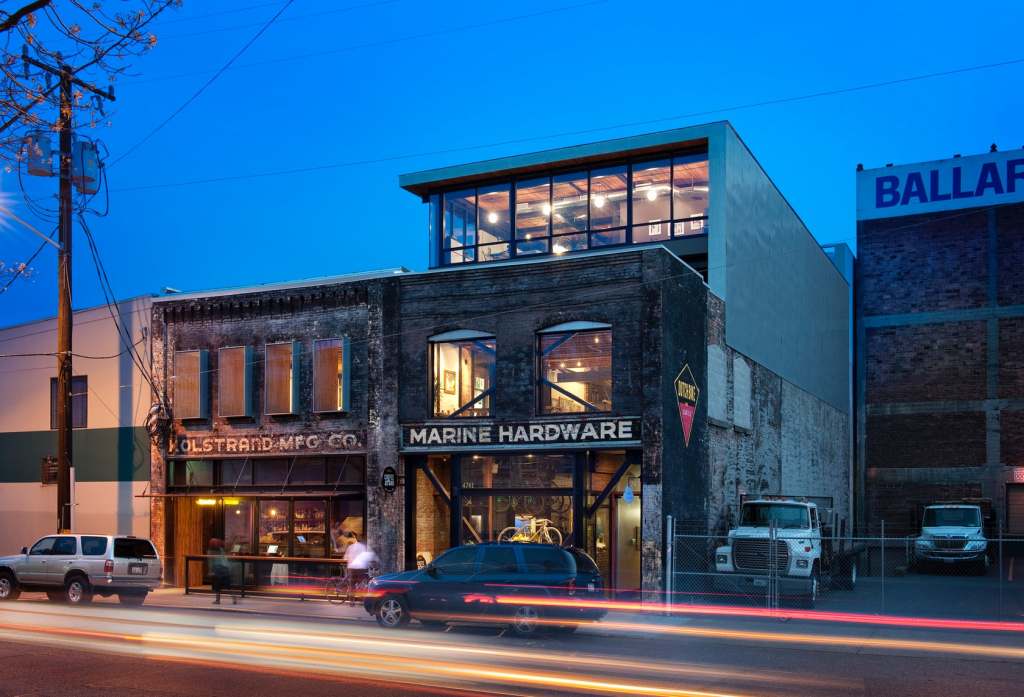
All photos courtesy of Architizer.

Architecture by Graham Baba.

SaveSave

The Van Nuys Experimental District (VNED)


kjellandersjoberg_salabacke_view-courtyard.jpg

kjellandersjoberg_salabacke_view-inner-courtyard.jpg

kjellandersjoberg_salabacke_view-inner-courtyard.jpg

Sketch by kjellandersjoberg_salabacke_view-inner-courtyard.jpg

perspektive_aussen_totale_006.jpg

kjellandersjoberg_salabacke_glade-view.jpg

payette_rbenson.jpg

Given that the largest amount of new housing built in Van Nuys consists of tents on sidewalks, the idea of taking a portion of this district, say from Oxnard to VanOwen along Van Nuys Boulevard, and re-christening it as “The Van Nuys Experimental District” (VNED) is an idea whose time has come.

Along with light rail, bike roads and alternate modes of transport beyond private automobiles, the VNED would allow architects great freedom to build modern, inventive and attractive buildings providing apartments for a city starving for it.

If these buildings could be tax deferred for developers for 25 years, maybe the high costs of construction could be partially ameliorated.

Professional complainers, who begin and end every discussion with “where will they park?” should instead ask, “where will we live?” Amateur economists, who hate new housing because “it’s too expensive” should ask if limiting housing will reduce its price.


The photographs on this page are taken from a website called Architizer.

The photographs below were taken by me on Victory near Sepulveda on the south side of the “99 Ranch Market” shopping center.

Victory Bl. east of Sepulveda, Van Nuys, CA 5/10/18

Victory Bl. east of Sepulveda, Van Nuys, CA 5/10/18


SaveSave

SaveSave

SaveSave

SaveSave

The Snack Pit.


Olivia DeHavilland in "The Snake Pit" (1948)
Olivia DeHavilland in “The Snake Pit” (1948)

There were plenty of pizzas and sodas at last night’s meeting of the Van Nuys Neighborhood Council.

Exasperation was the theme of the meeting.

Ten tables long, the Van Nuys Neighborhood Council has now grown, along with waistlines, to encompass twenty people; and the length of the officials with made-up titles now almost pours out onto the sidewalk.

As usual, there were older white women bemoaning the appalling conditions of Van Nuys, including people sleeping on the streets and the poor condition of trash containers on Van Nuys Boulevard, where no humans shop, walk or eat unless they are forced to.

This being Los Angeles, the heartfelt sympathy and emotionality was in evidence for those problems related to the automobile. The situation for one resident was dire. This man lived in a one-car garaged house on a certain street with two hour parking. He had no driveway. His vehicle was being ticketed. Couldn’t someone help him he asked in a ten-minute exchange.

First I cried because I met a man with no eyesight, then I cried because I met a man with no garage….

A woman got up to talk about someone and something that had touched her heart. She was almost in tears, but I had trouble understanding what brought her to the brink.

Another man who runs the “LICK” Committee spoke about by-laws and promised to help the man who lived in the house with the garage on the street with two-hour parking.

An elderly man got up and said it was not right. And a half hour later his wife got up to speak and said it was wrong and should not be tolerated. What it was was anybody’s guess.

Outside the meeting, Van Nuys Boulevard, Heart of Van Nuys, was deserted, its eight lanes of traffic and empty shops somehow not appealing to hipsters, late-night dinners, and romantic couples out for a date.

Despite the utter evident failure of Van Nuys as a civic and commercial entity, the Assemblyman Adrin Nazarian spoke to the gathered on all the issues he was working to solve and his agenda seemed at times to be larger than the Planet Earth.

Transportation funding, cutting tobacco use, gun control legislation, minimum wage increases, climate change action, renewable energy, earned income tax credits, cap and trade issues, green spaces, affordable housing, earthquake warning systems, VA drug prices.

Assemblyman Nazarian checked off an impressive list of issues whose resolution, if that day comes, promises a heavenly San Fernando Valley free of expensive housing where green spaces and reliable public transport shuttle people around to health care; where affordable drugs and professional medical help is there for one and for all, legal and illegal, young and old, vet and non-vet.

Two hours into the meeting, a sour faced group of old men in tan, anxious to present their proposed hundreds of units of housing to the VNNC, had barely any time to talk of the truly huge changes that might be coming to Van Nuys Boulevard.

And the architect with the $20 million apartment and retail project was told to come back next month as time had run out.

I forgot to mention the board members arguing about plastic bags.

Priorities always at the VNNC Snack Pit.