Housing, it seems, is everything these days, the foremost topic on the minds of Angelenos.
Those who can afford it fear those who cannot.
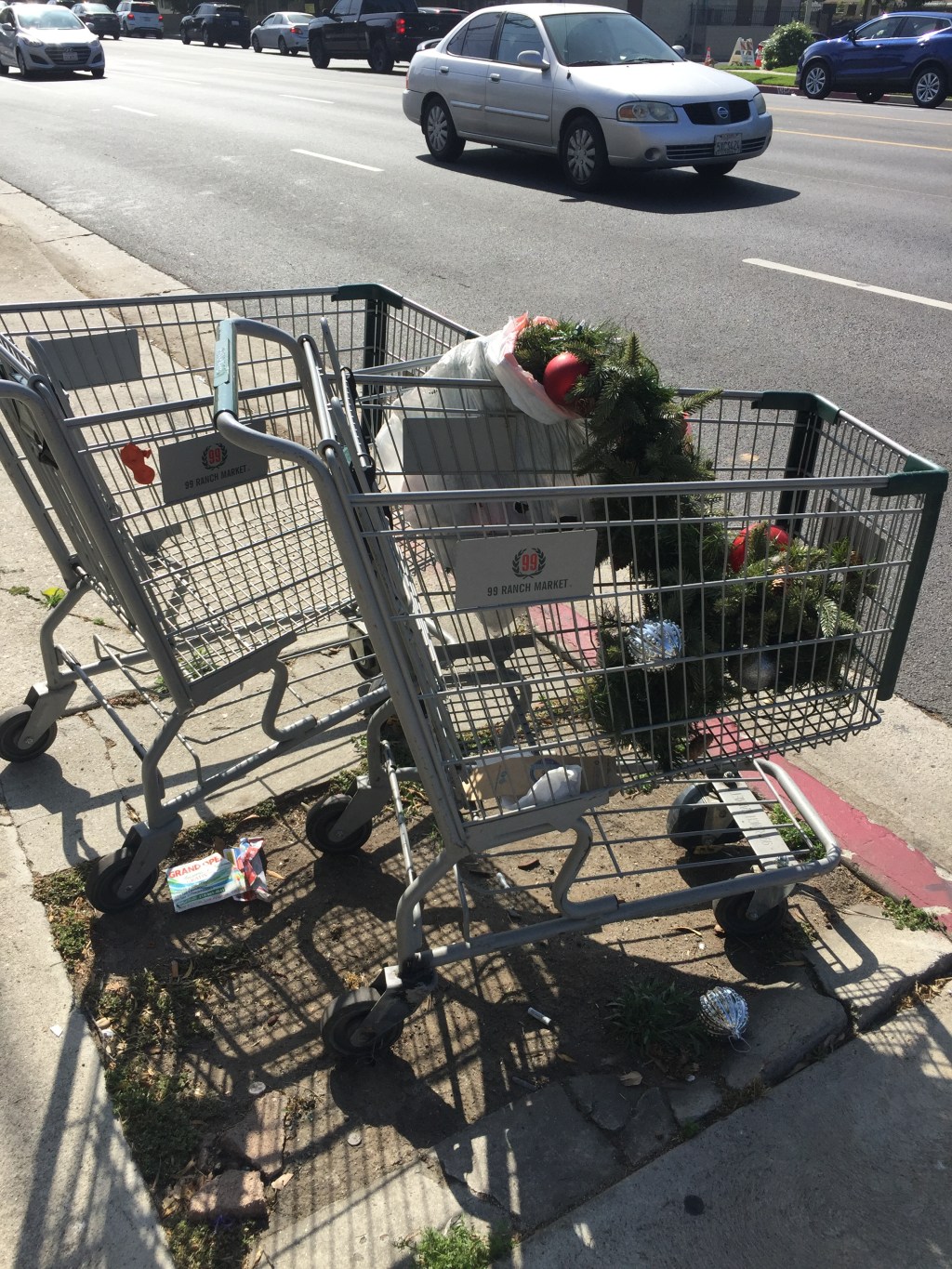
Fearsome, it seems, is our ragtag army of many thousands of un-housed vagrants who have established anti-communities out of shopping carts and tents, and made bedrooms, bathrooms and living rooms out of bus benches, trains, bridge underpasses and alongside our freeways. Covered in dirt and tortured by circumstance, pulling three bikes with two legs, they remind our fortunate ones that life often goes bad even for the good.
3/5/18 Bessemer at Cedros.
SB50, the state proposed override of single family zoning, struck terror into the hearts of many in Los Angeles who feared that the single family home, housing twelve unrelated people, might soon be replaced by twelve unrelated people in four houses on one lot.
“Leave it to Beaver” (circa 1959) the imaginary ideal of Los Angeles.
“Leave it to Beaver”, “Dennis the Menace”, “Hazel” and the rest of the 1950s and 60s back lots of Columbia and Warner Brothers are how many, now aging, but still ruling this city, think of Los Angeles, and how it should look.
When Dennis the Menance came home he didn’t enter into a lobby with an elevator. When Dr. Bellows drove up Major Nelson’s street, it was clean, tidy and sunny.
Home of Major Anthony Nelson, “I Dream of Jeannie” (1965-70)The cast and crew of the remodeled “Brady Bunch” home in Studio City, CA. (HGTV)
HGTV is now remodeling the real life home in Studio City that was used as the location for Mike and Carol Brady and their bunch, recreating in reality a 1970s home, inside and out, following an architectural blueprint from the set pieces of an inane, 50-year-old television show that seemed saccharine the night it premiered in 1969.
It is heartwarmingly creepy to see the now white-haired kids throw a football in an astroturf backyard, retirees feigning juvenile excitement as a synthetic reality show impersonates their old sit-com and pumps new advertising blood out of Geritolized veins.
But life is not a syndicated sitcom. What’s on TV is not what’s beyond our windshield.
We live in Los Angeles, and die a bit here, day by day. The city is getting worse in every imaginable way: housing, health, transportation, taxes and education.
Homeless on Aetna St. Feb. 2016
On the roads, in real life, in 2019, cars are now parked and packed alongside every obscure street because it takes four working, driving adults to afford one $3,200 a month apartment.
Building more apartments doesn’t mean more cars, it simply means less apartments. And less apartments means more rent, so Los Angeles keeps eating itself up in contradictions of cowardice and myopia.
__________________________________
Japan
As I travel around Los Angeles and see all the enormous parking lots and one-story buildings alongside eight lane wide roads, I wonder why we are so unable to build enough houses to house everyone.
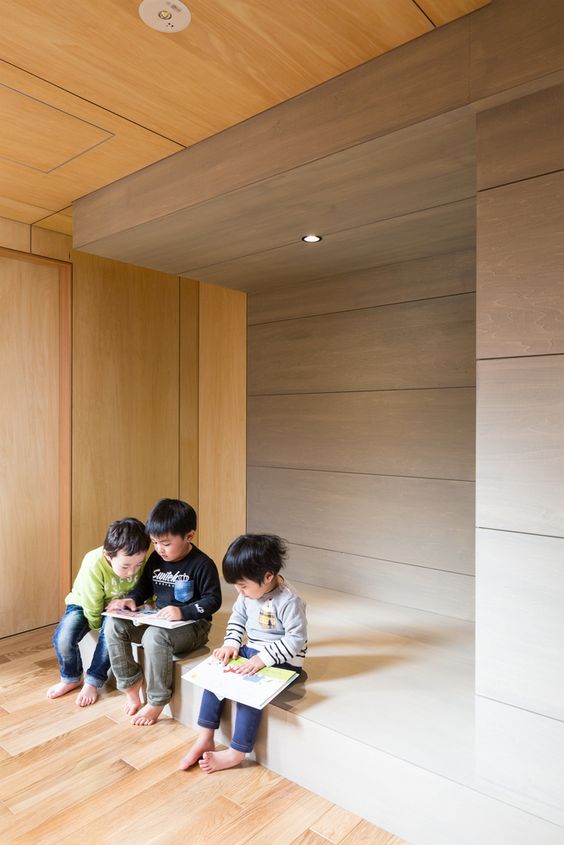
California is not nearly as crowded as Japan, yet that country ingeniously designs small dwellings that artistically and creatively provide homes for every type of person.
On the website Architizer, I found the work of a firm called Atelier TEKUTO.
Homes shown on Architizer by Atelier Tekuto are really tiny, but they are built solid, with each dwelling quite individual in style and form, an irony in a country where every black haired man coming from work is dressed in a white shirt and dark suit.
But Japan somehow pulls together the artistic and the structural to provide enviable and well-designed homes in well-protected, spotless communities. Violence is rare, except yesterday, but nobody goes out at night fearing random mass shootings, it is safe to say.
We can’t, or should not, want to remake the depravity of our dirty, violent LA into clean, peaceful, obedient Japan, with its fast trains and scrubbed sidewalks, but we might borrow some of their ideas. After all, we conquered them in 1945, can’t we take home some intellectual souvenirs?
Imagine if Van Nuys took the courageous and innovative step to redo the large, unused parking lots behind all the abandoned shops on Van Nuys Boulevard with a mix of little houses like these and perhaps some larger structures several stories high?
What we have now is this:
Near Cedros and Delano.
P
Bessemer St.
Van Nuys, CA 90401
Built: 1929
Owners: Shraga Agam, Shulamit Agam
Van Nuys, CA
Don’t we have a Christopher Hawthorne now, Chief Design Officer, working under Mayor Gar[BAGE]cetti? Former architecture critic at the LA Times, he may know one or two architects from his old job. Perhaps Mr. Hawthorne can take action?
What have we got to lose?
We are so far down in quality of life that we must engage our energies to pursue a remade Los Angeles.
A city that does not harm us but lifts us up.
As Japan shows, you can have enlightened ideas without living alongside mounds of trash and outdoor vagrancy.
There is no logical connection between toleration of outdoor garbage dumps and political tolerance in general. In fact the worse our surroundings get, the more people will turn right and maybe even hard right.
On these torrid July days, when the temperature is 105 degrees, and a walk down Van Nuys Boulevard near the Orange Line Metro stop brings you face-to-face with people sprawled out on the sidewalk, living in tents, sleeping on dirt, it is instructive and bracing to think of other civilizations, such as Japan, where human beings live under more benevolent and intelligent rulers.
Instead of parking lots furnished with the shopping baskets of homeless people, instead of garbage piles on the sidewalk, instead of empty streets filled with only the cries of mentally ill men and women, Japan offers low-rise, modern houses where children are cared for, and people work together to make contributions to society.
Every day we live amongst a remarkable level of filth, violence and rampant barbarity in Los Angeles; thinking it normal that a Trader Joes manager is shot dead walking to her store entrance to see what the commotion is; or that a camping father with his family is murdered, randomly, in Malibu State Park; or accepting as “normal” the idea that 100,000 people sleep on sidewalks, and RVs and cars, and live in tents in the city of the Kardashians, the Cruises, the Broads, the Carusos and the Spielbergs.
How can so much money, so much power, so much fame do so little for their city? How obscene it all is.
Near Cedros and Calvert, Van Nuys, CA.
Empty Buildings on Delano near VNB.
Slum Housing on Cedros. Owners: Shraga Agam, Shulamit Agam
There are places where guns don’t kill people every single day, and children live in clean, well-cared for apartments and houses next to spotless streets, where the trains run on time and people stand in line to wait for the next one to arrive.
We can’t completely transform what Los Angeles is, but we ought to engage our imagination to other places where they do a far better job of taking care of people and emulate those finer qualities of faraway lands.
Architects: HIBINOSEKKEI
Location: Sagamihara, Kanagawa Prefecture, Japan Project Year: 2017
Some six weeks ago, I went to MacLeod Ale and learned about an impending “slum clearance” in Van Nuys.
I was shown a sheet of paper in the owners’ office, laying out the destruction of the industrial neighborhood, just to the south of the brewery.
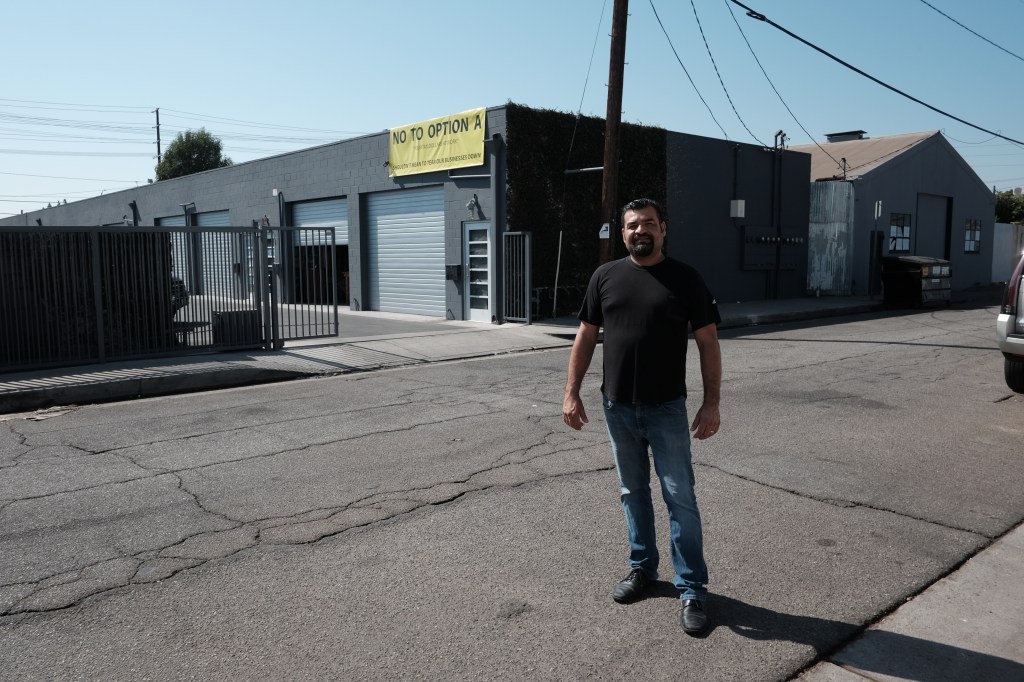
“Option A”, by Metro, planned to demolish 33 acres, stretching from the north side of Oxnard to the south side of Calvert, a hunk of real estate containing 186 businesses, 58 buildings, and 1,000 jobs.
A light rail maintenance yard would cover the area.
I had no idea what that meant, in terms of people and their livelihoods. I didn’t know anyone who worked there.
In my narrowly focused mind, MacLeod was, happily, not on the death list.
So I went back to my Better Days beer and forgot about Option A.
That First Email
A few weeks later, I opened a jabbing email from a stranger named Ivan Gomez.
He said he owned a business called Pashupatina on Aetna near Kester. “You seem to walk around our industrial community constantly looking for the worst possible things,” he wrote, possibly referring to a recent satire I wrote denigrating a certain low self-esteem street.
He said he was not wealthy, but “maybe you are.” He had plans to construct artist lofts. And he had just bought and renovated a blighted building. He described his plight of betterment:
“Sure there are a lot of missed opportunities with certain slumlords that own properties in the area. Don’t judge a book [by its cover]. Perhaps you can tell the stories that our buildings cannot. You can look inside and see we are all Van Nuys. We want to see change and if you are patient the change will come soon. If you are wealthy and can afford the price of admission than you will jump aboard the light rail gravy train. I proposed an alternate site that would save our manufacturing communities but that dream hit a bump in the road today. I urge you to reach out and help us tell our story. Hell, you might be able to make a difference,” he wrote.
He said he was slated for demolition and was fighting to keep his property and his district intact, to save jobs, and businesses, and dreams.
“I invite you into my facility to meet with a few of the people on Aetna, Bessemer and Calvert Streets who are trying to make a difference with the little resources we have to keep our area clean and safe.”
He said he had avoided the darkest aspects of life from gang violence to police brutality.
“I am Barrio Van Nuys, Pacoima Flats, San Fernando, Echo Park, Silver Lake, Angelino Heights, Lake Balboa,” he said.
His combative but challenging email intrigued me. I made an appointment to meet him, tour his place and the surrounding area.
Ivan Gomez of Pashupatina
Crossing Oxnard, North of Kester
Driving on Kester, near Oxnard, some of what one passes include day laborers on the sidewalk; the open sand and gravel yard of Valley Builders Supply; an al fresco used tire shop, Hamati Enterprises; Pat’s Liquors (check cashing, cold beer) asphalt parking lot and tall, ungainly, steel-posted plastic sign. And a big, looming billboard above it all; there is the shabby, tan painted, stucco entombed Uncle Studios, and Euro Motors’ turquoise doors and Virgin Mary mural.
In this blighted area, settled by the old Southern Pacific tracks, now the Orange Line, pickup trucks carry lumber, pipes, and sheets of glass. Sombrero hatted adults ride children’s bikes, others push shopping carts with belongings, addicts sleep and stare into space, buy cans of beer, and others reside in groups beside the bike trail. There are parked taco trucks serving lunch and many signs for auto repair, collision, bodywork, and smog certification. You are either working hard or hard up.
Hidden from view are many artisans, craftsmen, and skilled persons, working in fields from cabinet making to stained glass, from vintage auto and bike restorations to custom metal work. There are welders, boat mechanics, sauna installers, and music recording studios. Most rent fairly priced industrial spaces.
A sinister idea, it seems, would be trying to revitalize Van Nuys with light rail by wiping out this cloistered, unique, walkable, diverse, and industrious area.
Van Nuys, CA
Pashupatina
Switzerland on Aetna St.
Pashupatina, at 14829 Aetna St. is an unmarked, pitched roof, building painted in cool shades of green and gray. A steel door is in front. But the preferred entrance is around the side.
You walk up a narrow driveway, paved in white gravel and concrete, squeezing between two cars, and enter a facility whose orderly, airy, bright, industrious and technically equipped rooms evoke some expert machine shop in a Swiss mountain village.
They are a manufacturer of custom decorative hardware, whose brass and bronze knobs, hinges, handles and levers hang inside some of the most expensive homes in Los Angeles. Boxes of surplus custom work, from recent projects, sit in the storage room on shelves labeled with Bel Air streets: Stradella, Casiano, Chalon.
Established 1997, the shop name comes from a most sacred Hindu temple in Nepal, Pashupatinath, dedicated to the god Shiva. Believers go there to die and be reborn in a holy place.
To a young Mexican-American, raised in Van Nuys during its most violent and convulsive years, escaping its lethal menace by sheer persistence, this name, this creation, must have multi-layered meaning.
Laid out on the floor, in orderly procession, on glazed concrete, are an array of metal lathe machines, electronically programmed, finely calibrated devices that drill to exacting standards for clients who are able to pay $1,000 for a single, museum worthy door knob.
There is a $50,000 Alaris 3D printer capable of processing CAD images and carving them into polymer models. This is where you will often find Ivan, at his computer, turning out those highly detailed or modern sculptural pieces that will be used as templates for custom metal hardware.
Pinned by magnets to the steel walls are enlarged architectural blueprints with the location of each piece of hardware designed, manufactured and installed by Pashupatina. The size, the detail, the scope seems on the scale of a museum or medical facility. But these pieces will go inside 40,000 square foot homes and 15,000 square foot guest houses.
Pashupatina: Ivan and Daniel Gomez in their shop which they completely renovated with their own hands and money in 2015.
At work at Pashupatina. Programming and designing intricate metals for decorative hardware.
Remember what you thought the Option A area was and then step inside here to be disabused of your ignorance. Think of all the princes, all the captains of industry, all the movie moguls, rappers, tech billionaires and their third wives who could not open a drawer or close any one of their 30 bathroom doors without Pashupatina.
Natalie and Ivan, Cambodia, 2004.
Ivan Gomez, 45, his architect wife Natalie Magarian, 45, and his brothers Daniel, 42 and Manuel, Jr., 48 are all here, working.
Natalie and Ivan live in Lake Balboa, and Daniel and Manuel commute from Van Nuys and Canoga Park.
“Daniel and I are inseparable,” Ivan said. There is an affinity and closeness between them.
Daniel is thin, bearded, cheerfully fidgety with a rock-solid work ethic. He and Ivan rebuilt Daniel’s 1971 Corvette Stingray. It sits under canvas cover on a steel, 4-post lift just below Ivan’s 1971 Buick LeSabre, two cars, like two brothers in a bunk bed. A 1969 Plymouth Roadrunner, also owned and restored by Ivan, sleeps somewhere else.
“Daniel doesn’t put up with shit,” Ivan told me. The no-bullshit brother also owns a 40-acre home up in the desert near Palmdale where he can blow off steam and have fun. In 1994-95, to get away from LA for a while, Daniel and Ivan rented a home in Llano, CA. If they are ever at each other’s throats I imagine it’s one gently holding a razor and the other getting a hot lather shave.
The brothers (and Natalie) were renting another space nearby when Ivan saw a $500,000 building with 4,000 SF for sale. It was in poor condition, but they put in an offer. It was accepted and they got to work.
The entire structure, from the floor to the rafters, from the plumbing to the industrial grade electrical system, from the roof to the walls, to the driveway outside, the design, execution and construction, every last bit of it, was undertaken and completed by Ivan, Daniel, Natalie and other capable family and friends.
5/27/14-before
Ivan and his daughter Corina.
2/21/15-Ivan Dreaming and Doing
All their business comes from referrals. They don’t really have an online presence because they are too busy working.
They plan to one day have a retail line of their own, just like PE Guerin, a Manhattan company maker of exclusive, by appointment only, custom hardware.
Ivan and Daniel Gomez late 1970s
Registering with the INS.
Ivan was born, by chance, in Mexico, when his parents were back there visiting. His siblings, Manuel, Jr., Cynthia, Daniel and Angel are all American born.
As a child legal alien, and then as an adult, Ivan had to register with the INS every few years. He became a US citizen in 2002.
In 1980, the family moved from Pacoima, where gang warfare had made life intolerable. They settled on Friar St. near downtown Van Nuys, at a time when the last white, Irish, working-class families still lived there.
Drive By Shooting in Van Nuys; North Hollywood Boy, 14, Shot to Death in Front of School.
Ivan was intelligent, curious, and industrious. He would buy popsicles from La Paletería, and resell them to his schoolmates.
He found employment with his neighbors: Tim Monaghan and his janitorial company, and with Richard Taylor who made miniature wooden piers for collectors that he constructed in his garage. Later on, Richard Taylor would hire Ivan to work in his custom hardware shop in West Adams. Ivan would become a professional locksmith, but unofficially, he was earning his masters in metal work in the four years he spent there. “Richard was a Shaman,” Ivan said in praise.
Ivan also worked as a boy janitor in an Oxnard St building a few hundred feet from Pashupatina. Always finding a way…..
Manuel Gomez, Sr. Ivan’s reserved, hard-working father, drove a Cadillac and worked as a punch presser at Zero Corporation in Burbank where they made metal stamped suitcases for the military. After Zero closed, Manuel worked at Just Dashes, a custom shop in Van Nuys.
Teenage Ivan also had a job at Bargain Books in Van Nuys where he was paid $2 an hour along with some used books. An autodidact, he often read up on mechanics or design.
The children were baptized Catholics, but their freethinking parents never pushed their children into any dogma or practice. By chance, the family joined the Salvation Army which treated the kids to summer camp and provided a social and support network.
Wilbur Avenue Elementary School, Tarzana.
Ivan was enrolled for two years at Wilbur Avenue Elementary School in Tarzana.
He met south of Ventura Boulevard kids, many of whom came from affluent, white families. They listened to Pink Floyd and Led Zeppelin.
It was the mid 1980s and by that time Van Nuys was hit with a large increase in immigration, followed by plant closings (GM-1991), gang wars, drive-by-shootings, drugs, and the fleeing of white families from the disorder they saw all around them.
“I knew we were poor,” Ivan told me. He remembered having a rock thrown at him when he was three years old. He was shot at six or seven times before he was 25. One time he played dead in Panorama City and fooled his gun-wielding assailants.
He was Mexican-American, a target of cops who presumed guilt by ethnicity. He talked back to law enforcement when he thought they were wrong. He was handcuffed and targeted. He saw people in his neighborhood die from gangs, suicide, and shootings. He walked away from drugs and said he was a straight-arrow punk. As random acts of violence exploded all around him, he inoculated himself by diving into work, education, and music.
One day, at Van Nuys High School, a petite girl with a punky-pink haircut walked by Ivan and his friend. “Do you know her?” Ivan asked. “Yes, I do,” his friend said. He decided to write the girl a letter.
She was Natalie Magarian, born and raised in Lebanon. She came from a well-educated, well-to-do, Armenian family who left a war-torn land to live with relatives in Van Nuys. She spoke Armenian, Arabic, French, and English. She was interested in architecture and music. But she was odd-looking too.
“People said I dressed like I just got off the boat,” Natalie recalls.
Though Ivan claims to have seen her first, Natalie said, “Ivan liked me less than I liked him.” They came from wildly different backgrounds. Their respective families were kept in the dark about their relationship. “I think my parents wanted me to meet a nice Armenian boy,” Natalie said.
After graduating high school in 1990, Natalie went to study architecture at Woodbury University.
Also in 1990, Ivan went to work in a custom metal hardware factory owned by his Van Nuys neighbor Richard Taylor. The Jefferson Park Collection in West Adams is where Ivan would learn the craft that he would eventually master, emulate and reinvent into his own business.
Natalie and Ivan got married at the Transamerica Building in downtown Los Angeles in 1998. Architectural and secular and completely Angeleno, just like the couple.
They later found time to travel and explore Mexico, Cambodia, Singapore, Czech Republic, Portugal, Thailand. They lived in Silver Lake and Echo Park.
Years later they would come back to here in Van Nuys. And Lake Balboa.
1991/1992
Rodney King was a black motorist beaten by four LAPD cops after a high-speed chase on March 3, 1991. A video, shot by a witness, George Holliday, captured the whole bloody event.
In that era, before smart phones, video recording of crimes was rare. The effect of seeing this brutality in action infuriated many who saw it as racism in action. Others thought the police were justified, and that toughness was the only way to stop crime.
The acquittal of the four white officers by a Simi Valley jury on April 29, 1992 lead to the worst rioting in Los Angeles ever seen.
“The riots, beginning the day the verdicts were announced, peaked in intensity over the next two days. A dusk-to-dawn curfew and deployment of the California Army National Guardeventually controlled the situation.[32]
A total of 64 people died during the riots, including eight who were killed by police officers and two who were killed by guardsmen.[33]As many as 2,383 people were reported injured.[34]Estimates of the material losses vary between about $800 million and $1 billion.[35]Approximately 3,600 fires were set, destroying 1,100 buildings, with fire calls coming once every minute at some points. Widespread looting also occurred. Stores owned by Koreansand other Asianethnicities were widely targeted.[36]
Many of the disturbances were concentrated in South Central Los Angeles, which was primarily composed of African-American and Hispanicresidents. Less than half of all the riot arrests and a third of those killed during the violence were Hispanic.[37][38]”
Images from that time include Korean shop owners on Western and Vermont Avenues wielding guns atop their roofs, and helicopter vantage footage of a white driver, Reginald Denny, being dragged from his truck and hit on the head with a brick, his skull cracking 91 times, beaten by a mob of youths.
The early 90s were an explosively violent time in Los Angeles. This was the era of the drive-by-shooting. A terrified city saw random killings spread into formerly safe areas, such as Chatsworth, Sherman Oaks and Westwood.
Korean-Americans Defend Their Shops During LA Riots, 1992.
LA Riots/Peter Turnley, Corbis.
2 28 91 Trying Times
Once a refuge from urban crime, the SFV, had, by 1991, become plagued with it. Robberies increased to 6,638 up 40% from the year before. There were 142 homicides, a record.[1] Bad place names like Sepulveda, Canoga Park, North Hollywood and Van Nuys gave birth to North Hills, West Hills, Valley Village and Lake Balboa. Change the label and you will escape the consequences, or so the thinking went.
Flare-ups of sudden violence became normal.
On April 20, 1993, a disgruntled MCA employee, standing in a parking lot, used a Remington 700 hunting and target shooting rifle aimed at the Black Tower in Universal City. Seven employees were wounded by a 35-40 bullet barrage that shattered glass, caused mayhem and injuries, none life threatening, yet completely terrifying.
In June 1994, OJ Simpson was accused of murdering his wife Nicole Brown Simpson and Ronald Goldman. His Ford Bronco chase on the 405 has entered the pantheon of legend. He was later found not guilty, despite so much incriminating evidence, on October 3, 1995. The verdict was thought by many to be payback to the LAPD for its mistreatment of minorities in Los Angeles.
Former tenants Joan DeWolf and Gary Benoit carry suitcases to salvage possessions from the Northridge Meadows Apartments. July 15, 1994. (Los Angeles Daily News file photo)
Uncaused by humans, but just as devastating to them, was the January 17, 1994 6.7 magnitude Northridge Quake which caused $49 billion in damage and killed dozens of Angelenos.
“Among the wreckage were some 90,000 destroyed or damaged homes, offices and public buildings, according to the state Office of Emergency Services, with 48,500 homes cut off from water and roughly 20,000 without gas. Some 125,000 residents were rendered temporarily homeless.
When the dust settled, 57 people had died — including 33 from fallen buildings. Of those, 16 were killed when the 164-unit Northridge Meadows apartments collapsed atop its downstairs parking garage.
The fatalities included Los Angeles Police Officer Clarence Wayne Dean, whose police motorcycle plunged 40 feet off a collapsed section of the Antelope Valley Freeway. The Highway 14/Interstate 5 interchange was later renamed in his honor.
More than 9,000 people were injured, including hundreds treated outside a topsy-turvy Northridge Hospital Medical Center. Twenty-one preemies from its neonatal ICU were airlifted to other hospitals.”[2]
Ivan In the Time of Turmoil
“The best thing that happened to us was the underground dance music scene from 1989-93. It allowed us to get away from the Valley into safer places. We met a lot of cool people and spent time up in the Hollywood Hills,” Ivan told me.
While the city and his neighborhood, were racked by violence, Ivan took refuge in the music world, and in his work.
He was up in Sylmar one Sunday, skateboarding in the wash, when he met a guy Rey Oropeza who had a hardcore, rap political band called Social Justice (later Downset) who in turn introduced Ivan to hundreds of different writers and artists from all different walks of life.
Ivan was working at Aahs and so was Darren Austin and Cameron. They had an idea to start a band so Stikman was born, an idea that Ivan came up with. He was the vocalist, Cameron, a white dude, drummer and Michael Glover, a black kid, played bass. And Darren, another black guy, was a guitarist.
Ray, Darren and Michael were all graffiti artists part of a crew known as Under the Influence (UTI).
In the parlance of that time these were a “mixed race” group of musicians. Music, and people, at that time had more fixed boundaries of race, and culture, and human beings in Los Angeles also often self-categorized themselves into racial classifications, immutable and ridiculously rigid. But Ivan and his friends were in the vanguard of the new mashup city we live in today.
A photo of five of them, circa 1990, shows young Ivan, smooth-faced, hair band around his forehead, dressed in a black, boat necked shirt, holding what looks like sheet music, a large necklace around his neck.
He is, in that photo, modern but timeless.
His flat nose, his jewelry, his stance, his gentle, warrior aura beating tribal, evokes pueblos indígenas de México. He stares insightfully at the camera, as if he directed fate and not the reverse.
Stikman, Ivan recalled, sounded like Nirvana, which someone once told him, “stole your sound.”
The band was young, exotic, and got a following. They were adventurous, driving after dark to dangerous places along the orange, mercury lit streets. They would break into empty warehouses, guerilla style, near downtown, setting up impromptu concerts and raves.
After high school (1990), Ivan Gomez also had jobs in retail. He worked at Tower Records and Aahs a novelty store, both on Ventura Bl. in Sherman Oaks, west of Van Nuys Bl.
Some of his musical influences were AC/DC, Black Sabbath, Pink Floyd, Led Zeppelin, Iron Maiden, Cure, Echo and the Bunnymen, and The Sugarhill Gang, a late 1970s hip-hop group.
Stikman’s great moment of glory: they played Raleigh Studios in 1993 in front of 3,000. They had arrived in Hollywood and got inside the gates.
They were together and making music. And then they were not. The band broke up in 1993.
Later Michael committed suicide.
Ivan and his friends were getting off work at Aahs around 10pm one evening in 1993. They ran into some homies from BVN in the alley behind the store. The gangsters were delighted to see Ivan and happily showed him a trunk full of weapons. Ivan thought it was time to say good night. As the gang car with guns drove off, another car, full of a white gang, started shooting at Ivan and his friends and yelled “Gumbies 13!” Ivan and friends ran for cover and could see BVN speed after Gumbies 13. The white gang, from Ivan’s recollection, crashed and BVN “took care of them.”
Then LAPD arrived in the alley to interrogate Ivan and his friends. They were lined up and interrogated. They were pretty ruthless and one pointed a gun at Ivan’s head, he recalls.
To those too young to remember, violence was unrecorded by smart phones before 2007. Cops and criminals, and criminal cops could do pretty much anything they wanted to without being filmed.
Like religion today, you either believed the tales told from the pulpit of police record or you didn’t.
Atelier Pashupatina
Pashupatina employs eight highly skilled men and women who work together to execute designs in a shop where there are deadlines, machines, stress, and sometimes arguments and conflict. But the environment is soothing, cerebral, edifying, more like an atelier, an artist’s studio, than a factory.
The layout is architectural, drawn up by Natalie. She had worked in Frank Gehry’s firm. She still has other international and domestic gigs. Her influence in creating an architectural stage set is not accidental, and comparisons to lofty, elitist creative spaces in Culver City and Venice are warranted.
Pashupatina does not have furnaces. The caustic, burning, smokey parts of the metal making process are sent out. The dirtier and harsher and more primal parts of casting, blasting, and plating are outsourced. But machining, and drilling are done here, and buckets of bronze and brass scrap metal, grindings, collect in big quantities and are sold to recycling.
Should I Be Doing More?
“Technology is not an image of the world but a way of operating on reality. The nihilism of technology lies not only in the fact that it is the most perfect expression of the will to power … but also in the fact that it lacks meaning.”
Octavio Paz (1914-98), Mexican poet. “The Channel and the Signs,” Alternating Current (1967)
President Obama once described America as the one indispensable nation in the world. Ivan, in his family and work, seems to share that characteristic, as a man, that Obama subscribed to the USA.
“Everyone puts the burden on me,” he said.
Ivan spoke as a married man, with two small children and a thriving, technically advanced company, with many responsibilities, worries and duties.
And yet he ponders if he should be doing more.
He was thinking, perhaps, of our ruthless, opportune, robotic time.
He was acknowledging that the wealthiest people, his clients, hoard money and power, leaving a gap, enormous and hollow, in this nation, this state and this city.
Here was this “job creator”, this self-made person, embodying all the hoary clichés of America: the idea that if you have the will, the guts, the ambition you can do anything.
But he is also the Mexican, the immigrant, the other, who was once despised, feared, and whose people still battle, daily, to convince this nation that they are just as American as other Americans.
Ivan, like all of us who live here now, sees the suffering.
For the addicted, the suicidal, the abused, the unemployed
For the undocumented, the deported, the incarcerated, and the damned
You are overlooked but you will not be forgotten
There will come a day again of brightness, hope and redemption
Here is a man who has used technology to advance his life and create paid work for which he is proud. But he is still asking: what does it all mean?
It is a valid question that a particular type of moral thinker will ask.
Is there anything greater to give back?
Kesterville: Seen and Heard
Last week I learned a new word:
Enjambment
The running on of the thought from one line, couplet, or stanza to the next without a syntactical break.
It came, courtesy of Dictionary.com, in their daily email and the arrival was fortuitous because I grabbed that word and pinned it on Ivan Gomez.
He is ebullient, gushing, buoyant, effusive, often pouring out with a million ideas and directions at once. His first email to me was a screed of run-on-sentences, accusations, pleas, suggestions, offerings, come-ons and inventions of both reality and fantasy.
He will dream it and do it and make it and sell it and seek it and reinvent it.
Meeting Ivan and the people who work in Van Nuys, the metal workers, the wood workers, the stained glass maker, the Vespa restorer, the musicians, the boat yard mechanics, all the hard workers who wear grease stained aprons, breathing dust, inhaling paint fumes, crawling under machines to screw in parts, all of them made me both proud and ashamed.
I was ashamed, indulging in self-pity and living inside my imagination, while others were working and sweating in shops making real things, utilizing skills and tools and machines I had never operated, or learned or knew anything about.
What did I have but words and photos and opinions and artistic license?
When I joined up to fight for the folks on Option A’s Death Row I had no idea how much life existed in Van Nuys inside the metal walled shops, behind the garage doors, down the streets where the sound of the bus roared nearby, under the unmarked, steel roofed packing houses.
I thought I was educated but I was so dumb.
I was lassoed out of my solipsism.
I like to think I did something good in Van Nuys to preserve something meaningful. It all started with that first email from Ivan.
In January 2018, Metro will make an official announcement about where the new light rail service yard will go. Councilwoman Nury Martinez now opposes Option A and others were told, unofficially, that other powerful people now agree that Option A is a bad idea whose time has come and gone.
Options B, C and D are all located near the Metrolink train tracks not far from Van Nuys Boulevard. They would not be nearly as destructive as Option A.
# # #
[1] 1991: A Look Back: Review: The Rodney G. King beating, development … HENRY CHU TIMES STAFF WRITER Los Angeles Times (1923-Current File); Dec 30, 1991;
Curbed LA recently published a photo essay by Kwasi Boyd-Bouldin, “An Ode to the Valley Before it Changes” featuring images of grass growing through concrete and defunct gas stations in parts of the San Fernando Valley. It’s a type of setting I have long adored and sought out.
Photo by Kwasi Boyd-Bouldin.
Mr. Boyd-Bouldin writes, “The Valley neighborhoods I encounter still vibrate with an authenticity that I took for granted in the past and that have all but disappeared from the rest of the city I love. I am doubtful the Valley will always look this way as the pace of redevelopment picks up around it.”
Here are some my photographs of Van Nuys, taken with a different eye and intent.
14640 Victory Bl.
Should one yearn for authenticity and places that have not changed or improved in 50 years, a person might travel down Victory Boulevard between Kester and Hazeltine, where the buildings are 1950s shops and 1960s office buildings converted to vacancy, pot shop, and bail bonds. The Coalition to Preserve LA would no doubt approve of the frozen in 1966 retardation of Van Nuys where “greedy developers” have not come in and built anything on the scale of The Grove. Here preservation, in the form of economic impoverishment has worked wonders.
Should one desire a great example of failed urban planning from the 1960s, one might walk amongst the sleeping homeless gathered in front of the police station, next to the library, behind the Valley Municipal Building, on that mall of nothingness surrounded by the Superior Court and the small statues sitting in pools of pee.
Van Nuys is full of the real, the urban, the forgotten, the abandoned, the neglected and the ugly. We have blocks and blocks of empty buildings, empty parking lots, and shuttered retail stores awaiting tenants, investment, customers, renters and buyers.
14547 Gilmore-why not a beer garden or a garden?
There are no parking problems along Van Nuys Boulevard because nobody shops here. There are plenty of parking spaces in big asphalt spaces on Gilmore west of the “downtown” where Matthews Shoe Repair shut down, and other buildings, with tens of thousands of square feet of space, awaiting the next boom.
Matthews Shoe Repair-CLOSED
This is Van Nuys. I’ve been writing and photographing it for over ten years. I show it as it is. Or I try to.
Van Nuys, CA 90401-a slum property owned by a wealthy Encino businessman. Built: 1929 Owners: Shraga Agam, Shulamit Agam
Van Nuys, CA-why not a cool burger spot? Why not?
And I welcome change, provided it’s done with some architectural integrity and it’s not just the result of shlock hucksters and con-men throwing up the next slum.
But I would live with change, I’d welcome it, if it made my neighborhood safer, more prosperous and livelier.
You must be logged in to post a comment.