SB 79 and Our Hood


SB 79 is a new law, authored by State Senator Scott Wiener, approved by the legislature, and recently signed by Governor Gavin Newsom, to allow the state to overrule local zoning laws and permit the construction of multi-family housing on lots which are zoned for single family housing when these properties are within a half or quarter mile of a bus or light rail stop.

In Los Angeles, the law will allow much denser and higher development along not only wide boulevards, but inside old, intact, single-family streets, “side streets” which never had apartments or multi-unit housing.


A guide to the law along with maps is here.

Tiered density: The allowable height and density for projects are determined by the quality of the transit stop and the project’s proximity to it.

Tier 1: Applies to projects near high-frequency commuter rail or heavy rail transit, like BART and LA Metro.

Tier 2: Applies to projects near light rail and bus rapid transit lines.

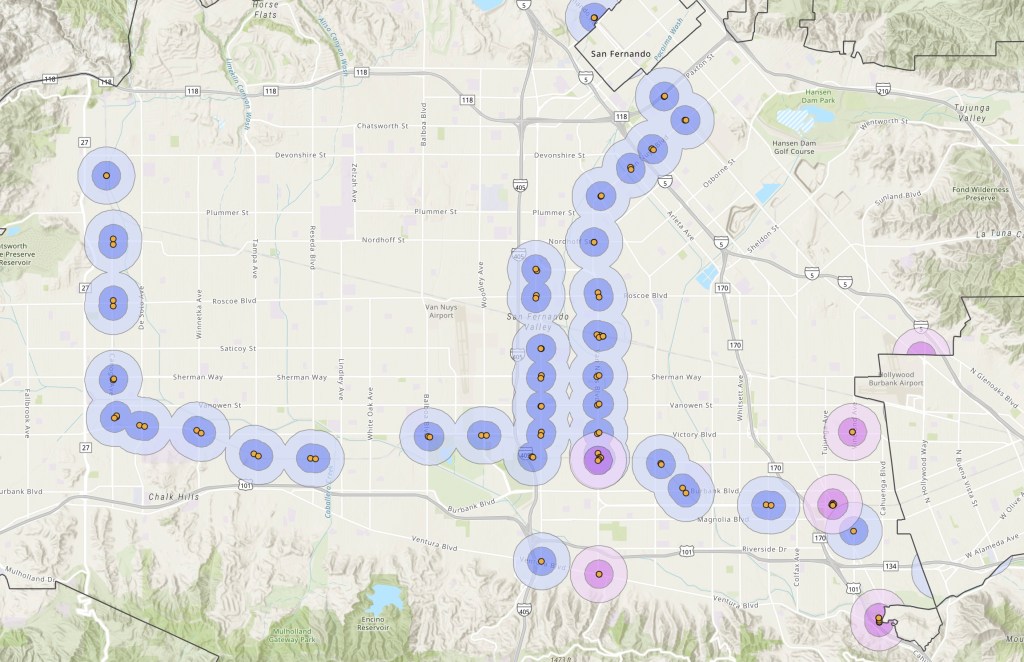
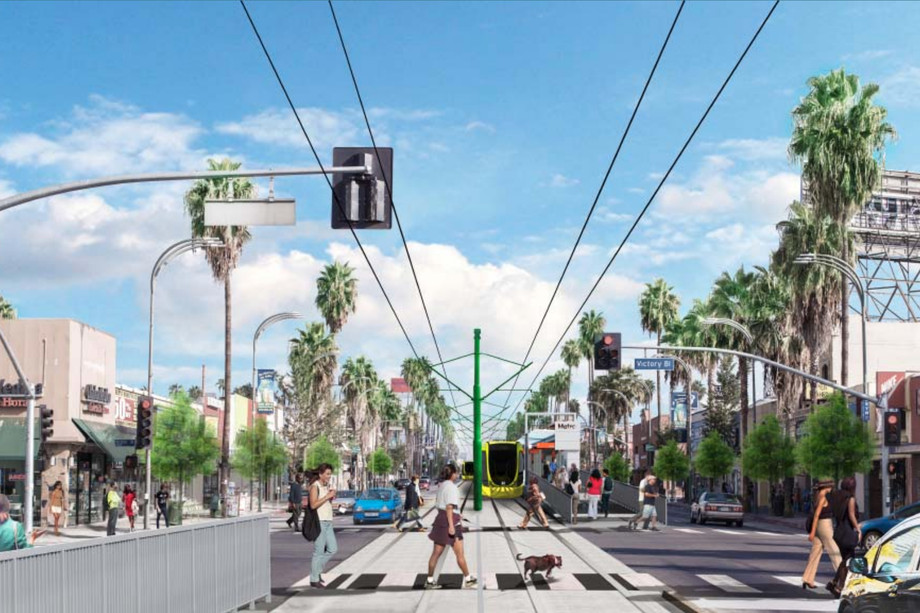
Along Sepulveda and Van Nuys Boulevard the proposed zoning map looks like purple bullet holes that radiate from transit stops. These circles are centered around the transportation stops and take no consideration into the historic or local character of any neighborhood. 

For example, I live on Hamlin Street which is a “Tier 2” zone because we are within a ¼ of Sepulveda Boulevard bus stop. My street, built on old walnut orchards, from 1936 onwards, is lined with palm trees, and then curves along with oak trees. The street has two-hour parking because of its proximity to Van Nuys High School.

If the law succeeds, my section of Hamlin Street would allow 65-foot-high buildings (six and half stories).

But the part of Hamlin Street a few hundred feet east from me would remain single family.

West of Sepulveda, south of Victory, is the beautiful and often filmed Orion Avenue with large colonial style houses planted with rose bushes and ranch fences, the location for many commercials seeking “a typical American street” that doesn’t exist anymore. With SB 79, the east side of the street could be obliterated with apartments that destroy the very beauty residents and film makers pay dearly for.


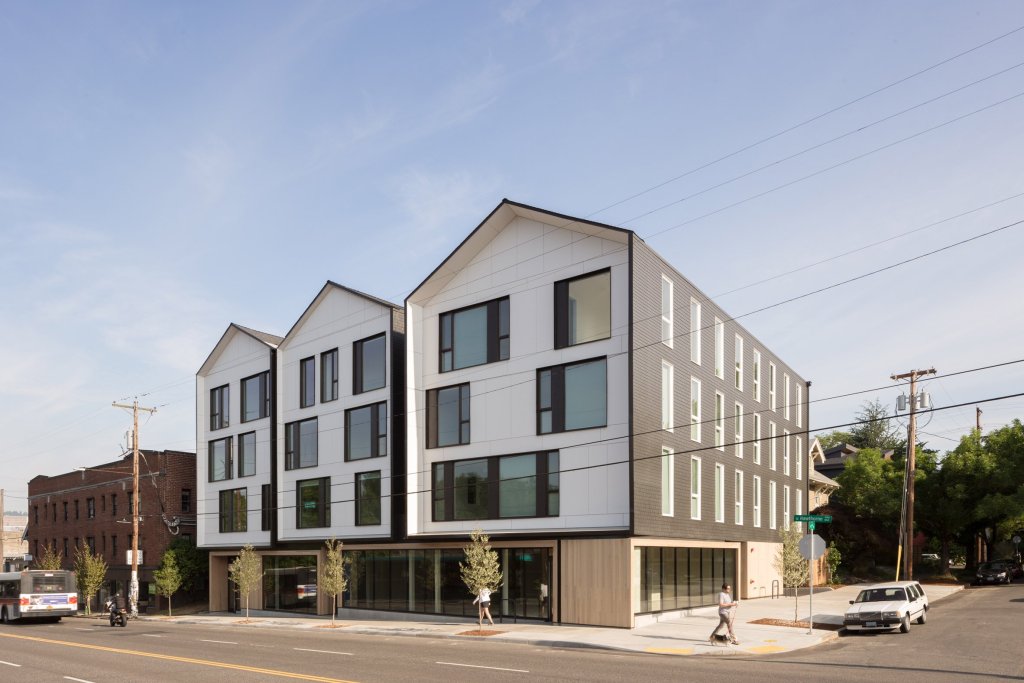
Yesterday, I had a real life encounter of what Hamlin St. and other locations nearby could become when I parked my car near 3052 West Boulevard in the Jefferson Park neighborhood of Los Angeles, east of Culver City. I was there to visit a new, multi restaurant creation, Maydan Market.

This area was given an economic boost by the Expo Line, a light rail system that connects downtown with Santa Monica. The good parts are investment, cleaner streets, the lowering of crime and the raising of the cultural and civic activities. 

The ugly parts are the disfiguring, ad hoc apartments that pop up on formerly coherent streets of 1920s bungalows. My eyes hurt looking at 3045 West Boulevard, a black and gray box suspended over a cinderblock faced garage, with a massive four story high open-air staircase on the side of the building. It looms like a monster over the street, with no respect or sensitivity to the vernacular that had existed here for 90 years.

Am I a hypocrite for decrying liberalized zoning that will change my backyard? Yes, I am. Sort of.

This blog has argued for years for the construction of new, multi-family buildings to replace unused parking lots behind abandoned shopping centers, or where there is a sea of asphalt like the Orange Line parking area along Sepulveda which was constructed for thousands of vehicles and is now empty.  I have fought for the idea of an architectural, coherent, community wide style that would incorporate history and embrace modernism but do it without destroying but enhancing the community of Van Nuys. 

And I’ve always cast a cold, unforgiving, forensic eye on the political neglect of Van Nuys by elected officials who seem to always be performing social media acts of kindness for oppressed groups while neglecting the needs of residents in this district. 

There are commercial zones galore that cry out for taller residential buildings along the wide boulevards of Van Nuys and greater Los Angeles. The one-story tall shops with parking lots in front are so defunct and useless that their very presence destroys civilized life and endangers the health of pedestrians. 

There are blighted buildings, such as this one at 7101 Sepulveda, that have been empty for years, packed with derelicts, unable to be demolished, yet crying out for replacement. As a bitter pill, the residents in the tree lined, charming, quiet streets behind must now expect multi-family housing to replace their 1940s ranchettes.

What do our elected leaders in Sacramento do with the quandary of building more housing? They embrace a fantasy of destroying single family homes and backyards. 

Will your neighbors and you, the elderly couple in the corner house, desire to ride buses (with homeless, drug addicts, crime?) and come home, late at night, from a bus stop on Sepulveda, and enter a new world of yet more cars, loud music, marijuana, dumped mattresses, and YouTube/TikTok/OnlyFans influencers smoking on the balcony next door? I doubt it.

Is that the paradise of tomorrow? Circles on a map, purple splotches of political malfeasance, indicating nothing but more mayhem, disorder and chaos.

I hope I’m long gone, either from life or Van Nuys, before this happens. 

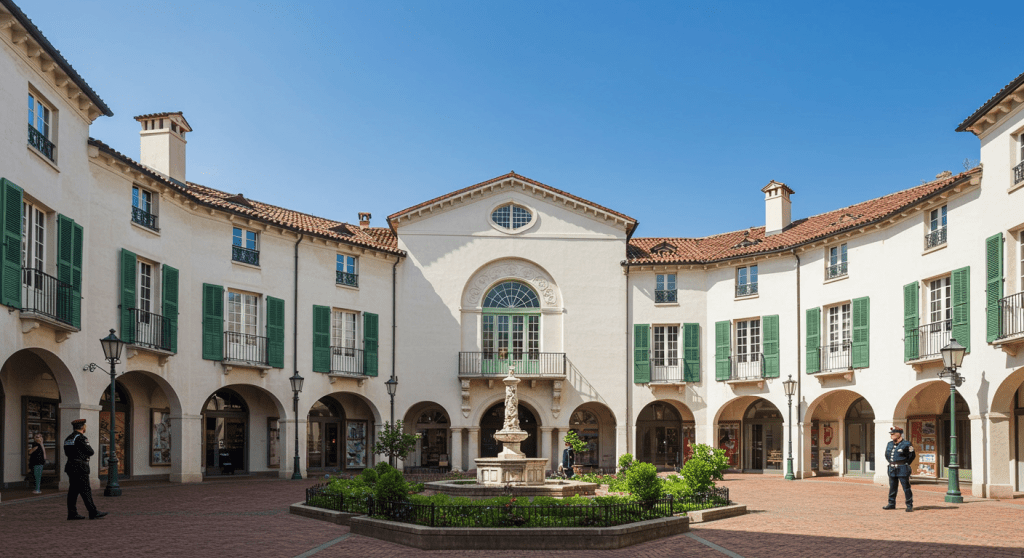
Turin Style Architecture in Van Nuys.


Above illustrations by Gemini AI


Much of commercial Van Nuys is in the worst condition of its 115-year-old history. There are empty stores, enormous parking lots with no cars, and trash camping everywhere.

What could replace all this and what kind of architecture would protect us from hot sun and occasional rain? The answer might come from Southern Europe.

Last year I spent five days in Turin, Italy, a metropolitan city of 841,600 in the NW of the country.

It has remarkable architecture, which was mostly built in the 18th and 19th Century by the Savoy Family in a unified, Neo-classical style.

The city has a series of arcades and long, shaded passageways, that protect from rain and sun. The arches along the ground floor provide a unifying effect that harmonizes all the buildings and anoints the urban environment with a regal and practical building style.

There are numerous courtyards, public and semi-private, which are encased by three and four story buildings.

Here are some photos I took in October 2024:

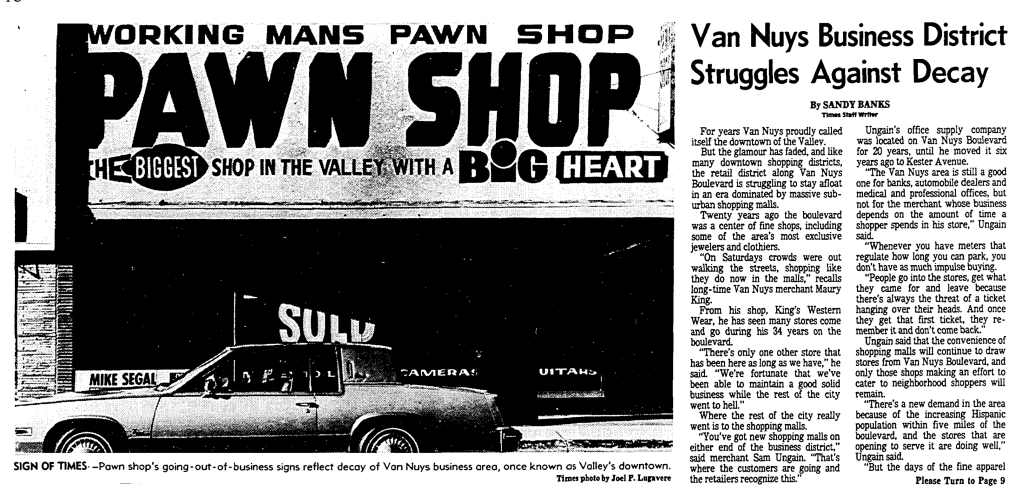
Van Nuys Business District Struggles Against Decay: 12 23 1979


43 years ago the situation of the Van Nuys Business District was quite abysmal. The good shops had closed down and the street was full of bail bonds and pawn shops. Merchants complained about street racing, and the negative affects of parking meters which discouraged shoppers from spending more time in stores.

On Wednesday nights the street came alive as thousands converged to watch cruise nights. But the crowds blocked streets and left behind trash. The businesses didn’t like it.

In 1977, “Vitalize Van Nuys” began, a privately financed, community-based redevelopment organization. It sought to revitalize businesses, generate more employment and upgrade the surrounding residential community.

34-year-old Bruce Ackerman operated the Greater Van Nuys Chamber of Commerce after working with the San Fernando Chamber of Commerce. He promoted a resurgence of retail.

“Van Nuys really hit rock bottom in 1977,” recalled Dick Lithgow of Agency Insurance.

There were 23 massage parlors back then.

Hopeful signs in 1979 included a $14 million dollar government complex with new courthouses, post office and police station. There were also new studies forecasting “a tremendous demand for office space in Van Nuys.”

Legitimate businesses such as Nahas Department Store complained that vagrants harassed customers in the parking lot.

Owner Richard Smith said the neighborhood was increasingly elderly and Hispanic. “We were concerned with the growth of the barrio around 1975-76, but that has not caused any problems for us,” he said.

Another positive sign for Van Nuys in 1979 was the 100 businesses that had spent more than $4 million dollars ($4,000 per business) upgrading their properties.

In 2022, it is hard to imagine the challenges Van Nuys faced in 1979.

Fortunately, those far sighted visionaries gave us a truly spectacular urban boulevard we can all be proud of: clean, safe, thriving, walkable, architecturally magnificent, the jewel of the San Fernando Valley.

Thank you especially goes to Councilwoman Nury Martinez and Mayor Eric Garcetti for their leadership!

Looks Like Yet Another Redevelopment Plan for Van Nuys.


In Urbanize LA “Revamp in the works for Van Nuys Civic Center.

“In a motion entitled “Building a Livable City,” Martinez instructs the Planning Department and LADOT to take stock of the number of parking spaces needed to serve Van Nuys City Hall and other government functions in the Van Nuys Civic Center, and lay out a plan for consolidating parking onto a smaller footprint. This would clear the path for redevelopment of the complex’s remaining parking lots with a mixture of affordable housing, open space, retail, and other community serving uses. Likewise, Martinez proposes that any scheme also incorporate amenities for pedestrians and cyclists.”

Must we endure these promises again? Here is what they were writing 31 years ago this month:

Downtown Van Nuys, due to 70 years of misguided “redevelopment”, has obliterated itself and now crawls along at the lowest condition in its history.  Homelessness, abandoned storefronts, and an eight lane wide highway are what it looks like.  

Ms. Martinez has occupied her office, figuratively and literally, for over 7 years and during that time she has spoken up about all the ills of Van Nuys and the NE SFV: human trafficking, crime, housing, drugs, homelessness.  

Yet, still the tent cities remain. The shopfronts are no more. The entire area looks like hell.

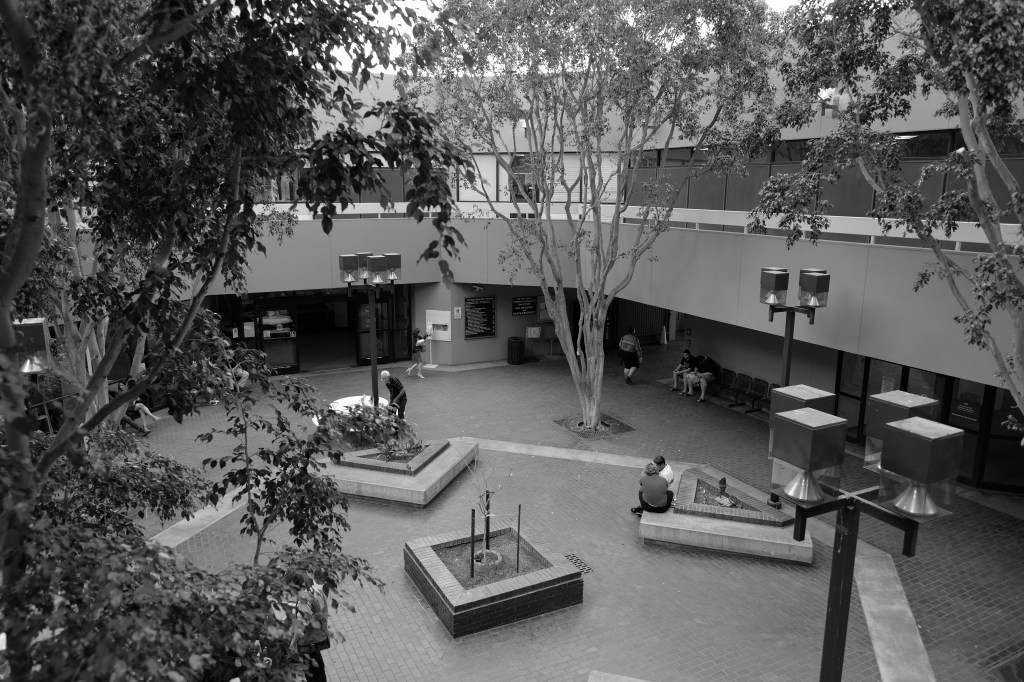
And at the center is the 1958 planned Van Nuys Civic Center, a ghost land of courthouses, library and police station all populated by vagrants, trash, emptiness and hopelessness. Surrounding the area are many tens of thousands of parking lots, enormous concrete fiascos erected 50 years ago to provide dignified places for vehicles to live. They are mostly empty now, and should be destroyed and replaced with housing, housing, housing!

But this requires a plan, an architectural plan, and there is never, ever any architectural thought put into any structures that go up in Van Nuys. Instead, a crooked and semi-literate group of grifters with dough show up at planning board meetings and offer up the shit boxes that are shoved into the poor streets nearby. And VNB remains the center of dysfunctional governance in the SFV. 

In past “great plans”, the Orange Line bus and and bike path was supposed to revive Van Nuys. But next to the path, are parking lots, rented out by nearby car dealers to store their unsold vehicles. This land, paid for with public tax dollars, is instead being exploited by for profit auto dealerships.

So I’m cynical.

Our present condition as a city, due to the horrendous tenure of Mayor Garcetti, normalized everything wrong, illegal, dirty and dangerous.

But let’s try again. Keep trying. We have nothing to lose. But our minds.

Our Lost Vitality


Sepulveda and Erwin, Van Nuys, CA.

Housing, it seems, is everything these days, the foremost topic on the minds of Angelenos. 

Those who can afford it fear those who cannot.

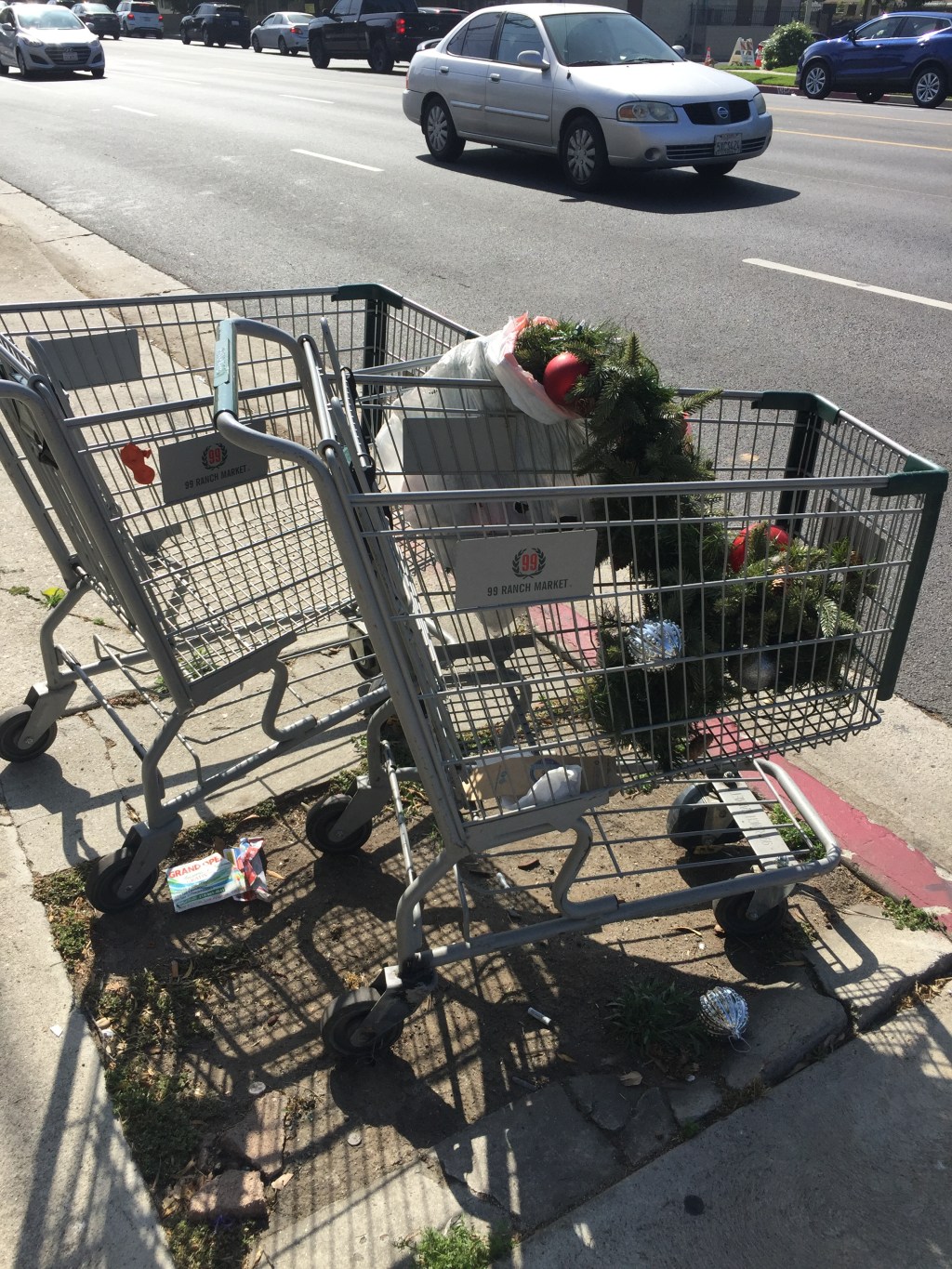
Fearsome, it seems, is our ragtag army of many thousands of un-housed vagrants who have established anti-communities out of shopping carts and tents, and made bedrooms, bathrooms and living rooms out of bus benches, trains, bridge underpasses and alongside our freeways. Covered in dirt and tortured by circumstance, pulling three bikes with two legs, they remind our fortunate ones that life often goes bad even for the good.

3/5/18 Bessemer at Cedros.

SB50, the state proposed override of single family zoning, struck terror into the hearts of many in Los Angeles who feared that the single family home, housing twelve unrelated people, might soon be replaced by twelve unrelated people in four houses on one lot.   

“Leave it to Beaver” (circa 1959) the imaginary ideal of Los Angeles.

“Leave it to Beaver”, “Dennis the Menace”, “Hazel” and the rest of the 1950s and 60s back lots of Columbia and Warner Brothers are how many, now aging, but still ruling this city, think of Los Angeles, and how it should look. 

When Dennis the Menance came home he didn’t enter into a lobby with an elevator. When Dr. Bellows drove up Major Nelson’s street, it was clean, tidy and sunny. 

Home of Major Anthony Nelson, “I Dream of Jeannie” (1965-70)
The cast and crew of the remodeled “Brady Bunch” home in Studio City, CA. (HGTV)

HGTV is now remodeling the real life home in Studio City that was used as the location for Mike and Carol Brady and their bunch, recreating in reality a 1970s home, inside and out, following an architectural blueprint from the set pieces of an inane, 50-year-old television show that seemed saccharine the night it premiered in 1969.

It is heartwarmingly creepy to see the now white-haired kids throw a football in an astroturf backyard, retirees feigning juvenile excitement as a synthetic reality show impersonates their old sit-com and pumps new advertising blood out of Geritolized veins.

____________________________________________________________________________

Woodley Park, 2018.

But life is not a syndicated sitcom. What’s on TV is not what’s beyond our windshield.

We live in Los Angeles, and die a bit here, day by day. The city is getting worse in every imaginable way: housing, health, transportation, taxes and education.

Homeless on Aetna St. Feb. 2016

On the roads, in real life, in 2019, cars are now parked and packed alongside every obscure street because it takes four working, driving adults to afford one $3,200 a month apartment.

Building more apartments doesn’t mean more cars, it simply means less apartments. And less apartments means more rent, so Los Angeles keeps eating itself up in contradictions of cowardice and myopia.

__________________________________

Japan

As I travel around Los Angeles and see all the enormous parking lots and one-story buildings alongside eight lane wide roads, I wonder why we are so unable to build enough houses to house everyone.

California is not nearly as crowded as Japan, yet that country ingeniously designs small dwellings that artistically and creatively provide homes for every type of person.

On the website Architizer, I found the work of a firm called Atelier TEKUTO.

Homes shown on Architizer by Atelier Tekuto are really tiny, but they are built solid, with each dwelling quite individual in style and form, an irony in a country where every black haired man coming from work is dressed in a white shirt and dark suit.

But Japan somehow pulls together the artistic and the structural to provide enviable and well-designed homes in well-protected, spotless communities. Violence is rare, except yesterday, but nobody goes out at night fearing random mass shootings, it is safe to say.

We can’t, or should not, want to remake the depravity of our dirty, violent LA into clean, peaceful, obedient Japan, with its fast trains and scrubbed sidewalks, but we might borrow some of their ideas. After all, we conquered them in 1945, can’t we take home some intellectual souvenirs?

Imagine if Van Nuys took the courageous and innovative step to redo the large, unused parking lots behind all the abandoned shops on Van Nuys Boulevard with a mix of little houses like these and perhaps some larger structures several stories high?

What we have now is this:

Don’t we have a Christopher Hawthorne now, Chief Design Officer, working under Mayor Gar[BAGE]cetti? Former architecture critic at the LA Times, he may know one or two architects from his old job. Perhaps Mr. Hawthorne can take action?

What have we got to lose? 

We are so far down in quality of life that we must engage our energies to pursue a remade Los Angeles.

A city that does not harm us but lifts us up.

As Japan shows, you can have enlightened ideas without living alongside mounds of trash and outdoor vagrancy.

There is no logical connection between toleration of outdoor garbage dumps and political tolerance in general. In fact the worse our surroundings get, the more people will turn right and maybe even hard right.

Van Nuys: Vigorous Valley Hub 12/13/1959


It was “230 square miles encircled by mountains and roofed by a blue sky.”

Its 800,000 residents were more populous than Boston or San Francisco and its land size equaled the city of Chicago.

It was famous for “its distinctive way of life” a “perpetual exhibit of Modern Suburbia at its brightest and biggest. Valley people live outdoors with patios, swimming pools and gardens all year through. They wear sports clothes and drive sports cars.”

Vigorous Valley Hub, Page 2

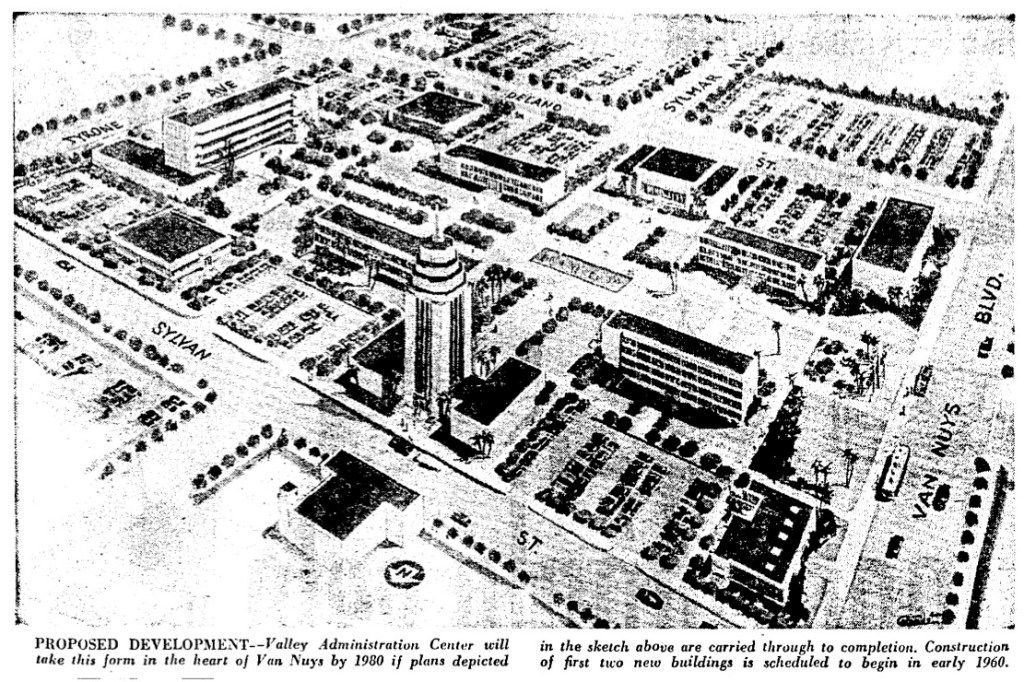
So exclaimed the Los Angeles Times on December 13, 1959 in breathless prose accompanied by an aerial illustration of the Valley Municipal Building surrounded by open parking lots and flat topped office buildings floating in a sea of spaciousness.

And Valley industries were tops, in the forefront of electronic, missile and space age developments. PhDs were hired by the thousands, and the Van Nuys Chamber of Commerce sponsored more than 239 courses for upgrading personnel including 60 UCLA classes taught right here in the San Fernando Valley.

The Air Force and the US Government loved the spaciousness of the valley and its highly educated workforce and spent over 1/3 of ballistic missile budget dollars here.

90% of all filmed television was produced at such studios as Warner Brothers, and Disney in Burbank; Universal in Universal City and Republic Studios in Studio City.

And to make sure the success, the glittering, shining, prosperous times continued, efficient government services were necessary. 

In 1959, a $7 million dollar streamlining of the Valley Administrative Center in Van Nuys, described as “second only to the Civic Center in downtown Los Angeles” began a sweeping, and comprehensive remodeling of the area by bulldozing hundreds of old bungalows and opening up a vast pedestrian mall which would one day be a glorious assemblage of courthouses, government offices, a new library, a new police station, and parking for tens of thousands of cars.

_________________________________


If the luminaries, the citizens, the people of Van Nuys in 1959, could have only looked 60 years into the future, they would have been stunned by the enormous progress our town has made, truly a model of technological, architectural, social, cultural, and aesthetic achievement.

Today, a walk down Van Nuys Boulevard between Oxnard and Vanowen is fun, safe, entertaining, clean, delightful, a veritable model of city planning with great restaurants, wonderfully restored old buildings, friendly shops, and spotless sidewalks.

Councilwoman Nury “No Human Trafficking” Martinez keeps everyone on their toes, and should the police even hear of one intoxicated person nearby, they are immediately apprehended and taken into custody.

Our schools are wonderful, ranked first in the world, with the highest paid teachers in North America, and schoolchildren getting healthy exercise walking and biking to nearby classrooms. All students in Van Nuys are required to live near school so roads are not jammed with parents driving students to other districts.

Recent statistics show that only 1% of all children are obese; and diabetes, obesity, mental illness, marijuana and drug addictions are almost unknown in this healthiest of districts.

Mayor Airwick Garbageciti is adamant in keeping Van Nuys clean, lawfully prohibiting anyone from sleeping, camping, tenting, RVing on public property. Nobody disagrees because after all the public taxpayer pays for public property and expects it to be kept in tip-top condition.

Laws are faithfully obeyed, and drivers always obey speed limits, stop for red lights.  And illegal dumping, a scourge of the third world, is never seen here. 

A new law proposed by the City Council and supported by Mayor Garbageciti will require RHP (Registered Homeless Person) identity cards which will monitor people to make sure they report to 40 hour a week jobs cleaning parks and mowing lawns and working for $10 an hour to assist elderly residents who need house painting and yard maintenance. 

We, in 2019, are rightly grateful for what our ancestors built here, and we vow to keep it as perfect as it is for many years to come.