Those Fantastic Clouds


In Southern California, we are so used to living under full sun with no clouds, that the presence of an impending storm is a revelation. The illumination inside our house changes, and there are real shadows hitting the walls and the sofa again just as there are in other real cities around the globe.

Introspection and thoughtfulness, a pause in the frantic, occluded light, the end of the year.

It takes days for the rain to come. We know it’s coming, the way we knew the virus was coming in February 2020, like a slow-motion freight train. But precipitation, no matter how meager, is a benevolent threat we can get excited about.

Yesterday we were still in the midst of a refreshing cycle of weather: cold nights, cool days, sun and partial sun, rain and no rain.

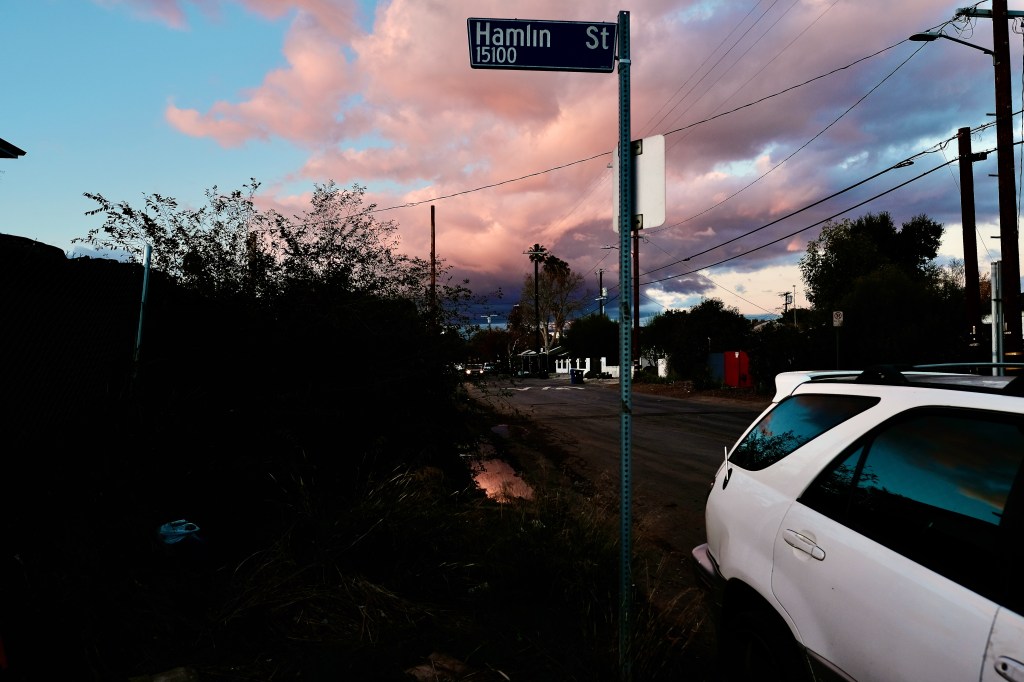
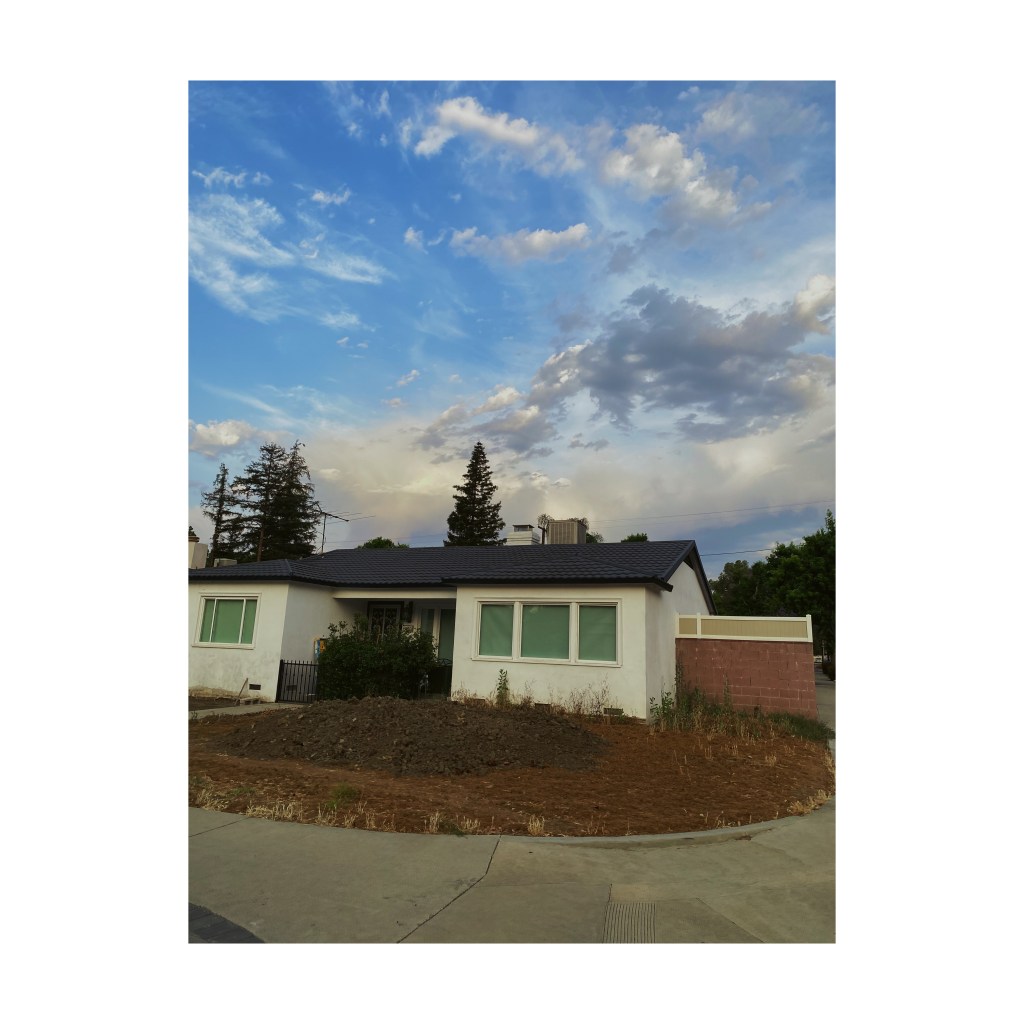
Around 4 pm I looked outside and saw a stunning sight of a gold leafed tree against a blue, pink, and gray sky. It would only last a few minutes so I grabbed my XE3 camera and ran out.

It was a strange hour. There was a menacing helicopter chopping up the sky, and reckless, going back home drivers speeding down Columbus and Hamlin in monster trucks. 

Death was just beyond my driveway so I wandered out cautiously.

Somewhere along crudely unpaved Columbus, where there are no sewers or curbs, I could see the vast sweep of the northern sky and those fantastic clouds miles away.

September 6th Through the Years.


Let us pick one day off the calendar and compare the weather in Los Angeles on September 6th for every ten years since 1950.

It’s hot today, (nearly 100 in Van Nuys) and we’ve had days in the last week when it was 106, 110, 113 and only dropped below 90 well after midnight. All of the western US is under a heat dome, and even San Francisco is sweltering at 91F at 2pm.

Los Angeles weather readings were taken at LAX (thank you Orca), which is different than what it might be in Marina Del Rey, Woodland Hills or Van Nuys.

I perceive that Los Angeles is a hotter and more humid city than it was before. And the old “dry heat” is disappearing as the Pacific Ocean heats up and the cooling effect of that once frigid body of water dissipates and weakens.

I came here in 1994 and the air was dirtier but there was a certain monotonous regularity to the weather, dependably hot in the Valley in the summer, and dry and windy and then rainy in the winter. It was still hot in September or October.

But not this hot..

I found some weather charts for comparison on Weatherspark. You can look up any day of the year historical weather here.  I pulled up LAX temperature graphs from Septemeber 6th: 1950, 1960, 1970, 1980, 1980, 1990, 2000, 2010 and 2020.

If I’m reading them correctly things were quite pleasant for almost every decade until 2010.

9/6/70: high 81, low 61


9/6/80: high 72, low 62

In 2020, we knew we lived in hell.

Now we need to get out of hell.

But how?

POSTSCRIPT:

Reader Orca pointed out to me that the charts above were taken at LAX not downtown.

I apologize for that mistake.
Here are temperature readings taken at Burbank Airport from September 6th every decade except 1980:

Middle of June


It is only mid-June but already the extreme heat has landed in Southern California.

Every week there is another “record breaking” temperature in thousands of places, not only here but around the world.

To an older Angeleno, June once meant days of haze, overcast and cloudy.

The Pacific Ocean was cooler, even cold. The truly hot times did not start until late August.

Now the ocean is warmer, semi-tropical, and the clouds that emanate from the sea are the clouds we see in the sky, and they are the clouds one sees in places like Miami and Houston. There is “monsoonal moisture” and the air is thick, even in the morning, making the heat more intense.

I’m not a meteorologist but something is very strange in the skies these days.

This is what the “Kester Ridge” neighborhood looked like around 6:30 am today.

They Had Promised Rain.


IMG_0241

IMG_0240

IMG_0239

They had promised rain.

We were going to be drenched, drowned, and flooded.

The clouds would stay overhead for months, and there would be endless days of mudslides, dark clouds and gray skies.

They had promised rain, clearly, and said it in English, many times; the word was rain, but there was so much of it and they had renamed him El Niño.

For maybe one or two days there was rain and it came down and drenched the garden and it seemed that relief was on its way.

But the heat and the sun, and that blinding light, the kind that throws deep shadows on surfaces, came back.

The hot winds, the cloudless skies, the bees and the mosquitos, the dust and the fires, and the furnace of the car parked in the sun with black seats that burn your ass when you sit down.

IMG_0244 IMG_0243 IMG_0242

In Hancock Park, last Saturday, the air smelled like smoke, and lungs labored hard to bring in oxygen.

But on curved streets with swept sidewalks and trimmed hedges, homes glowed, in the inferno.

Movie star beauties, these residences, from the 1920s and 30s, photographed like Garbo and Gable, in black and white.

They retained dignity, reserving in elegance, those rights given to the rich, to remain unaffected by external events, to quietly succeed by dint of elitism, and transcend the hot weather through graceful form.

IMG_0237

IMG_0236

DSCF0010

There are no sudden storms in the Southland.


There are no sudden storms in the Southland.

They are slow, and anticipated for many days before arrival.

The rains of Los Angeles are not the violent and fast moving ones from my youth in Illinois.

They come from San Francisco, imported and exotic, served only in winter.

They travel, as if on a slow moving freight train, chugging down across the mountains, picking up wind and moving clouds with great effort, until, by eminent domain, they seize this region in rains, pushing out that squatter the sun, drenching the city in something purifying and disorienting, dark and light; a benevolent symphony of Earth’s workings, cleansing and renewing.

The rains of Los Angeles are a strange corrective of nature. They are more powerful and more intimidating than the human cesspool city of sudden violence and crashing cars. The Army of the Clouds is a conqueror who must be obeyed. Under occupation, rivers are rerouted, trees blown over, electrical current shut off, oceans churned, roads made impassible.

But they are kind in power, artful in practice.

They transform the ugliness of asphalt into reflecting pools.

They tame cars, dragging them through curbside baths.

They throw dark daytime shadows across the city.

And after they pass, one looks east, towards Pasadena and the nation beyond it.

And we stand, once again in the sun, in the Southland, in our winter.

Left to our own devices.

Raymer-LA River USA Gasoline Farmer's Ranch Market Raymer-Kester


Los Angeles, Oregon.


DSC_4123

DSC_4160

DSC_4135

DSC_4142

Los Angeles is not, by nature, an introverted, bundled up, snuggly, gray, rainy city.

But this year, the rains came early.

And we have had several weeks of storms, cold nights, blustery evenings.
And sparkling days with intermittent showers and drizzles, puddles and frost.

Nearby, up in the mountains, the nights are much colder and snow has fallen, snow that is visible way down here in the San Fernando Valley.

These few days, between Christmas and New Year’s, transformed and tamed the City of Angels into a Portlandia: wool sweaters, hot green tea in gloved hands, dog walkers and hikers encased in down jackets and flannel shirts, Icelandic wool caps and long scarves.

In Studio City, at 3pm on a Thursday afternoon, Laurel Tavern was filled with down-vested drinkers.

In Van Nuys, there were hardly any barking dogs left outside at night.
Only the occasional swoop of the helicopter…

I went up to the rocky, steep and trampled dirt of Runyon Canyon a few days ago. From that high altitude, I climbed higher to a mountain overlook, a physical cliff, where the streets spread out below in every direction and I could see for miles from downtown to Catalina Island.

This is where you come with your parents when they visit from out of town.
And you can sometimes convince them of this city’s virtues, because they meet its bright views absent its shady people.

And again today I went up into Wilacre Park above Studio City to capture something as brief and beautiful as a child walking for the first time: a sun and smog cursed city magnificently and somberly draped in dark and gray clouds, chilled, sobered and intellectualized by the absence of suffocating heat and blinding light.

A meteorological delusion. This is not Los Angeles. But the camera captured it. It must be real.

Refreshed and purified, swept clean for the New Year, the city and the region, ready to welcome 2013, another year, which will once again dump its toxins of illness, worry, debt, violence, deceit, sadness and broken hearts into our lingering days.

I could live here happily if it just looked sadder a few more months of the year.