The Nadir.


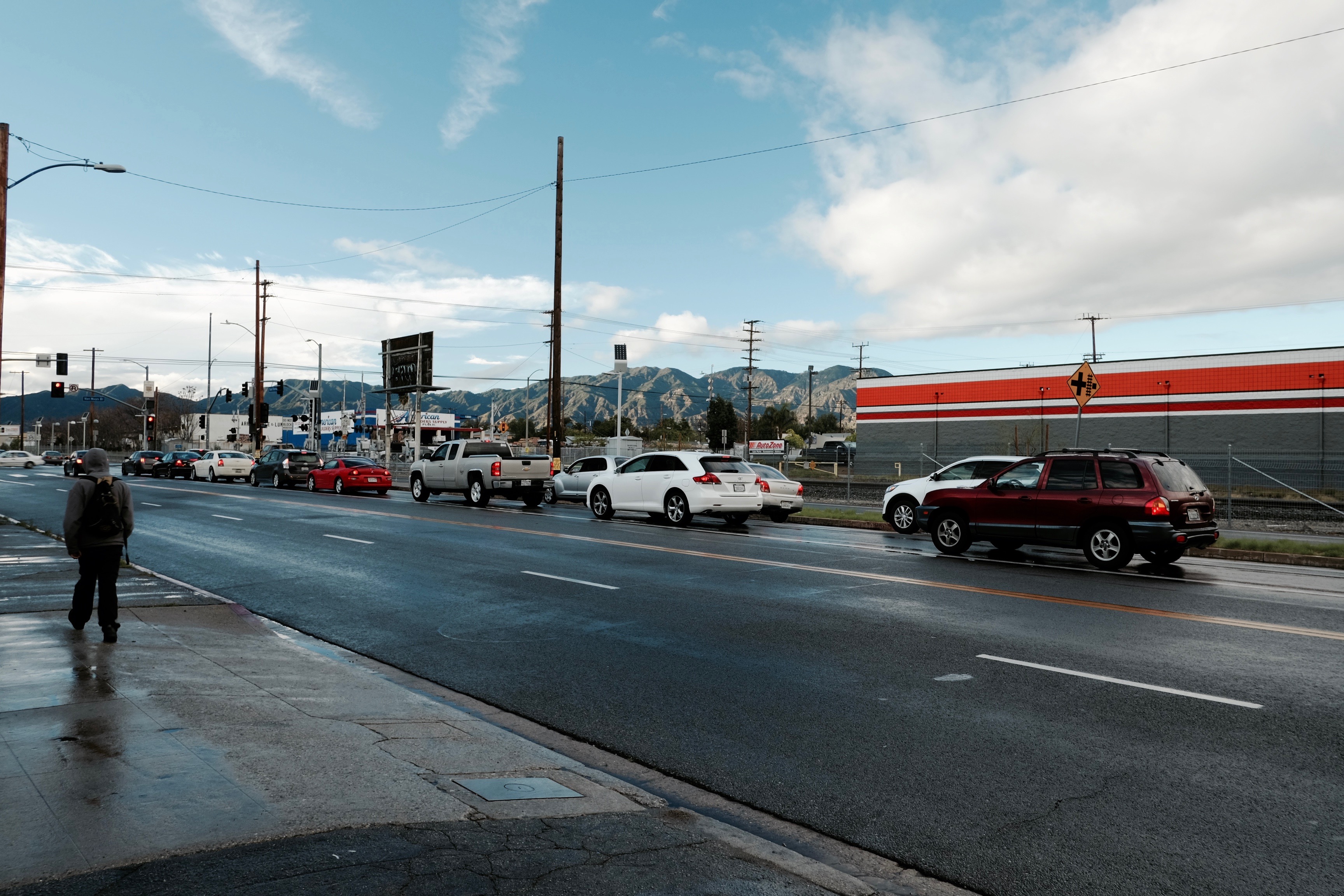
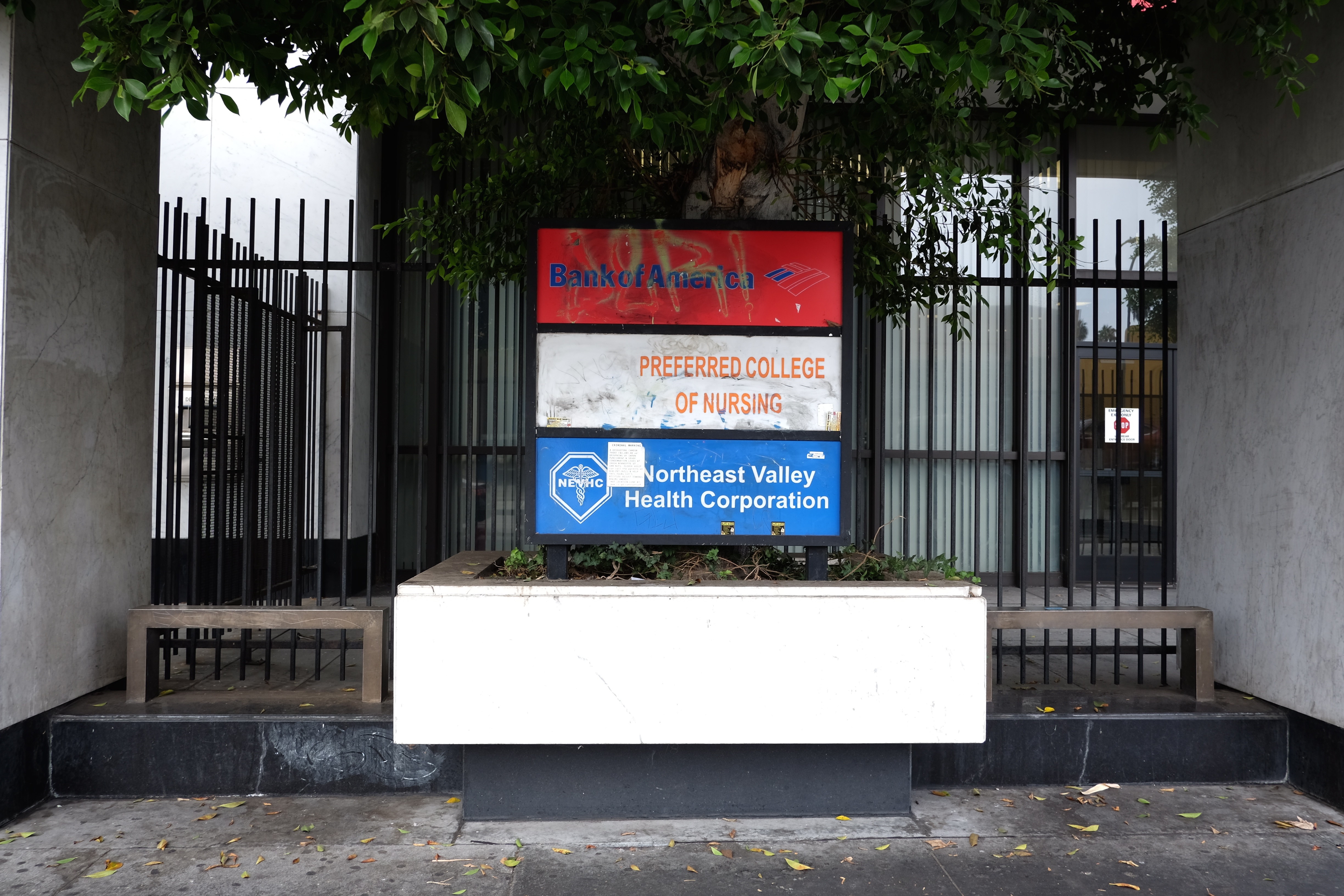
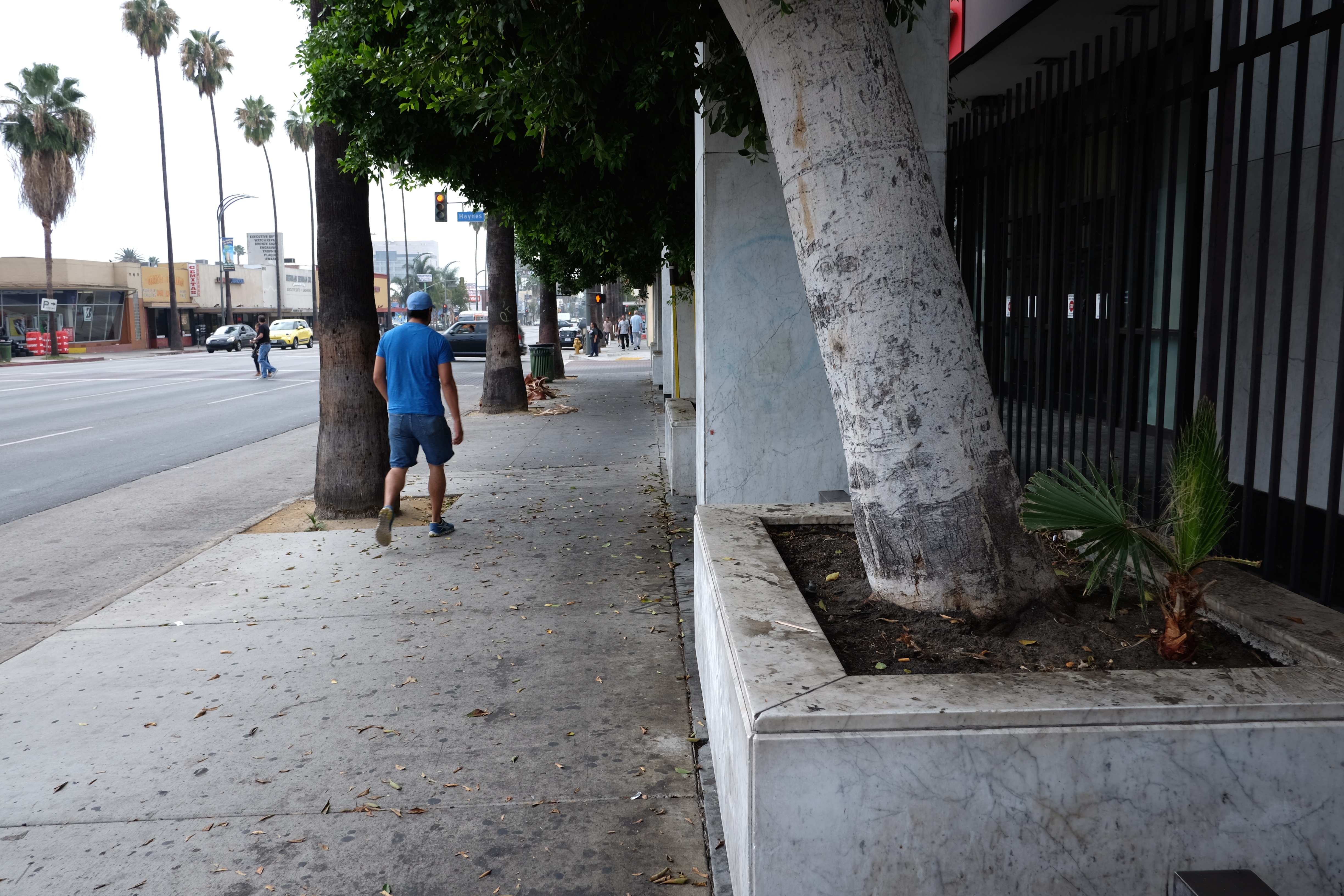
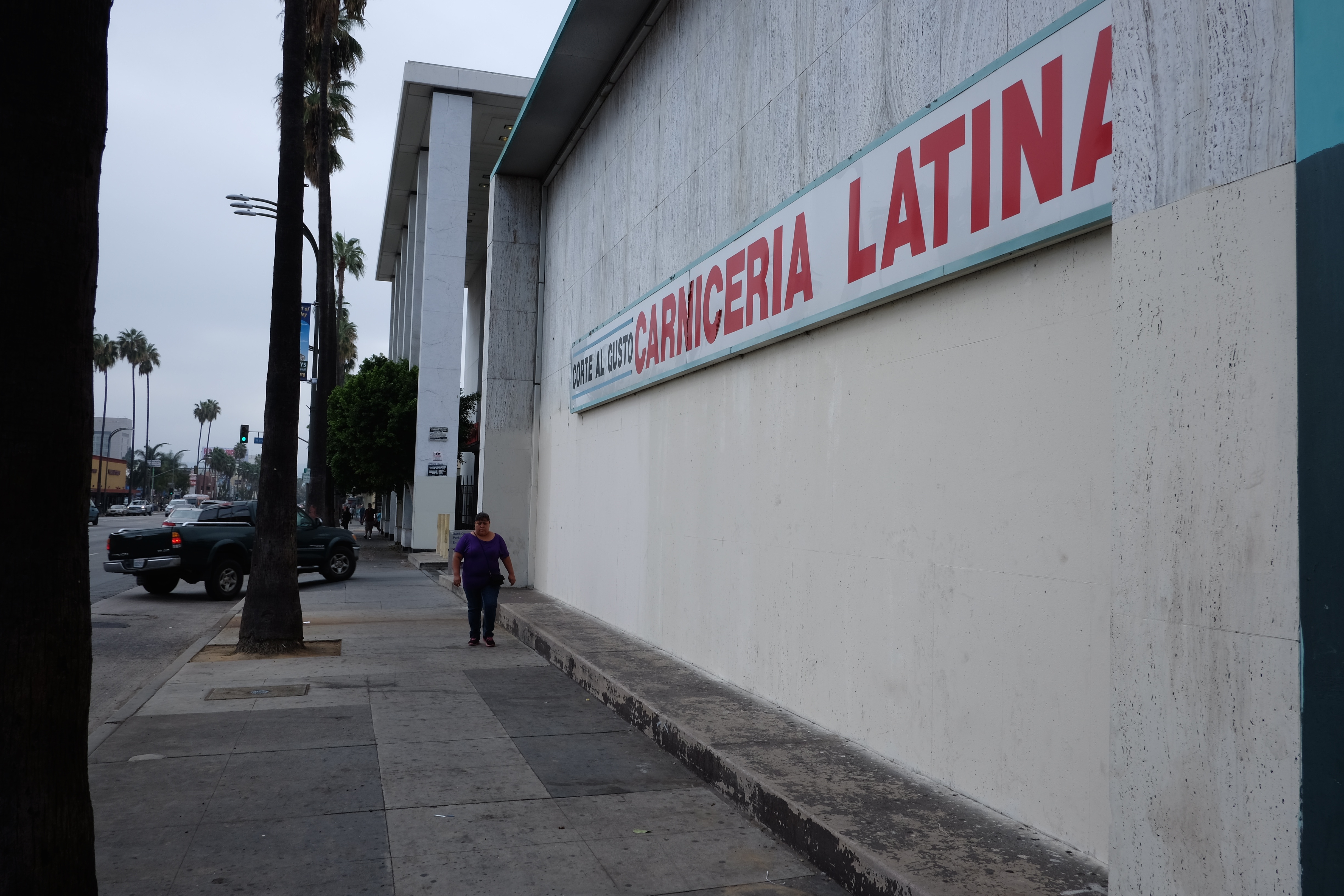
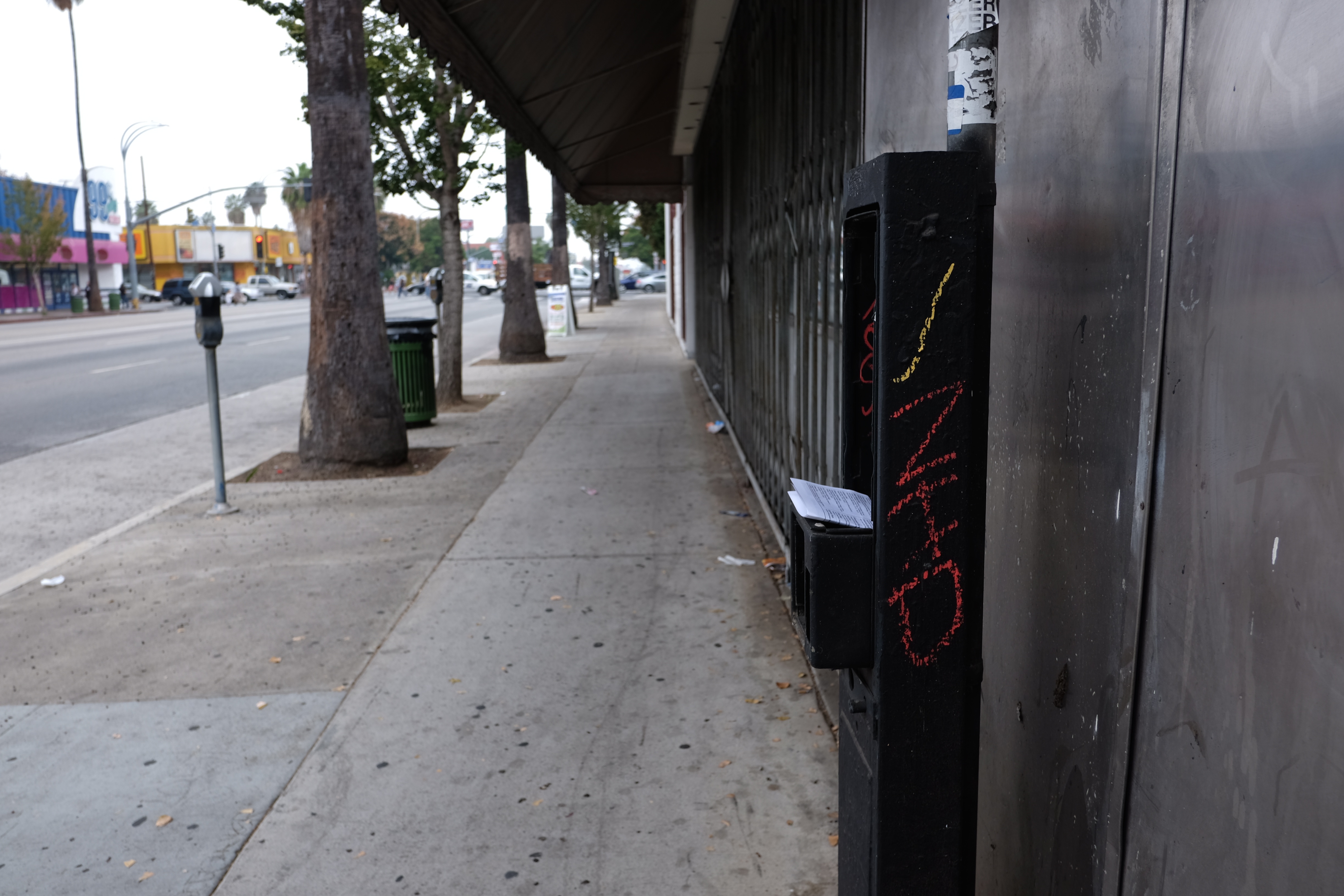
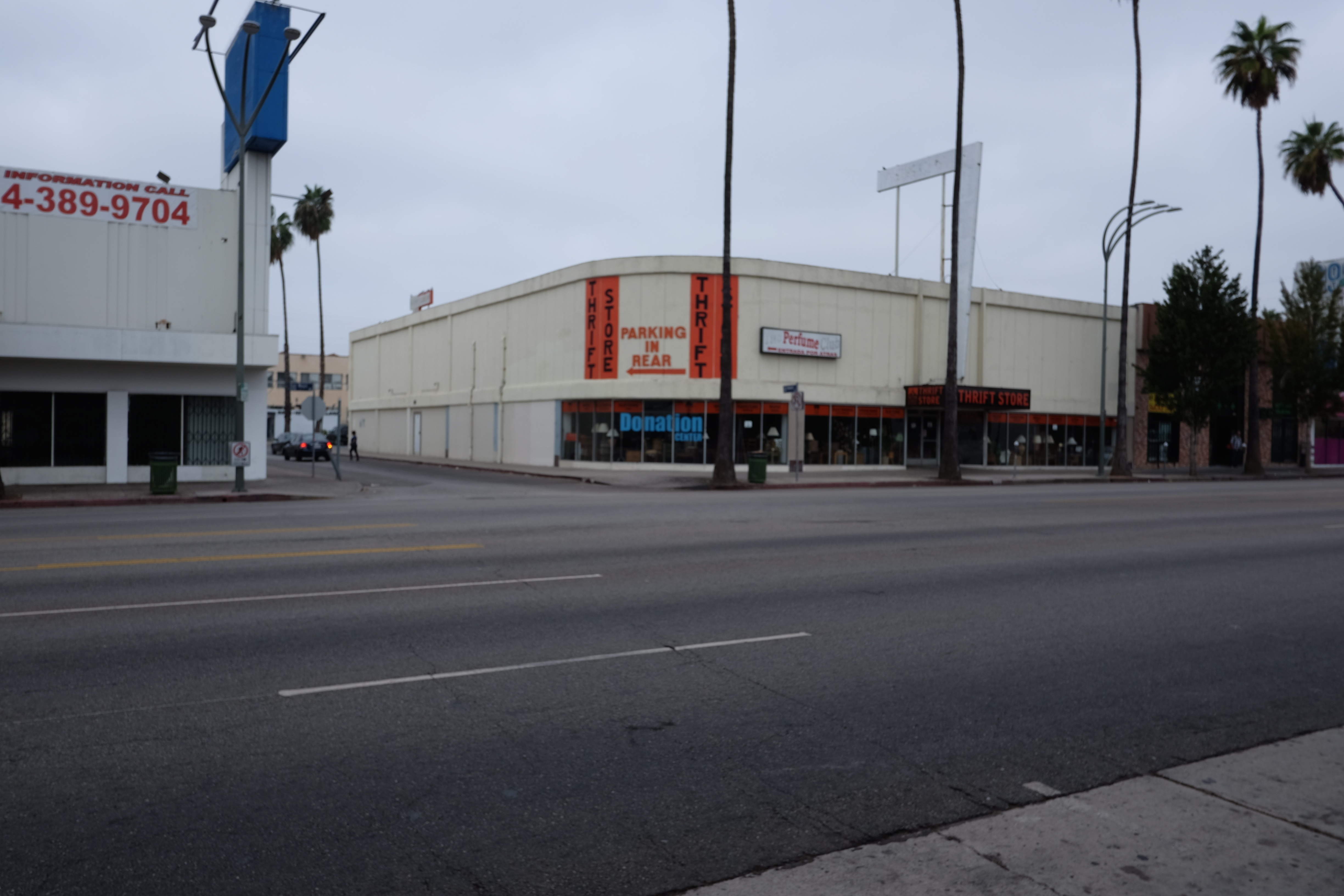
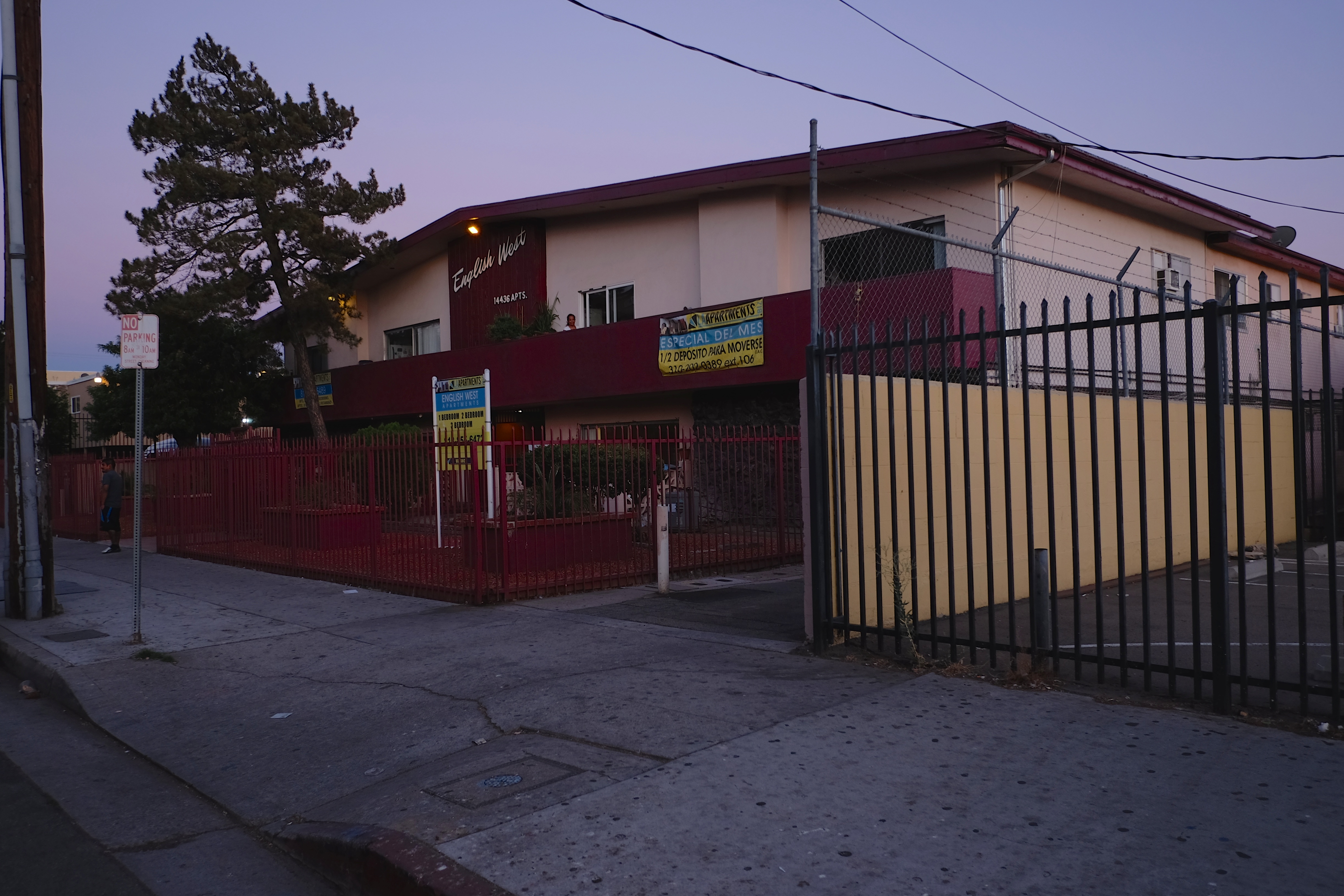
DSCF2605It is doubtful that Van Nuys Boulevard, especially that languishing, forgotten, distressed stretch between Victory and Vanowen, has ever been as low, neglected and poor as it is today.

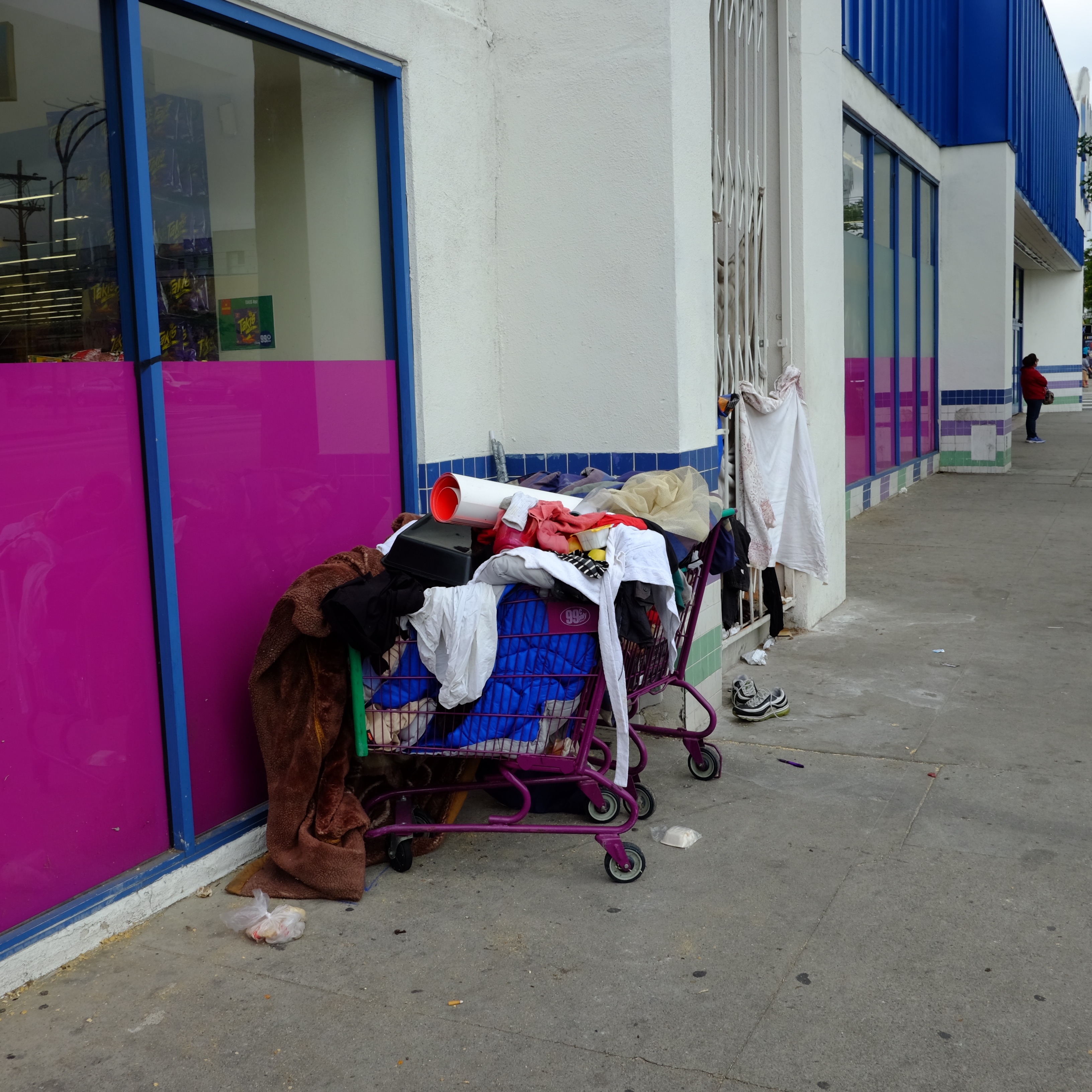
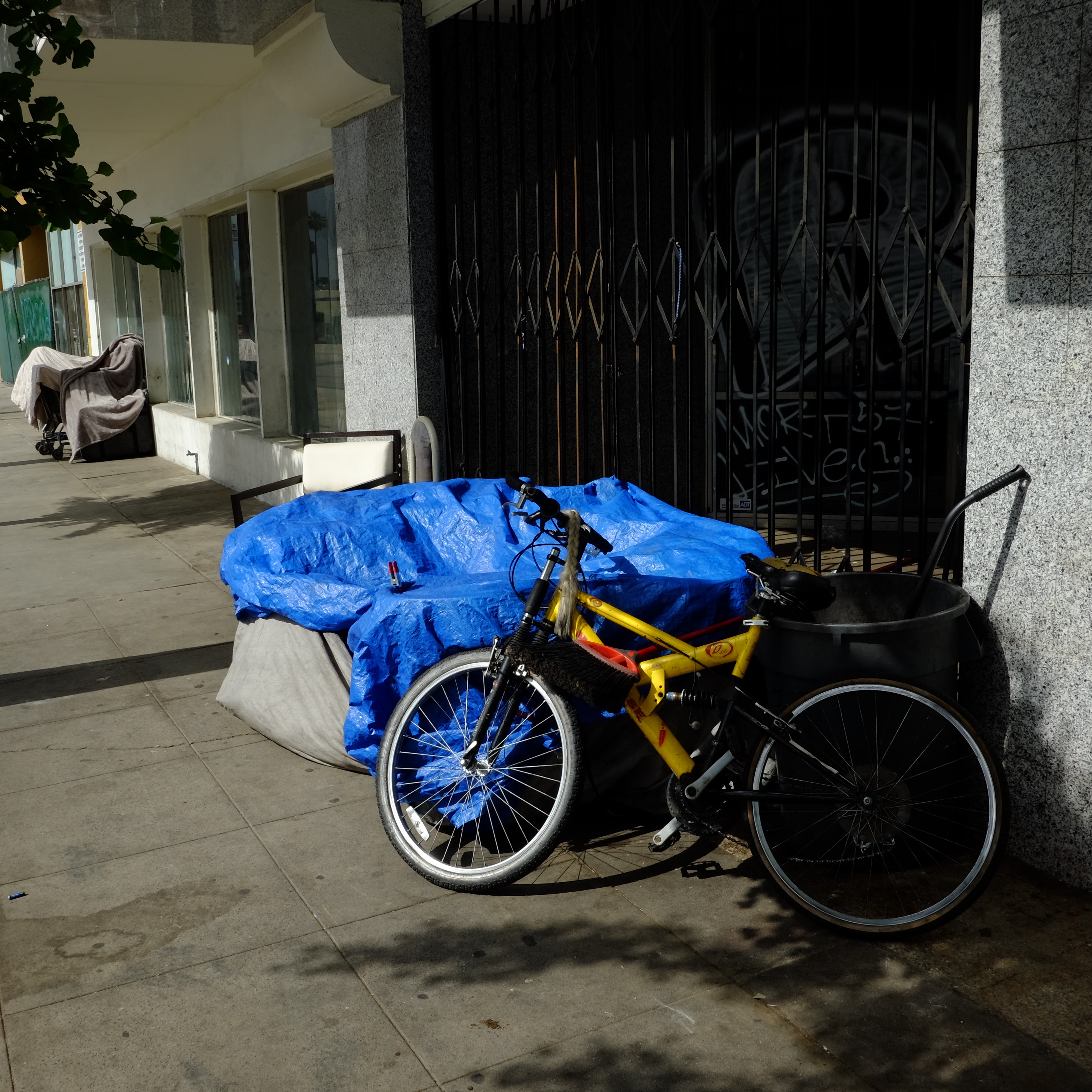
No longer do the homeless hide in alleys. They are now set up on the sidewalk, their belongings piled into shopping carts, covered in tarps.
DSCF2642 DSCF2645 DSCF2648

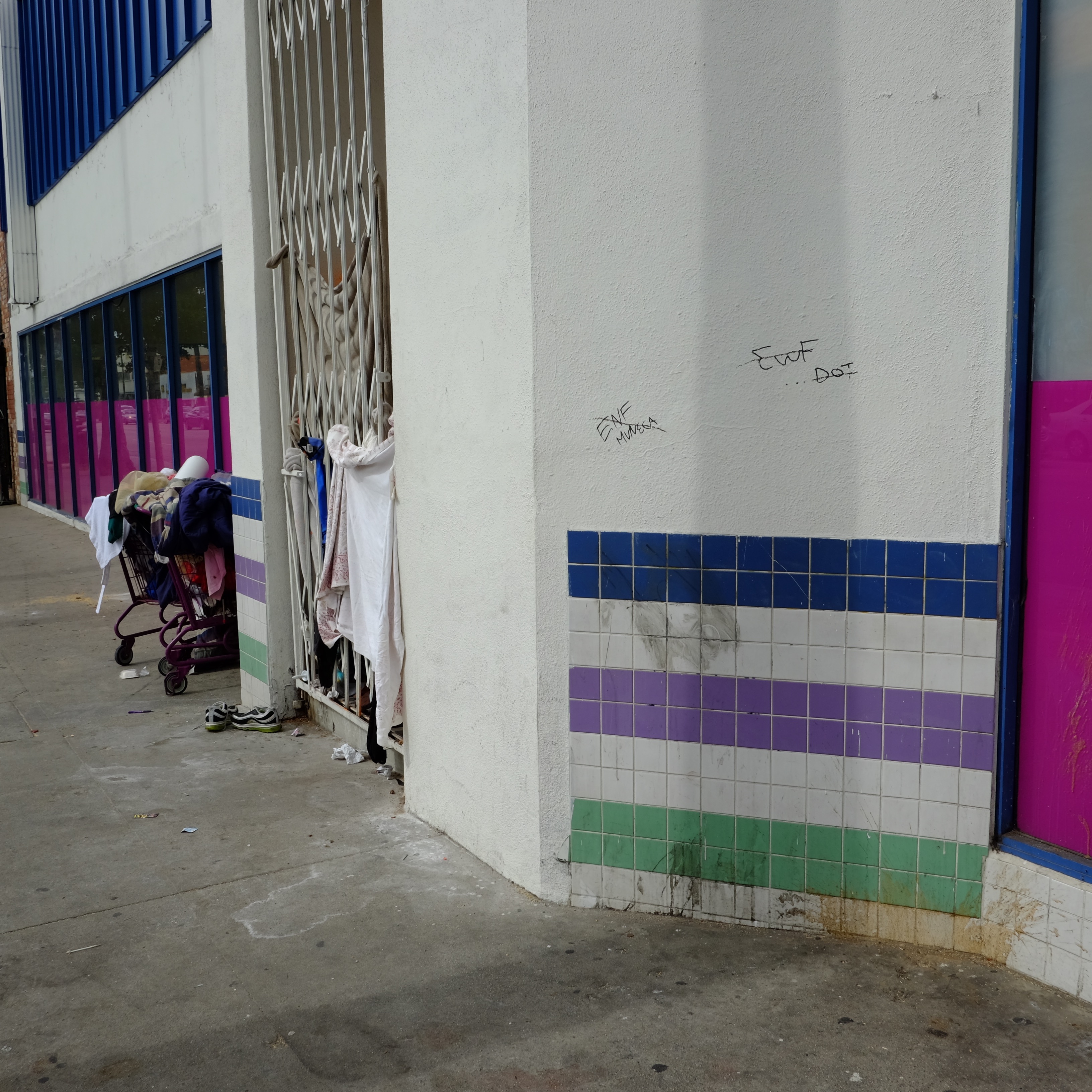
At the 99 Cents Only Store, a steel gate guarding a delivery door is pulled back. Towels and curtains hang over it, and behind it are black feet in flip-flops.

There are other sleeping humans on the sidewalk, and the black woman with the black feet in black flip-flops is not unique.

From 2003 to 2013, Tony Cardenas served on the Los Angeles City Council in the 6th District covering Van Nuys. He was elected to the US House of Representatives from California’s 29th District and now represents Van Nuys in Washington, DC.

The man who calls himself “The Honorary Mayor of Van Nuys” is George Thomas, also the President of the Van Nuys Neighborhood Council, also the publisher of a newspaper called “The Van Nuys News Press” which “features stories on everything, but especially golf and travel.” Recent stories featured whale watching in Hawaii and the Kahalu’u Beach Park Condo on the Big Island, a “Property of the Week”. Mr. Thomas, who is also a resident of Agoura Hills, is currently running for state senate.

These are just two men, Mr. Cardenas and Mr. Thomas, leaders of Van Nuys. They do not live here. They may not even care about here. Their careers, not their community, are foremost.
 

DSCF2660 DSCF2666

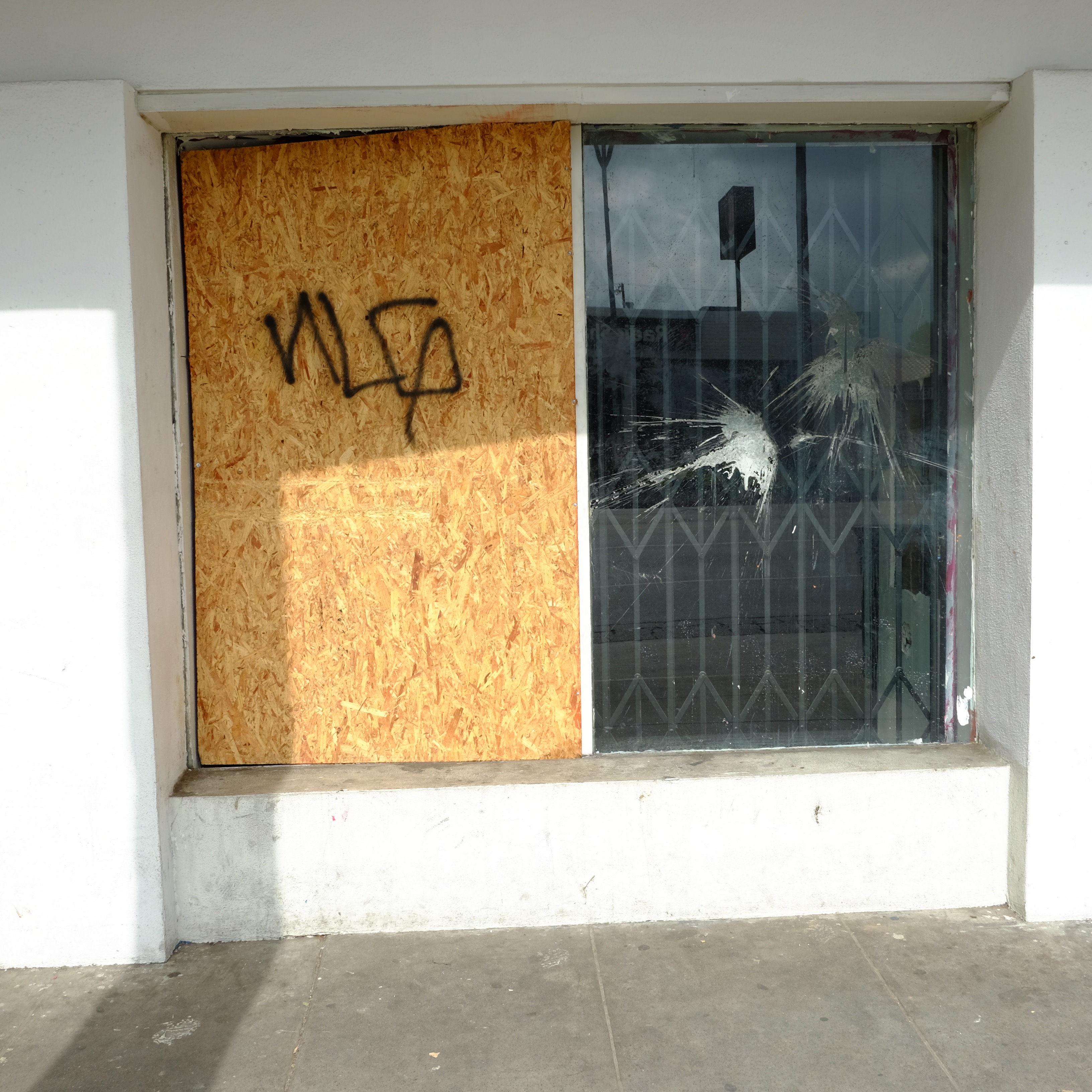
To say that Van Nuys and its Boulevard is without leadership or vision is obvious. This once thriving district of Los Angeles is now on intoxicated autopilot. It is careening fast into oblivion and may one day be as ill and impoverished as Skid Row.

With the “revitalization” of downtown Los Angeles, the mentally ill, the drug and alcohol addicts, and the other lost men and women of the city have to go somewhere.

They are going North by Northwest to the San Fernando Valley.

The ghost citizens arrive unwelcomed, their presence an uncomfortable reminder that we all are just one paycheck away from ruin, one illness away from financial catastrophe.

They have their carts, we have our cars; they have their hovels, we have our homes; they are unemployed and we are consultants.

We took our shower this morning but we resemble them more than we admit.

The homeless are the new pioneers, the new settlers of Van Nuys. They will come here to live on the sidewalk, in the alley, in the box behind the dumpster. They will multiply into the thousands, and Van Nuys Boulevard will be an outdoor city of tents, defecation, boxes, shopping carts, and the smell of urine in 110-degree heat.

Developers may snap up the cheap building. They may come here and build, that may be a good thing. But what are the larger solutions to end the dumping of human beings into the street? How will this street reform and repent itself? Will a few benches and a few trees and a Starbucks on the corner change the larger malaise?

DSCF2672


Van Nuys Savings and Loan.


1 3 54b.jpg
LA Times 1 3 54
1 3 55.jpg
LA Times 1 3 55

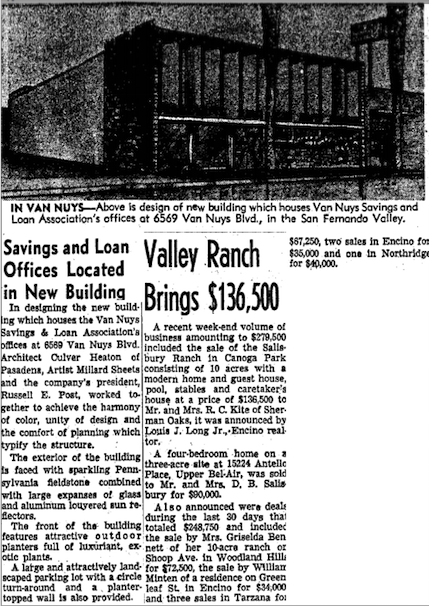
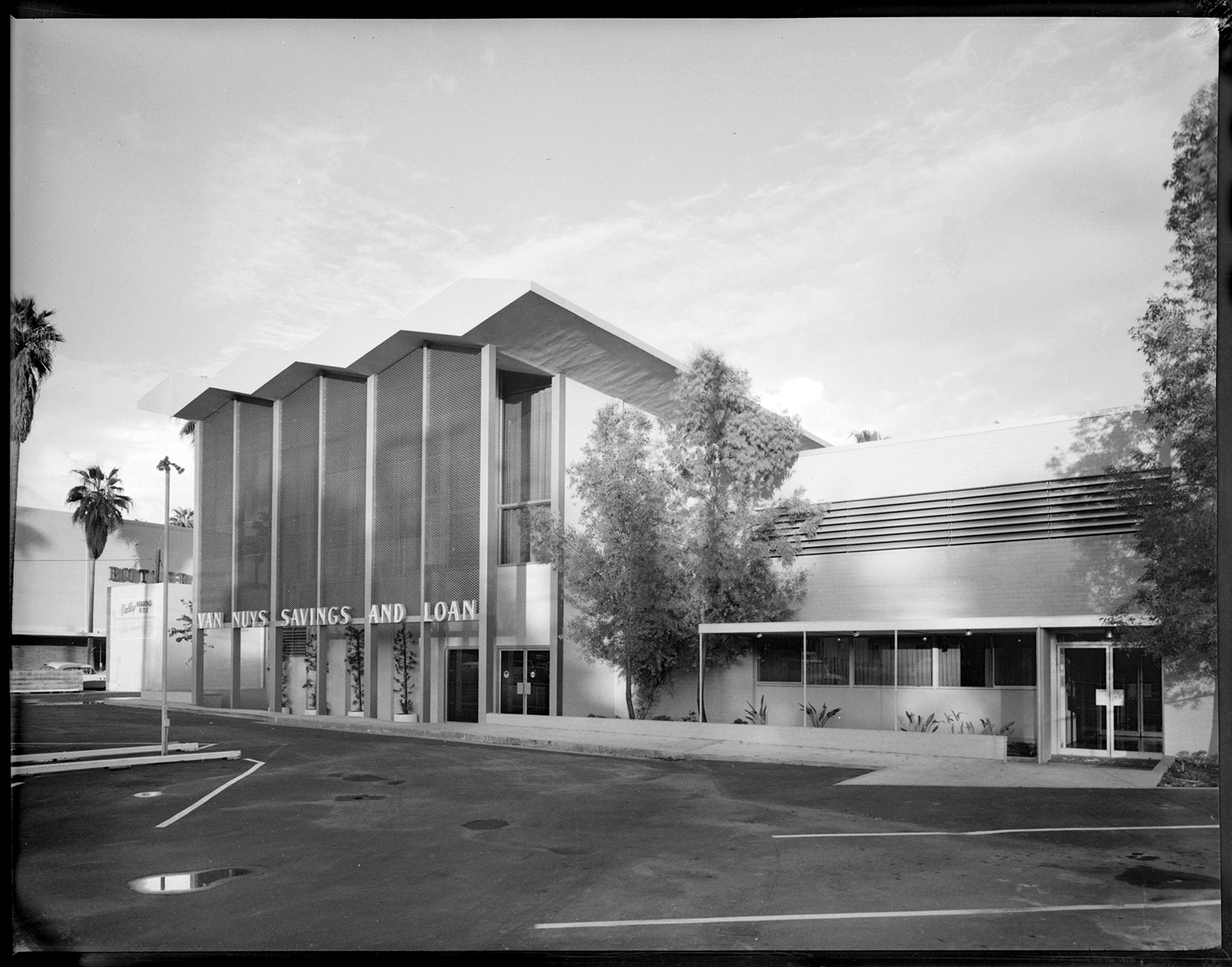
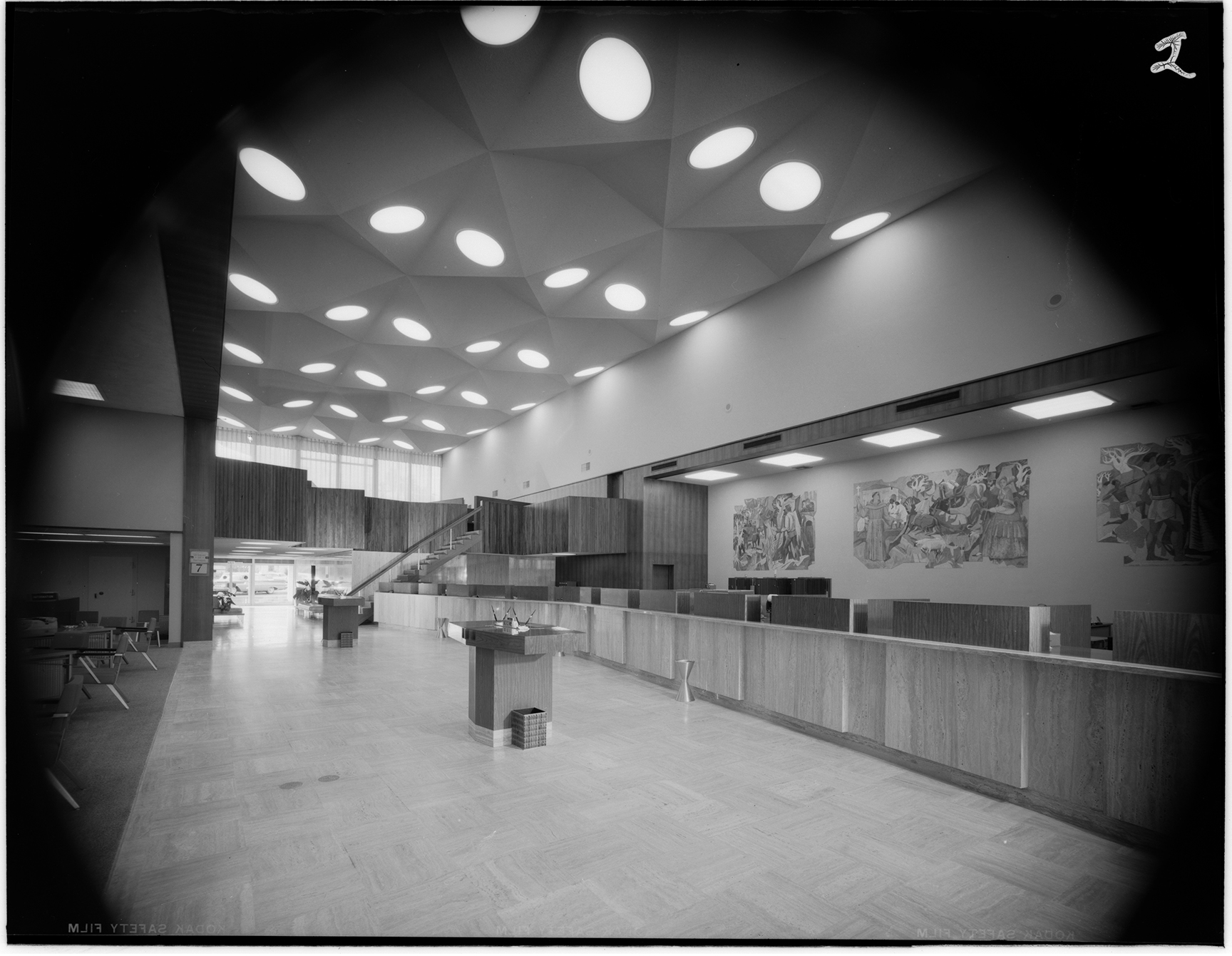
In 1954, architect Culver Heaton’s design for the Van Nuys Savings and Loan, with interior murals by artist Millard Sheets, rose at 6569 N. Van Nuys Bl.

Along with other financial institutions such as Jefferson Savings, Lincoln Savings, Great Western Bank and Bank of America, they served the local community of hard-working people who opened accounts that paid 3% or 4 1/2% interest and where polite tellers, dressed in pearls and high heels, addressed customers by their last (never their first) name.

photCL_MLP_0551_003

photCL_MLP_0551_008 photCL_MLP_0551_007 photCL_MLP_0551_006

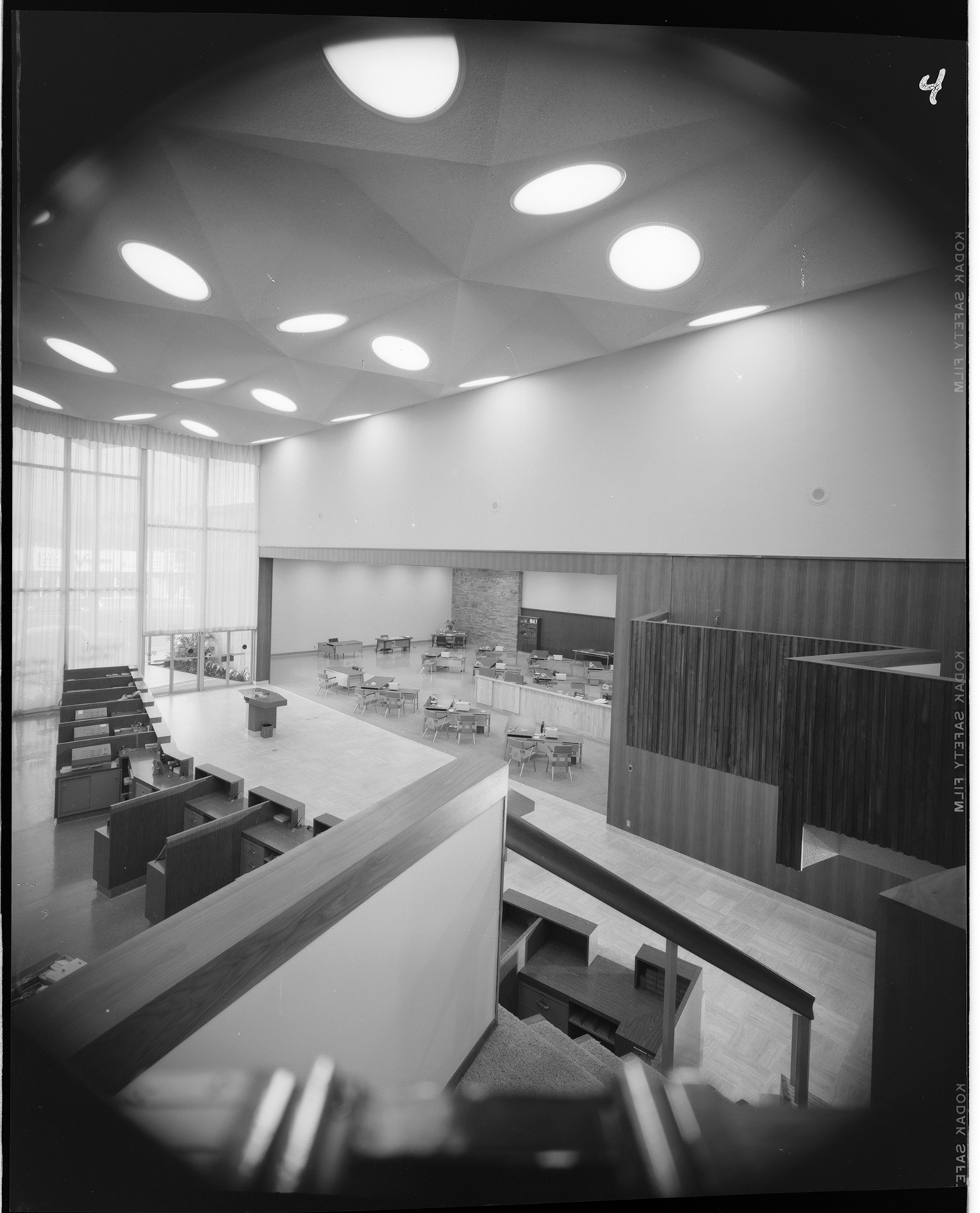
Photographer Maynard Parker shot these images of the bank exterior and interiors. They bespeak a dignified and progressive institution whose architecture was as up-to-date as its vision of a prosperous, safe Van Nuys. A sign on the outside of the building reads “The Home of Security” leaving no doubt to depositors about the solidity of the S&L.

photCL_MLP_0551_005 photCL_MLP_0551_004

Mr. Sheets was a prodigious artist whose work can be seen all over Southern California, most notably on the exteriors of many of those white, marble clad, Home Savings of America buildings that resemble mausoleums.

Architect Culver Heaton designed many Mid 20th Century churches in Southern California in a style of expressionistic eccentricity long departed from our stripped-down imagination. His Chapel of the Jesus Ethic in Glendale (1965) is almost campy in form with its prayerful red roof, rising like hands, above a turquoise reflecting pool and a statue of Jesus on water fashioned by Herb Goldman.

Photo by Michael Locke

In the 1980s, there was a national scandal and shakeout in the savings and loan industry and many closed down. The de-industrialization of Van Nuys, and its decline as a manufacturing and commercial center, coincided with a tremendous increase in immigration from Central America.

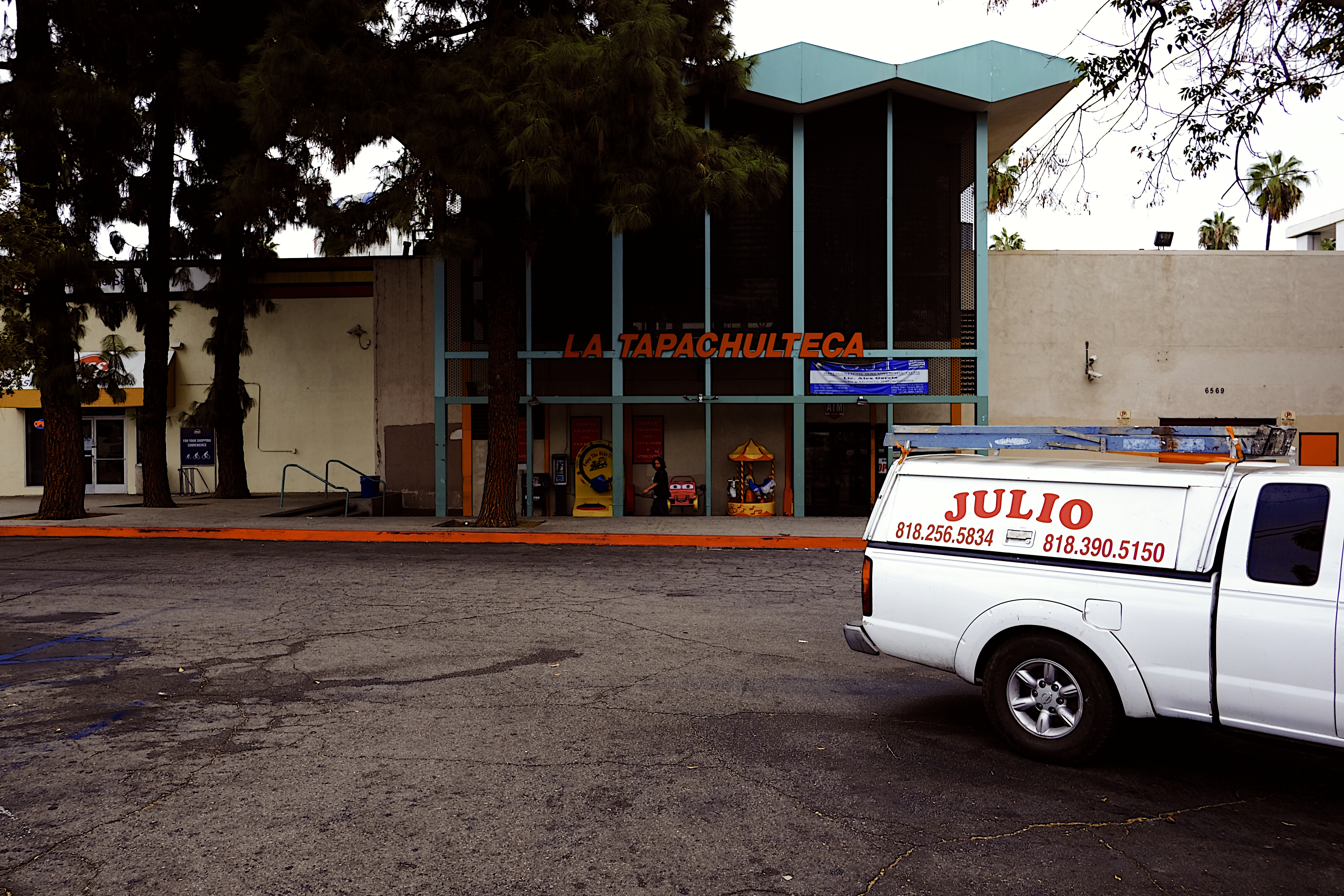
Today, a Guatemalan market, La Tapachulteca, occupies the old bank property.

2014/ Image by Andy Hurvitz

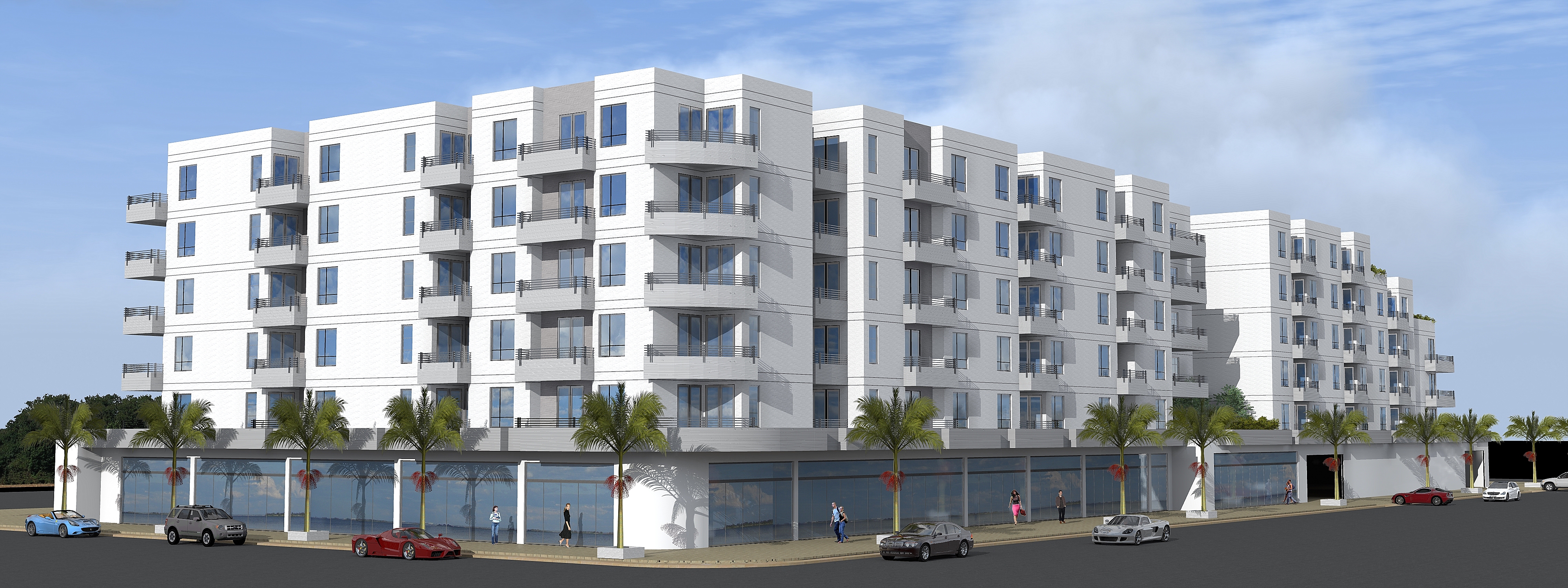
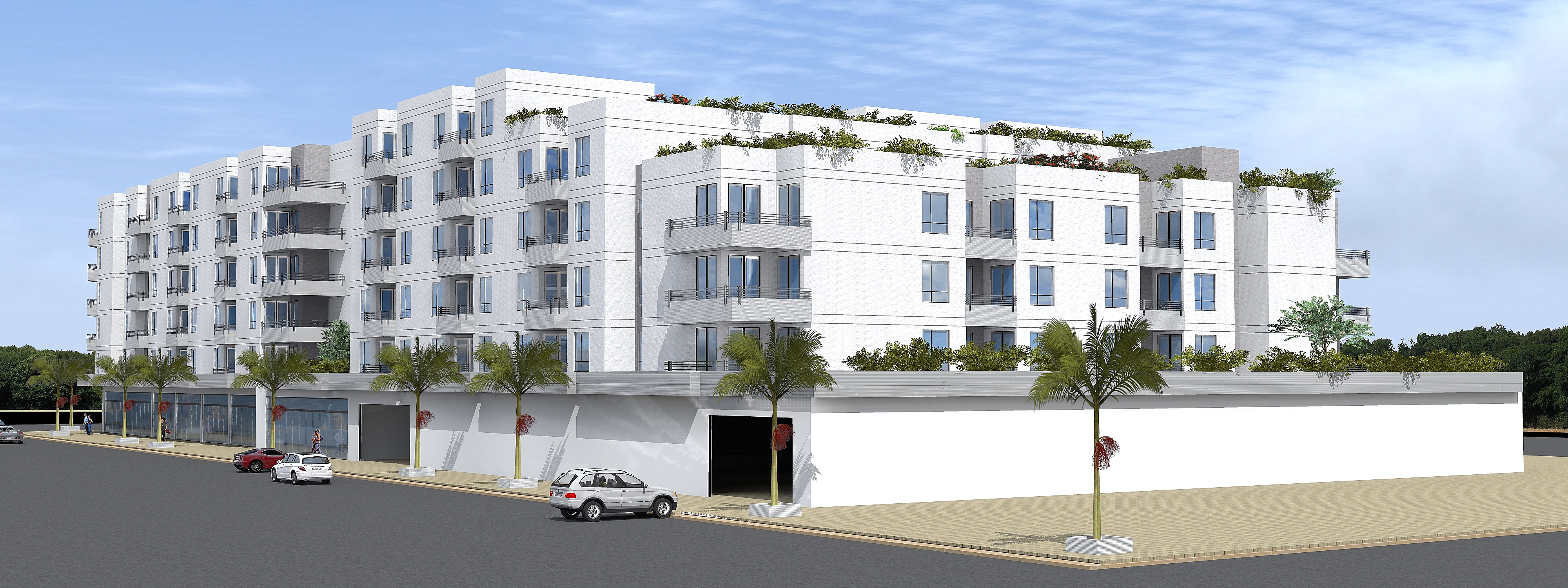
But last year, in a hopeful sign of better times, Boaz Miodovsky of Ketter Construction, who is the new owner, plans on demolishing the old bank which has now been degraded from its original condition. His company will design and erect a multi-story apartment house with ground floor retail. The front, on VNB, will be five stories tall and taper down to three stories in back.These illustrations, which he sent to me, are preliminary and will be further refined to include landscaping and additional detail.

View 0 View 0_3

Nostalgist and Van Nuys Neighborhood Council member John Hendry, who grew up and still lives in Van Nuys, alerted me to the impending demolition and asked me to research the origins of the historic structure. Quirino De La Cuesta, another VNNC member, stepped in and purchased these images from the Huntington Library.

And Mr. Miodovsky, in a nod to the old murals, will have new artwork painted within the new structure. It will be created by local artists and reflect the continuing development of Van Nuys which hit its bottom and is now climbing out parcel by parcel.


El Color de La Vida.


DSCF0656

Before the cold rains struck the San Fernando Valley late Monday afternoon, dark and menacing storm clouds went into formation.

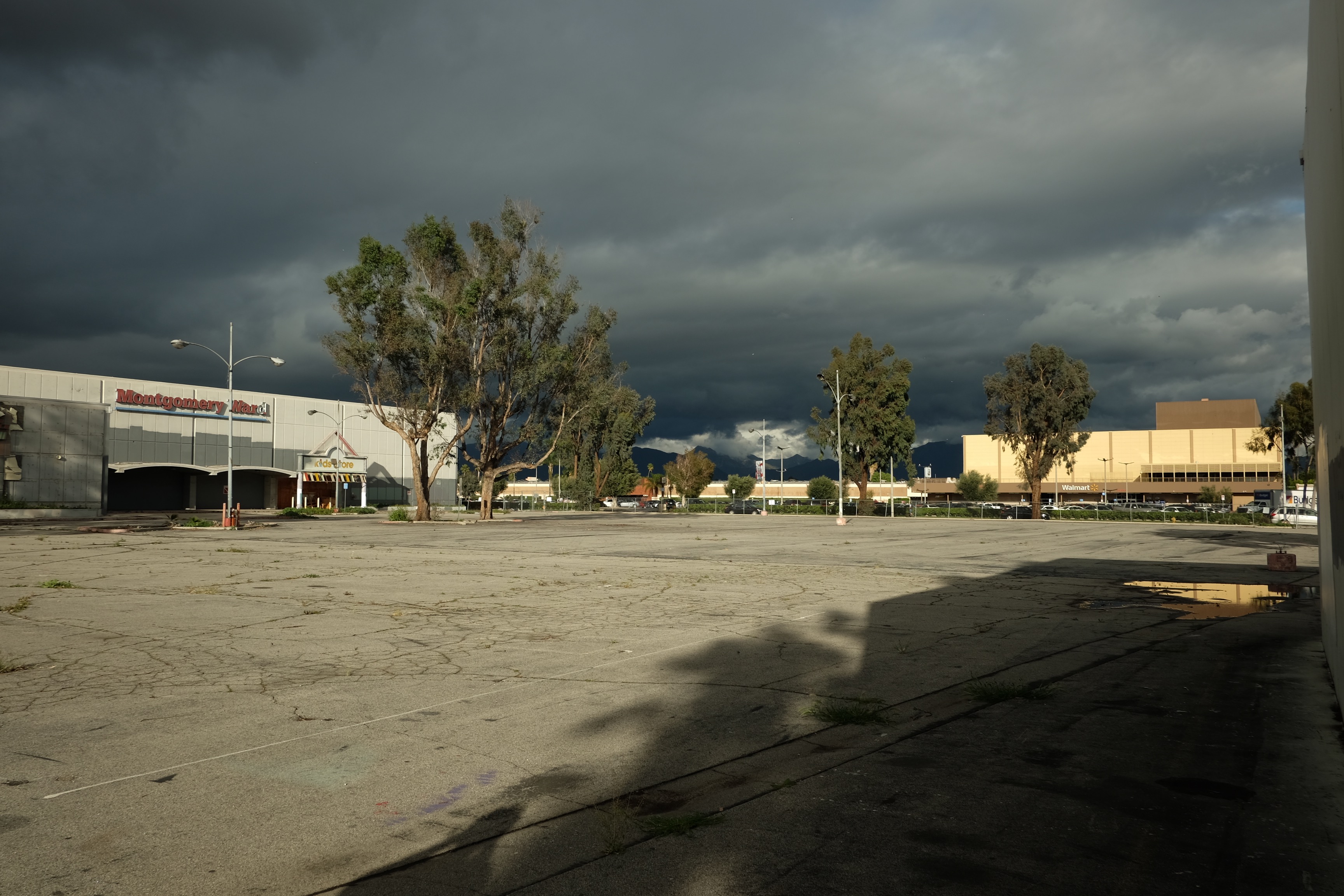
Seen from the empty asphalt of an abandoned parking in Panorama City, the view east lived up to its name. The craggy, inky, rock-topped San Gabriels permitted fog to brush their face.

Eager to pursue the dark light show, we drove east on Roscoe where it opens up under the high voltage lines, across the valley, under the concrete freeway, cutting diagonally up Tuxford, emerging into the industrial abattoir of Pacoima where death and life, and light and shadow hunt under smokestacks and behind motels.

DSCF0668

DSCF0700

DSCF0709

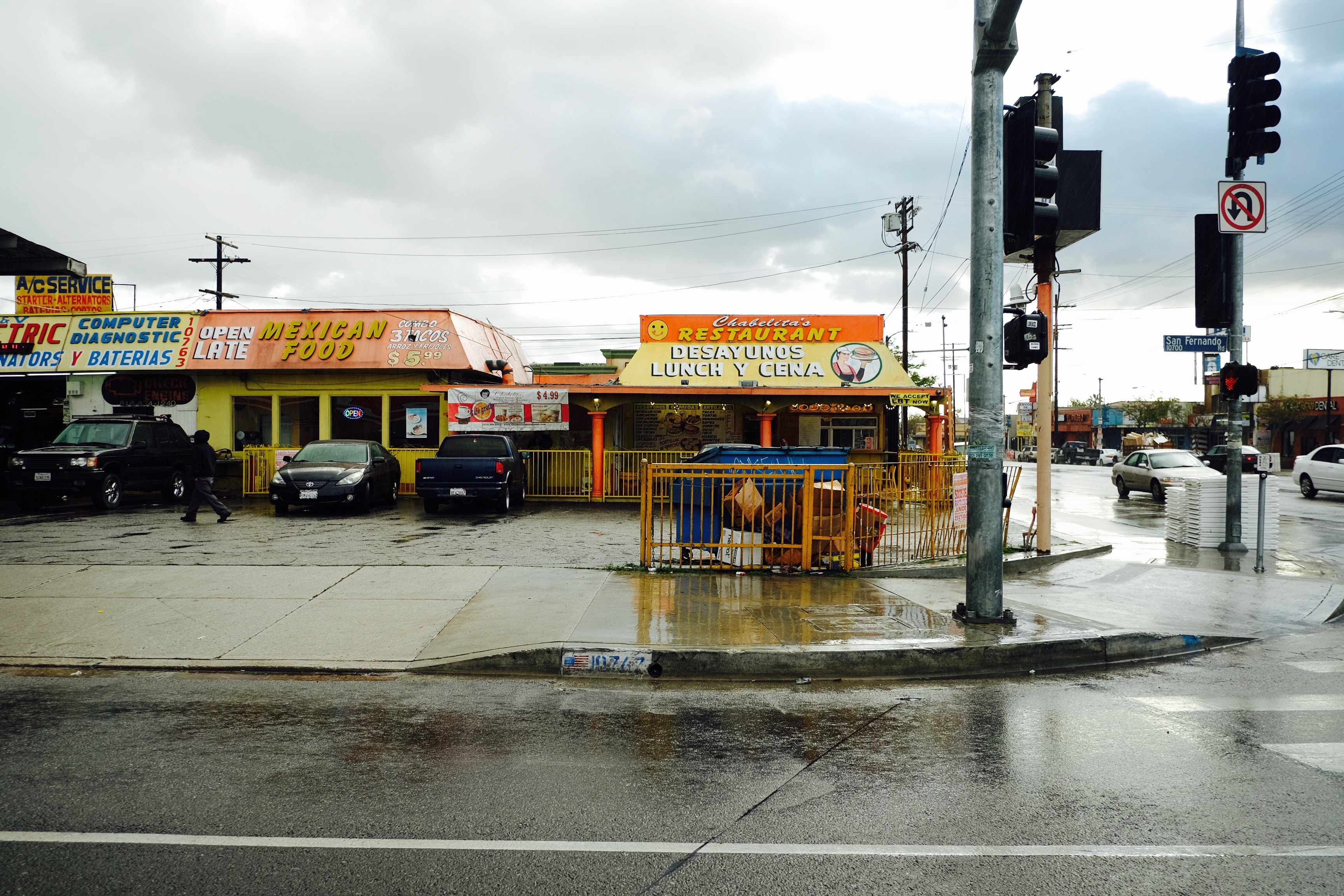
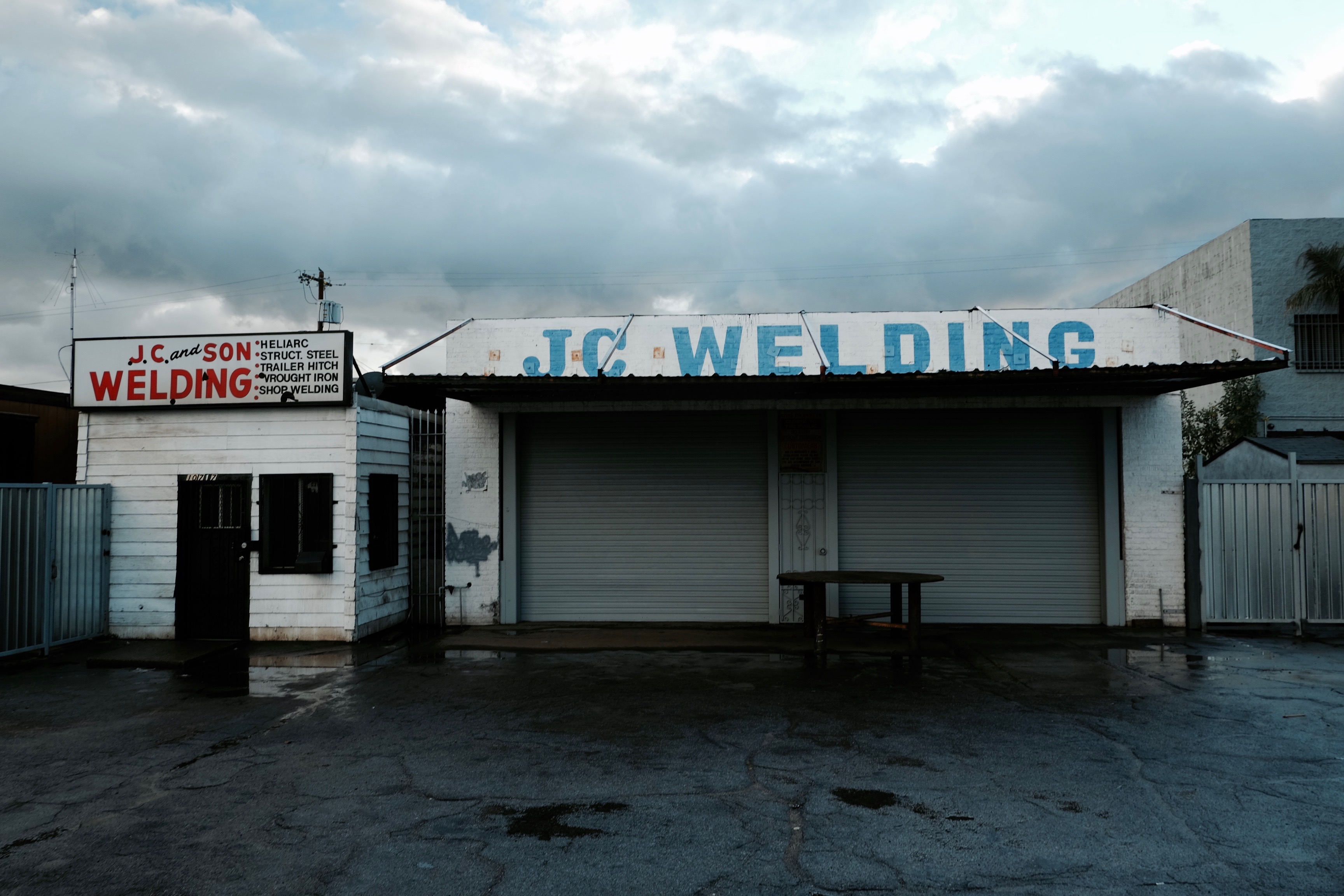
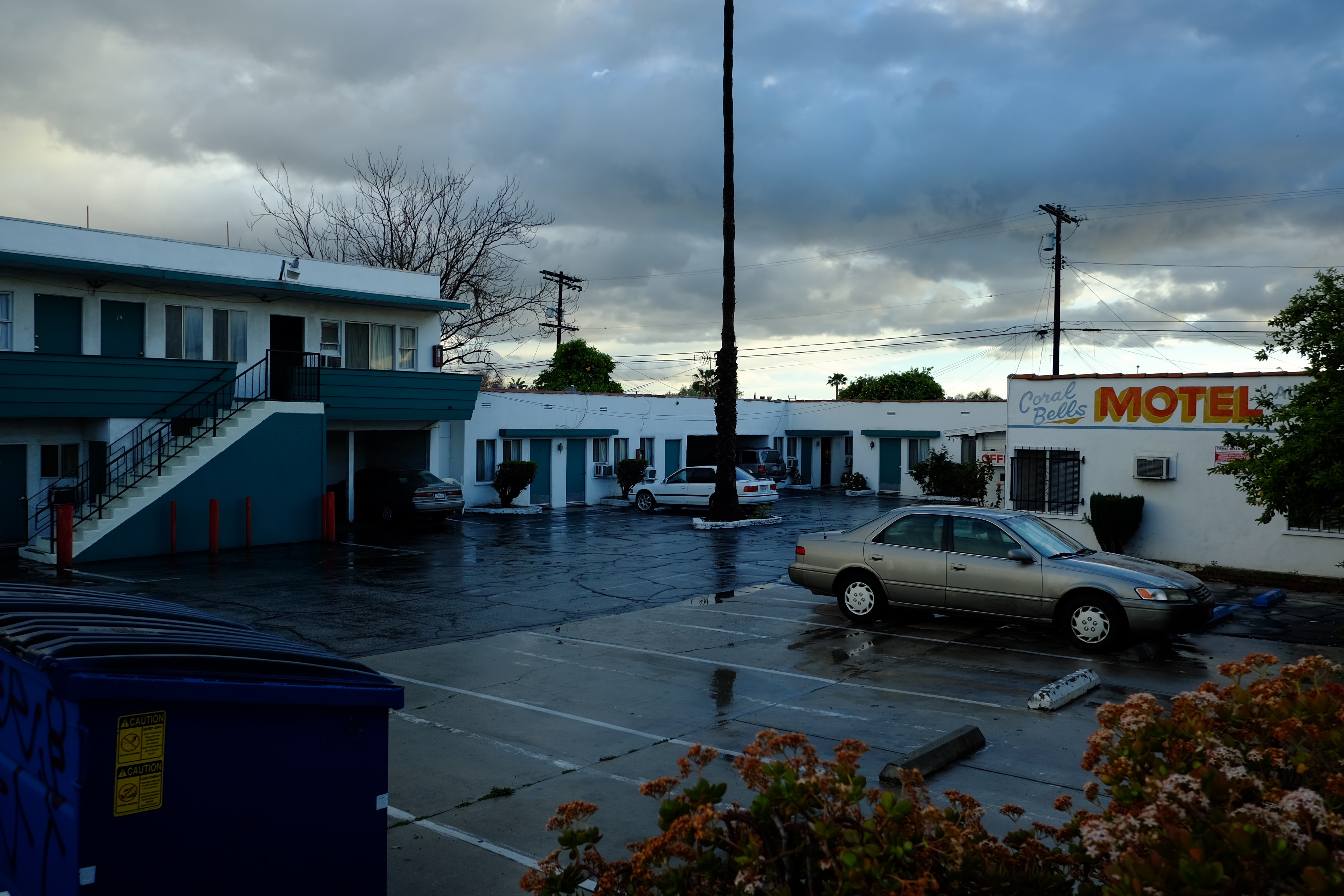
The rains came down on Van Nuys Boulevard and San Fernando Road, soaking Chabelita’s Restaurant, Gallardo’s Auto Repair, Fierro’s Muffler, Franco Tires, JC and Son Welding, and the Coral Bells Motel.

And then, in the mode of Los Angeles, the sky cleared. A vast, blue vista opened up. A cold wind followed.

DSCF0689

Carrying our cameras, we passed men who eyed us with suspicion. Señor Fierro came out of his muffler shop and kindly asked us why we were taking pictures. I handed him my card and told him how beautiful the sky was. He seemed to agree.

These people work hard. They come from lands where blood soaks the cross and breaks the heart. Now they weld metal and change tires and cut hair and dig trenches. Here are these Americans whose presence makes us American.

San Fernando Road is also part of Route 66. The historic state sign says so. The old motels along the highway attest to a long history of travellers who made their way into California: on foot, by automobile, in the back of trucks, hidden inside freight trains.

They got here and slept on the floor, two or three to a bed. Some had no papers. Some had no money. They were somewhere strange and hostile, but free, free to pursue and put down roots and stop running.

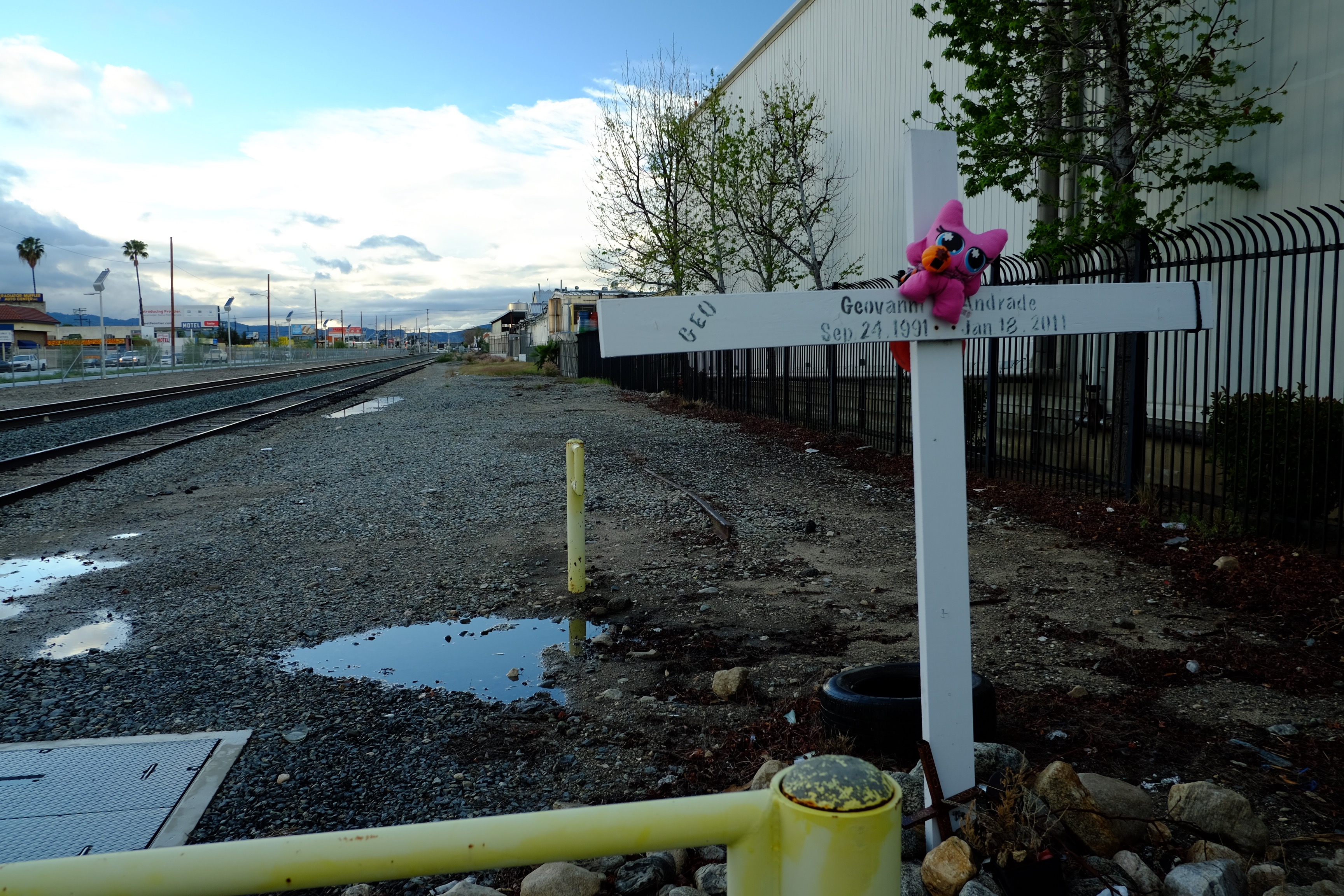
But death caught some too young. Some died under trains, running across tracks after the signal, or purposely running into death to escape the misery of life.

DSCF0725

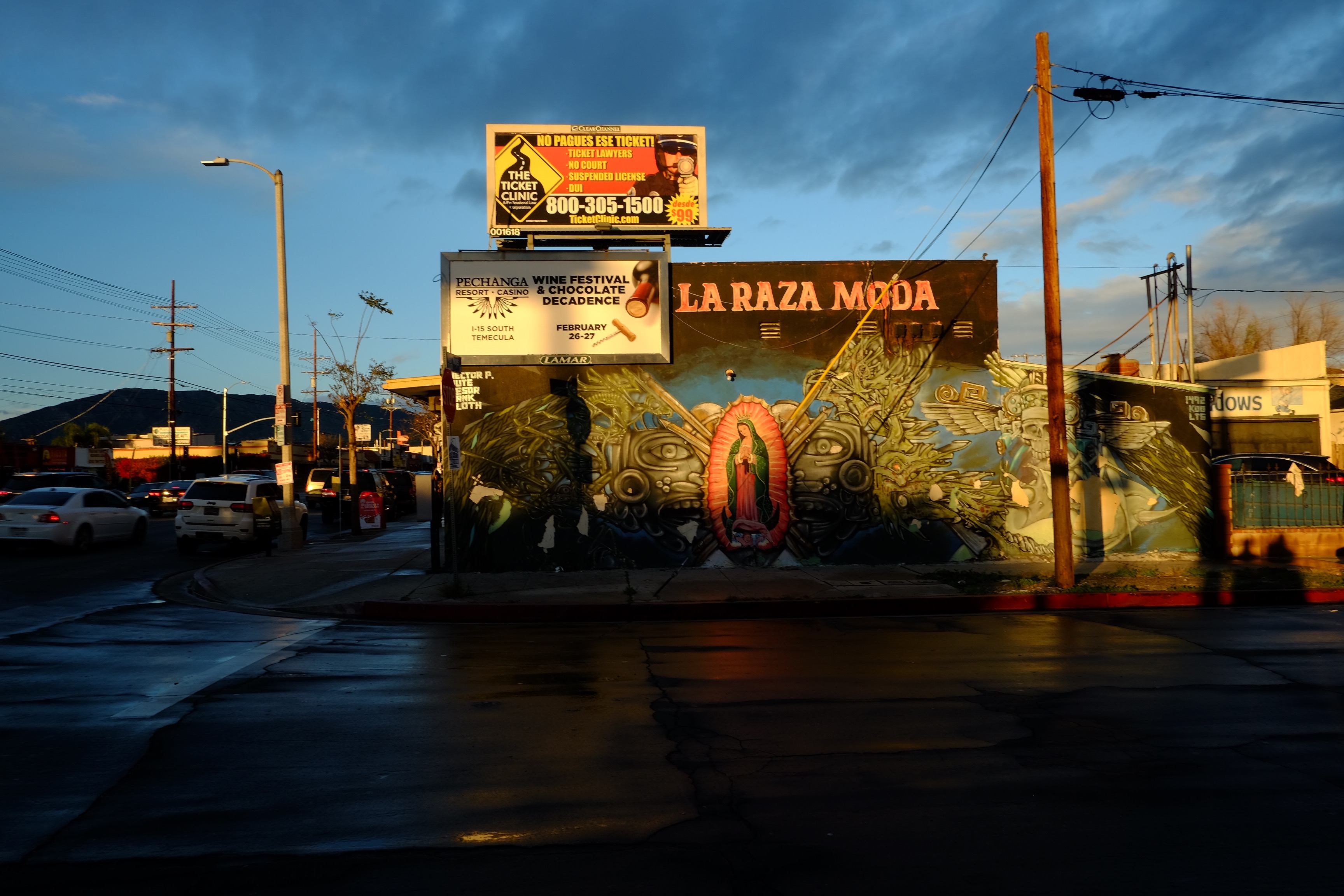
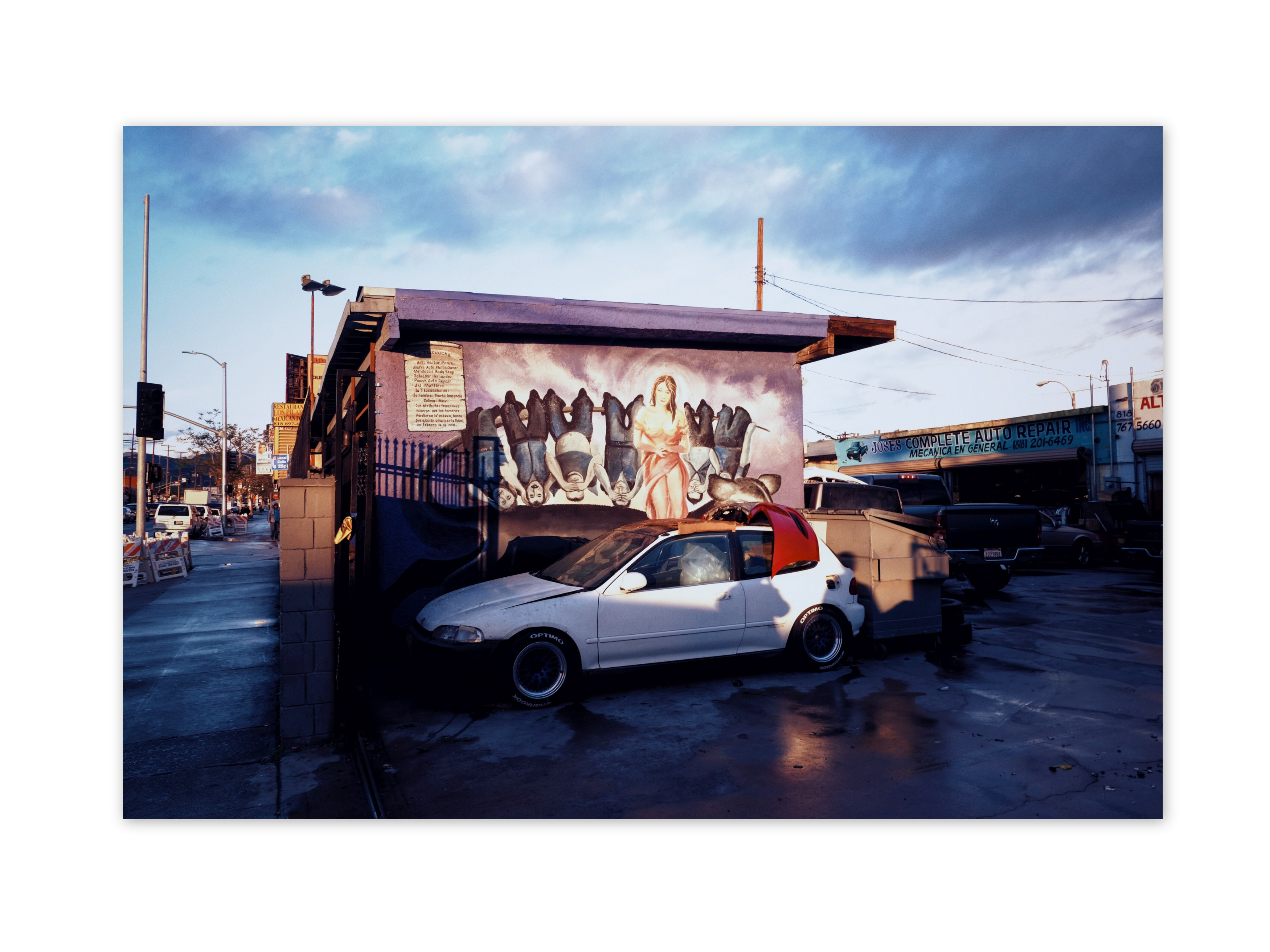
Pacoima is strong. Its buildings are painted in the deepest blues, oranges, yellows, reds and greens. There is no room for ambiguity in hue. The choices are laid out in bright sunlight. The devil and the angel battle here. You can eat well or go hungry. You can get pregnant and high, or go to school and study hard. You can pray or you drive drunk into a wall. Pick the orange off the tree or the prostitute off the street. It’s up to you.

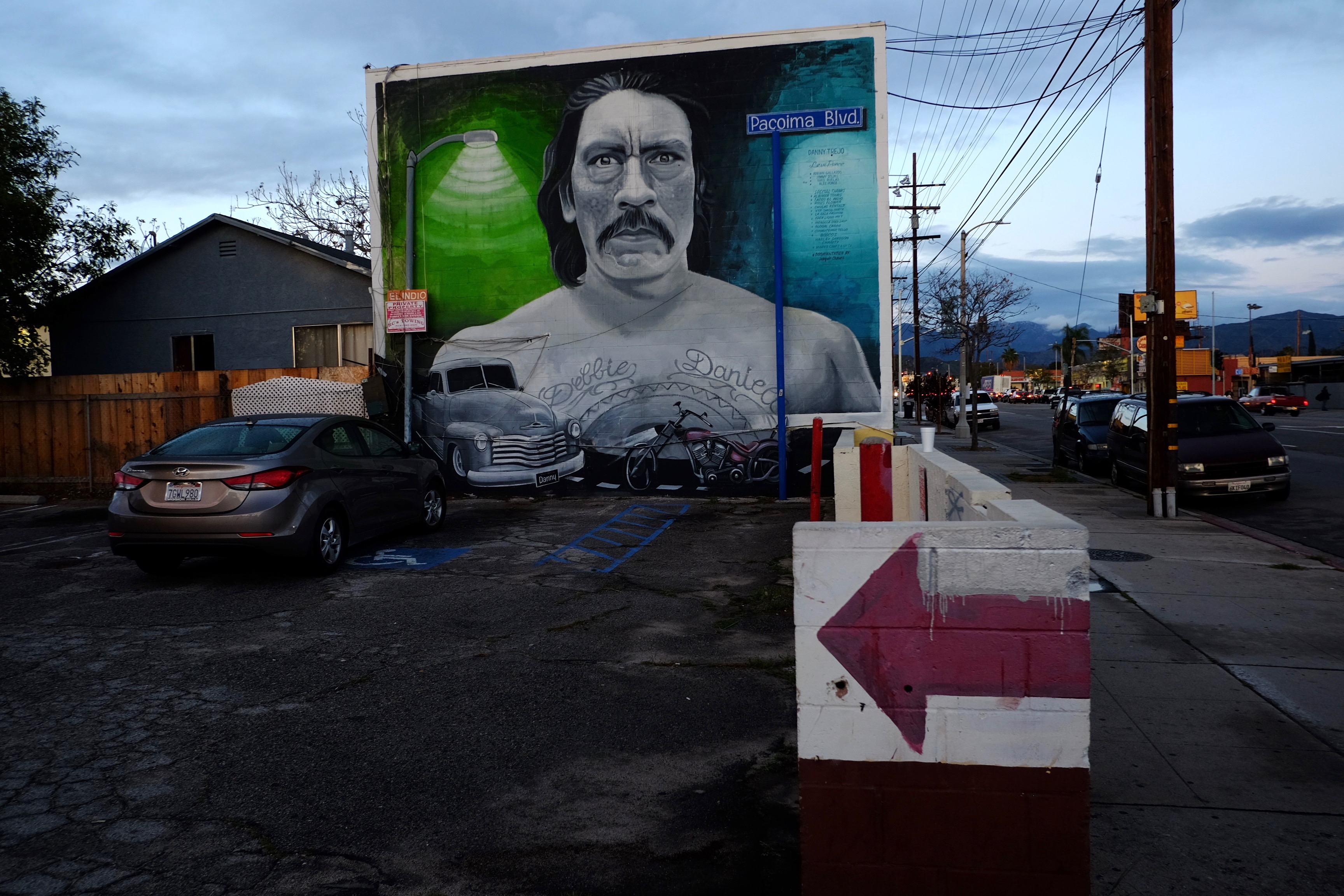
On walls, adjoining muffler shops and liquor stores, are murals of mythological, cultural and aesthetic magnificence. Poor Pacoima has more beautiful public art than Beverly Hills. And there is even a wall-sized portrait of that savior and scoundrel El Niño. Artist Levi Ponce is the Michaelangelo of this district.

DSCF0787

DSCF0755

DSCF0759

VSCO J3

El Niño, as we all know, is in town for a few weeks. He may pay up or he may skip town without leaving payment. Nobody knows.

But Pacoima will carry on.

Processed with VSCOcam with e4 preset

Processed with VSCOcam with e4 preset

Van Nuys Boulevard in Three Eras.


Van Nuys Blvd. Opening 1911. (DWP)

Van Nuys Boulevard was made in 1910, open for traffic and business in 1911.

It was the heart of the San Fernando Valley, and apparently a quite pleasant and neighborly place to shop.

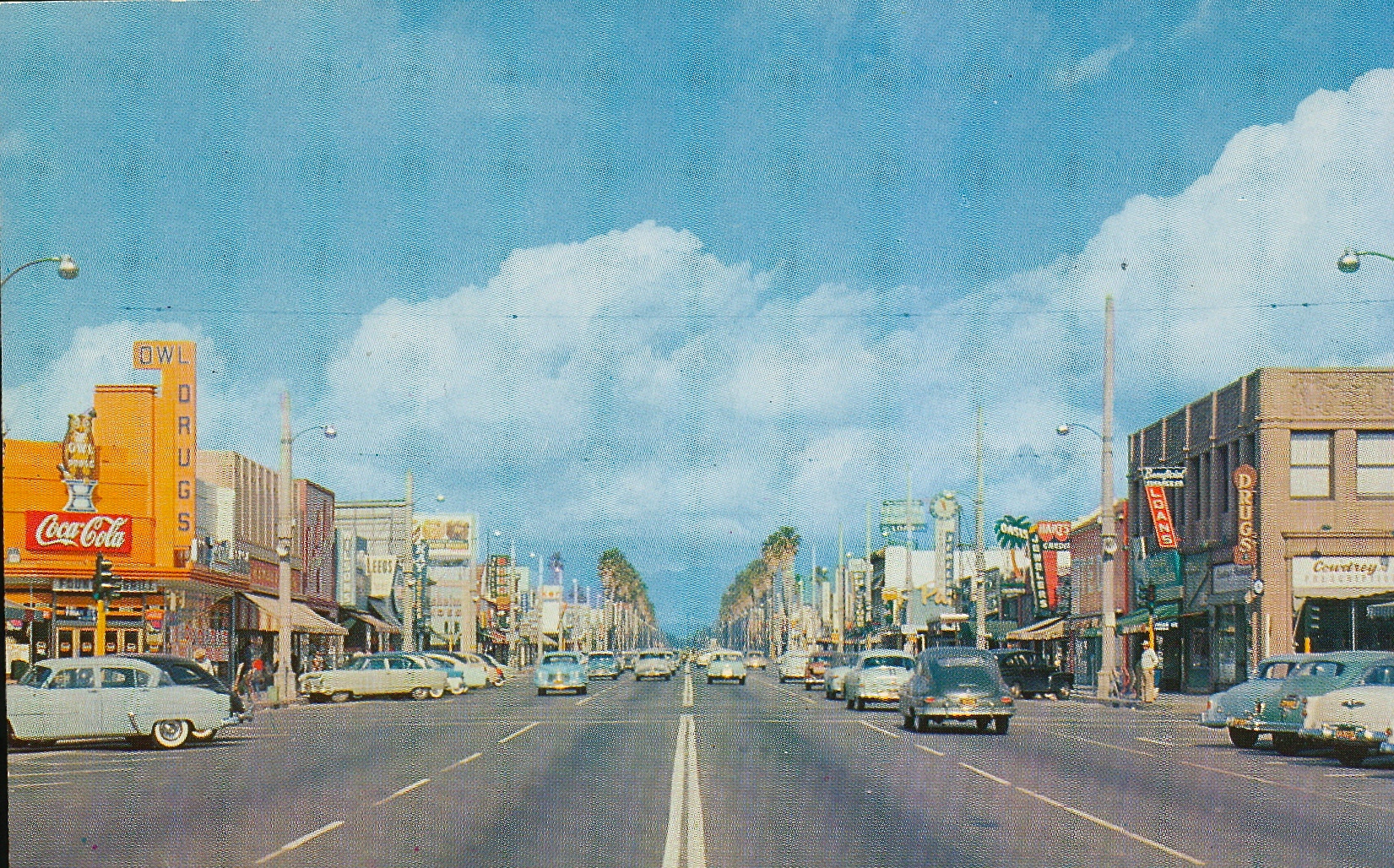
Van Nuys Blvd. Early 1950s

Cars were parked at a diagonal (like Glendale’s Brand Blvd. today) which effectively and passively narrowed the wideness of the street. It was a more pedestrian friendly boulevard.

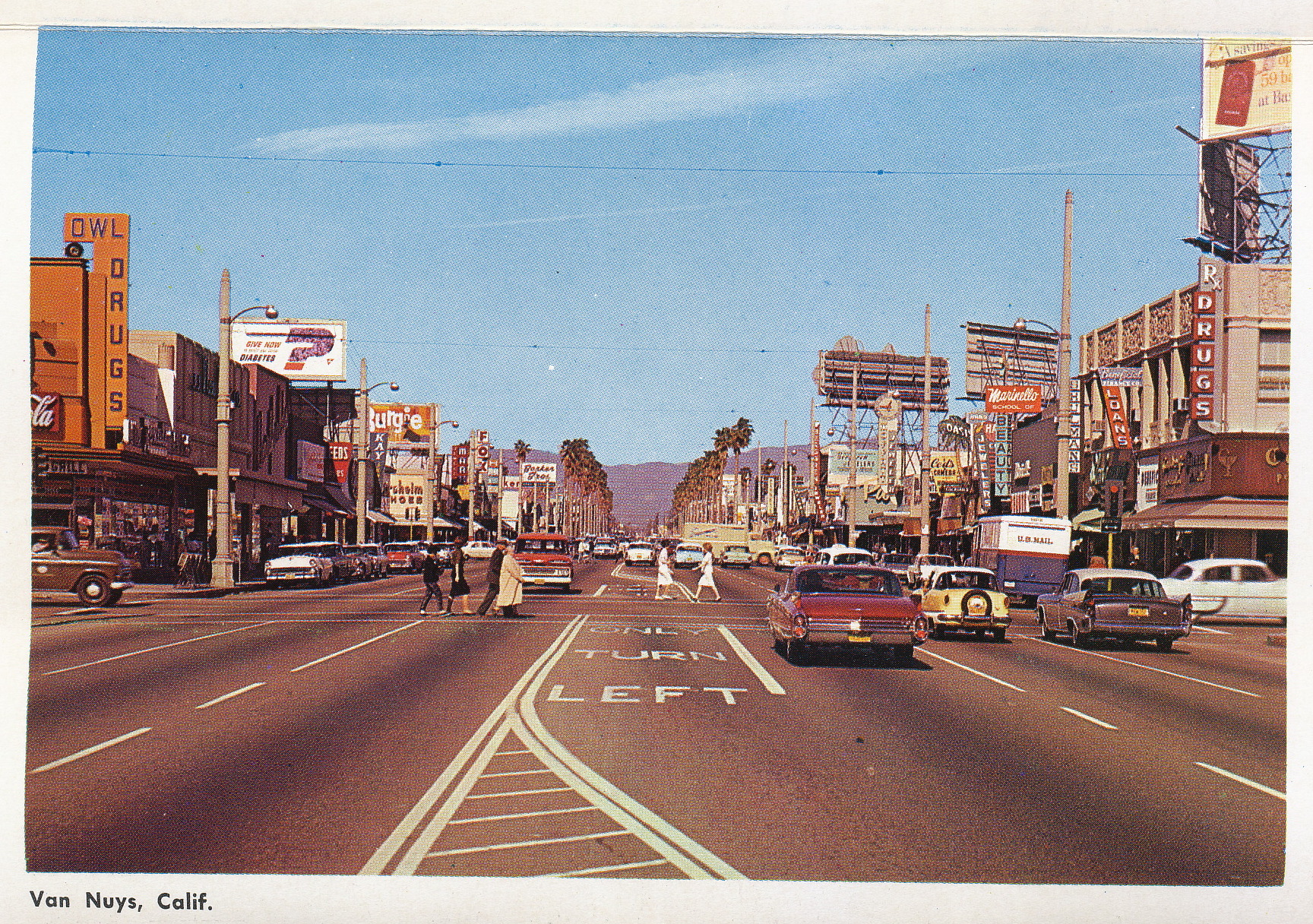
Van Nuys circa 1960
Van Nuys circa 1960

But in 1954 Victory and Van Nuys Boulevard were widened. The high intensity lights came later, but the effect was to turn the street into a type of freeway, perfect for cruising, but inhospitable to much else.

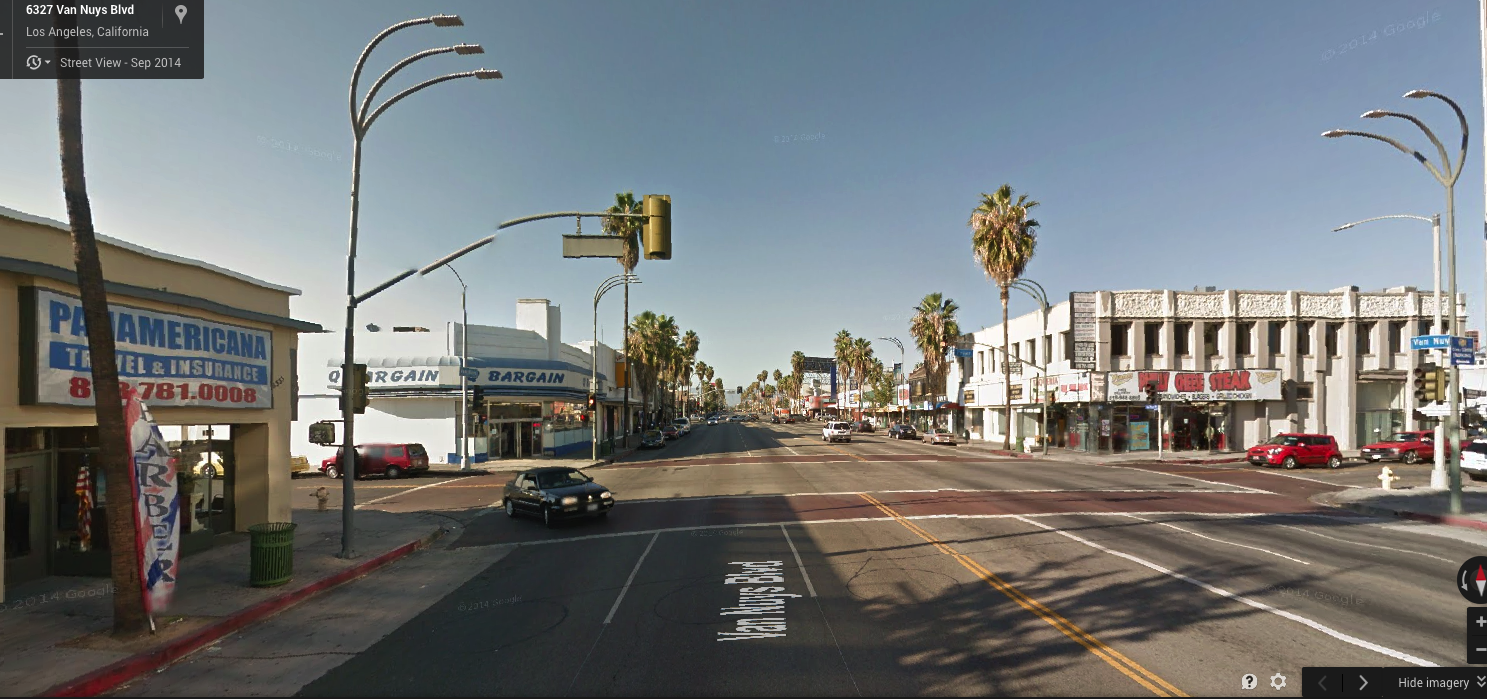
Van Nuys at Friar, facing north, September 2014.

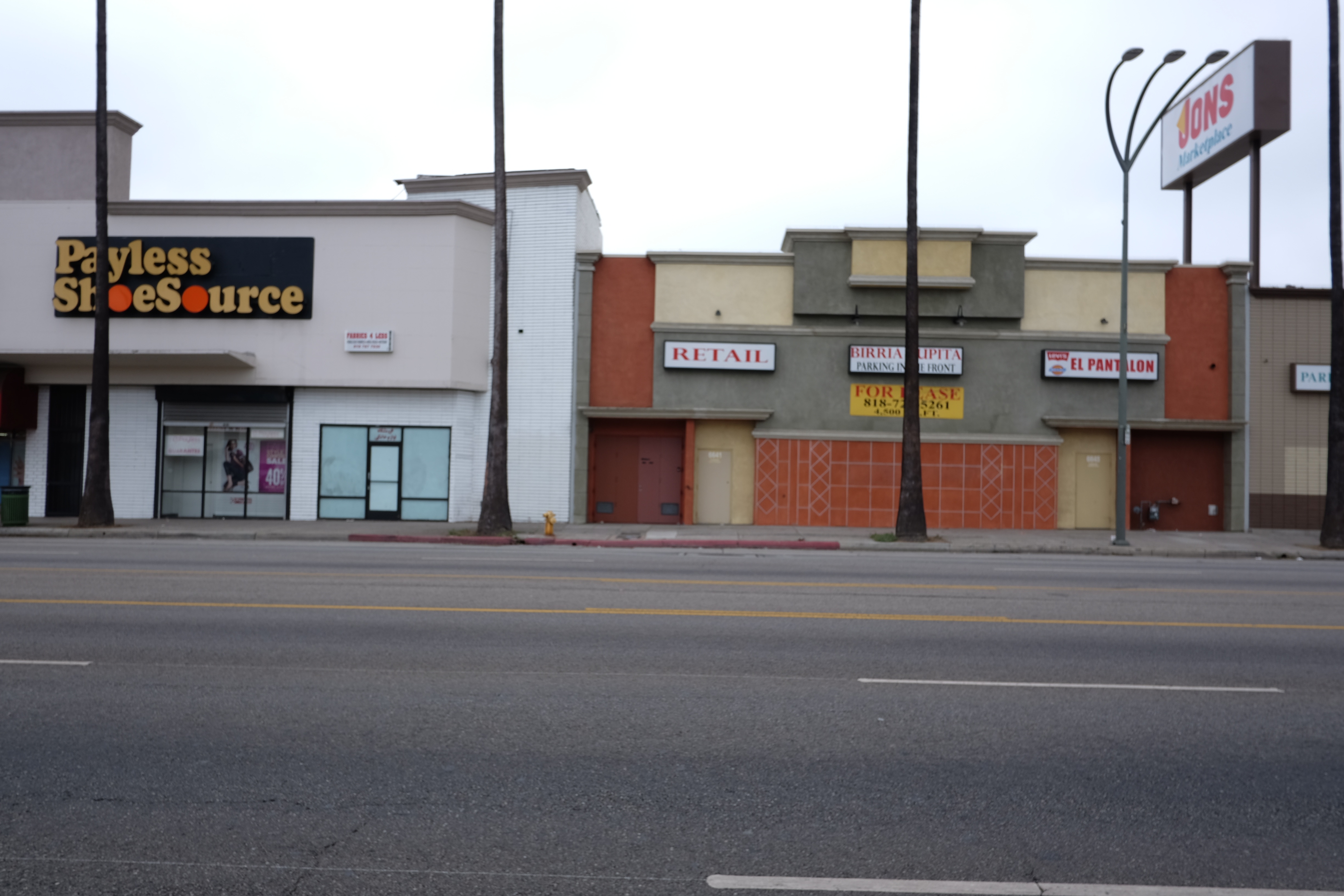
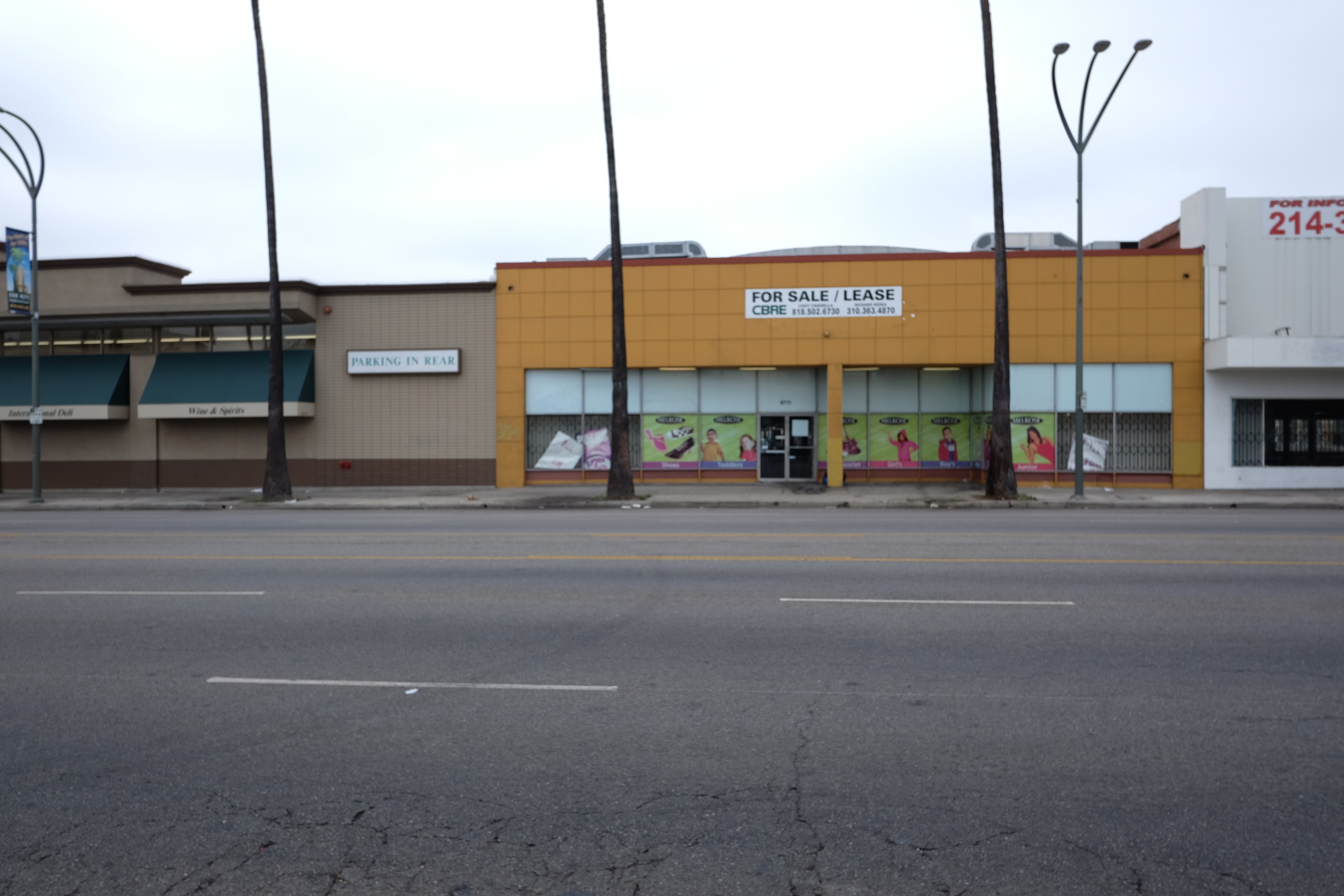
The 2014 view is what we see today, a wide street stripped of appeal, whose stores are either vacant or taken up with low rent bail bonds, and cheap crap.

Wide streets are not where people walk and shop. They want trees to shade them. They want to cross the street without walking across six lanes of speeding cars. Studio City, Sherman Oaks, Encino and Tarzana, all the wealthier parts of the San Fernando Valley, have all grasped this basic fact of life and have planted trees and landscaped medians to humanize their business districts.

What accounts for the neglect other than a lingering racism and an inability to formulate a plan financed by government and developers? If a sea of blond-haired people started coming here, would Mayor Garcetti and Councilwoman Nury Martinez suddenly spring into action? Why is Van Nuys different than Highland Park, Encino, North Hollywood or Burbank? Are we somewhere on Mars?
The postcards are (once again) courtesy of Valley Relics. The 2014 photo is taken from Google Street views.


Boulevard of Blankness.


DSCF0082 DSCF0080 DSCF0078 DSCF0036

According to City Data, the area of Van Nuys bounded by Roscoe Boulevard on the North, Woodman Avenue on the East,Burbank Boulevard to the South, and the 405 on the West, an area of 7.2 square miles, contains some 100,000 people at a population density of 13,271 per square mile. The LA Times claims 110,000 lived here as of 2008.

Heart of this district is a blank-walled canyon of bleakness, Van Nuys Boulevard. It was once a thriving commercial street, full of fine looking Mid-Century Modern banks, small stores, and family run businesses where the windows were washed and the sidewalks swept daily.

In the 1950s through the 1980s it was a cruising area, taken over by young people and cool cars.

And now it is a dump.


It seems that this blog, for over 8 years, has reported ad nauseum on this wasteland of shuttered shops, littered parking lots, and vast expanses of asphalt surrounded by decay.

And yet, two blocks from Van Nuys Boulevard, there are some lovely and historic streets, well maintained houses, people and their properties who are trying to keep neatness and bourgeois respectability evident in their front yards.

The bottom line is the bottom line. There is not a plan, nor a large scale investment, nor a vision for Van Nuys Boulevard. There are piecemeal and weak proposals put forth by well-meaning people to make it “bicycle friendly” or “pedestrian friendly”. But who the hell wants to spend time in the 100-degree heat, soaking up the smell of urine in doorways, stepping over dog shit, as the smoke of illegal food vendors blows over the parked cars and idle trucks who have flunked their smog inspections?

The current environment is a hellish place, one whose continuing demoralizing existence blights the whole community of Van Nuys.

One hundred thousand people who live here deserve better.

DSCF0031 DSCF0028 DSCF0027 DSCF0020


Van Nuys Boulevard: Between Sherman Way and Saticoy (Part 1)


DSCF1046

Bustling, aesthetically hideous, vibrant, multi-ethnic, colorful, trashy, tacky, inhuman; filled with families, vagrants, small businesses and the newest Americans.

Van Nuys Boulevard, between Sherman Way and Saticoy, that is where the action is.

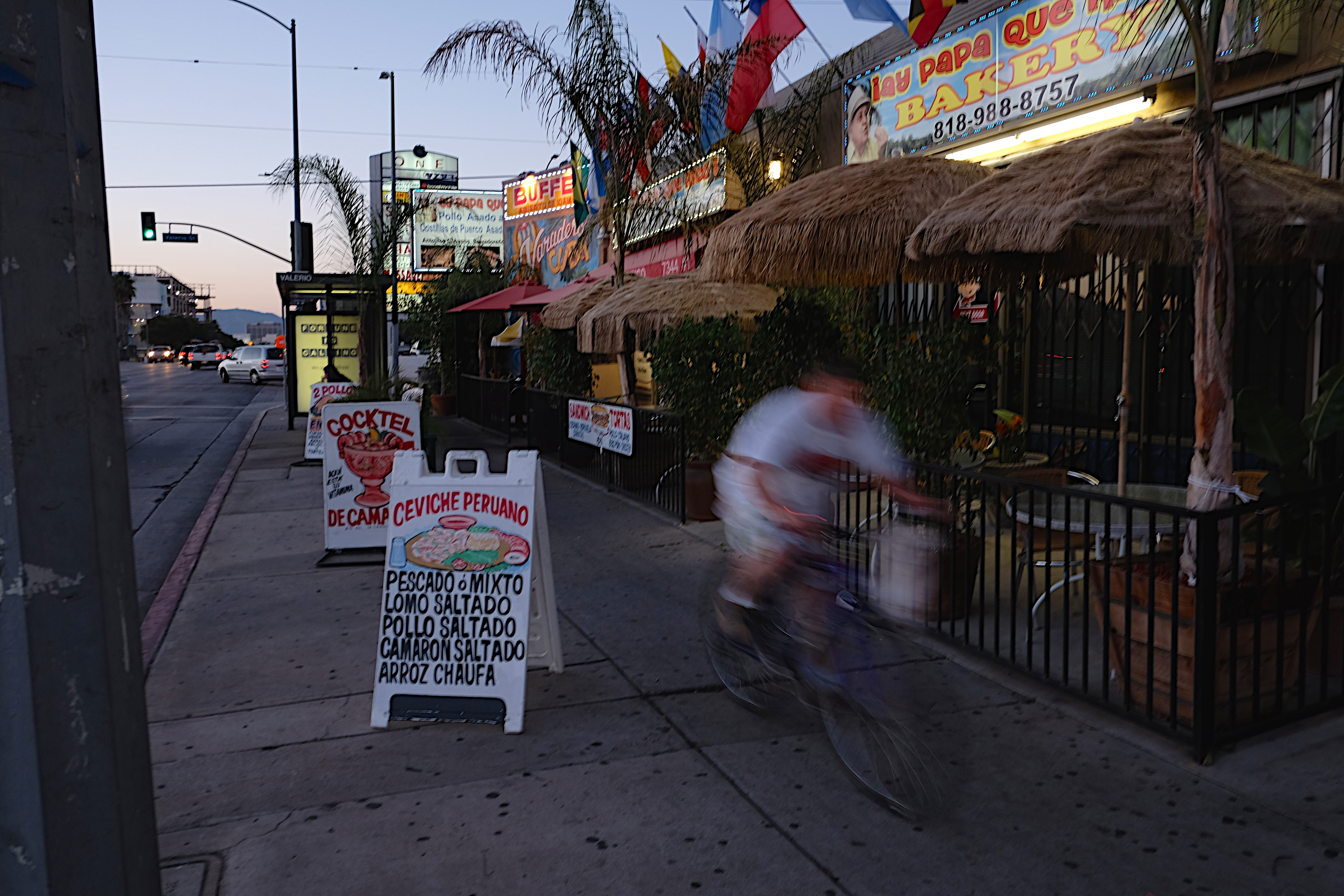
Reformers and planners might dream of trees and benches near the Valley Municipal Building, in the old downtown, but Van Nuys has moved up north, where the bus riders catch the #162 and #163, stopping to grab lunch at Boston Market, buying a cake at Mey Fung Bakery, picking up smokes at Angie’s Cigars, getting their hair cut at John’s Barber Shop, and snacking on Ceviche Peruano at Ay Papa Que Rico, a Cuban restaurant rated highly on Yelp.

7429 VNB

DSCF1026

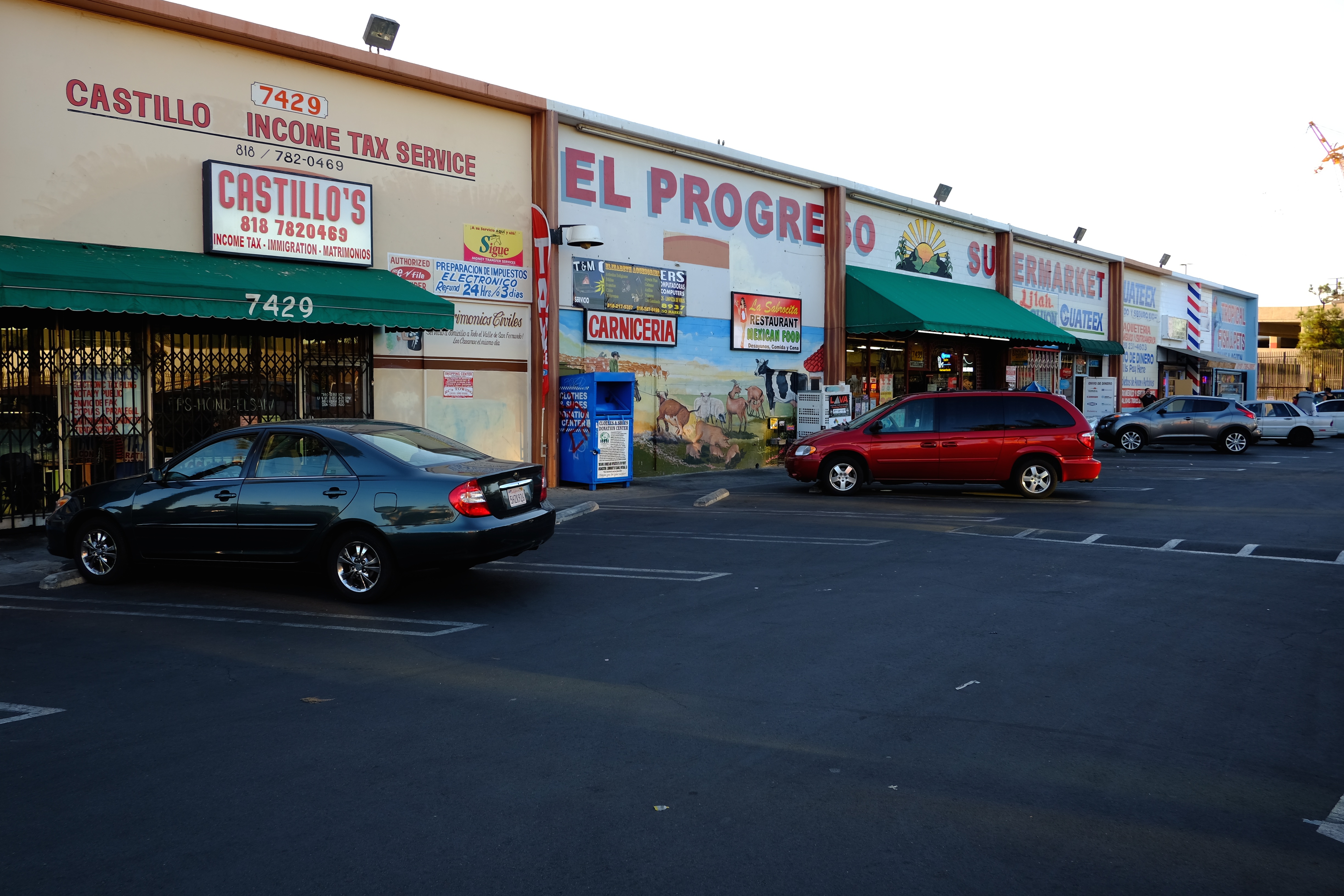
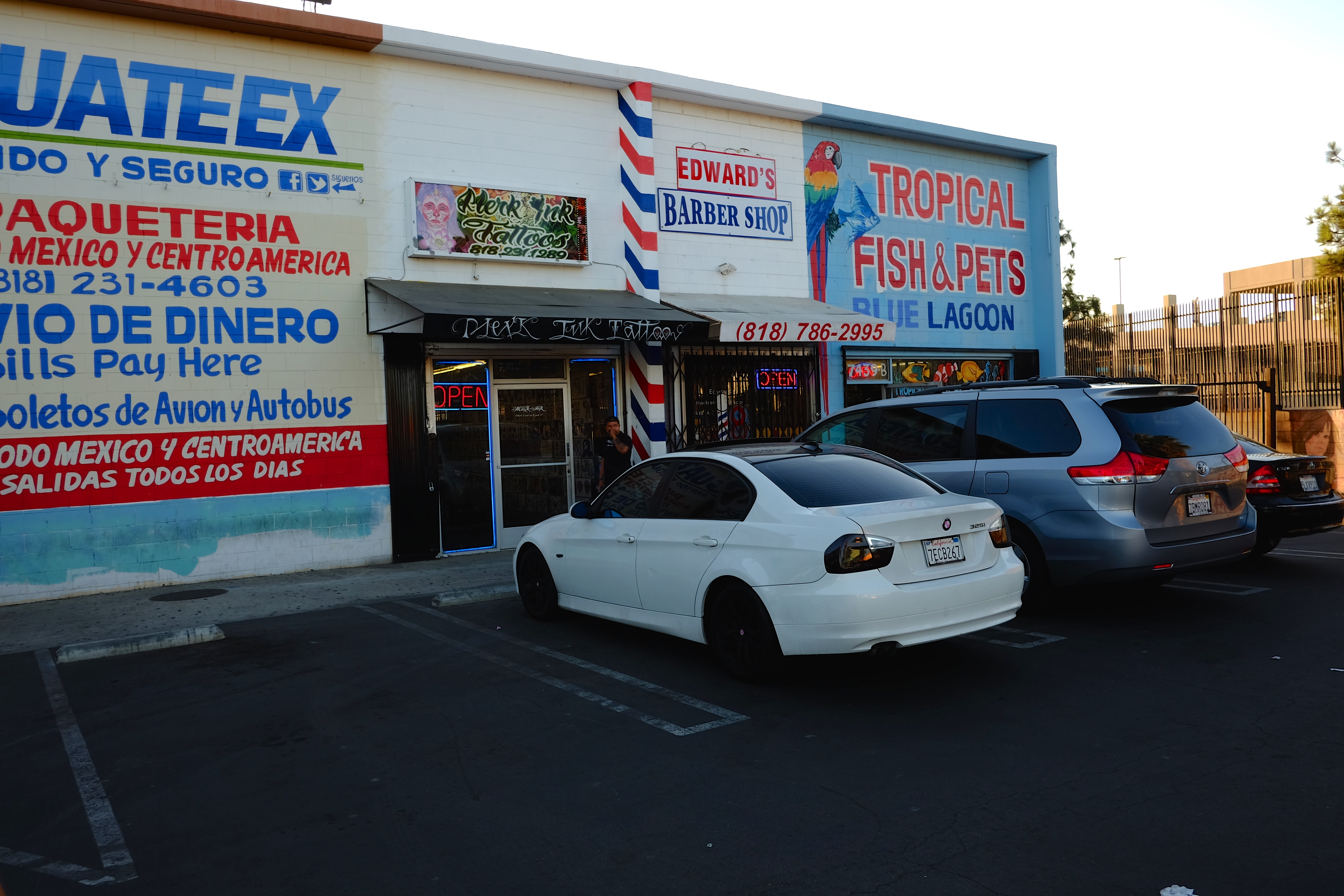
Like a vision from old Tijuana, a row of brightly painted shops near 7433 Van Nuys Blvd, houses El Progresso Supermarket and Guateex “Rapido y Seguro” a place to send packages and shipments to Central America; a barber, a tattoo shop and “Tropical Fish and Pets”. Each business is enclosed in a cube, vividly colored, advertising signs.

7301 Van Nuys Blvd, Van Nuys, CA 91405

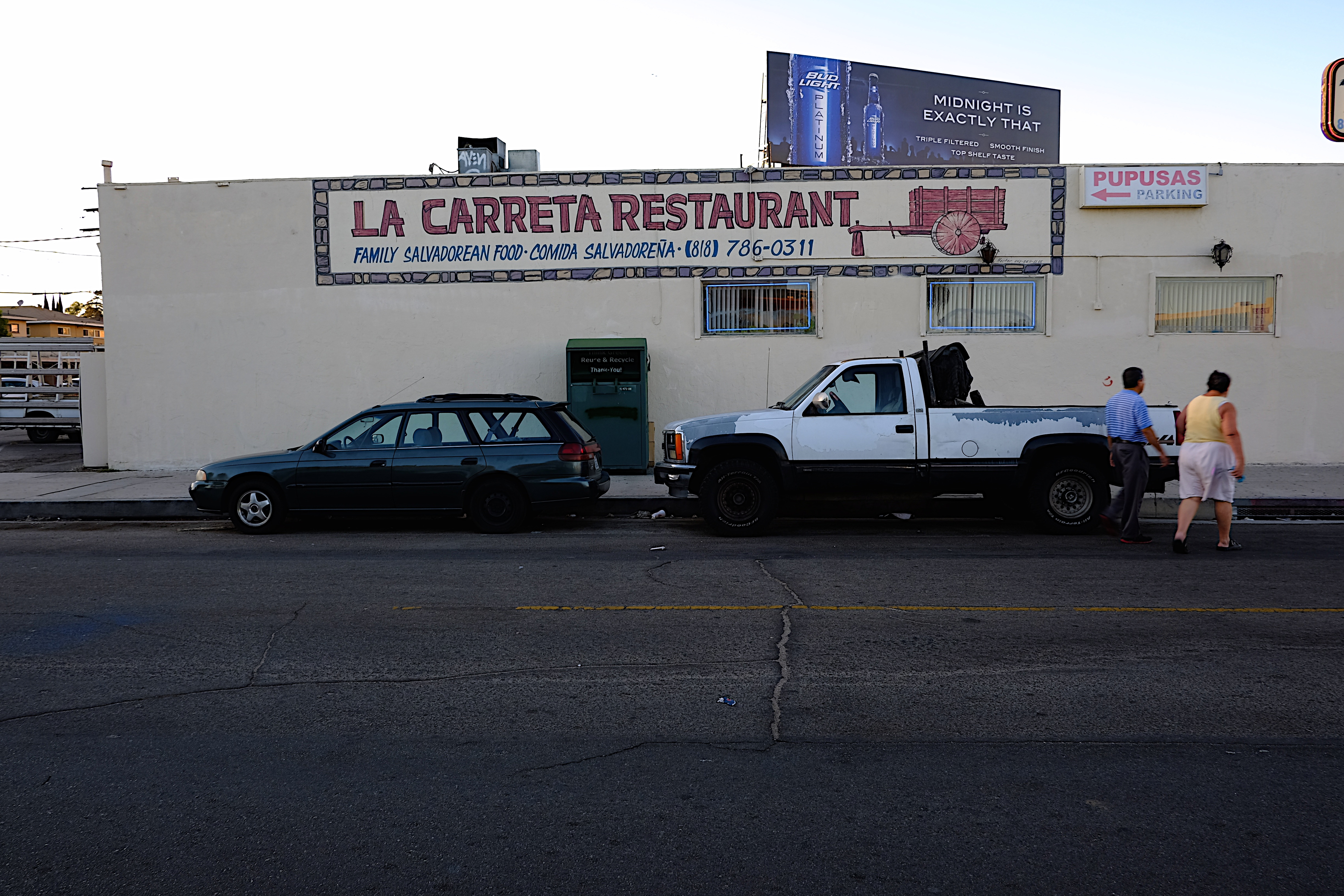
Salvadorean food is served at La Carreta (“The Cart”) a one-story, stand alone restaurant with tables and parking at 7301 Van Nuys Boulevard. Mediocre reviews alternate with better ones on Yelp:

“This is a small Salvadorian restaurant in the middle of Van Nuys (yeah, yuk, Van Nuys I know) I work out here and it’s hard to find good places to eat. Here, I love the pupusas. I get them filled con frijoles, con loroco y con loroco y frijoles.”

Ay Papa Que Rico Ay Papa Que Rico

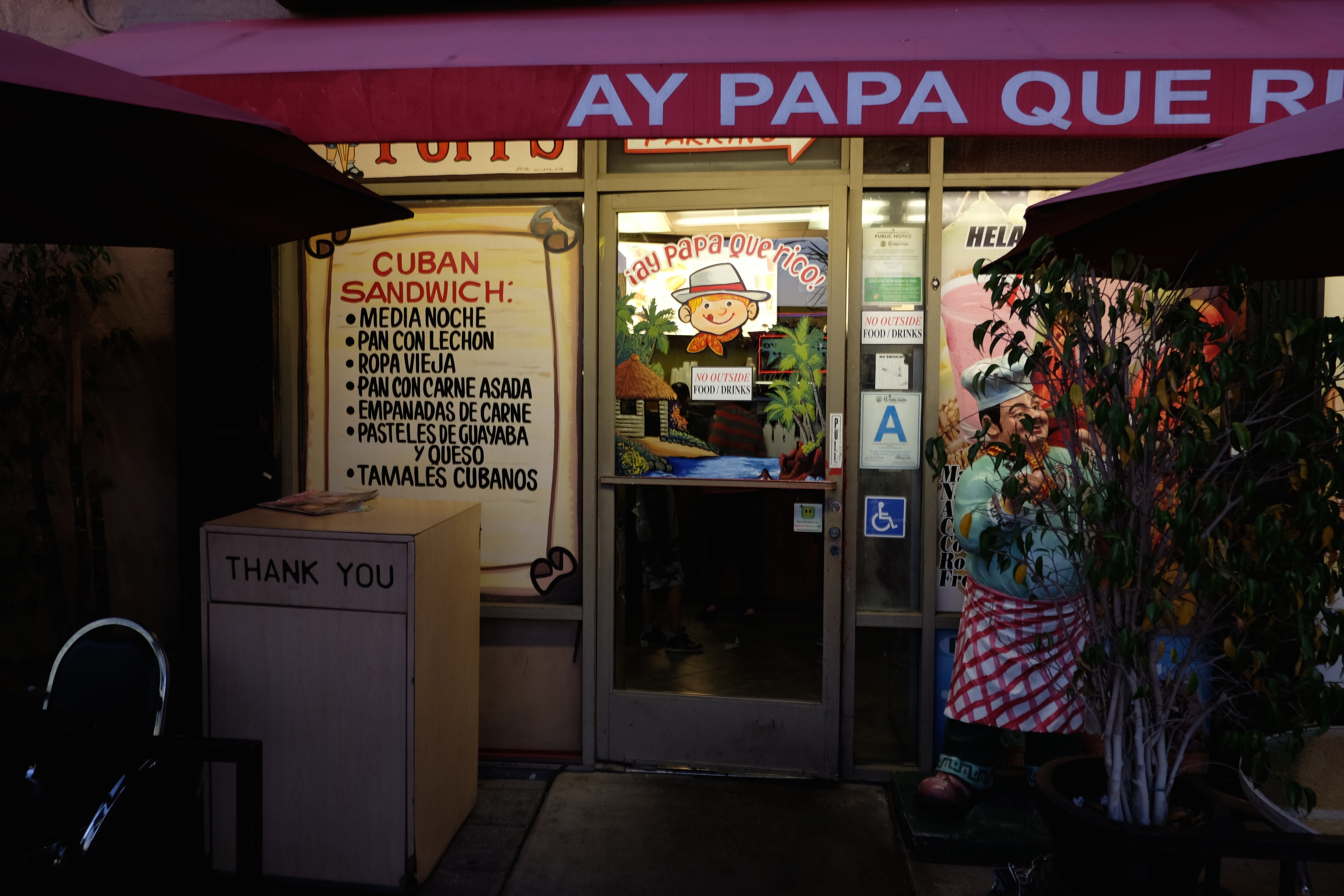
And smoke pours onto the street from burning mesquite at Ay Papa Que Rico, 7344 Van Nuys Blvd, Van Nuys, CA 91405 where Yelp reviewers are ecstatic:

“I was getting my car serviced & I smelled the most delicious mesquite scent coming from this place on the corner. I walked in got a half chicken, & Wow!!!!!! It has to be some of the best tasting grilled chicken I have ever had.”

 “The grilled chicken is a definitely must order! It’s Tender, juicy & well seasoned. Cooked to perfection. Also try the Cuban sandwich, it hits all the right notes.”


DSCF1087

English Westz

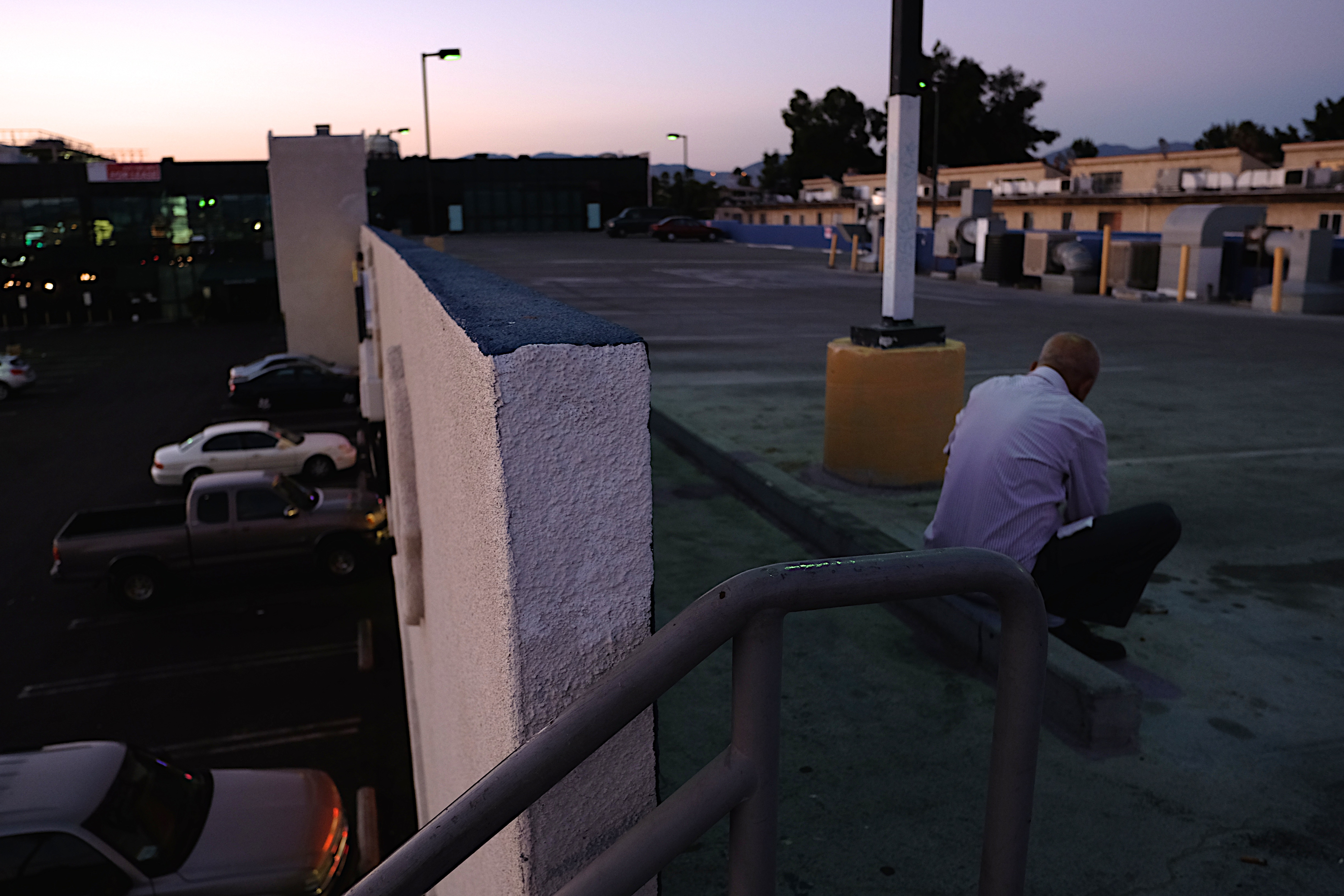
As night falls, the long day of men and women who work in dirt and heat, under cars, in kitchens, cutting hair, stacking boxes, looking after children,  go back to their apartments, (like “English West”), collapsing on the couch, taking a long shower, resting in a bedroom where the air-conditioning blows cold.

Part 1 of a 2 part article